
Today’s jolly good fellows and fellowesses include, but are not limited to, football player, former Sunderland AFC manager and Coldstream Guardsman Lawrie McMenemy (90), ex-Prime Minister of Australia John Howard (87), Rolling Stone Sir Mick Jagger (83), actress Dame Helen Mirren (81), Queen co-founder, drummer and surprisingly convincing schoolgirl Roger Taylor (77), actress and producer Susan George (76), former Lady Justice of Appeal Dame Anne Rafferty (76), President of the Islamic Republic of Pakistan Asif Ali Zardari (71), former Liberal Democrat MP for Lewes Norman Baker (69), controversial Academy Award-winning actor and director Kevin Spacey (67), actress and producer Sandra Bullock (62), actor and comedian Jeremy Piven (61), action star Jason Statham (59), actress Olivia Williams (58), former Paralympian and broadcaster Baroness Grey-Thompson (57), actress Kate Beckinsale (53), shortest serving Prime Minister, irrepressible buck-passer and possessor of fixed grin Liz Truss (51), actress and Cymraes Eve Myles (47) and former Prime Minister of New Zealand Dame Jacinda Arden (46).
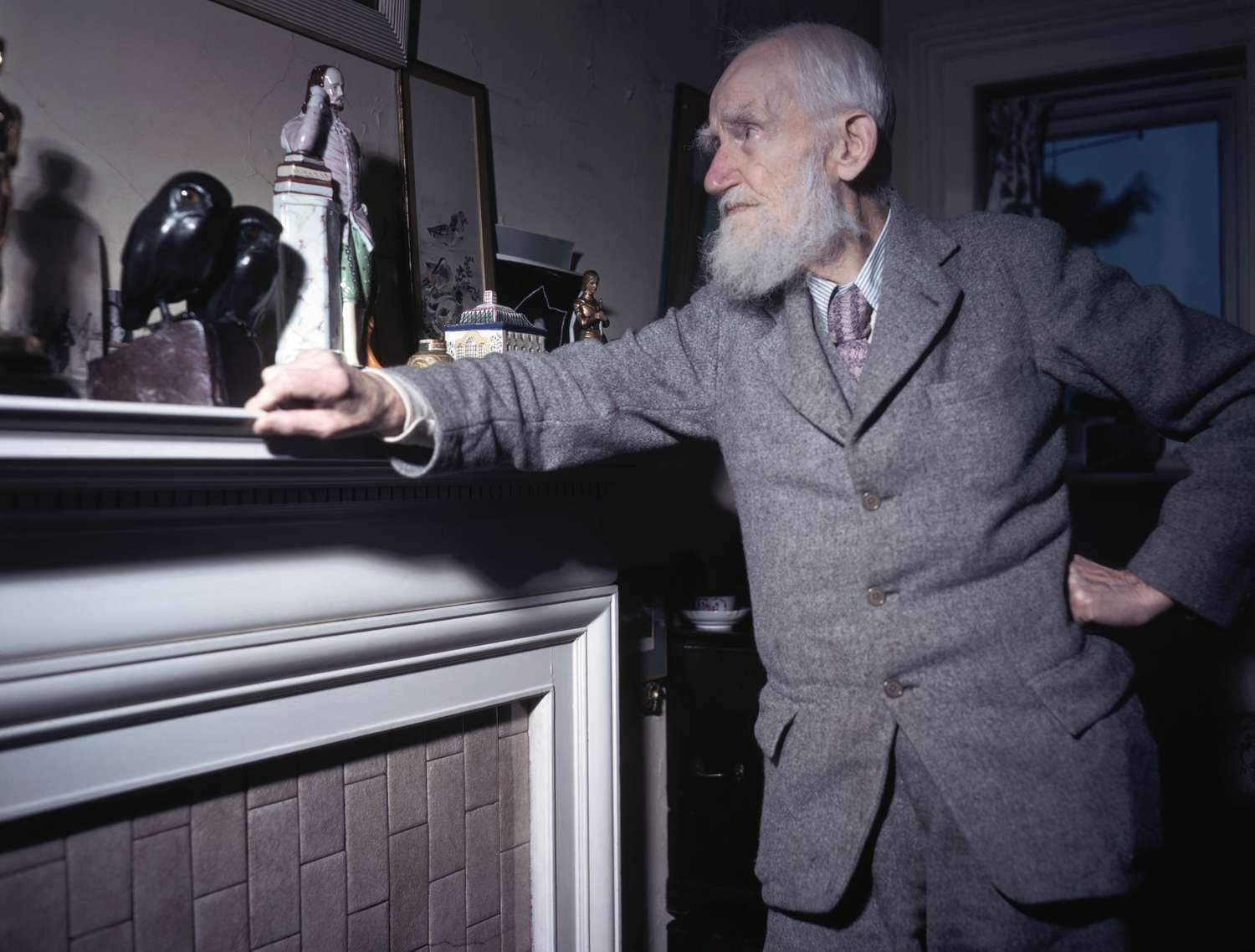
Today’s now-0-hours party people are playwright, critic, Fabian and totally-on-board eugenicist George Bernard Shaw (1856), public proclaimer of the German Republic, Social Democratic Party of Germany leader and Reich Minister President of Germany Philipp Scheidemann (1865), psychiatrist and psychotherapist Carl Jung (1875), painter and illustrator George Grosz (1893), author and philosopher Aldous Huxley (1894), two-time 24 Hours of Le Mans winner Sir Henry “Tim” Birkin (1896), Democratic Party vice-presidential nominee, Senator for Tennessee and campaigner against organised crime Estes Kefauver (1903), Chancellor of the Exchequer, first Secretary of State for Defence, Chairman of the Conservative Party and one of the original “little local difficulties” Lord Thorneycroft (1909), scientist, environmentalist and Gaia hypothesis originator James Lovelock (1919), director, producer, screenwriter and Julie Andrews spouse Blake Edwards (1922), cinema legend Stanley Kubrick (1928), Conservative MP and Cabinet minister and Chairman of the Football League Lord Mawhinney (1940), singer-songwriter, Miles Davis wife number two and Eric Clapton and Robert Palmer sexual enthusiast Betty Davis (1944) and Caribbean-English comedian and writer Felix Dexter (1961).
The Erfurt latrine disaster
Only in Germany.
Ludwig III, Landgrave of Thuringia, was in his early 30s. The nephew of the Holy Roman Emperor, Friedrich I Barbarossa, he was an energetic and acquisitive ruler, forever seeking to expand his territorial possessions and exploit his privileges to the full. His father, Ludwig II, had asserted his his authority over the Thuringian nobility, and father and son took as axiomatic close adherence to the imperial cause and the interests of the ruling house of Hohenstaufen.
The details have been lost to history, but by 1184, Ludwig III was embroiled in a land dispute with Conrad Cardinal von Wittelsbach, the 64-year-old Archbishop of Mainz and Archchancellor of the Empire; the dispute was of some years standing, and had become so bitter and intractable that its lack of a resolution had reached the attention (and irritation) of the Emperor. Barbarossa, now in his early 60s, knew his job, and he knew that if he wanted to consolidate imperial power and jurisdiction at home and go on crusade in the Holy Land like any normal person, these kinds of festering controversies between major landholders and princes, and especially between ecclesiastical and temporal authority, had to be resolved.
The Emperor’s son and heir, 18-year-old Heinrich VI, already crowned King of the Romans and therefore designated as the next Emperor, was on his way to Poland, where Casimir II, High Duke of Poland, was attempting to assert himself over his deposed elder brother, Mieszko III. Barbarossa directed Heinrich to stop at Erfurt, the Thuringian capital, and seek to mediate and resolve the dispute. Heinrich therefore convened a Hoftag, an informal gathering of imperial princes which dealt with more localised matters than the Reichstag, the imperial diet, to meet on the feast of St James, 25 July. It would be attended by the protagonists, Ludwig III and Archbishop Conrad, members of Heinrich’s own court and local nobility, bishops and eminent citizens of Erfurt.
The Hoftag met near St Mary’s Cathedral, an imposing Romanesque basilica built on the site where St Boniface had first constructed a church in AD 742. Its meeting place was a two-storey stone building, either the bishop’s palace or, more likely, the Dompropstei or provost’s lodgings. The presence of the King of the Romans meant that a great number of people sought to attend the Hoftag, and when they gathered in the upper floor on the second day, 26 July, there were probably more than 100 nobles, clergymen, local worthies, staff and retainers packed into the hall.
The beams supporting the wooden floor on that storey were rotten and simply could not take the weight of so many people. They collapsed and with them the floor, causing a fall of carpentry, masonry and, most significantly, the crowd of 100 or more people, down to the first floor. All of that weight was more than the timbers of the first floor could bear, and it too collapsed.
That would have been bad enough. But beneath the first floor was the building’s cesspit, a great tank of rotting sewage and liquefied human shit. It is hard to arrive at a precise figure, but at least 60 people were killed: some died in the fall, some were killed by collapsing masonry and others drowned in faeces or were overcome by the fumes in the cesspit. Count Friedrich I of Abenberg, Count Heinrich I of Schwarzburg, Count Gozmar III of Ziegenhain, Burgrave Friedrich I of Kirchberg, Count Burchard of Wartburg and Behringer von Wellingen all lost their lives, but the names of some were not recorded.
Landgrave Ludwig III fell into the cesspit but was rescued and survived. King Heinrich and Archbishop Conrad had been sitting in a stone window alcove and so did not fall when the floor collapsed, but had to be rescued when people arrived with ladders to recover them from what had suddenly become a high stone ledge.
King Heinrich did not stay long in Erfurt: he resumed his journey to Poland. Mieszko III had offered him a large quantity of silver to back his claim to be High Duke, but his manoeuvre was discovered by Casimir II, who simply outbid him. Meanwhile Barbarossa had been planning his son’s dynastic future, and in 1186 he married Constance, the daughter and sole legitimate heir of King William II of Sicily. In 1190, Barbarossa drowned aged 67, while his army forded the Saleph River in Cilicia during the Third Crusade. Heinrich was crowned as Holy Roman Emperor in Rome on 15 April 1191.
Ludwig III of Thuringia also died during the Third Crusade; he fell ill and was returning home when his ship sank sailing from Acre to Cyprus in October 1190.
There is no record of the dispute between the Landgrave of Thuringia and the Archbishop of Mainz being resolved.
I would never seek to diminish the real and heightened physical threats our politicians face in a culture which reaches too easily for blind anger as a response (and is often encouraged in that). However, for a degree of perspective, it’s worth noting that since the Union with Scotland Act 1706 and the Union with England Act 1707 created Great Britain, only 10 sitting Members of Parliament have been murdered or assassinated (not including duels). The most recent was Sir David Amess, Conservative MP for Southend West, stabbed to death by an Islamic extremist on 15 October 2021. Of the others, six were assassinated by Irish Republicans of various kinds, one was killed by a far-right white supremacist, one was shot dead by failed businessman who blamed the government for his misfortune, and one was shot in the mouth two days after his election by his mentally ill brother, an ordained clergyman in the Church of England, during a coach journey to London.
In the same period, 1707 to the present day, four sitting Members of Parliament were killed in duels. The most recent was Owen Buckingham, Whig MP for Reading, who attended a birthday party in Windsor on 5 March 1720, during the course of which he quarrelled with a friend, William Aldworth. Both “elevated with wine”, they exchanged harsh words and insults and went outside for what was technically a duel but was more of a drunken brawl. Buckingham was mortally wounded in the fight but accepted responsibility for the provocation as he lay dying. In addition, John Colclough, MP for County Wexford from 1806 to 1807, was shot dead in a duel after being accused of tenant vote poaching: the duel took place on 30 May 1807, during the period after Parliament had been dissolved, so, although Colclough was standing for re-election (he was posthumously defeated), he was not technically a Member of Parliament at that point (because there are no MPs once Parliament has been dissolved).
By contrast, since 1707, 35 Members of Parliament have committed suicide while in office, an alarming average rate of one every decade or so. The rate has slowed somewhat, thankfully, and only one MP has taken his own life in the last 35 years and more. Gordon McMaster, a horticulturalist, was elected as Labour MP for Paisley South at a by-election on 29 November 1990 having been Leader of Renfrew District Council. Not quite 31 on his election, he was a large, heavy and sometimes awkward man who campaigned for the rights of disabled people, including greater provision for them to be involved in decisions about their care and treatment. He became an opposition whip in 1992 then in 1994 assistant to Labour’s Deputy Chief Whip, Don Dixon. A year later he became a spokesman on disabi JJlity rights, but he did not receive a ministerial post when Labour came to power in May 1997. The following month, he was mugged in London, an experience that affected him badly, and on 28 July 1997 he killed himself by carbon monoxide poisoning in his car on the garage of his home in Johnstone. It transpired that he had been suffering from depression and believed he was afflicted with myalgic encephalomyelitis or chronic fatigue syndrome. He left a suicide note in which he accused Don Dixon and Labour MP for Renfrewshire Wesr Tommy Graham of a whispering campaign to smear him: McMaster believed they were spreading rumours that he was gay, that he had had a relationship with a 17-year-old employee of Graham’s, Scott Robinson (the age of consent for homosexual sex was then 18) and that he had AIDS. When the contents of the note were made public, Dixon, by then a member of the House of Lords, responded by saying that McMaster had had a drinking problem and that he had recommended against giving him a ministerial post because he was not able enough. Graham was suspended then expelled from the Labour Party and stood down from the House of Commons in 2001.
Percy Illingworth was elected Liberal MP for Shipley in 1906. After Jesus College, Cambridge, he had been called the Bar at Inner Temple, then served in South Africa during the Second Boer War. On his election to the House of Commons, he became Parliamentary Private Secretary to James Bryce (1906-07) and Augustine Birrell (1907-10) as Chief Secretary for Ireland, then was appointed a Lord Commissioner of the Treasury, a government whip, in February 1910. When the Government Chief Whip, the Master of Elibank, was forced to resign in August 1912 in the wake of the Marconi scandal, Prime Minister H.H. Asquish chose Illingworth to replace him. He was nominated to the Privy Council in the New Year Honours of 1915, but before he could be formally sworn in, he died on 3 January, aged 45, of typhoid fever. The cause of his fatal illness seems to have been a bad oyster.
I mentioned above “little local difficulties”, which has become a semi-ironic phrase, especially in politics, for serious challenges or adversity which someone seeks to play down. It originated, perhaps inevitably, with that most outwardly languid of Prime Ministers, Harold Macmillan, on 7 January 1958, as he prepared to fly from Heathrow Airport to start a six-week goodwill tour of the Commonwealth. The previous day, the Chancellor of the Exchequer, Peter Thorneycroft, the Financial Secretary to the Treasury, Enoch Powell, and the Economic Secretary to the Treasury, Nigel Birch—in those days, HM Treasury’s entire ministerial team—had resigned in protest at plans ro increase government expenditure. Macmillan was acutely aware of the scale of challenge to his authority this represented. Thorneycroft had been a key supporter 12 months before when Macmillan had replaced Sir Anthony Eden as Prime Minister, while Powell’s formidable intellect and erudition were respected, and he was regarded as the ideological motor driving the resignations. At Heathrow, Macmillan was asked whether he had considered postponing his foreign trip to manage the domestic crisis. Ever the quizzical, ironic, slightly detached Edwardian, Macmillan decided—almost certainly correctly—that he was within a narrow window of time during which he could control, through his reaction, how great ot footling a crisis it was. With benign and performative patience, he said: “It is always a matter of regret from the personal point of view when divergences arise between colleagues, but it is the team that matters and not the individual, and I am quite happy about the strength and the power of the team, and so I thought the best thing to do was to settle up these little local difficulties, and then turn to the wider vision of the Commonwealth”. He spiked their guns: Thorneycroft returned to government as Minister of Aviation in 1960 but was diminished in stature; Powell was appointed Minister of Health at the same but only became genuinely influential after Macmillan’s sudden retirement on 1963 and Birch, the oldest of the three, was known as a spiky, rebarbative figure with little love for Macmillan and had no following to appease.
It was to describe Macmillan’s handling of “these little local difficulties” that the word “unflappable” may have entered the language. Viscount Hailsham, an eminent barrister and daunting intellect contained within a boisterous, sometimes-unpredictable and emotional personality, had been appointed Chairman of the Conservative Party in September 1957. The sinecure office of Lord President of the Council gave him a seat in Cabinet and he also acted as Deputy Leader of the House of Lords to the Earl of Home. Hailsham’s energy and good humour made him a successful cheerleader for the government, even if they sometimes caused colleagues to hold their breath uncomfortably. He was inevitably eager to minimise the resignations of Thorneycroft, Powell and Birch, and admired Macmillan’s outward sang froid in remaining calm. In his 1990 memoirs A Sparrow’s Flight, Hailsham claims that “this in turn was what led me to make one of my few genuinely original contributions to current demotic English usage by coining the word ‘unflappable’ and sticking it on to the Prime Minister’s lapel”. Later on, reflecting on neologisms to which he could lay claim—he had been a brilliant classical scholar at Christ Church, Oxford, before winning a Prize Fellowship at All Souls College—he reiterated, “I certainly coined ‘unflappable’, which has come into common use, as a compliment which I had applied to Macmillan in 1958”. Marking the exact birth of a word or phrase is very difficult, but there is certainly a chance that Hailsham is justified in laying claim to “unflappable”; most sources agree that the word emerged in the late 1950s, so it may have been that Quintin Hailsham was its originator in January 1958.
The 2012 Ben Affleck film Argo told the story of the rescue of six American diplomats from Tehran in January 1980, shortly after the Iranian Revolution. They had evaded capture when Iranian students stormed the United States Embassy in November 1979 and took most of the staff hostage, and the CIA worked with the Government of Canada, whose diplomatic staff in Tehran were sheltering them, to get the Americans out of Iran covertly. Two CIA officers, Tony Mendez and Ed Johnson, went into Iran and, with the fugitives from the US Embassy, posed as a film crew scouting for locations before flying out on Canadian passports on 28 January. It’s an entertaining film and made $232 million at the box office (having cost $44.5 million to make) as well as finding favour with the critics. Inevitably, though, it is not absolutely true to life in every last detail: suffice to say its Wikipedia entry has a sub-heading “Historical inaccuracies”. One tiny moment, however, which is not included in the film and which many people would have assumed was too-cute Hollywood garnish, occurred the night before the operation took place. On the evening of 27 January, Mendez waited for a response from the US and Canadian governments to the detailed plans for the following day’s exfiltration he had sent them via the Canadian Embassy in Tehran. Approval came from Washington and Ottawa and the operations final details were authorised. The cable from the two governments concluded “SEE YOU LATER, EXFILTRATOR”.
It was observed this week that the new Prime Minister is the first “Andy” to lead the government, distinguishing him by preferred usage from the Conservative Andrew Bonar Law. By that standard, of the names by which premiers have gone, the tally from a total of 59 stands at: eight called William: William Cavendish, 4th Duke of Devonshire; William Pitt (the Elder), 1st Earl of Chatham; William Petty, 2nd Earl of Shelburne; William Cavendish-Bentinck, 3rd Duke of Portland; William Pitt the Younger; William Grenville, 1st Lord Grenville; William Lamb, 2nd Viscount Melbourne; and William Ewart Gladstone: five named Henry: Henry Pelham; Henry Addington; Henry Temple, 3rd Viscount Palmerston; Sir Henry Campbell-Bannerman; and H.H. (Herbert Henry) Asquith: four named Robert: Sir Robert Walpole; Robert Banks Jenkinson, 2nd Earl of Liverpool; Sir Robert Peel; Robert Gascoyne-Cecil, 3rd Marquess of Salisbury: three called George: George Grenville; George Canning; George Hamilton-Gordon, 4th Earl of Aberdeen; three called John: John Stuart, 3rd Earl of Bute; Lord John Russell, John, 1st EarlR Russelll and John Major; two called Arthur: Arthur Wellesley, 1st Duke of Wellington; and Arthur James Balfour; two dubbed Charles: Charles Watson-Wentworth, 2nd Marquess of Rockingham; and Charles Grey, 2nd Earl Grey; two named David: David Lloyd George; and David Cameron; two named Edward: Edward Smith-Stanley, 14th Earl of Derby; and Edward Heath; two going by Frederick: Frederick North, Lord North; and Frederick John Robison, 1st Viscount Goderich; two named Harold: Harold Macmillan; and Harold Wilson; and two called Spencer: Spencer Compton, 1st Earl of Wilmington; and Spencer Perceval.
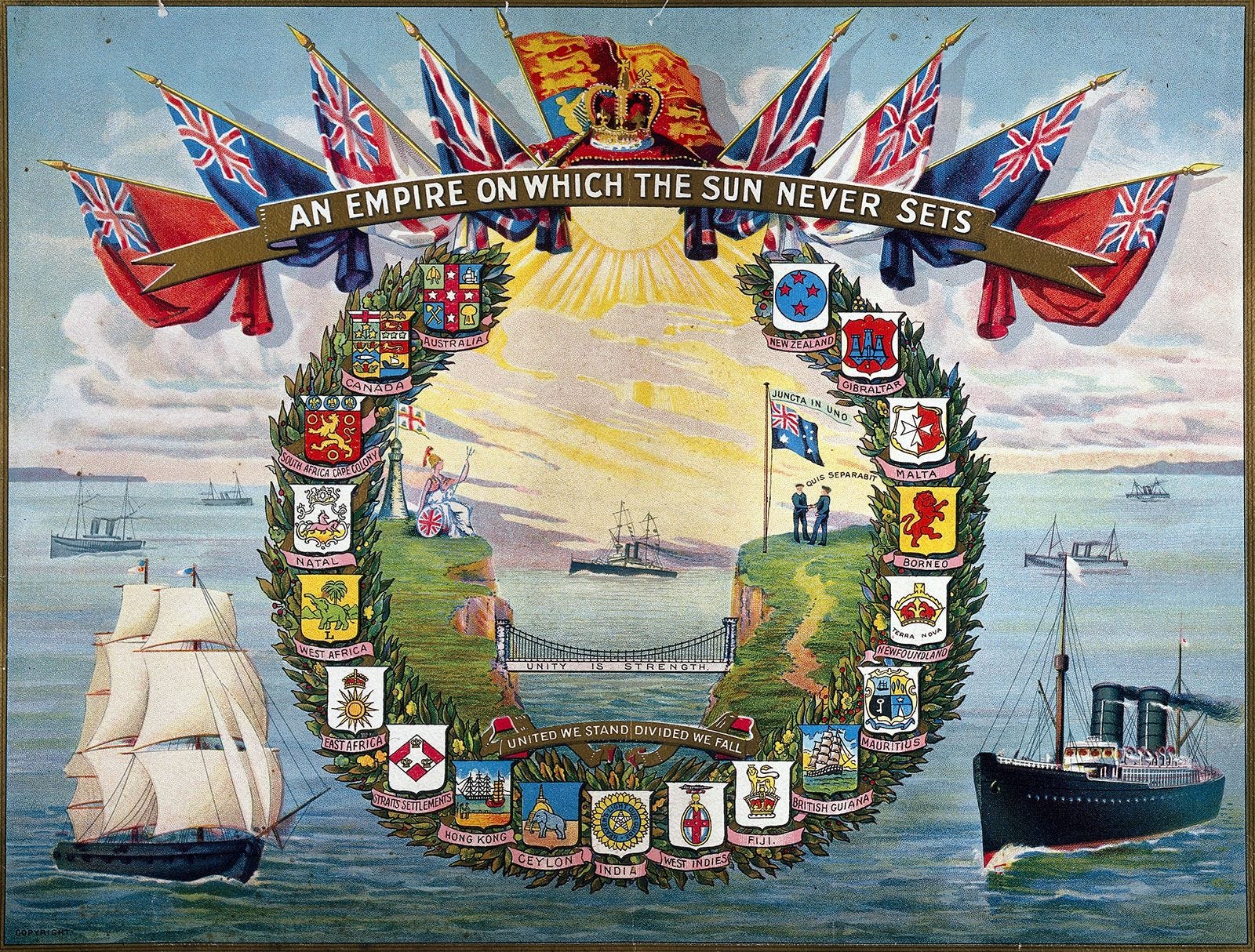
“How Britain’s imperial history affects diplomacy today”: I have said many a time how important historical awareness is to the exercise of contemporary politics, and made the argument in The Critic last year that ministers and officials should engage much more actively with the past, especially the yearly release of government documents from the National Archives. In The Spectator, Bethany Elliott examines the vital dimension of history in the UK’s foreign relations, especially with countries which were formerly British colonies, protectorates, mandates or other possessions (and, let’s face it, there are a lot of them: estimates range from 58 to 65, just shy of a third of all modern countries). One can become fixated by the past and turn it from a guide into a gaoler, and it is important to remember that the historical memory of other countries may not necessarily be accurate, but ignorance is inexcusable for our Diplomatic Service and to be unaware of another country’s past, whether or not in relation to Britain, can be to miss a fundamental part of that nation’s identity and sense of self (I am currently writing an article about the impending 500th anniversary of the Battle of Mohács and the ineradicable part that played in the development of modern Hungary and its sensibilities). Beth relates Robin Cook’s astonishment, newly appointed as Foreign Secretary, at Taoiseach Bertie Ahern taking exception to a portrait in his office. “New Labour had, after all, selected the painting for portraying a parliamentarian. The figure in question? Oliver Cromwell. The English never remember and the Irish never forget.”
“The Victorians have some lessons for Burnham on radical devolution”: in The Financial Times, Philip Stephens points to the great civic governments of Victorian Britain in cities like Birmingham, Glasgow and Manchester as “a lodestone for strong, economically thriving communities”. He recalls that the 1980s saw local authorities lose a great deal of their power and autonomy over revenue raising as Margaret Thatcher constructed a much more centralised state apparatus than Britain had previously enjoyed. Around 65 per cent of local authority spending now goes towards centrally mandated social care, leaving councils as hollowed-out subcontractors. But Stephens says that the Prime Minister is starting in the wrong place: “replacing central direction with decision-making in a handful of regional centres is to miss the lessons of late Victorian England”. He argues for scrapping the cap on increases in council tax, conducting a long-overdue revaluation on which council tax rates are based and allowing local authorities more control over the level of business rates and the power to issue municipal bonds to fund housebuilding. There is much to agree with here. The current model of councils effectively as powerless clearing houses for grants from Whitehall and subcontractors for centrally dictated services has left them not just powerless but ignored and anonymous. I made a similar argument in CapX in 2024. Stephens is right to say that some councils will get it wrong and make mistakes, but that is a part of the democratic process and, as he notes, “councils will struggle to match the tens of billions squandered by Whitehall on aborted IT and infrastructure projects”. Genuine empowering devolution also requires a government which is conscious that it is creating potential sources of opposition and so must be high-minded about the fact. But that is what Burnham claims to want, and he should be held to it, with all its consequences.
“A plan to save our towns”: in The Critic, author, researcher and urbanist Nicholas Boys Smith analyses the decline of post-war towns and cities in Britain. A successful urban centre, he argues, needs to “mingle pleasure and purpose”, with dense population and variety of retail and residential spaces. Instead, post-war planners drained the vitality from places like Coventry and even—topically—Manchester by ruthless zoning and a slavish devotion to the needs of the automobile. “If we want our towns to revive, we need to rediscover and unleash the dense pattern of small businesses, innovation and investment that grew them in the first place.” Some of his prescriptions sail dangerously close to Carlos Moreno’s (actually entirely harmless and benign) “15-minute city” concept which the madder sort of rightist sees as a Davos-inspired conspiracy to enslave us, which should take nothing away from a brisk and inspiring vision for urban life.
“No one wants to talk about the dark side of the suffragettes”: the Women’s Political and Social Union, founded in 1903 by Emmeline Pankhurst and her daughter Christabel, poses a challenge for historiography. It was set up principally to campaign for female suffrage, but it disavowed any partisan allegiance, defined itself as an activist group rather than a political party and adopted the motto of “Deeds, not words”. In 1906, a journalist at The Daily Mail dubbed WPSU members “suffragettes”, to distinguish them from mainstream “suffragists”, because the increasingly embraced direct action, civil disobedience and outright violence as valid methods of campaign. While it would be hard to find many people today who would take exception to the suffragettes’ goal, the WPSU was essentially an extremist organsation: it planted bombs on trains and the Underground, outside the Bank of England and inside St Paul’s Cathedral and Westminster Abbey, sent letter bombs to Prime Minister H.H. Asquith, Chancellor of the Exchequer David Lloyd George and Home Secretary Reginald McKenna and committed arson across the country. In The Daily Telegraph, historian Dr Paula Bartley argues that many suffragettes, as well as being more than prepared to countenance terrorism (because that is what it was), were enthusiastic supporters of eugenics and racial pseudo-science, and some leading names from the WPSU eventually migrated to Sir Oswald Mosley’s British Union of Fascists. Yet, while the reputations of Winston Churchill and others are now minutely scrutinised for any traces of dubious or problematic opinions, the suffregettes are often give a bye because of the rightness of their principal cause. “The fact that this less convenient side of the suffragettes has received little attention says a lot about our tendency to view history through a heroes vs villains’ mindset… the truth is that heroes and heroines are made, not born; and people are complicated”.
“Gallipoli general died after taking officer’s place”: even though it has been largely debunked by modern scholars, the “lions led by donkeys” image of Britain’s First World War leadership maintains a dogged grip on the public imagination. (The phrase as a description of the British Army was attributed to General Erich von Falkenhayn, Chief of the German Great General Staff 1914-16, by the author and Conservative MP Alan Clark for his 1961 volume The Donkeys: A History of the British Expeditionary Force in 1915; he later admitted he had made it up.) More justifiably, the Gallipoli campaign of 1915-16 remains a gold standard for poor leadership, a stubborn refusal to learn lessons and a callous disregard for the lives of ordinary soldiers in the pursuit of victory. It is heartening, therefore, to read this tale of straightforward but staggering heroism and sense of duty in The Daily Telegraph. Brigadier General William Scott-Moncrieff commanded the 156th (Scottish Rifle) Brigade at the Battle of Gully Ravine in June-July 1915, a British and Empire assault on Ottoman positions near Cape Helles where the British had landed on the Gallipoli peninsula earlier that year. He was 56 years old and walked with a stick after being seriously wounded in the leg during the Battle of Spion Kop, and had retired from the Army on 1913 before being recalled the following year. As the 156th Brigade moved forward for the attack at Gully Ravine at 10.45 am on 28 June 1915, Scott-Moncrieff noticed that the commanding officer of one of his battalions had neglected to go forward at the right time. Despite his infirmity and a prohibition on general officers exposing themselves to unnecessary danger, he decided in a split second to assume command of the battalion himself and lead it forward. He was shot and killed almost instantly, as his uniform would have marked him out from ordinary soldiers and more junior officers. A young Royal Artillery officer who was present wrote afterwards: “as far as I saw & recollect the General was killed instantly in personally leading his Brigade in an attack; the attack failed & we re-occupied the trenches from which we advanced, hence the fact of failing to recover the General’s body. His leading the charge was magnificent, & the talk of the Peninsula… He was magnificent as he must have realised that with his Generals uniform etc. his chance of not being hit was nil.” British generals may have got many things wrong during the First World War—though, like everyone else, they were desperately learning and improvising in a kind of warfare for which none of them had been prepared—but they were no cowards: the casualty rate among our general officers was nearly 20 per cent, and Scott-Moncrieff showed the unhesitating, instinctive sense of duty which was one of the most admirable aspects of Britain’s officer corps.
“The City of Chicago”, Christy Moore
“Surrender to the Rhythm”, Brinsley Schwarz
“Through the Barricades”, Spandau Ballet
“Gloria”, Laura Branigan
“Our Mutual Friend”, The Divine Comedy
… the dying Joan Crawford shouted at her housekeeper as she prayed. Don’t you dare ask God to help me!
No posts
Comments
Nothing yet. Say the first thing.
Sign in to join the conversation.