
My life and work are more data-driven than most people might imagine. As a competitive athlete, I use different tools and techniques to make sure I’m maximizing my training to the best of my ability. Being in the professional services world, I am constantly asked to demonstrate my worth by quantifying various aspects of my output. And even when I sit down to write this newsletter, I look at the metrics to see where to go with the content. It’s not necessarily a super scientific approach, but there is a method to my madness, which brings me to today’s topic of conversation.
I hate LinkedIn. Scratch that. I abhor LinkedIn. It is a longstanding, deep-seated dislike that grows more intense with each passing year, and it feels really good to admit that. Why am I telling you this? Because one of the powerlifters I follow has a saying, “If you’re going to bitch about it, be about it.” Her stance is that if you’re going to complain about something that you can actively fix and/or change, you should fix and/or change that thing.
Now, I’m not saying I’m going to build a new LinkedIn. Many have tried, none have succeeded. I’m also not going to quit LinkedIn. That’s equally pointless. Most of us feel obligated to be there, and after nearly 23 years, it remains the world’s only real, industry-agnostic, “professional” social network. I’ve had my profile for about 20 years, though I’m fairly certain I didn’t bother posting for the first 10. My paltry number of connections is further testament to the level of effort I’ve put into this particular channel.
After years of nonstop self-aggrandizing posts about lessons learned from buying luxury real estate and other nonsense, the algorithm is currently serving up nothing but ads and posts offering advice on using AI to improve XYZ. At the same time, the state of the job market means that I’m seeing amazing people share news of mass layoffs, while the companies that laid them off keep up facades. LinkedIn is out of touch with my personal values, and that gap is growing.
Having bitched about it, how do I be about it? The obvious answer would be to go on LinkedIn less. I’ve set limits in the past. Taken the app off my phone. And sure, that changes my relationship with the site for a time. It just doesn’t seem to stick. So, I’m going to go the other way. I want to fix my feed. I want to broaden my network. I want to make myself more helpful* to the people in my larger community. And yes, I know I’m not the first to come to the realization, I’m just the latest to say it with my whole chest. You know where to find me.
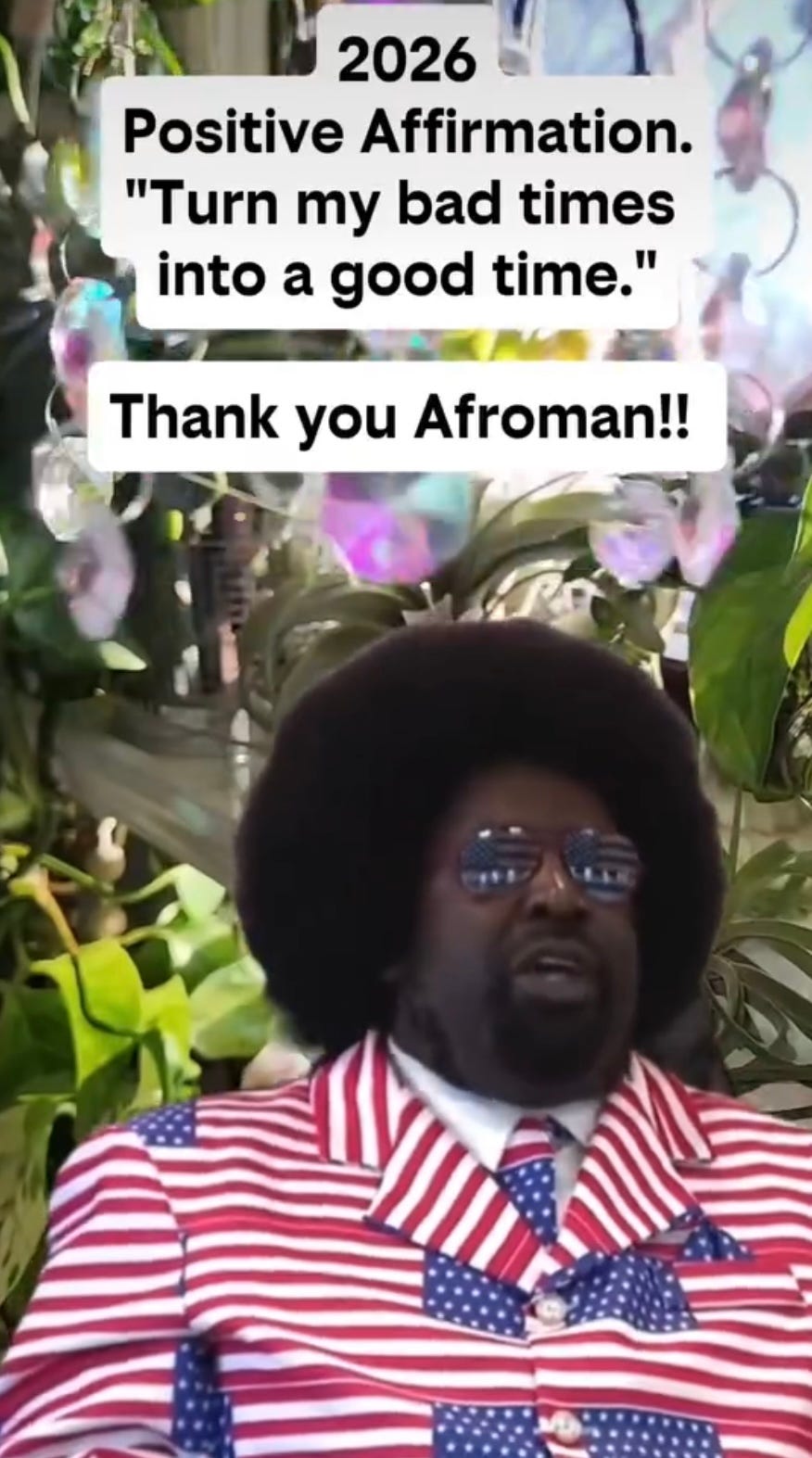
Image via Instagram. If you haven’t read about Afroman’s recent trial, I highly recommend it (pun intended). Also, try his lemon pound cake recipe.
*On the matter of help. Last year, I had a conversation with someone in the HR Tech space and at the end of the call, I said something to the effect of, “If there’s ever anything else I can do to help, let me know.” This person practically spat back at me with disdain, “Well, I’m not going to pay you.” I never offered my services; I offered my help. While I pride myself on practicing pay-it-forward PR, there is still a distinction to be made. Help is asking if you know someone at a certain company. Help is asking if you know a good resume writer. There are limits. Be measured.
Dear Laura,
I’m noticing a lot of my HR peers seem to have an “us” versus “them” mindset. Not so much about the employees, but about themselves. It’s almost as if they see themselves as unworthy or undeserving of the same support given to other teams. Have you observed this?
Thanks,
Not Other
Dear Not Other,
To say I have observed this also is a big understatement! I wrote this blog 14 years ago, reminding HR Pros to put their own oxygen mask on first (and still see it, sadly, as a pervasive issue).
Many HR Pros have the strength of ‘giving.’ They are the employees (and human beings) who would get awards for ‘generosity of spirit’ and ‘going above and beyond’ if there were such awards given at work. But, what they often struggle with (and it’s a real skill, and a real area for development) is ‘receiving.’
If you work in HR and are reading this, ask yourself: Am I good at receiving help? Receiving compliments? Receiving support? Receiving external resources? Receiving a state of relaxation, rest? Pause and really reflect. So, to your point ‘No Other’, many don’t feel deserving of support given to other teams because they aren’t comfortable admitting they even need support. Which is only harming themselves.
When I talk to CEOs, they often say that every single Executive of theirs comes to them with requests for resources (tech vendors, external search firms, new headcount, etc.), but they almost never hear from HR. This worries them (and me! And you!) The real challenge here? This is inner work. This is the kind of work only each and every individual in HR can do for themselves. They need to do the self-reflection and be willing to ask themselves, “How do I get in my own way of receiving the help I so deserve?”
Your friend,
My other idea for a column this week was about how tired everyone is, but recent readership told me to swing a little more positive. Instead, I’ll point you to Sarah Deane’s recent piece for Reworked, which makes the succinct point: “Capacity enables capability.” That thinking can be applied to almost every initiative in life, personal and professional, from signing up for a new class or hobby to rolling out a company-wide change.
The dichotomy between companies expecting, nay, requiring that employees use AI as part of their performance management plans, with leaders handing down AI-generated slop that is eroding workplace trust, is almost comical. Almost. It kind of reminds me of when I entered the workforce to that ongoing trope (but also very real issue) of senior execs who didn’t know how to open a PDF. And we wonder why the generational stereotypes refuse to die.
To say there’s a lot happening over at Meta would be an understatement. In addition to sunsetting the Metaverse and the landmark lawsuit ruling, the company also started its rumored layoffs, letting 700 people go right after it announced a new stock program for SIX top executives that would increase their comp by as much as $921 million EACH. And we wonder why people are out there talking about eating the rich? I can almost hear Jean Valjean in the distance.
The “Where You Work Matters” list launched this week (full disclosure: I worked on this project, but that doesn’t mean I can’t believe in its mission). I recommend checking out this Wall Street Journal article, which includes data visualizations and narrative storytelling. It helps unpack the true value of what’s been created here, accounting for 12 million American workers across nearly 55,000 roles at about 1,750 employers.
At the same time, new Gallup research found that, for the first time since they began tracking the “life evaluation” of the U.S. workforce, more workers are struggling (49 percent) than thriving (46 percent). That’s on top of the lowest engagement level in a decade (31 percent). While the margin between struggling and thriving is pretty thin, Gallup drills down into the considerations workers are weighing amid today’s rocky job market.
With candidate fraud still all the rage, it’s interesting to see the various identity verification solutions entering the market. The Quartz ring is one such option, building on the concept of a handshake while using finger-vein biometrics, near-field communication, and cryptography to verify identities between users, in person or remotely. The design reference is a signet ring, which has been tied to authentication throughout human history.
Top HR Products of the Year (submissions due March 27 - FINAL CALL)
Money 20/20 (application for speakers closes April 17)
SHRM NJ Conference & Expo (application for speakers closes April 17)
Reading: “50 Ways to Meet Your Neighbor.” Adults often lament how difficult it is to make friends with other adults, but overlook those within their immediate purview. Here are ideas for those feeling stuck.
Watching: “How to Get to Heaven from Belfast.” While there is a connection to “Derry Girls,” the shows are nothing alike, with the former being much, much darker than the latter.
Listening: I’m time-traveling next week and going to see A Flock of Seagulls with Gene Loves Jezebel. Lots of hits (and fun hairstyles) between the two bands, from “Space Age Love Song” to “Desire.”
Exploring: VHS Slipcover Maker. In the analog era, VHS reigned supreme for a brief moment in time, and as a physical-media household (primarily in the form of vinyl), this site scratches a nostalgic itch I didn’t know I had.
And with that, the first two major conferences of the year (UNLEASH and Transform) are over. I’ve heard plenty about both, though I wasn’t able to attend either. There’s more to come on the events front, and much, much more coming in terms of industry news, which George LaRocque and I cover every few weeks on our crossover podcast, Up Next @ WorkTech, so keep an ear out for that.
Until next time.
- Katie
No posts
Comments
Nothing yet. Say the first thing.
Sign in to join the conversation.