
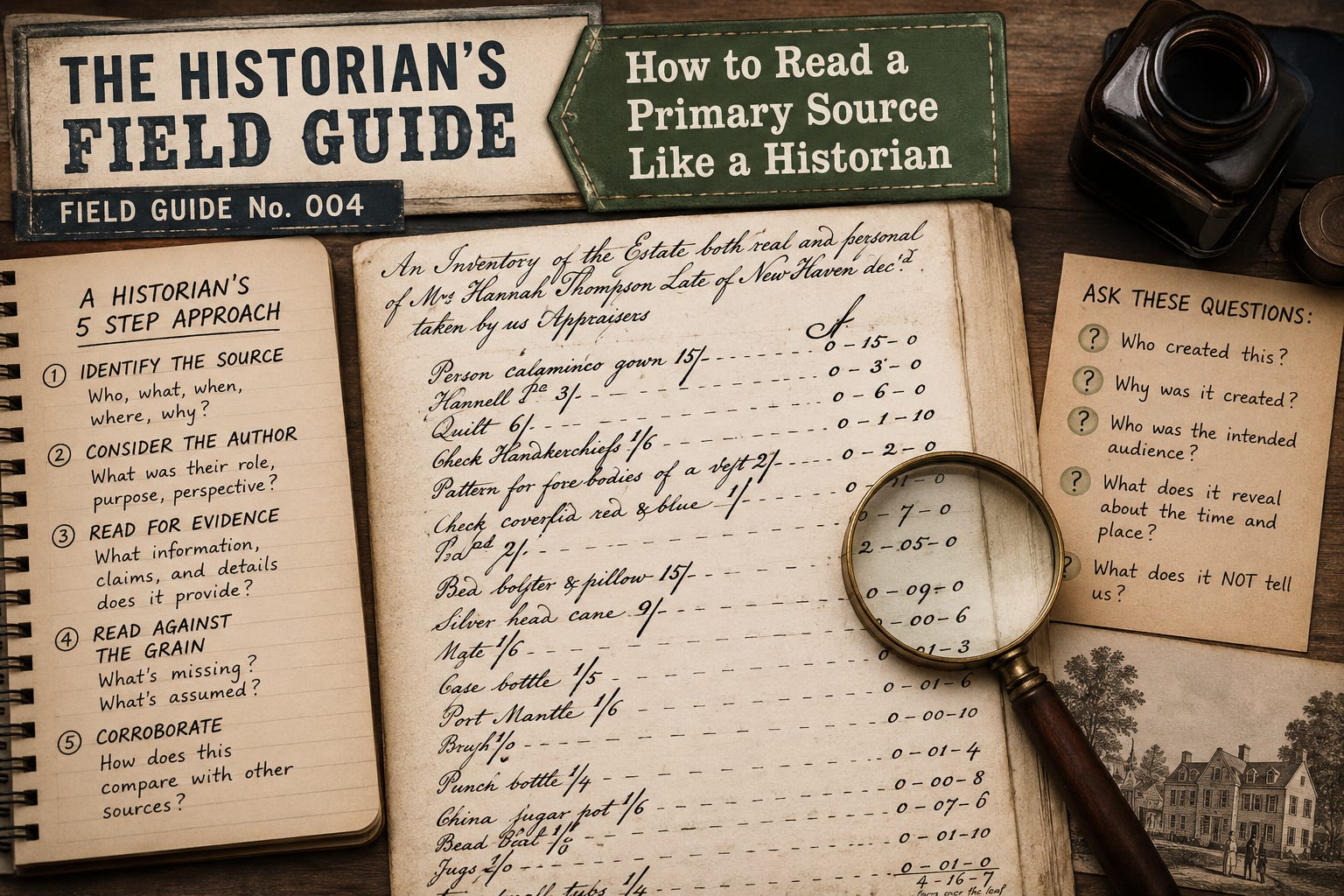
I’ve been holding a lot of documents from the 1740s lately. The paper is yellowed, the ink often smeared or faced, and the handwriting often difficult to decipher. As thrilling as it is to just have this in my hand (or spread out on a table), how would I read this document as a historian?
Most people would begin by just reading the words on the page.
But historians begin somewhere else. As you know from the previous post, historians begin with questions—who wrote this? Why? For whom? And what were the circumstances?
Historians talk a lot about the importance of primary sources, but they aren’t exactly windows to the past as it happened—instead, they are pieces of evidence created by people who had a particular purpose, perspective, and who was, of course, facing limitations.
Students often believe that primary sources tell us “what happened.” And while that’s true, it’s true only in a limited way. Every speech, diary, photograph, newspaper, court and government record reflects both the experience and intentions of the people who wrote and created them.
Reading primary sources as historians means moving beyond “what does this document say” to asking “why was it created in the first place? What can it tell us? What might it leave out? Why?
Let’s go back to the beginning.
A primary source is any evidence created during the period being studied or by someone directly connected to the events.
Examples include:
Letters
Diaries
Newspapers
Court records
Government documents
Maps
Photographs
Oral histories
Artifacts
Census records
Primary sources are the raw materials of history.
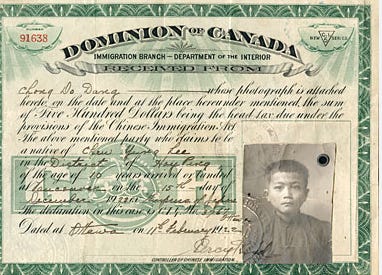
a. Who created this source?
b. When was it created?
c. Where was it created?
d. Who was the intended audience?
e. Why was it created?
These questions immediately place the document in context.
Every source has an author, even if the author’s name is unknown.
a. What was this person’s role?
What did they know firsthand?
What did they hope to accomplish?
What assumptions shaped their perspective?
Remember, perspective is not the same as dishonesty. Every source reflects a particular point of view.
Historians read with a purpose.
Instead of asking, “What happened?”
a. What evidence does this document provide?
What claims does it make?
What assumptions does it reveal?
What details appear unintentionally?
What questions does it raise?
Often the most revealing information is not what the author intended to communicate.
Sometimes historians learn as much from what a source does not say as from what it does.
Consider:
a. Whose voices are missing?
What topics are ignored?
What information might the author have assumed readers already knew?
What would another participant have written differently?
Silence can be evidence.
No single document tells the whole story.
Historians compare sources.
a. Does another source confirm this account?
Do other sources contradict it?
Why might different witnesses remember the same event differently?
History is built by comparing evidence, not relying on one document alone.
Reading an Eighteenth-Century Probate Inventory
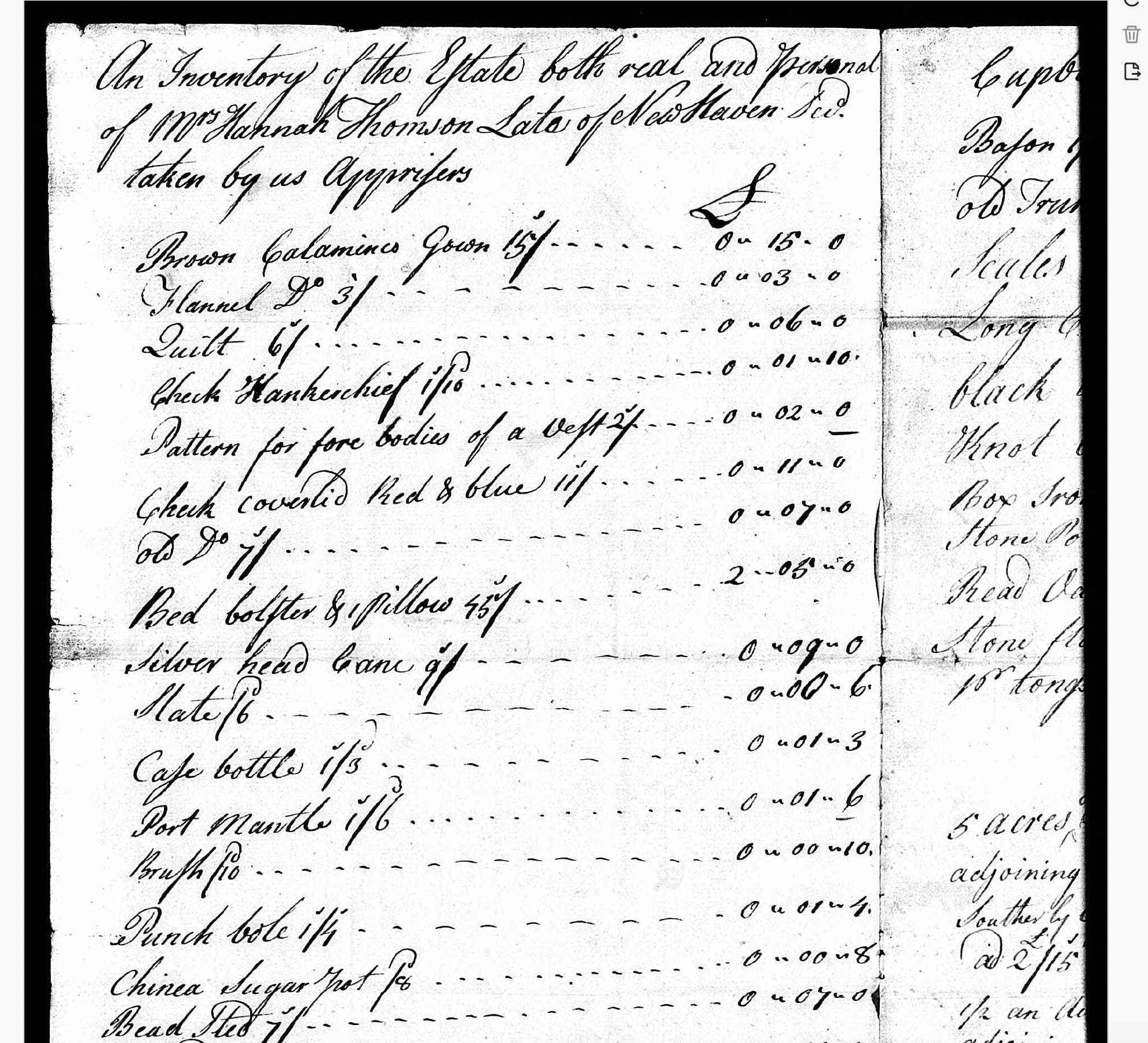
At first glance, this document doesn’t seem particularly exciting. It is an inventory of the estate of Hannah Thompson of New Haven, listing her household possessions after her death. Multiple pages record ordinary objects and assigns each a monetary value: gowns, bedding, silverware, bottles, furniture, and other household goods.
Someone might conclude that this document is little more than an accounting record, but historians see something different.
Before reading the list, a historian would begin by asking questions.
Who was Hannah Thompson?
Why was this inventory created?
Who decided what was included?
What kinds of possessions did she own?
What does the inventory tell us about her standard of living?
Just as importantly, what does it not tell us?
These questions transform an ordinary legal document into historical evidence.
As I examined Hannah Thompson’s inventory, I wasn’t simply trying to learn what she owned, I was attempting to reconstruct the world in which she lived.
The inventory tells us that she owned multiple gowns made from different fabrics, bedding, silver objects, china, household furnishings, and numerous domestic tools. Together, these items suggest a household that was comfortable and reasonably prosperous, even if not exceptionally wealthy. They also hint at daily routines, consumer choices, and social expectations in eighteenth-century New England.
But historians also pay attention to what is missing.
An inventory rarely tells us who received these possessions, which objects were especially meaningful, or how they were used. It cannot describe family relationships, personality, grief, or memory. It records property, not emotions.
That limitation is just as important as the information it contains.
For my own research, Hannah Thompson’s inventory mattered for another reason. Her husband was the captain of the Seaflower, the immigrant vessel at the center of my current book project. This probate record became one small piece of a much larger puzzle. By comparing it with wills, shipping records, newspaper accounts, church registers, and court documents, I could begin reconstructing the social and economic world inhabited by the people connected to that voyage.
No single document tells the whole story.
Each source contributes one piece of the evidence.
That is why historians rarely ask, “What does this document say?”
Instead, they ask, “What can this document help me understand?”
If this inventory were the only surviving document about Hannah Thompson, what could you confidently say about her life?
What important questions would remain unanswered?
That’s how historians approach primary sources. We begin not with certainty, but with curiosity.
Students often ask whether a source is “biased.” Of course it is! People created these sources and they are always made with some agenda in mind. That doesn’t make them “bad” (the sources or the people who created them), it just makes them human.
But that doesn’t matter to us as historians because we are asking a different question:
How does this source’s perspective shape the evidence it provides?
There’s no such thing as a neutral source—but that doesn’t mean it should be discarded.
In fact, understanding a source’s perspective often makes it more valuable.
Try It Yourself
Find a historical photograph online.
Before reading the caption, answer these questions:
What do you notice first?
Who created this image?
What was its purpose?
What details stand out?
What questions would you ask before using it as evidence?
Only then read the accompanying explanation. Did your interpretation change?
Imagine you discover a diary describing a famous historical event.
Would you trust it immediately?
Or would you first ask why the diary was written, when it was written, and whether other sources support its account?
That’s the difference between reading like a reader and reading like a historian.
From the Reading Room
If You Read One Book
Martha Howell and Walter Prevenier, From Reliable Sources: An Introduction to Historical Methods
A clear and practical introduction to how historians evaluate, compare, and interpret primary sources.
For Curious Readers
Sam Wineburg, Historical Thinking and Other Unnatural Acts
Especially the chapters that explore how historians read documents differently from students and the general public.
For Students
Explore the digital collections of the Library of Congress or the U.S. National Archives. Choose one document that interests you and practice asking the questions introduced in this Field Guide before reading any accompanying explanation.
Next week we will explore why historians often disagree with each others’ interpretations!
Coming soon—
Find out more at kellymcmichaelauthor.com
Comments
Nothing yet. Say the first thing.
Sign in to join the conversation.