
Welcome back to our course on Women in Late Medieval England! This course is available for all level of paying subscriber to The Historian’s Desk.
You can watch today’s lecture in the above video (click “watch now” to pull up the page for this lecture) and you can adjust the playback speed of the lecture using the arrows in the bottom righthand corner of the video player.
You can also find the written copy of the lecture below, just in case you’d like to follow along with the recording. You can find a list of suggested readings at the bottom of the written lecture. Please feel free to post any thoughts, questions, or ideas you’d like to discuss in the comments.
I hope you enjoy learning about medieval women’s recreational activities and self-representation!
As we’ve seen in our lectures over the past two weeks, women knew how to present themselves in particular ways, oftentimes using this self-presentation to achieve a particular goal. This was the case for Joan Beaufort and her daughters, including Cecily Neville, when they chose how they wanted to be portrayed in their portraits in the Neville Book of Hours, with Joan’s fur-lined mantle clearly communicating her position as a member of the royal family and each woman’s interlocking ‘S’ chain representing proud membership in the royal House of Lancaster.
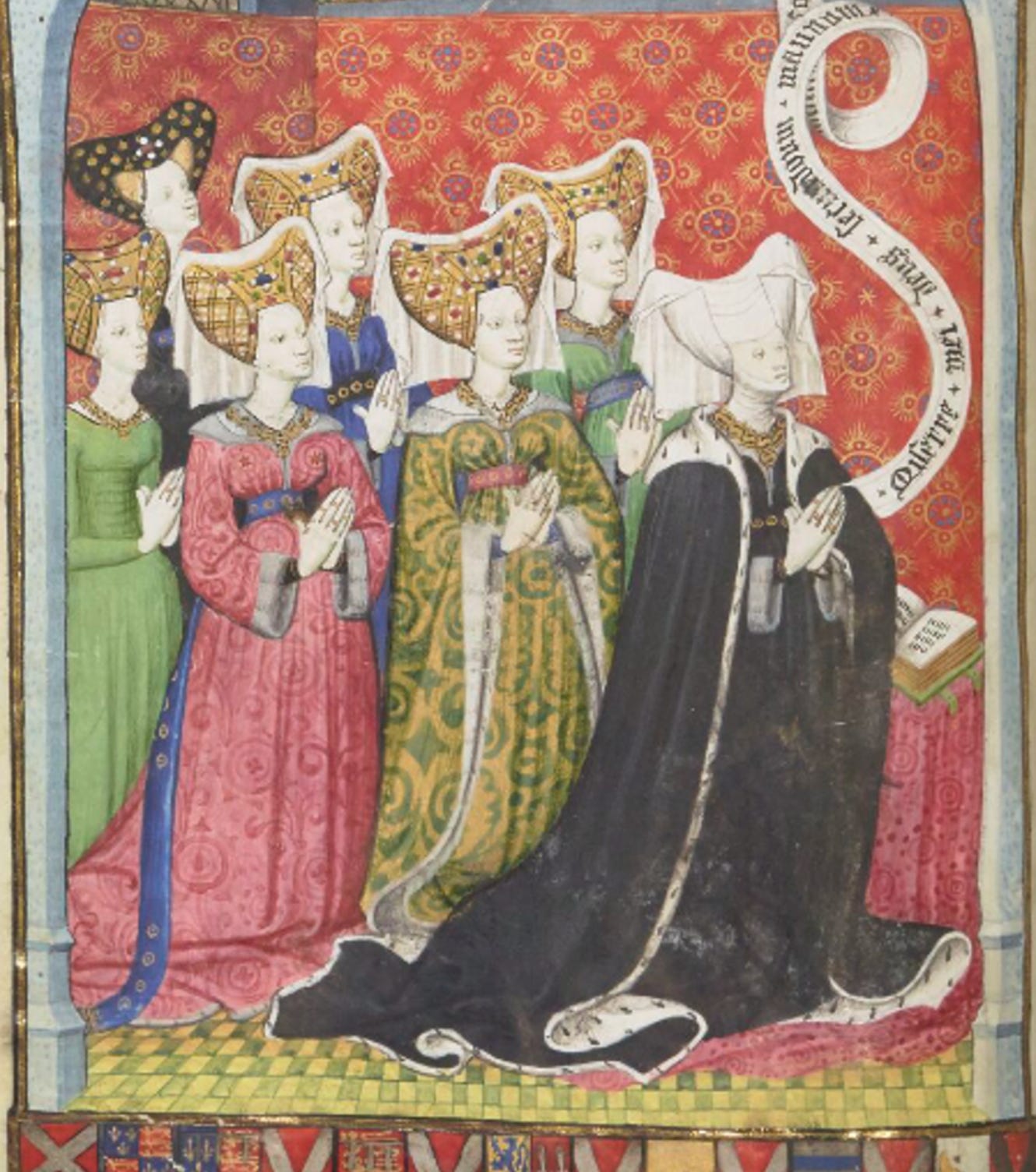
This was also the case when women chose whether or not to use cosmetics or to do their hair in a certain way, with each choice being both a personal one and being part of the broader social and cultural context in which these women lived. Just like today, women in the Middle Ages could use fashion and personal adornment to present a carefully curated version of themselves to the outside world if they so wished.
This same mindset also extended to women’s pastimes and recreations in the medieval period. While much of the feasting, dancing, storytelling, and sporting that women participated in was rooted in fun and entertainment, it was also often part of a highly-visible display of manicured actions and reactions, especially for women who found themselves in high-stakes arenas like the royal court.
One medieval manuscript that shows a wide range of pastimes and options for entertainment survives today in the Bodleian Library, Oxford, as MS Bodl. 264. It’s from this manuscript that many of the images in today’s lecture will come, and the manuscript is entirely digitized, so you can view all of its illustrations through this week’s supplemental reading link.
While the literary contents of the manuscript are mostly a retelling of the legends of Alexander the Great and Marco Polo, its illuminations and marginal illustrations give us some really interesting insights into the recreational activities of people living during the time of its creation, from the mid-fourteenth to the early fifteenth centuries.
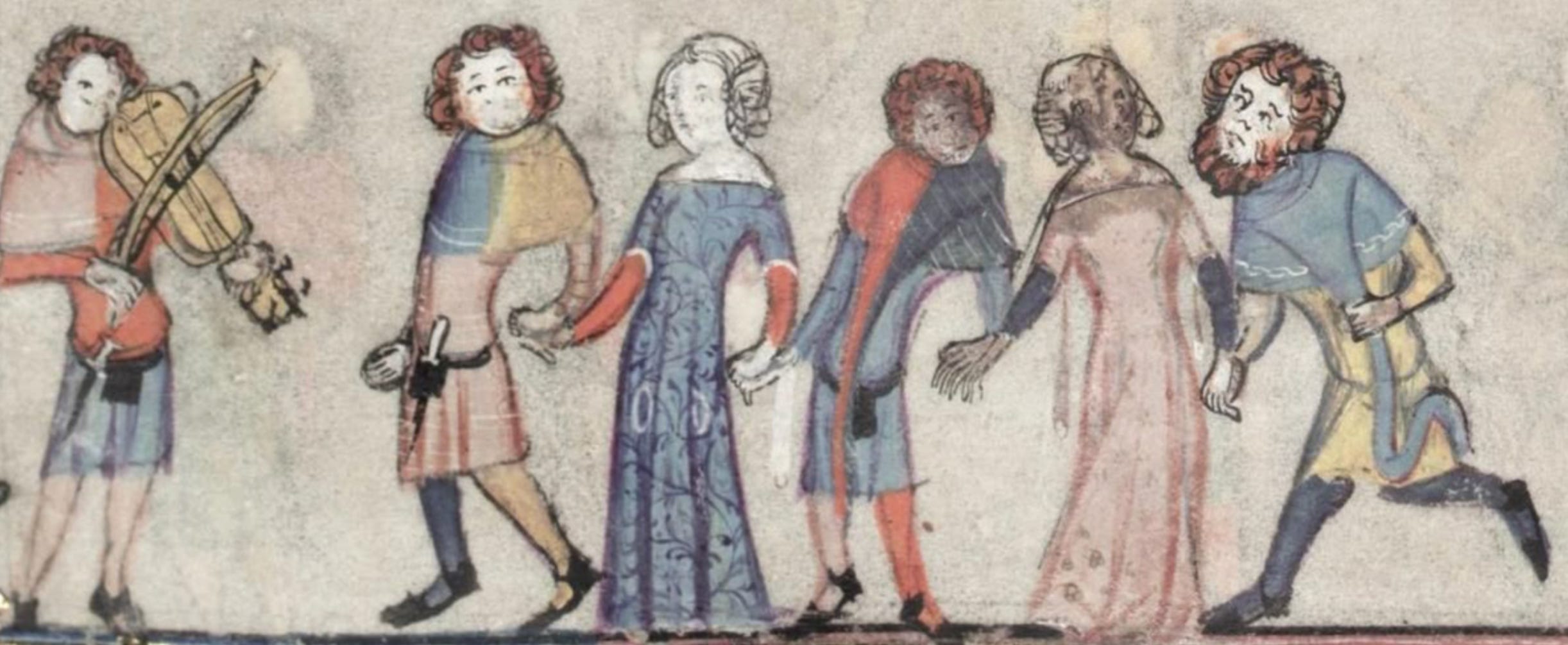
This particular manuscript was made to impress (which you can tell by the elaborate illustrations and gold leaf), and many of the images in its pages reflect the entertainments chosen by the upper classes. Scholars think the earlier part of the manuscript may have even belonged to Edward III or his queen, Philippa of Hainault, due to its contents and elaborate illustrations.
We also know that at a later date, this manuscript belonged to Richard Woodville, the father of Elizabeth Woodville, who likely received this sumptuous collection of texts as a New Year’s Day gift in 1466, the year after his daughter was crowned queen, as we will see. Perhaps more than most of their fellow noble families, the Woodvilles were well-aware of the importance of curating appearances, and even just possessing this manuscript would have conveyed a certain amount of social prestige and opulence for the owner.
Comments
Nothing yet. Say the first thing.
Sign in to join the conversation.