
This May, during an extended visit to London, Canary Wharf became our base. The wife’s cousin (our host) works there and had rented a place nearby. At London prices, naturally, they (she and my co-brother) were paying a bomb.
Canary Wharf, is a massive global business hub, made up of dozens of skyscrapers.
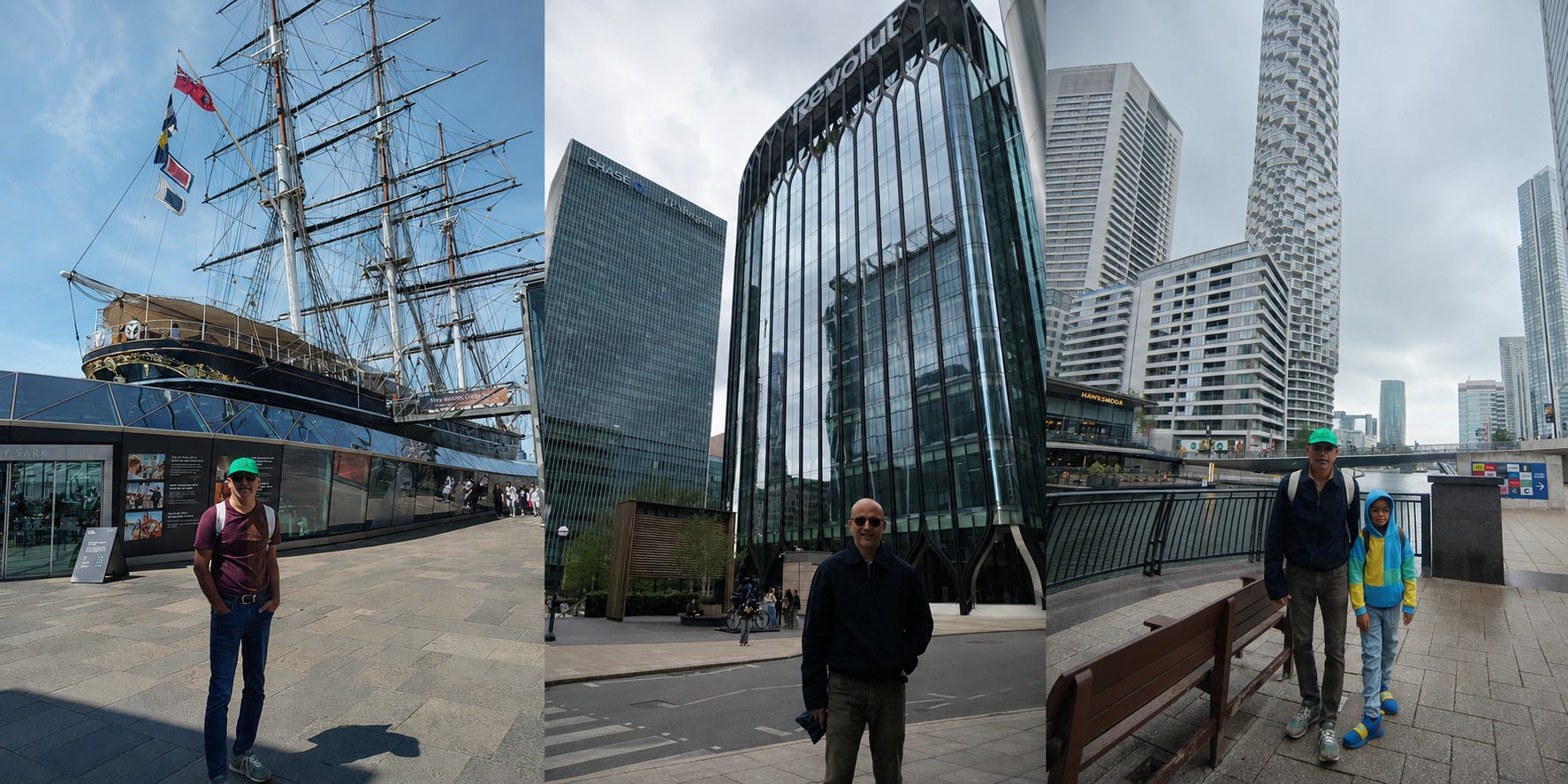
Given my love for history in general, and British Naval history in particular, I started making some mental notes, based on what I saw around. Finally, after few months, I am revisiting them to write this post.
Canary Wharf has the strange confidence of a place that looks inevitable after the fact. Glass towers. Trading floors. An underground station moving people through the district at speed. Stand there today and the old docks have to be searched for.
But then, for much of the twentieth century, ships came up the Thames and waited while cargo was unloaded piece by piece. The locks, warehouses, roads, labour arrangements and nearby neighbourhoods had grown around that wait. Delay helped determine the shape of the system around this place (it was knowns as The West India Docks).
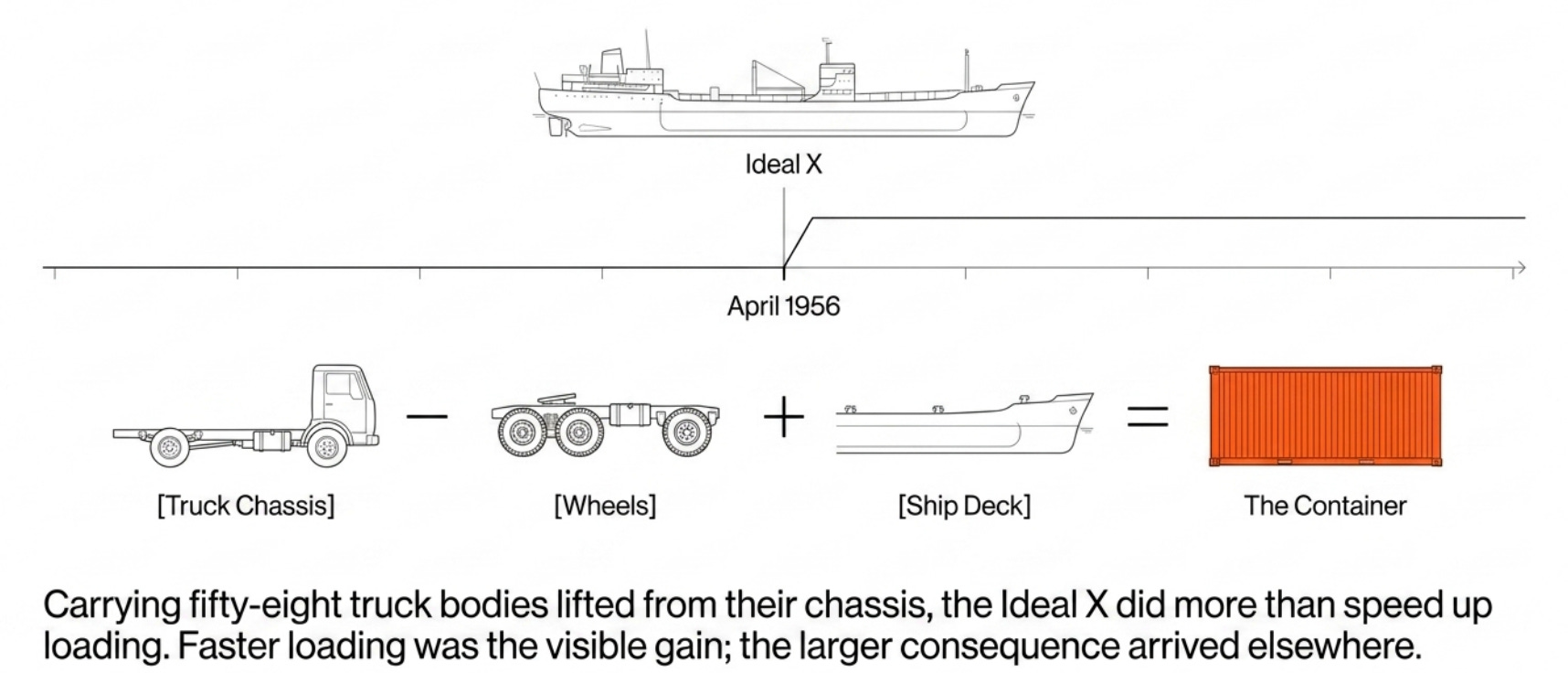
Then, in April 1956, a converted tanker called the Ideal X left Newark carrying fifty-eight truck bodies lifted from their chassis and fixed to its deck. Malcolm McLean’s container cut the time and labour needed to move cargo between road and sea. If you have not, please do read: The Box: How the Shipping Container Made the World Smaller and the World Economy Bigger by economist and historian Marc Levinson.
As, container ships grew bigger. They needed deep water, large cranes, wide quays and direct road and rail access. London’s older docks sat inside a city built for another method of moving goods. Working faster could not rescue them. Trade shifted downriver. The docks closed. Finance eventually occupied the space cargo left behind.
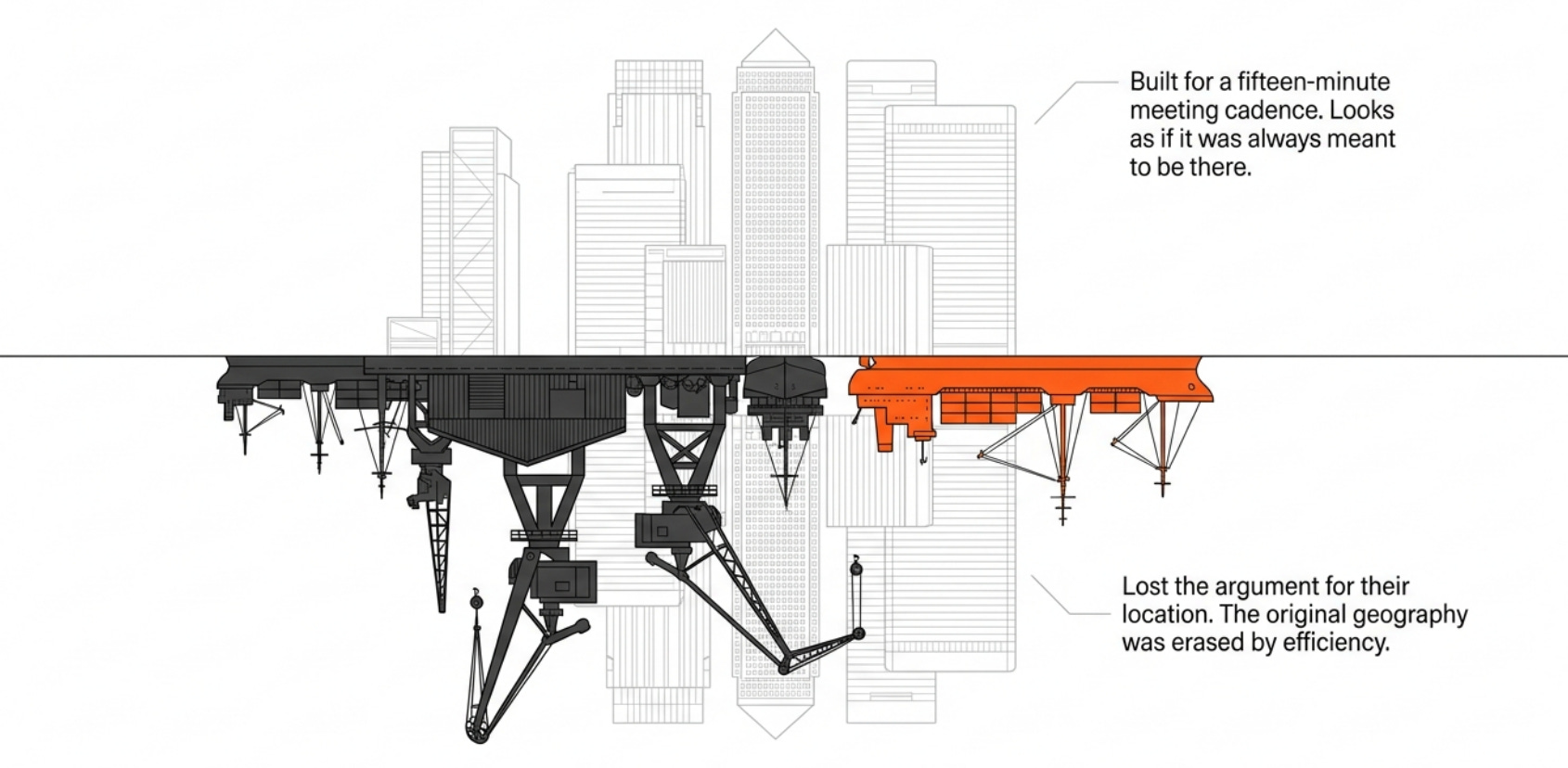
Canary Wharf makes something visible that is usually harder to see: an efficiency improvement can invalidate a place.
The time ships spent in port had looked like waste. Some of it was. But labour, housing, warehousing, credit, transport and local knowledge had formed around it. When the wait disappeared, these arrangements became wrongly located.
I had earlier called this The Third Order: a successful solution changes its environment until the consequences build their own machinery. Canary Wharf is that idea made physical.
Quick commerce is the container story running in the opposite direction.
Containerisation pushed inventory away from households and shops towards ports, large warehouses and long supply chains. Quick commerce pulls a thin layer back, into dark stores behind residential blocks and inside busy Indian pin codes.
In Some Failures Are a Beginning, I wrote about companies misreading where control settles after a technological transition. Quick commerce asks the same question of retail. The valuable location is now also a small warehouse close enough to make a ten-minute promise believable.
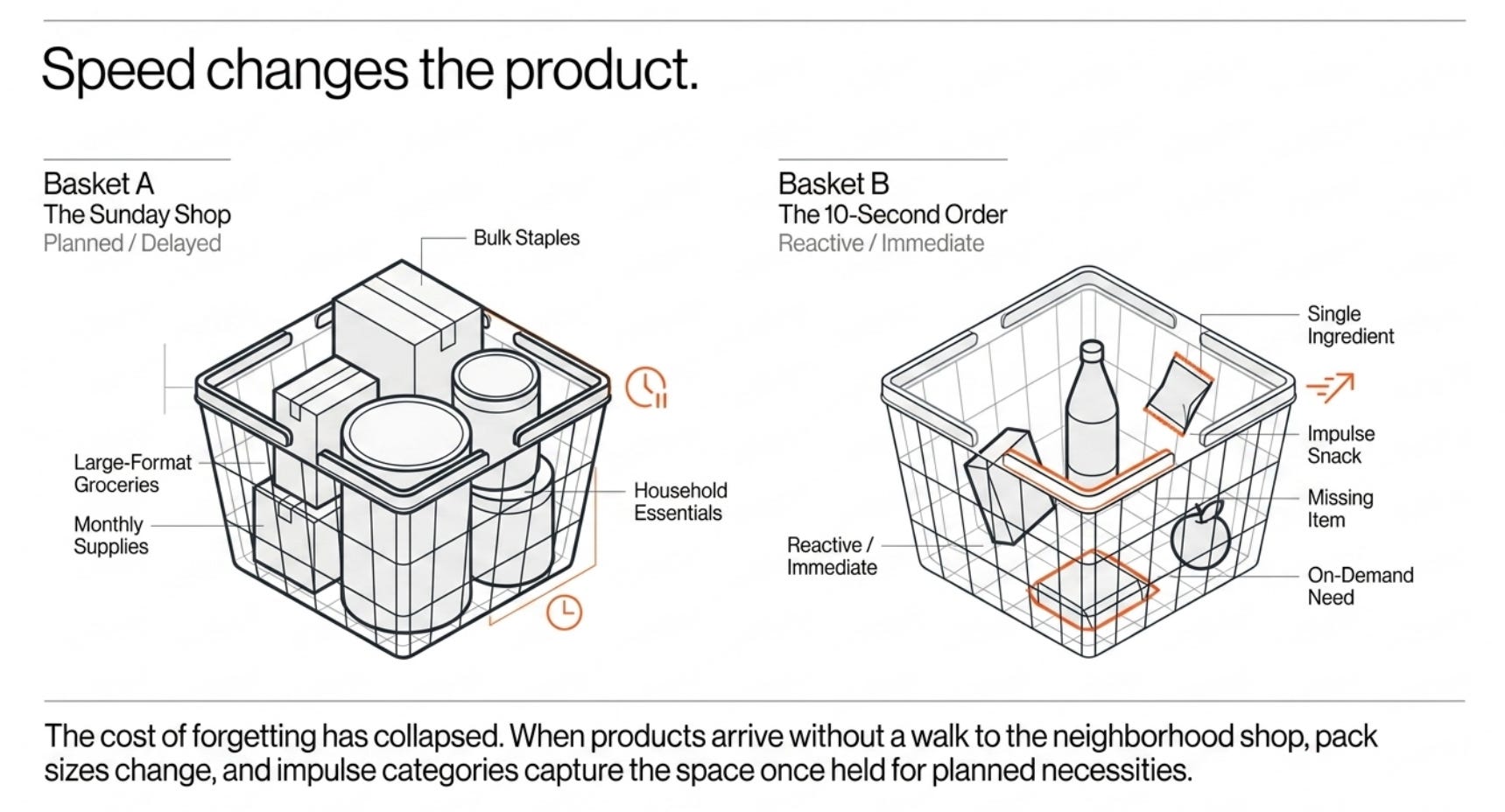
That changes more than delivery time.
A basket assembled in ten seconds is different from one planned on Sunday. Personally, I have always enjoyed those longer grocery trips, whether to BigBasket, DMart or elsewhere. During our London visit, I somehow ended up at the Asda Isle of Dogs Superstore three times.
Back home in India, however, the routine has changed.
Keeping groceries in the house once required a rough forecast. What might run out? Who might visit? What had to be bought before the next trip? Quick commerce now absorbs part of that uncertainty. We never decided to stop planning. Planning simply became less necessary. A missing ingredient no longer changes dinner because the cost of forgetting has fallen.
This is what speed often does. It removes an inconvenience first. Then it weakens the habit that had formed around that inconvenience.
The habit may have been obsolete and deserved to die. Or it may have carried a useful capacity. I still do not know which is true of grocery planning. Quick commerce made the routine optional before we had decided whether the routine was valuable. And, I believe in the advantage of Routines, read more on that thought.
Now, let me jump from London and groceries to the Operator Mode.
Currently, data and automation has shorten the distance between a signal, a decision and an action. Much of the old delay deserves to go. Nobody should wait because documents are moving between desks or because the same check is being repeated by three teams.
But a pause can also contain a second look.
Two signals may disagree. The instruction may have been followed correctly while the situation around it was missed. When a system recommends, someone still has time to notice. When it can decide and act, that interval closes.
The usual response is another rule, approval or control. Yet we are building these systems precisely to remove approvals and waiting. The inefficiency and the protection can occupy the same few seconds.
This is where the price of speed becomes difficult to see. We measure the seconds removed. We rarely know how to measure the judgment that once occupied them.
The systems we build may leave no such ruin. The dashboard will show the promised gain. Missing judgment may first appear as a handful of exceptions, each too small to challenge the efficiency story.
The hard question is what will have to go wrong before we discover what the waiting had been keeping alive.
No posts
Comments
Nothing yet. Say the first thing.
Sign in to join the conversation.