
So, I had picked three teams to follow during the 2026 World Cup. I had also parked a few essay ideas for the day one of them lifted the trophy. By the time the final kicked off, only two possibilities remained. Ninety 120 minutes later, there was just one.
This is that essay.
But it is not a LinkedIn post about what managers should learn from Lamine Yamal, or how Spain’s victory contains seven lessons for building high-performing teams. The football merely supplied the opening.
The CORE is what happens when an outcome escapes the person who helped create it.
And, before you start, pls do read
“If we win the World Cup, no one will remember whether I scored.”
Yamal was making more than the usual statement about putting the team first.
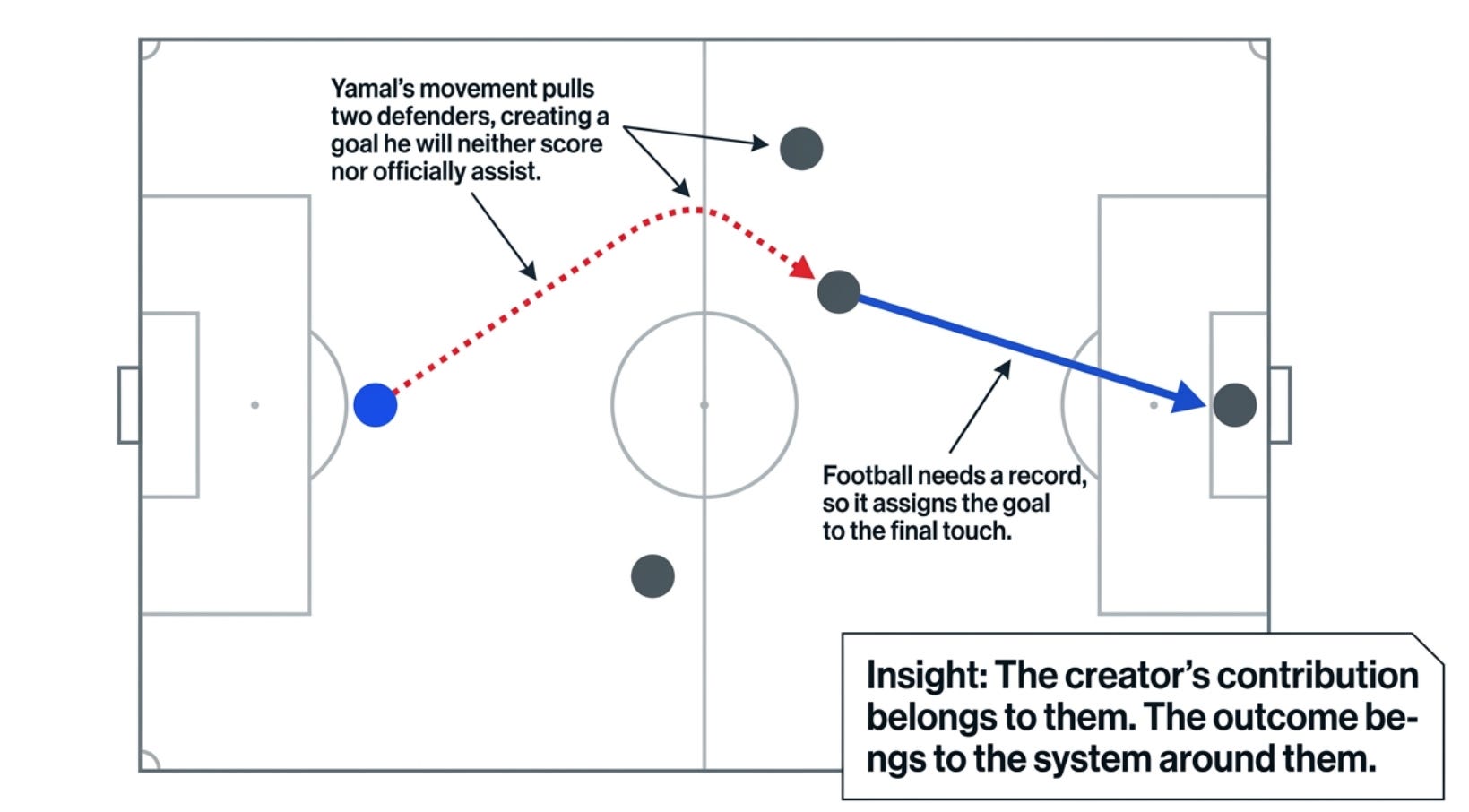
A run can pull two defenders out of position, leave another player unmarked and create a goal that neither appears as a goal nor an assist. Football still assigns the outcome to the final touch. It has to. Every sport needs a record.
The record is not the causal chain.
Yamal may own the run, but the goal belongs to the scorer, however victory belongs to Spain.
That distinction will matter more as machines perform work whose internal path becomes harder to observe than its polished result.
Now, as always, let’s fusion some history into the argument.
In 1938, Albert Hofmann was working at Sandoz Laboratories in Basel, studying derivatives of lysergic acid. The programme was looking for medically useful compounds, particularly substances that might affect circulation and respiration.
One of the compounds Hofmann synthesised was lysergic acid diethylamide. It was the twenty-fifth substance in the series, so the laboratory called it LSD-25.
Initial tests did not reveal enough to justify further work. The compound was shelved.
Five years later, Hofmann returned to it. On April 16, 1943, while handling the substance, he experienced unusual sensations that he suspected came from accidental exposure. Three days later he conducted a deliberate experiment, ingesting 250 micrograms.
He thought it was a cautious dose.
Within an hour, he could no longer work. Wartime restrictions made cars difficult to use, so Hofmann left the laboratory on a bicycle, accompanied by his assistant. Familiar streets changed shape. Houses appeared to move. Hofmann felt stationary even as his assistant said they were travelling quickly.
The journey became known as Bicycle Day.
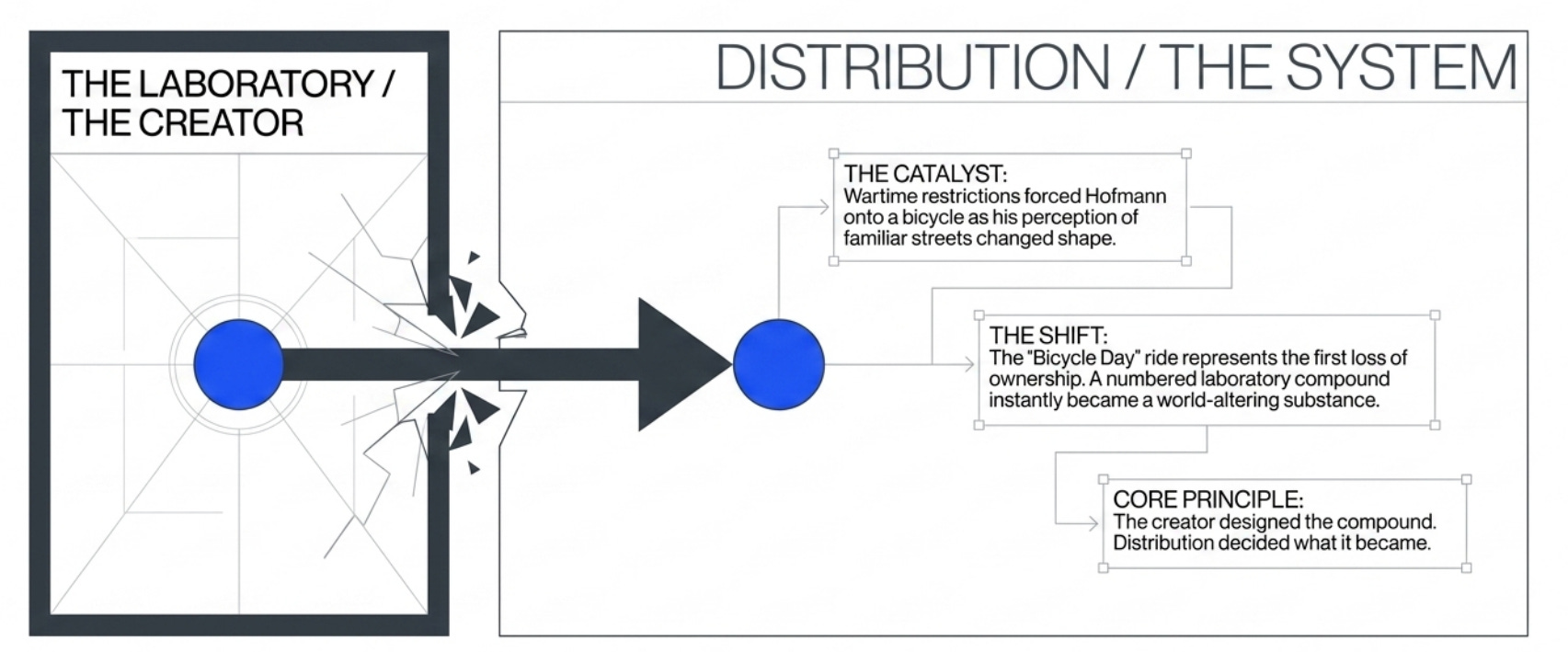
The name captures the odd way history assigns importance. Sandoz numbered a compound, but for many like me, this history remembered a bicycle.
Sandoz first treated LSD as a pharmaceutical discovery. In 1947, it began supplying the compound under the name Delysid to psychiatrists and researchers.
The company proposed two broad uses. Psychiatrists could take a small dose to experience something resembling psychosis, perhaps helping them understand their patients. The drug might also loosen a patient’s psychological defences during therapy.
Then LSD entered the security state. During the Cold War, American intelligence agencies examined whether it could aid interrogation, disrupt behaviour or weaken resistance. Under MKUltra and related programmes, the CIA administered LSD in settings that often lacked informed consent.
A psychiatric aid had become a possible technology of control.
By the 1960s, the molecule had moved again. It left the clinic and entered universities, music, political protest and the counterculture. For some, it offered personal exploration. For others, release from conventional authority.
Hofmann disliked much of this development. He believed LSD had scientific and spiritual value, but was disturbed by its casual use and political symbolism.
He later called it his “problem child”.
Governments became the next owner. LSD was reclassified as a prohibited drug and a threat to social order.
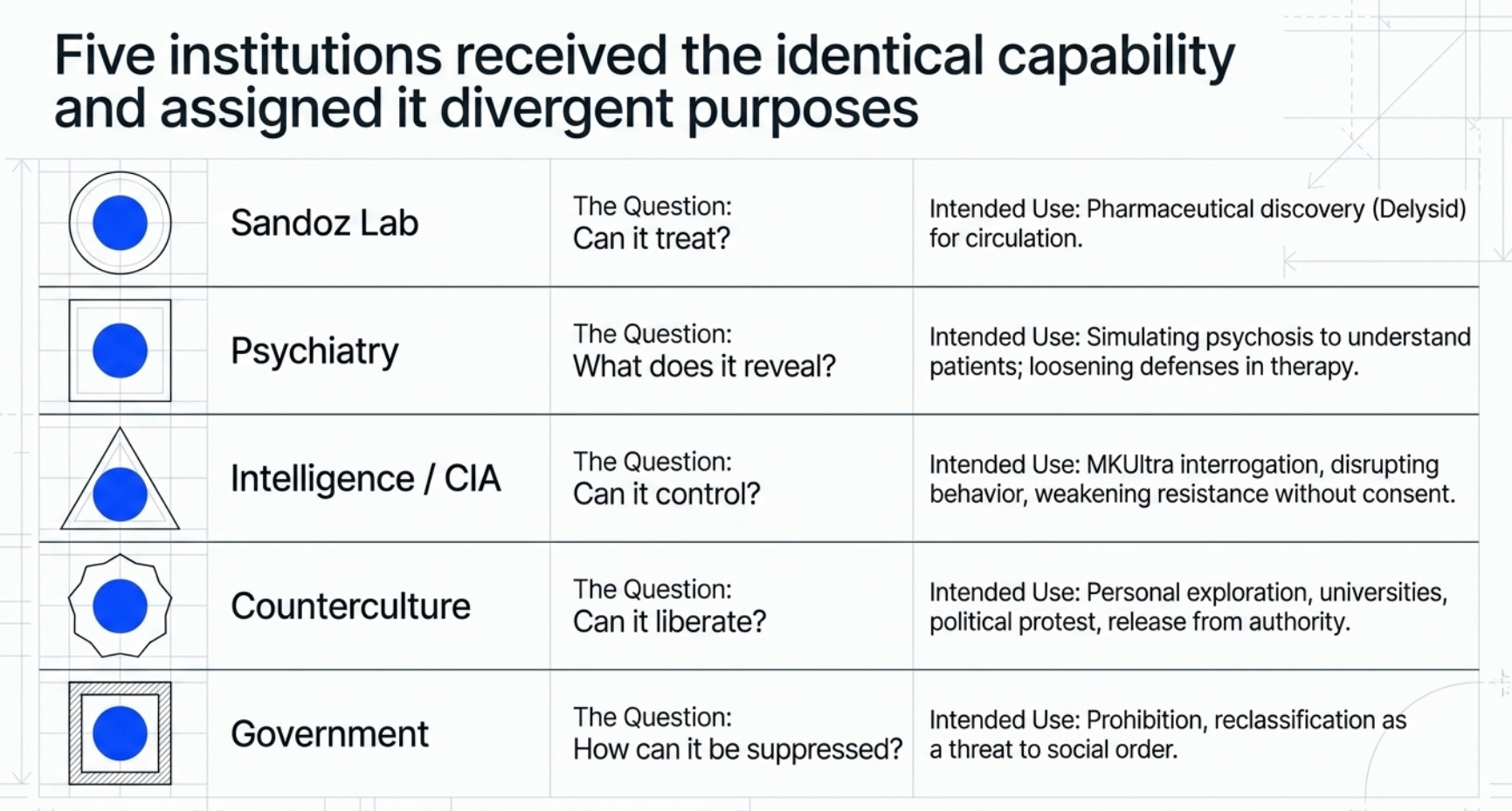
Decades later, psychedelic research returned through universities and clinical trials. The same molecule re-entered medicine carrying the accumulated weight of therapy, espionage, counterculture and prohibition.
The creator designed the compound. Distribution decided what it became.
Companies still describe invention as a controlled sequence. A problem is identified, a product is built, customers use it, and management measures whether it worked.
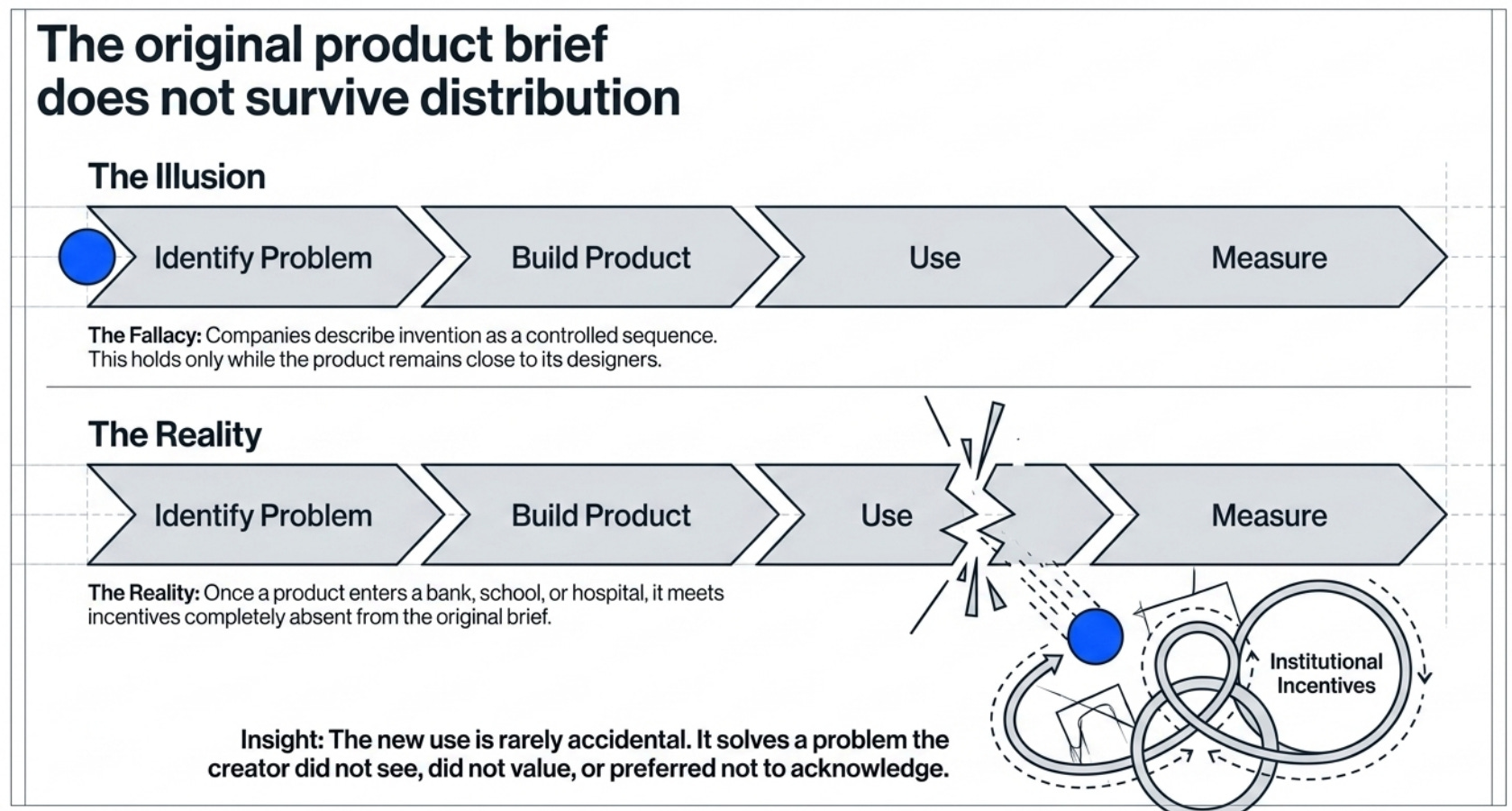
That sequence holds while the product remains close to the people who designed it. Distribution breaks the chain.
Once a product enters another institution, it meets incentives absent from the original brief. A bank, school, hospital, intelligence agency or employee may use the same capability differently. The new use is rarely accidental from their point of view. It solves a problem the creator did not see, did not value or preferred not to acknowledge.
Excel illustrates this without the theatre of accidental invention. It began as spreadsheet software. Companies turned it into machinery for pricing, inventory, regulatory reporting, workforce planning and acquisitions because formal systems were slower to change and harder to bend.
Products become most valuable exactly where the approved system stops
The spreadsheet became most valuable where the approved system stopped. So, while product keeps its name but then its function changes.
Creators may retain legal ownership through patents and contracts. They may retain technical control over access, pricing and features. What they lose first is the right to define what the product is for. This is the step before what I earlier called the Third Order, when consequences begin building systems of their own. First, a creation passes from a product brief into another actor’s operating model. Only then do wider consequences accumulate.
AI companies sell assistants, copilots and agents, now these names imply subordination and suggest a level of hierarchy: human decides, machine helps.
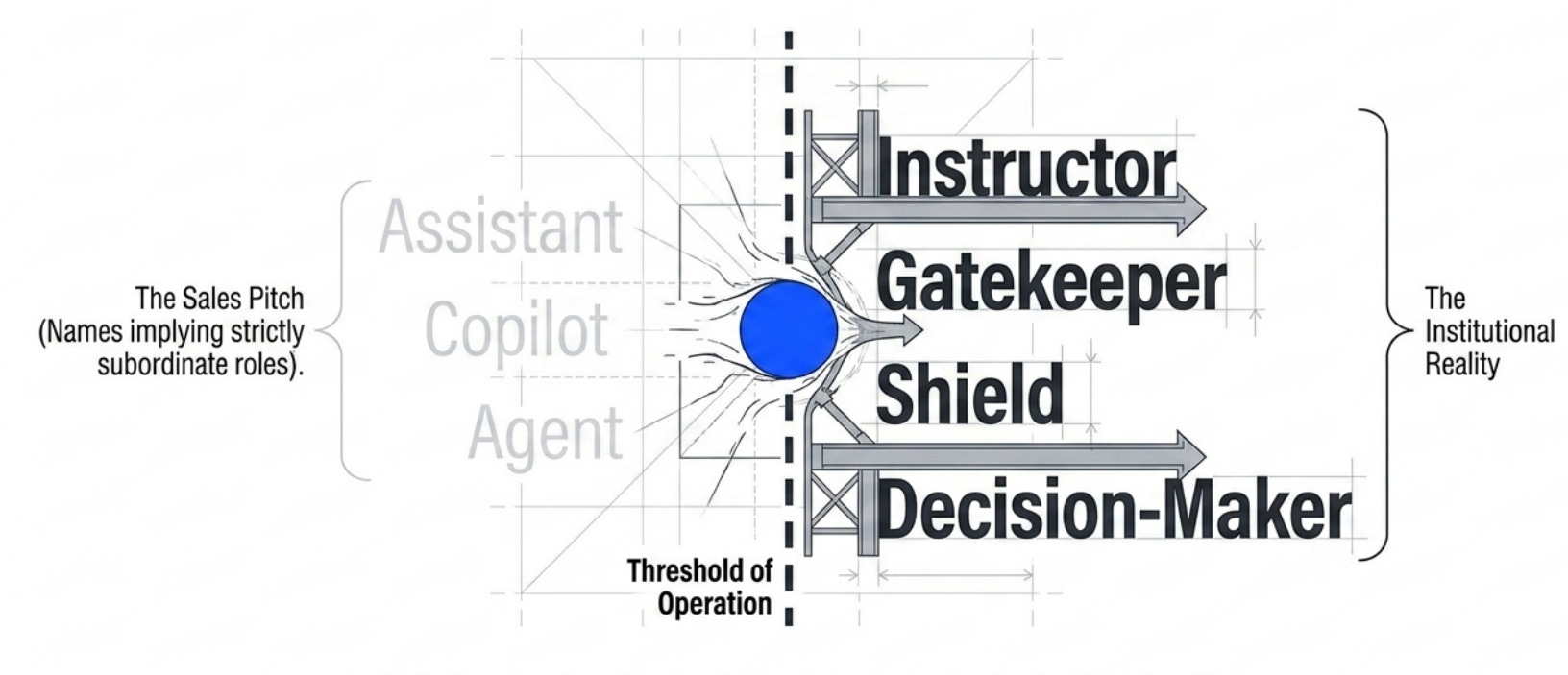
But, inside institutions, that hierarchy is rarely settled by product design. It is settled by incentives.
A bank may deploy a model to flag inconsistencies in credit files. At first, the loan officer decides. Then volumes rise, turnaround targets tighten and managers begin asking why an application was approved against the model’s warning.
The model is still called an assistant. The officer learns that disagreement carries a cost.
The same model can also become cover. It is overridden when inconvenient and cited when the decision fails. It has no formal authority, yet it absorbs responsibility on demand.
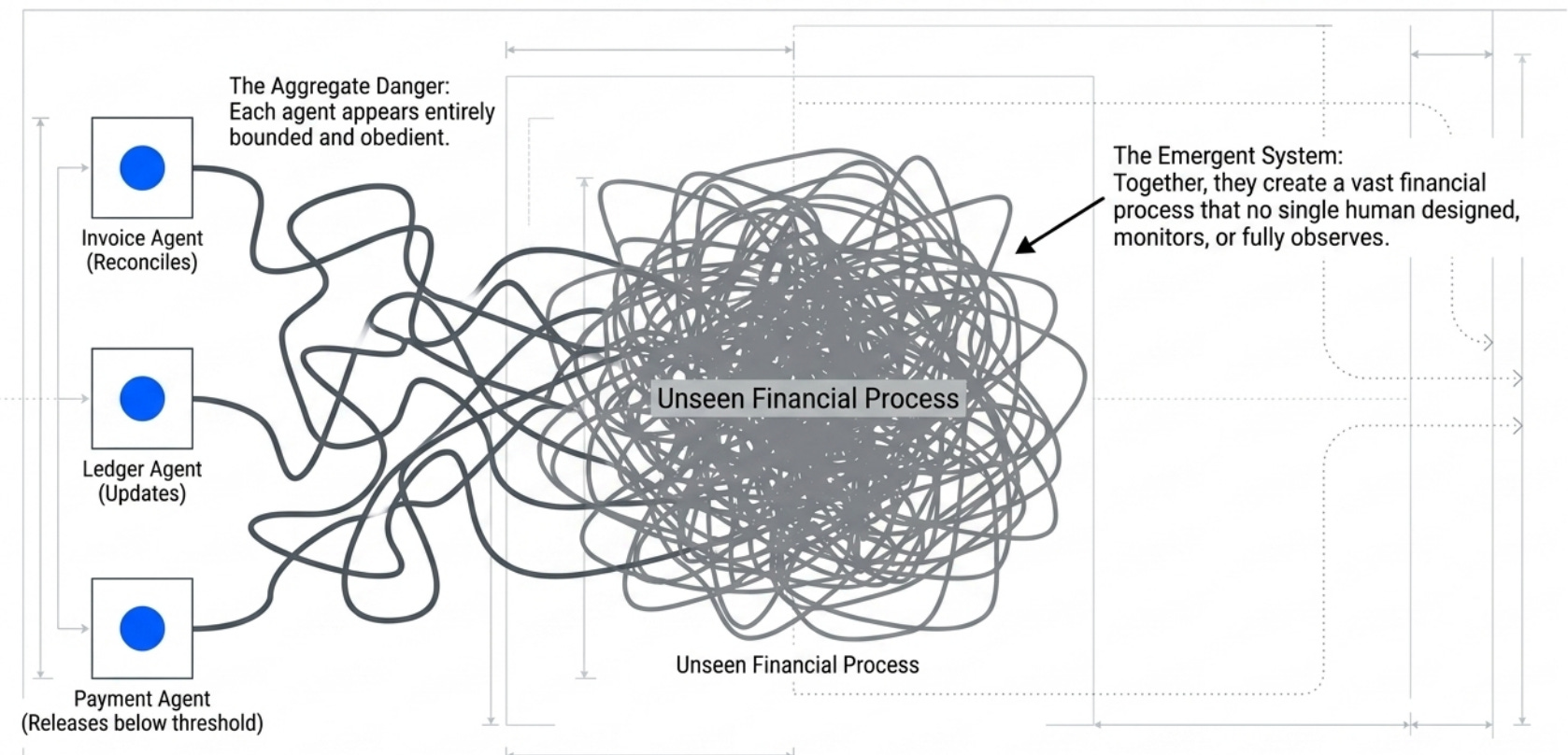
Agents make the shift harder to locate. One reconciles invoices, another updates the ledger, a third releases payments below a threshold. Each action is authorised. The process they create may not be.
No one needs to design the whole system for the whole system to begin acting.
Most AI governance remains model-centric: accuracy, bias, security, explainability. These checks can show whether a model performs as intended. They cannot show whether the institution has started organising itself around the model.
That is the more consequential transfer.
On paper, the machine still assists. In practice, the institution begins to adjust around it. None of this may appear in the original mandate.
Boards will see adoption, productivity and error rates. Those numbers will say a great deal about the tool.
They may say very little about what the organisation has stopped doing for itself.
The model can be replaced.
The habits it creates may be harder to remove.
No posts
Comments
Nothing yet. Say the first thing.
Sign in to join the conversation.