
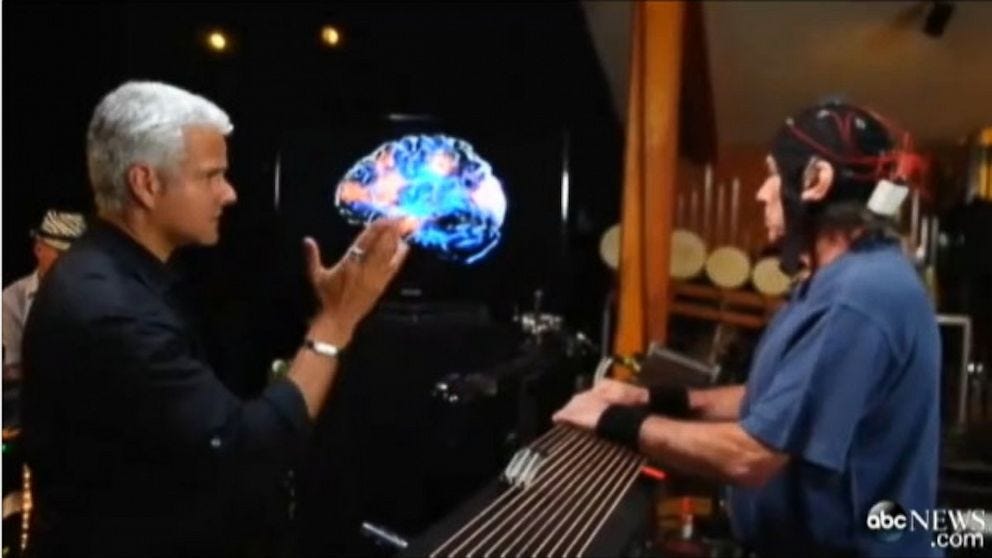
Music is medicine. Not metaphorically. Not as a feel-good way of saying that your favorite album lifts your mood on a rough Tuesday. Literally, clinically, neurologically medicine, and the research now exists to prove it. Mickey Hart has spent decades saying exactly this, and the scientific community has spent decades slowly, reluctantly catching up. As of July 1, 2026, the catching up has taken a significant institutional leap forward.
That’s the day the Foundation for the National Institutes of Health launched the Music as Medicine Neuroscience Research Initiative, and Hart’s name is right there in the founding partnership alongside soprano and arts advocate Renée Fleming and Real Chemistry founder Jim Weiss. The NIH doesn’t do things casually. When the Foundation for the National Institutes of Health puts its name on something and writes grant checks, the science is real.
Here’s what the initiative actually does.
The program funds individual research grants of one hundred thousand dollars each, directed toward scientists with innovative proposals in three distinct areas. Basic research into the underlying biological and neurological mechanisms through which music influences health. Clinical research developing, testing, and personalizing music-based interventions for cognitive function, mental health, and quality of life. And research into how to actually integrate these therapies into healthcare settings and communities at scale.
That last category matters enormously. Promising medical research dies in the gap between the lab and the patient all the time. The fact that Music as Medicine is explicitly funding work on scaling and accessibility tells you this initiative is not interested in publishing papers that get cited twelve times and go nowhere. It wants music-based therapy inside hospitals, inside care facilities, inside the communities where people with Alzheimer’s and Parkinson’s and depression actually live.
Nominations were open through July 31, 2026. The scientific selection committee, chaired by Dr. Assal Habibi, Associate Professor of Psychology at the University of Southern California, will review applications and select grant recipients in the fall.
Dr. Habibi put it plainly: emerging research keeps demonstrating that music can meaningfully improve the lives of people with Parkinson’s, Alzheimer’s, and other conditions affecting memory, movement, and emotional well-being. This initiative is the next generation of that work, bringing together interdisciplinary researchers who are serious about finding out exactly how and why.
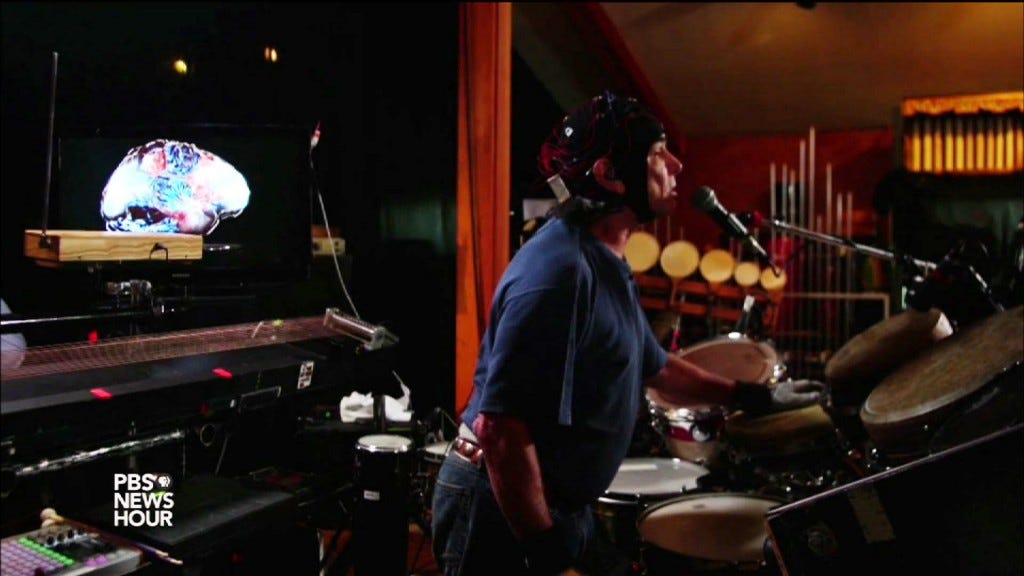
This isn’t a celebrity endorsement situation. Hart didn’t write a check and put his name on a press release. The man has been doing this work for years, in ways the music press mostly ignored because it didn’t fit neatly into the rock biography frame they preferred.
His collaboration with neurologists at the University of California San Francisco to track his own brain waves using EEG equipment during drumming. His research into rhythmic entrainment, the process by which the brain’s neural oscillations synchronize with external acoustic stimuli, and the clinical implications of that synchronization for patients with damaged neural pathways. His work with astrophysicists to translate cosmic radiation data into audible musical patterns, a project rooted in the same conviction that rhythm operates at every scale from the subatomic to the galactic.
Hart has been arguing since at least the 1990s that the difference between “music feels healing” and “music is a clinical intervention” is a research problem, not a philosophical one. The Foundation for the National Institutes of Health agreeing with him enough to build a formal grant program around the question is a significant validation of everything he has spent decades pointing toward.
The partnership with Renée Fleming adds another dimension that is worth understanding correctly. Fleming isn’t simply lending star power to a science project. She has been one of the most serious and persistent advocates for the intersection of music and medicine in the performing arts world, working on the former Sound Health partnership that preceded this initiative. Sound Health connected the National Institutes of Health with the National Endowment for the Arts, the Kennedy Center, the Fleming Foundation, and FNIH in an earlier phase of exactly this research agenda. Music as Medicine is the next chapter of that work, not a separate project.
The community that formed around the Grateful Dead has always understood rhythm as something more than entertainment. Not everyone articulates it in neurological terms. But the experience of standing inside a drum circle, or of feeling a 25-minute Dark Star do something to your nervous system that no amount of descriptive language quite captures, has always carried an implicit argument that the music is doing something real to the body and brain.
Hart spent thirty years in the Grateful Dead’s Drums section making exactly that argument through practice, every night, in arenas and theaters and outdoor amphitheaters across the country. The specific quality of attention that a Mickey Hart and Bill Kreutzmann percussion conversation required from an audience was not passive listening. It was participation, even for people sitting still. The entrainment Hart has been studying in clinical settings is the same phenomenon that made the Drums section feel the way it did at 11:30 PM on a Saturday night at Nassau Coliseum.
Now he’s funding the science that explains it.
Tomorrow night, Don’s Pick brings its Saturday selection to The Grateful Dead Live, and the timing of the Music as Medicine announcement makes this particular week in the broadcast calendar carry a specific kind of weight. Hart’s work as a researcher and advocate for music’s therapeutic potential is inseparable from the deeper question that the Planet Drum Circle radio program asks every Sunday: what does rhythm actually do to a human being, and why does the answer matter for how we live?
Don’s Pick operates on the same fundamental principle as the Music as Medicine initiative, which is that serious, careful, intentional attention to this music reveals something real rather than simply something enjoyable. Don selects each Saturday night’s recording with the understanding that the right performance, heard at the right moment, by a listener who is genuinely paying attention, does something that cannot be replicated by casual listening. That is not mysticism. That is, increasingly, neurologically supported fact.
The Dead’s catalog has always been the argument. The research is now the evidence.
The Music as Medicine launch is not the only significant development in Mickey Hart’s extended world this summer. The Planet Drum percussion pop-ups and sonic bath experiences he is developing as accompaniments to his gallery tours represent the same conviction in a different format: that music delivered with intention, in environments designed around the listening experience rather than around spectacle, produces measurable effects on the people inside them.
The Forever Grateful exhibition at the Haight Street Art Center in San Francisco, where a functional scaled Wall of Sound broadcasts vault recordings to gallery visitors, is a physical installation built around exactly the same principle. You are not standing in that room looking at objects. The sound is doing something to you. Hart has spent fifty years trying to articulate the mechanism. The Foundation for the National Institutes of Health just committed grant money to the scientists who are going to prove him right.
The Summer Magic 1985 twenty-CD box set, releasing September 18 through Dead.net, captures the band at a specific peak of their live practice. Hearing it now, with the Music as Medicine context in mind, you might listen to the rhythm section with different ears than you would have a year ago.
That’s what good science does. It changes what you hear when you listen.
Tune in tomorrow night. Don’s Pick is on the air, and the music is doing exactly what Mickey Hart always said it was doing.
Planet Drum Circle!
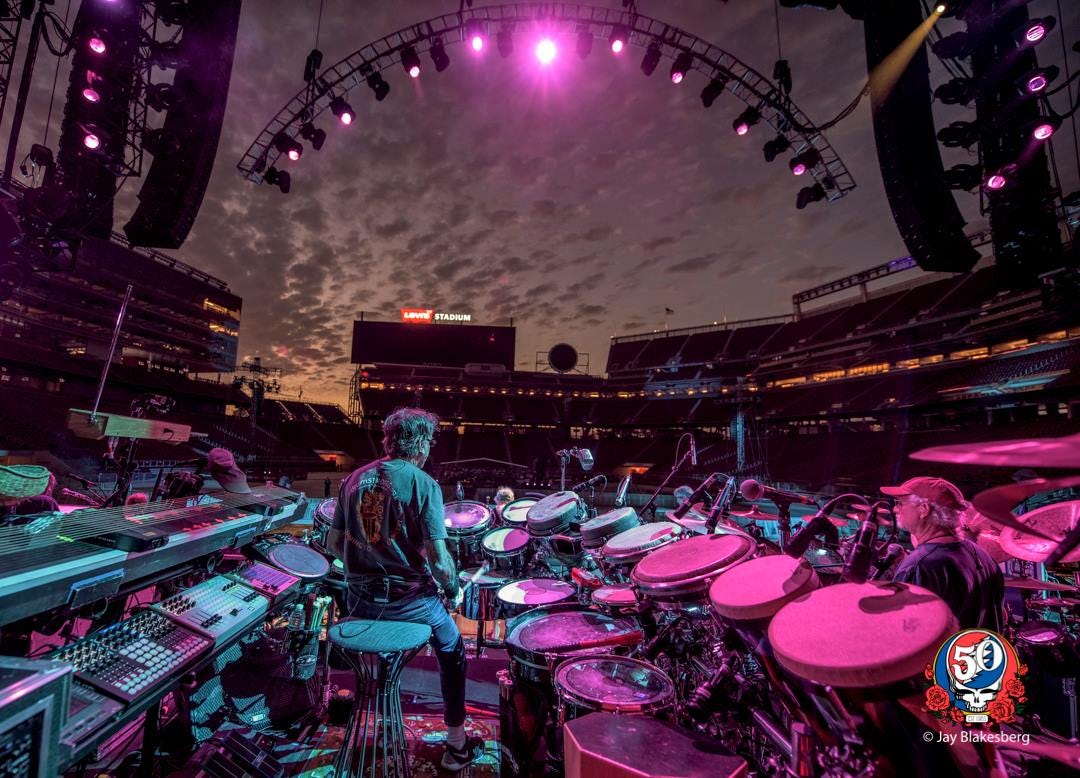
Planet Drum Circle is an invigorating radio show that takes listeners on a rhythmic journey through the vibrant world of percussion, led by none other than Mickey Hart and Bill Kreutzmann, two legendary drummers best known for their roles in the Grateful Dead. Broadcasting for an hour every Sunday, this show is a testament to the power of rhythm and the universal language of music.
An old fashioned Hour A Week Good Ole ‘Planet Drum Circle’ every Sunday Morning at 11AM EST!
Every Sunday Morning at 11AM EST
The JGB Radio Show!
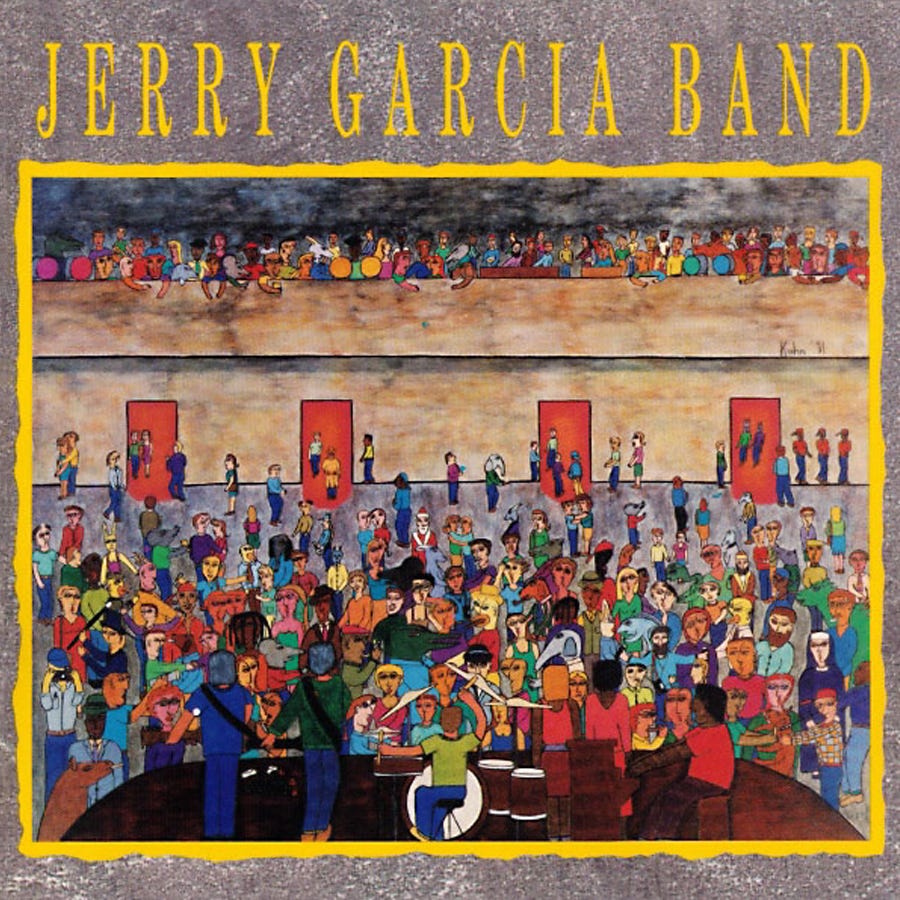
Celebrating Jerry Garcia’s Solo Projects with Live Music. When it comes to iconic figures in the world of music, Jerry Garcia is a name that stands out. Known primarily as the lead guitarist and vocalist of the Grateful Dead, Garcia’s influence on the music industry cannot be overstated. However, what many people may not be aware of is Garcia’s extensive solo career, which produced some incredible music that deserves recognition.
FIVE (5) Hours of Live Jerry Garcia Music from His Solo Projects Every Sunday Night!
Comments
Nothing yet. Say the first thing.
Sign in to join the conversation.