
In 1994, William Utermohlen—an American painter living in London—decides to visit a neurologist. He’s depressed and suffers from memory loss. One year and a series of tests later, the verdict hits hard: the 62-year-old has Alzheimer’s disease.
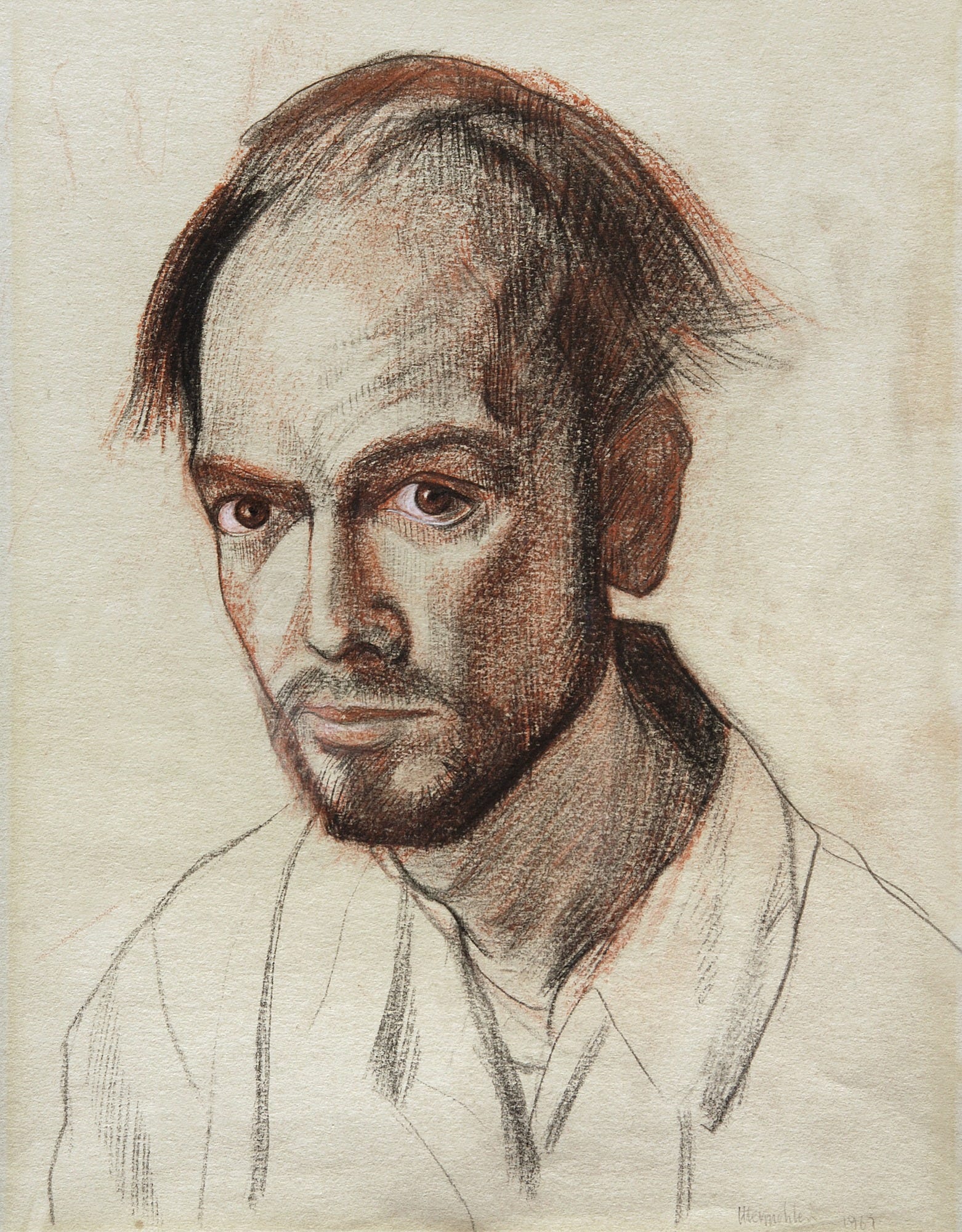
When he receives the bad news, Utermohlen has already been an artist for over 40 years. He is known, among other things, for his murals in Saint John’s Synagogue and the Royal Free Hospital in London, where he also lives.
The Alzheimer’s diagnosis is a signal for the painter to take action.
Utermohlen immediately starts an ambitious series of self-portraits. He wants to understand his disease by capturing himself on canvas.
For scientists, Utermohlen is an excellent test case to gain more insight into the disease. How does Alzheimer’s affect an artist’s style? How does his spatial awareness change? And is his talent also affected? A team of doctors follows Utermohlen for five years. The paintings he creates during that period provide answers to their questions.
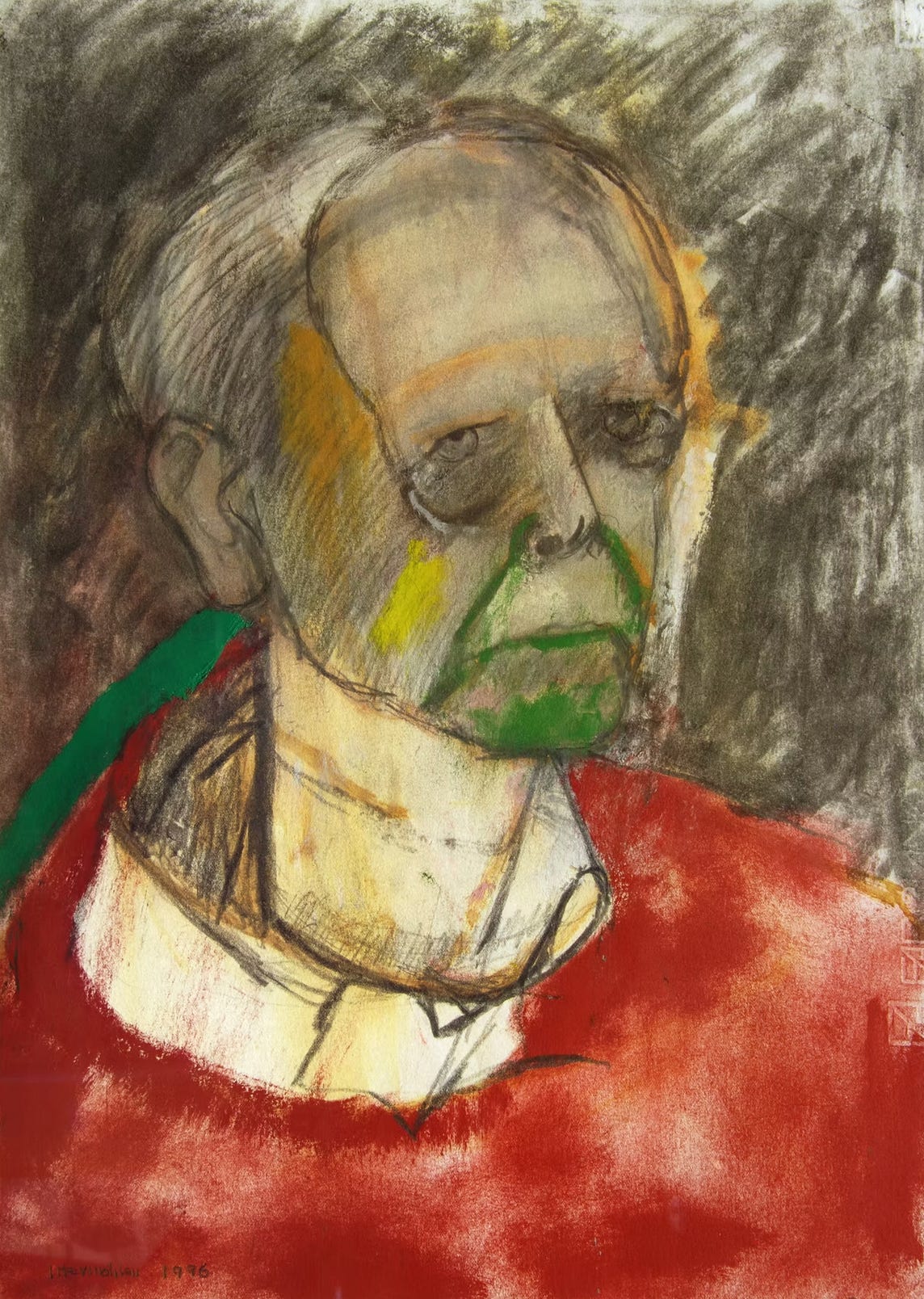
The deterioration quickly becomes apparent. In the first portraits, the different parts of his face are less defined and not precisely positioned. In the 1997 portrait shown below, Utermohlen includes a saw. He painted it shortly after giving doctors permission to examine his brain after his death.
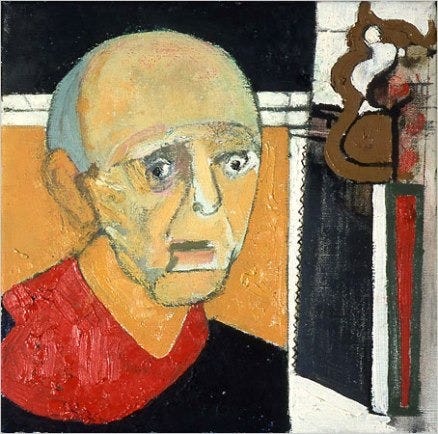
In the following years, the evolution continues. The images are rough and the background disappears: Utermohlen stands against a black void. The dark colors signal his somber mood.
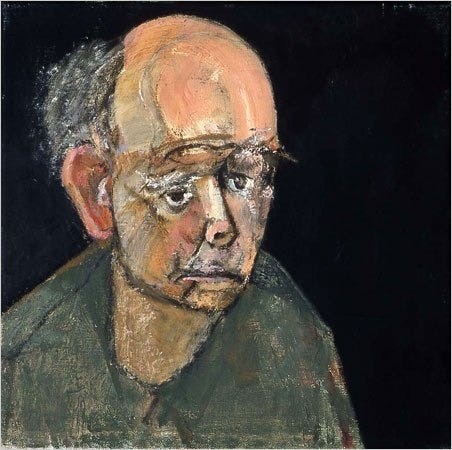
The effect of brain damage on spatial understanding and drawing skills is proven. In fact, patients with brain disorders such as Alzheimer’s are often given simple drawing tasks to see how advanced their disease is. Based on the type of drawing errors patients make, doctors can deduce which parts of the brain are damaged.
So, the drawing skills of Alzheimer’s patients deteriorate, regardless of any artistic talent they may have. But the paintings of William Utermohlen reveal something more.
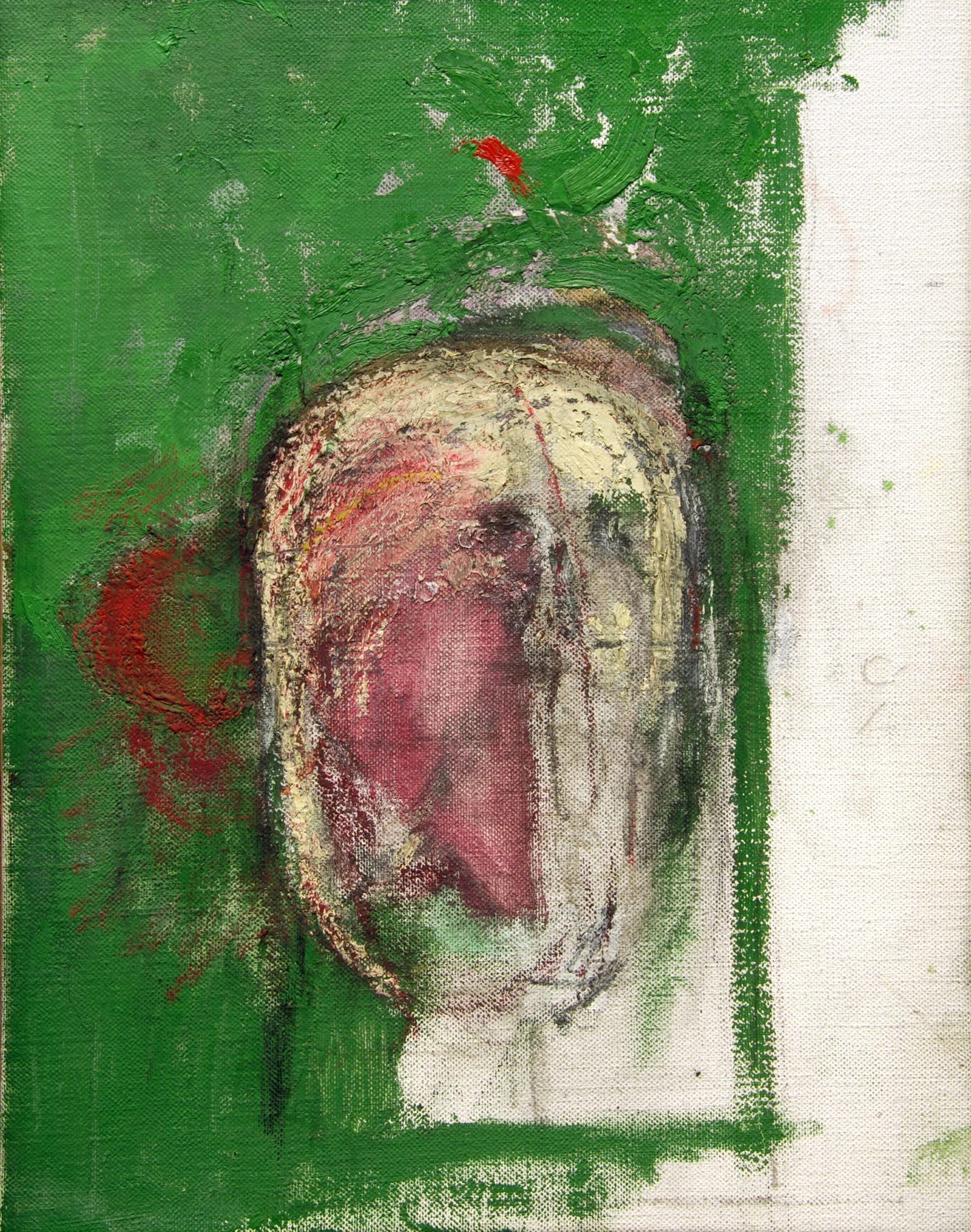
Because despite the formal simplification of the paintings, the artistic capacities of the painter remain largely intact. Utermohlen uses forms, compositional elements and colors creatively. He manages to capture his feelings on canvas. His work is consciously influenced by Francis Bacon, so he can still make deliberate artistic choices. Utermohlen remains a gifted artist, despite his condition.
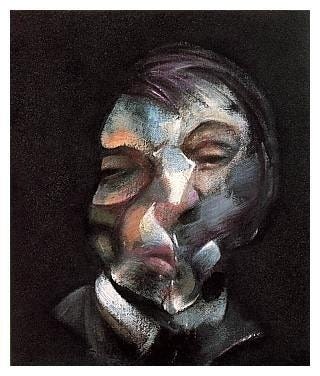
Utermohlen’s works show the deterioration in the mind of an Alzheimer’s patient, but they also provide insight into the creative resilience and artistic strength of the artist. Until, of course, the resilience breaks and the disease wins. In his final few drawings, the faces are muddy and blurred. Utermohlen can no longer paint a clear image. In just five years time, his style has completely changed.
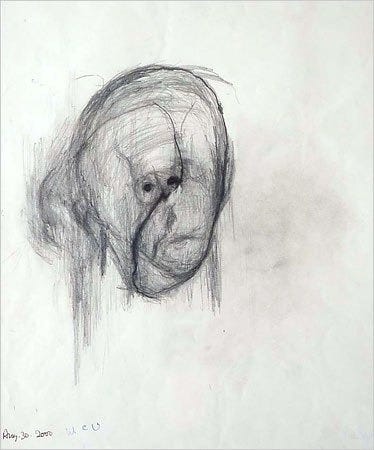
In 2002, Utermohlen creates his final work. According to his wife, Patricia Utermohlen, this is the moment when he truly dies, even though he lived for another five years.
On March 21, 2007, William Utermohlen passes away at age 73.
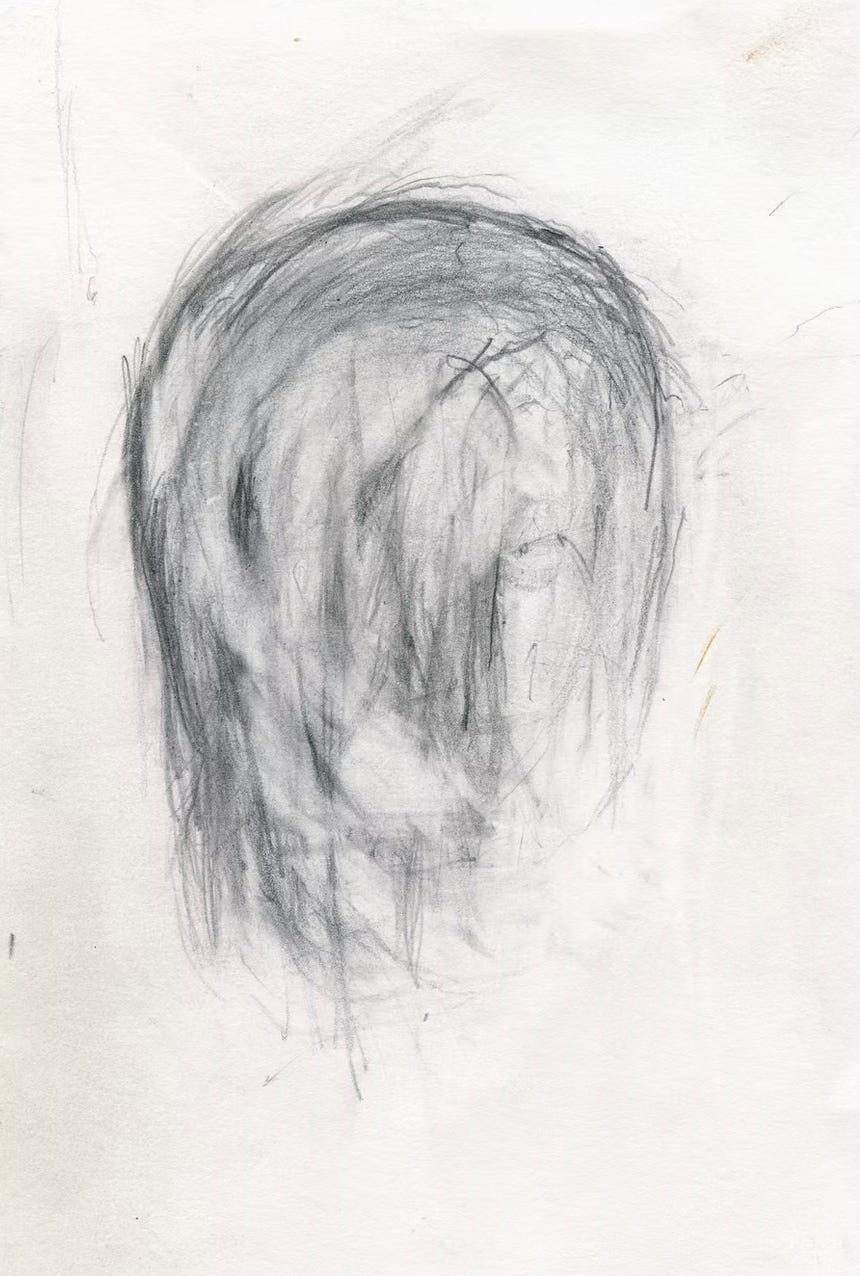
All images : © 2026 Estate of William Utermohlen
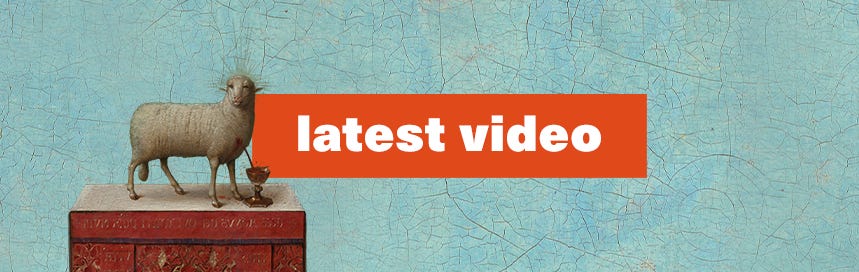
I haven’t uploaded any new shorts in the past few weeks, because I was editing a brand new YouTube film about Pieter Bruegel the Elder. Hope you like it!
👀 Get ready for some serious zooming.

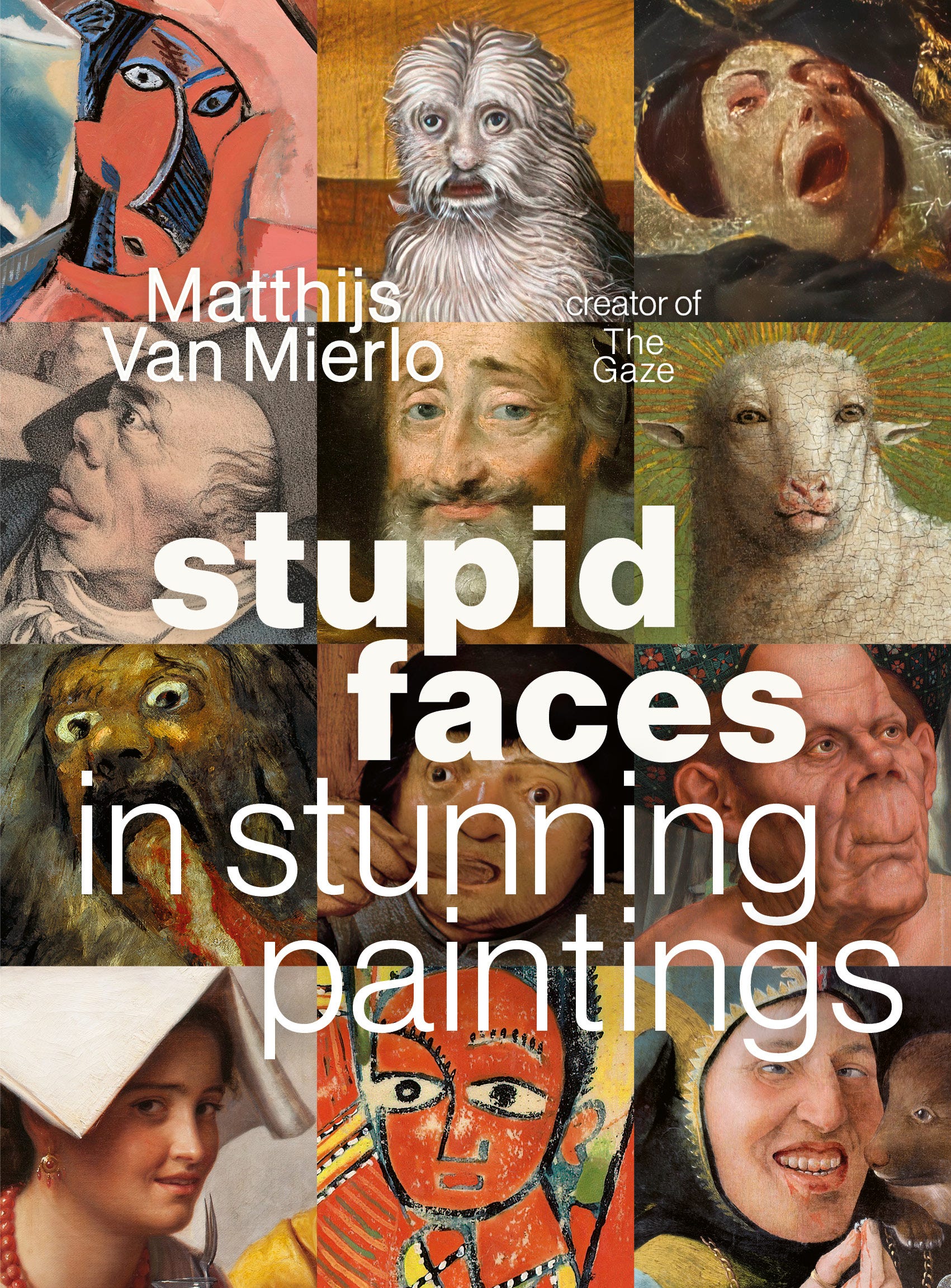
Wow, this newsletter might have been a bit too gloomy. Let’s end on a lighter note, because I have great news about my book Stupid Faces in Stunning Paintings. After the English and Dutch edition, it will soon also be available in Vietnamese, Russian, Chinese and Ukrainian. ❤️

Thank you for reading, see you next month!
No posts
Comments
Nothing yet. Say the first thing.
Sign in to join the conversation.