
America has a hydrangea problem. In the best possible way. They’re consistently among the best-selling flowering shrubs in the country, they colonize every garden center and big box supercenter from May to August, and, if you don’t have a deer problem, you’re likely to succumb to the latest plump, end-of-aisle offering every time you go out to buy some milk. Erin Schanen, The Impatient Gardener, and Founding Mixer, describes what has happened to us in one word: Hydrangification.
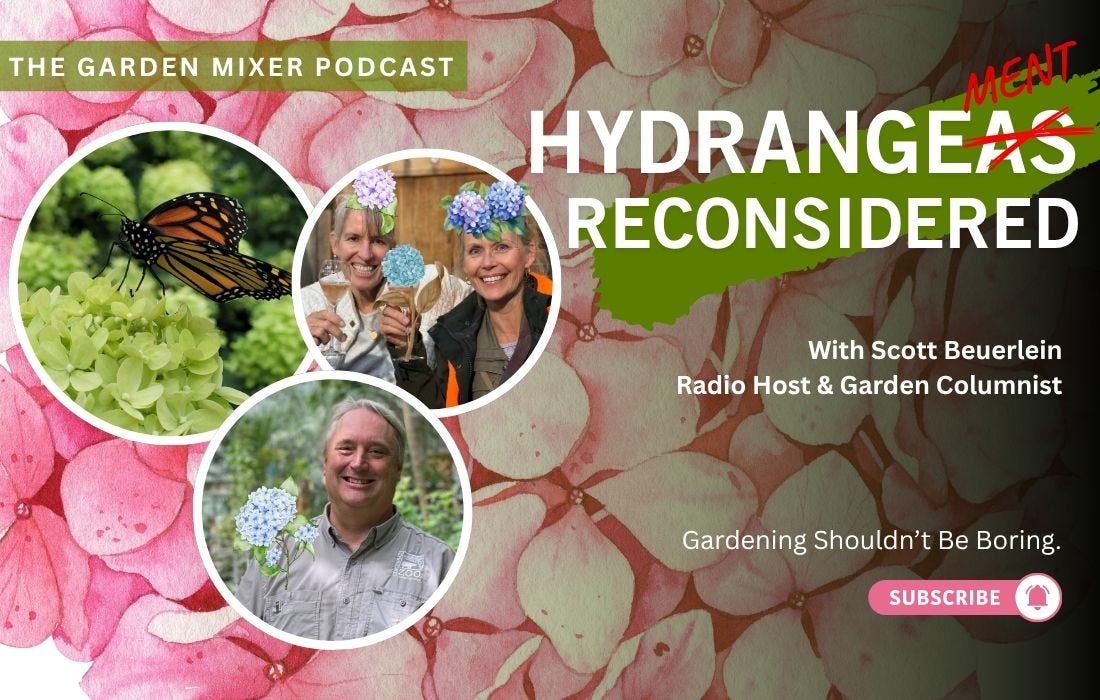
Marianne did not want to do a hydrangea episode — Hydrangement is real, Leslie’s got a bad case, and how much more can possibly be said? But Leslie disagreed and drafted in Scott Beuerlein — radio host, horticulturist at the Cincinnati Zoo and Botanical Garden, and Marianne’s nemesis at GardenRant — to prove it.
He had analogies. He had opinions. He had been thinking about hydrangeas all day.
And Marianne was wrong. It turns out there is quite a lot left to say.
Pssst…
Thanks for joining us for a big gulp of this week’s Notes, Links & Laughs. If you haven’t hit subscribe on your favorite podcast player — two clicks is all it takes.
And it makes a bigger difference than you know.
In honor of hydrangeas that don’t know if they’re blue or pink, or something in between, Leslie & Marianne make their versions of a Blue Mule, inspired by page 109 of their new drinks bible Cocktails Illustrated.
Results for both were outstanding. Here’s a recipe for Marianne’s
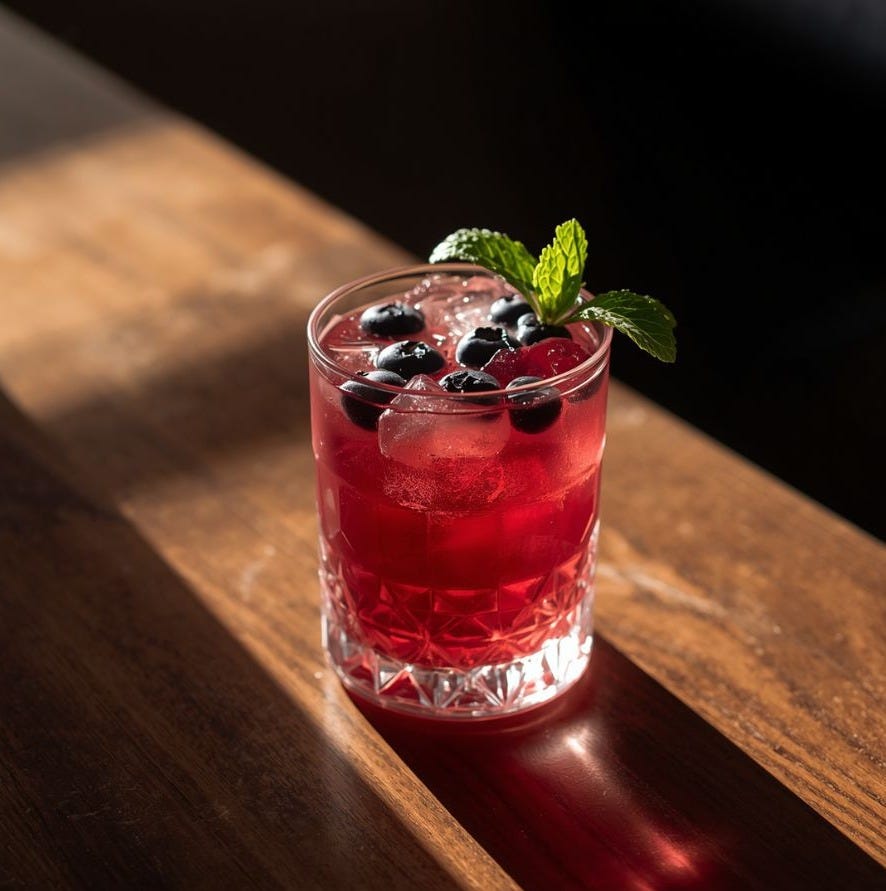
1/4 cup blueberries, plus extra for garnish
1 ounce peach schnaps
1 ounce elderflower liqueur
1 1/2 ounces vodka
1/2-ounce lemon juice
Ginger ale (or seltzer) chilled (depending on your sweet tooth)
Mint sprig
Method:
Muddle blueberries in alcohol and lemon juice in shaker. Add ice and shake vigorously. Strain into a lowball glass with ice and add ginger ale. Garnish with blueberries and mint.
Scott comes over all sophisticated with a gin and tonic created with a gin from Middle West Spirits in neighboring Columbus, Ohio. Vim & Petal is a botanical-forward American dry gin built on Ohio soft red winter wheat, and 18 botanicals including elderberry, jasmine, hibiscus, Sichuan peppercorn, and rose hips. Scott credits Marianne with his conversion back to gin after an embarrassing few decades sipping vodka tonics.
To help lovers of common names, Leslie gives them one for Phacelia — which would be ‘lacey phacelia’. Which brings us right back to square one. Scorpionweed is another.
Turns out that the sheath around an allium blossom is technically called a spathe.
Leslie and Marianne both experienced a ‘Summer Drummer’ allium fail this year — why is not clear. Bad winter? Virus? Share your thoughts below in comments and help them figure it out.
World Flora Online helped Marianne to look up the exact number of Allium species recognized — although sadly it can’t help her remember them (986 not 969 as she said in the episode). Plus 1135 taxa. And thousands of synonyms.
Not sure if a botanical name is correct, or merely a synonym at this point? Bookmark this collaboration between Missouri Botanical Garden, New York Botanical Garden, Kew Gardens, and the Royal Botanic Garden Edinburgh for the final word on taxonomic classification (and REclassification, dammit).A lot of listeners LOVED the Allium episode. We did too. Find it here.
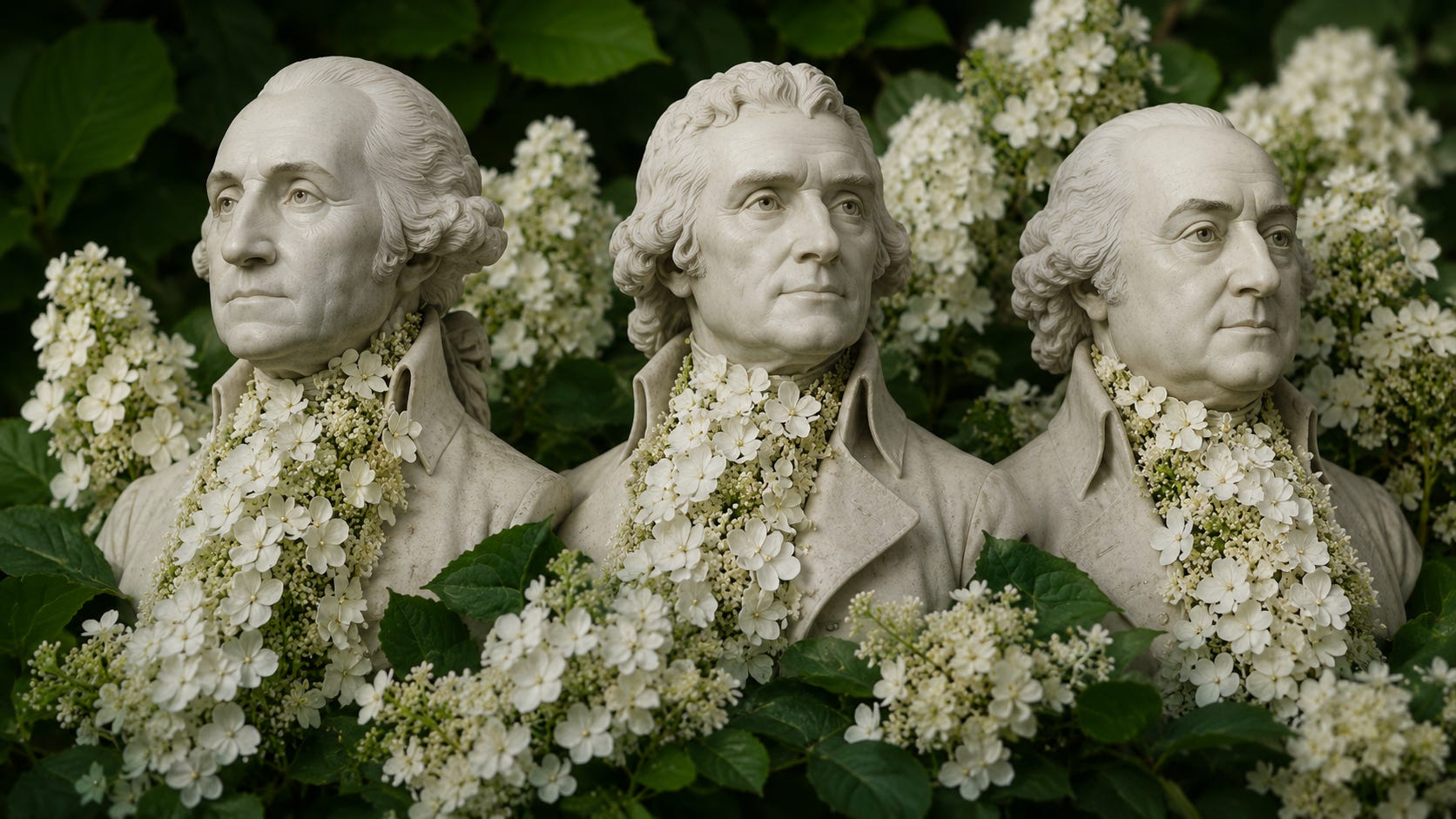
Desperate to prove Marianne wrong, Leslie reached into her creative bag for this episode and pulled out a party guest analogy for the most popular of the hydrangea species. Scott got the secret memo and came with his own.
The result is the most useful — and most unhinged — hydrangea cheat sheet ever produced, that bizarrely includes the Founding Fathers, Marilyn Monroe, a bad partner you cannot quit, and a credit card that eventually owns you. Believe it or not, they’re all hydrangeas.
Plus, pruning, pollinators, color chemistry, cultivar picks, and a sustained argument about whether ‘Annabelle’ is vulgar (Marianne) or magnificent (Leslie). Also: why you don’t get blooms on your climbing hydrangea when the temperature drops sixty-eight degrees in one night. And why ‘Blue Bunny’ is not the same plant as ‘Bluebird’, a fact that Leslie promises she is now fully aware of.
(because that’s always the question….)
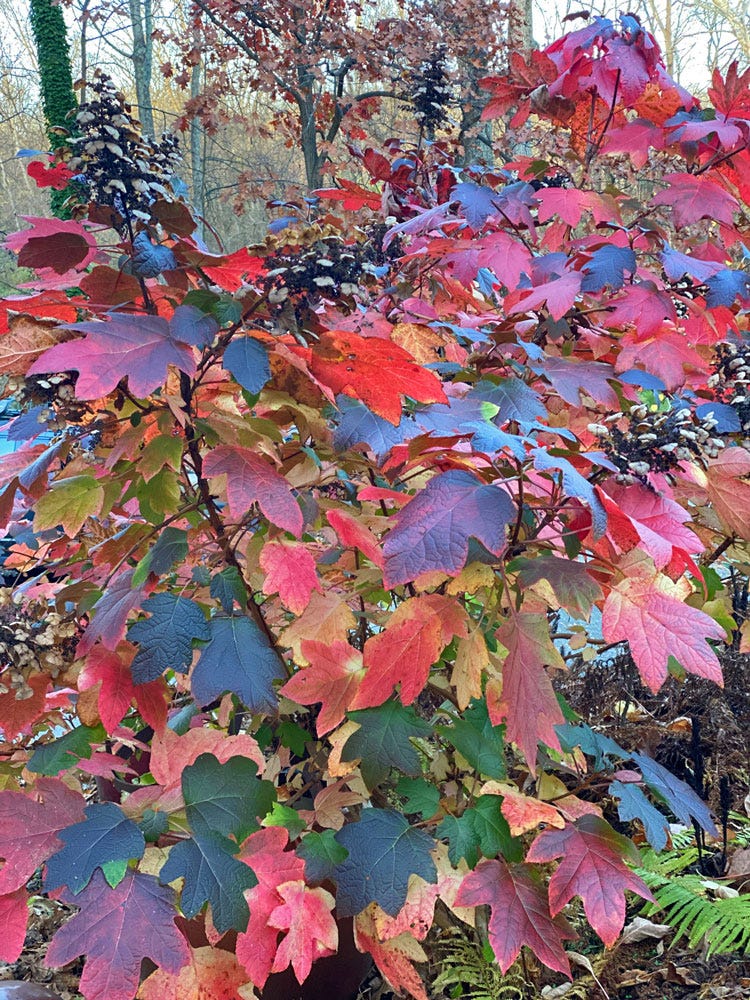
H. quercifolia (oakleaf) — pruning after it blooms is always safest, but late winter shaping is okay if you’re fully aware that the old wood you’re cutting off may contain flowering buds and you’re good with that. If you want to preserve the exfoliating bark structure and thick branching, use a very light hand when you prune — you’ll end up with a large but sculptural winter plant. Dead and weak branches can come out anytime.
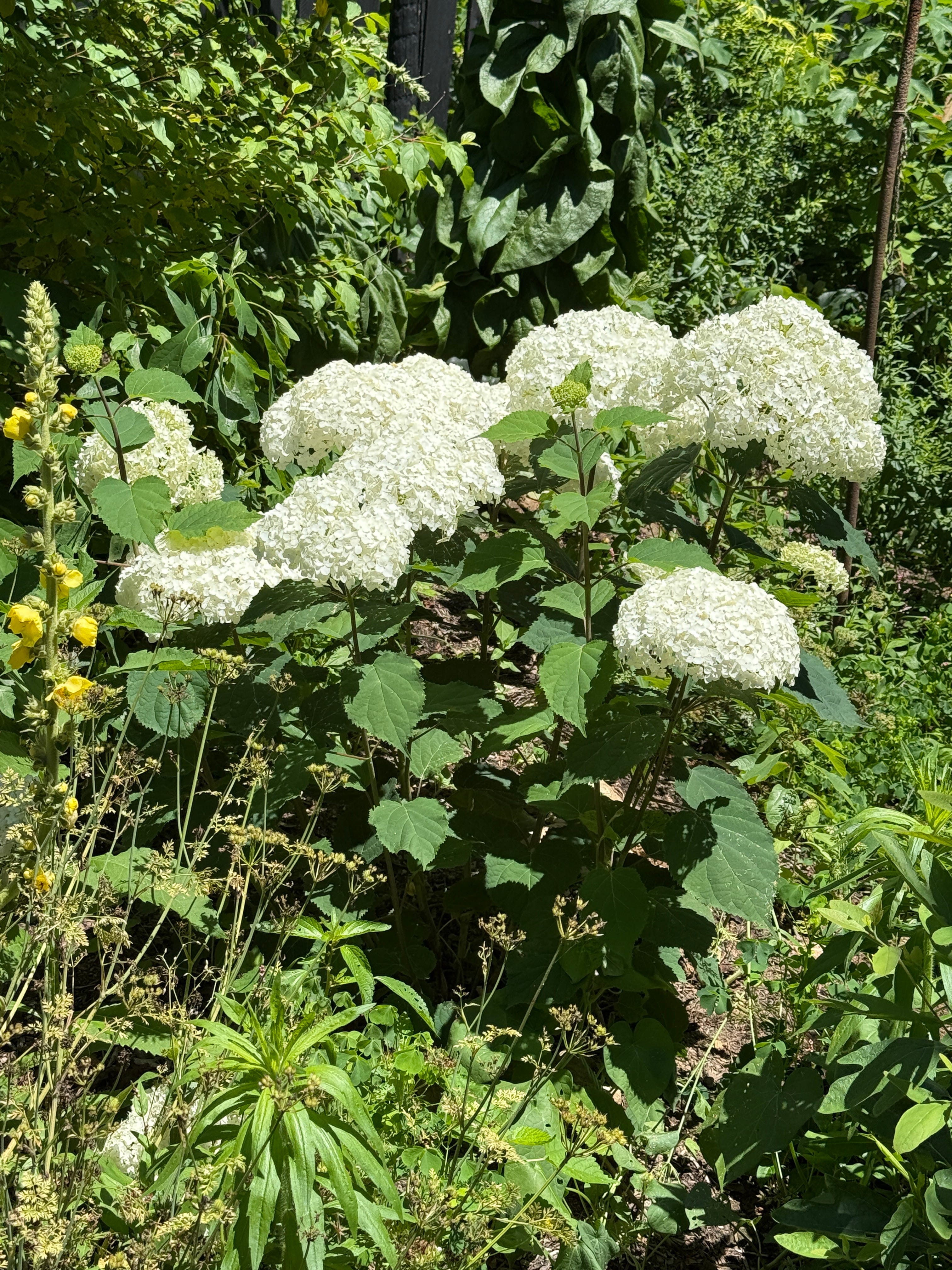
H. arborescens (smooth) — blooms on new wood. Cut back hard in early spring. It will come back, and Leslie will rejoice.
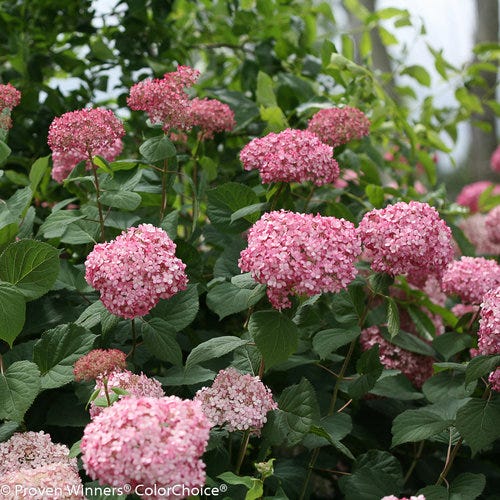
H. macrophylla (big leaf) — blooms on last year’s old wood and laterals from old wood. Give it a little time in the spring to find out if that late frost hit it too hard, or if it’s just resting. Then tidy it up. If your late frost keeps killing the buds, consider whether H. paniculata or H. arborescens might be a better fit for your garden. The remontant varieties (Endless Summer / Let’s Dance series) bloom on both old and new wood, but results vary.
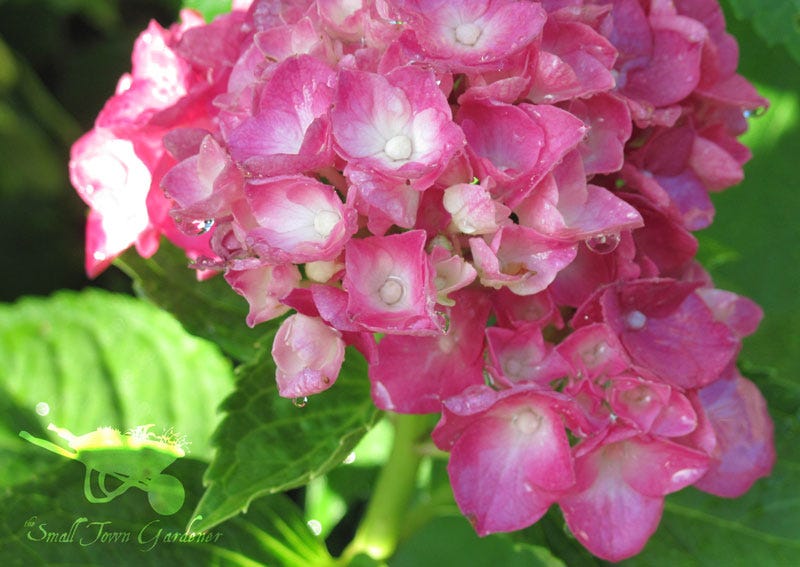
H. serrata (mountain) — similar pruning method to H. macrophylla on a shrub that’s hard to tell apart from its more famous cousin.
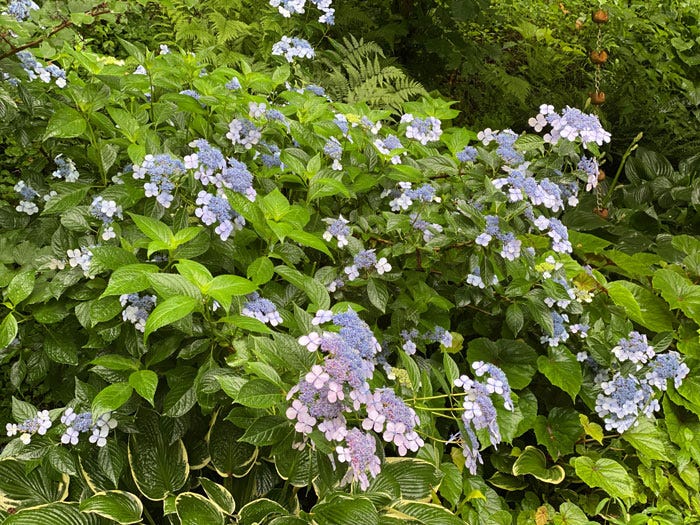
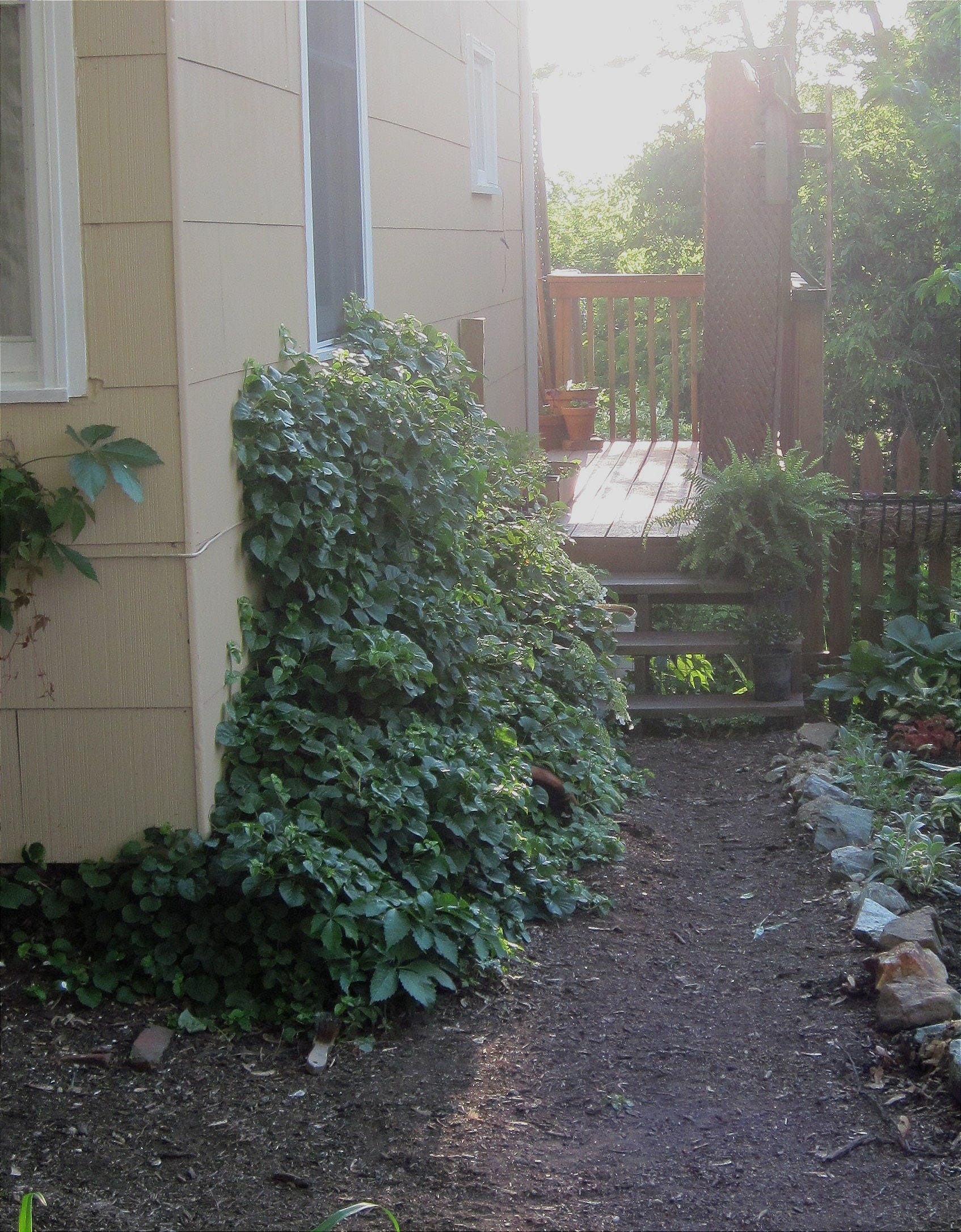
H. petiolaris (climbing)— prune after flowering if needed to shape. Be aware that the suckers adhere to surfaces and will require real work to remove. Think carefully before putting it on something you’ll need to paint.
Been fighting with your soil for the perfect blue hydrangea? The color of many macrophylla and serrata hydrangeas is actually determined by aluminum presence and availability in the soil. Although aluminum is one of the most common elements in soil, it is bound up in alkaline soils, producing pink blooms. In acidic soils, it is more available, producing blue flowers.
Soil acidifiers that use aluminum sulfate can build up in soils and become toxic over time. If your soil is not aluminum deficient, a dose of Espoma’s Organic Soil Acidifier (that uses elemental sulfur), may give you the blooms you’ve dreamed of.
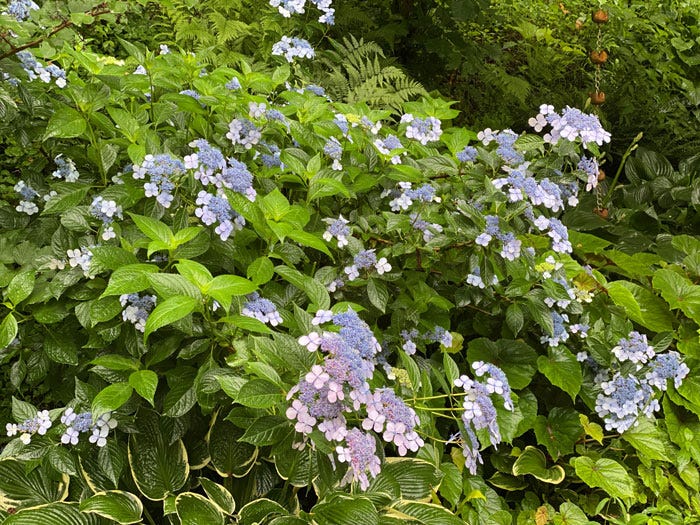
We’re loving this part of Notes, Links, and Laughs (and we’re compiling our most surprising results for a future episode). You don’t have to subscribe to click an answer, but we hope you do. Go on…. tell us what you think!
Not sure? You’ll have to listen to the episode.
Planning for what you’re going to plant starts with knowing what’s doing what, when, in gardens around you. Here are a couple of picks for right now. Your zone may push this timing a bit (L&M garden in 6b/7a in the Eastern Temperate Forest ecoregion); but get out into your neighborhoods and public gardens and see what’s looking good for your own garden. Then plant when the season is right!
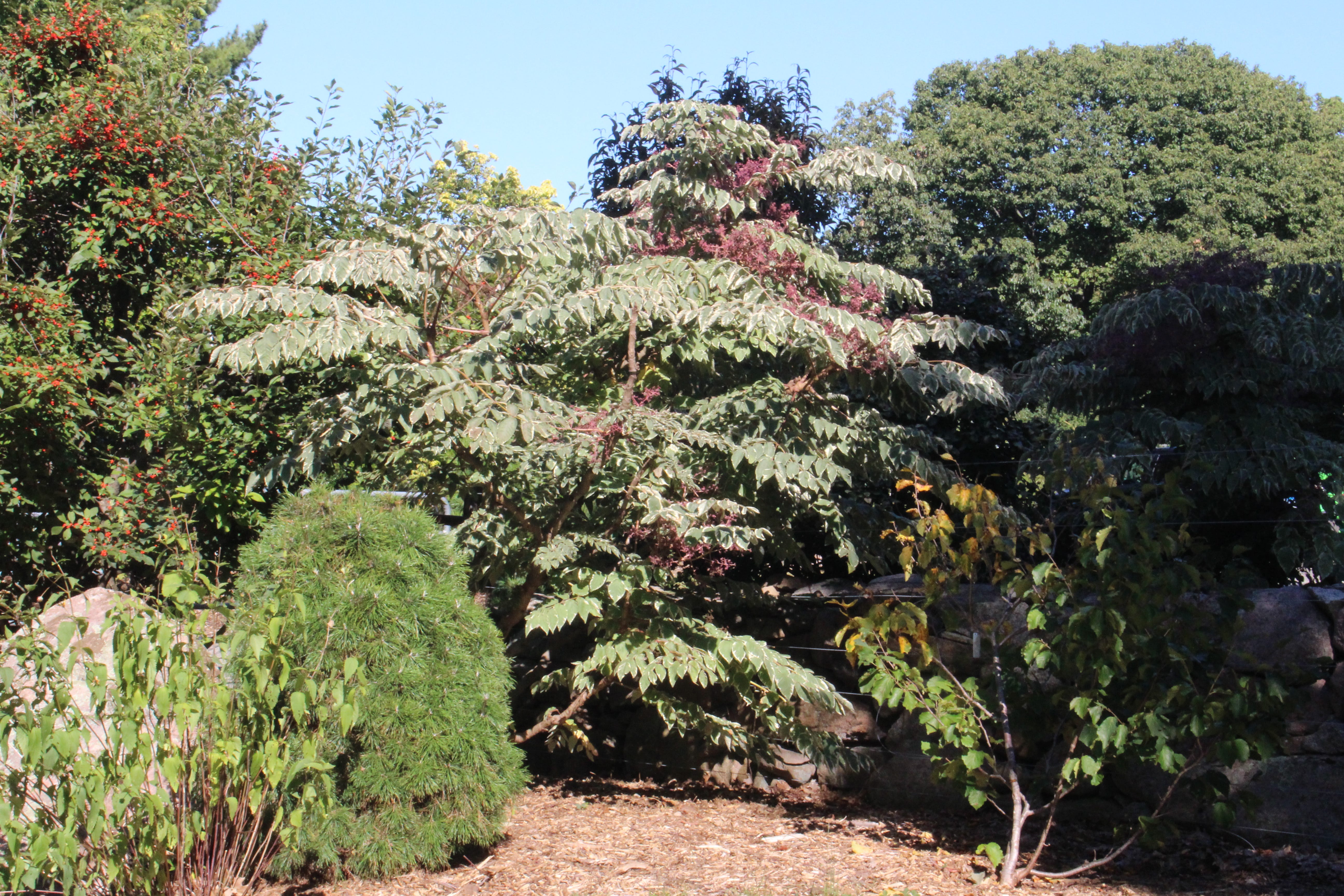
Aralia elata ‘Variegata’ (Chinese angelica tree) USDA 4-9
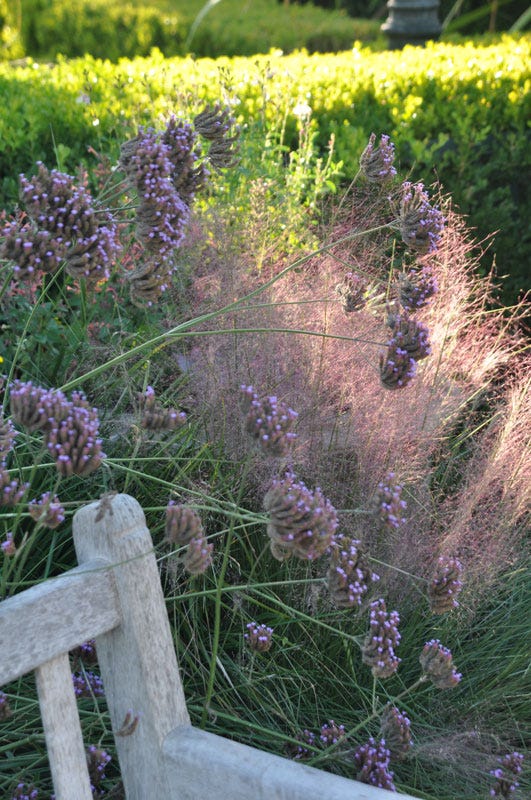
Verbena bonariensis (tall verbena) USDA Zones 7-11 - annual elsewhere
Salvia guaranitica ‘Black and Blue’ (blue anise sage) USDA Zones 8-10
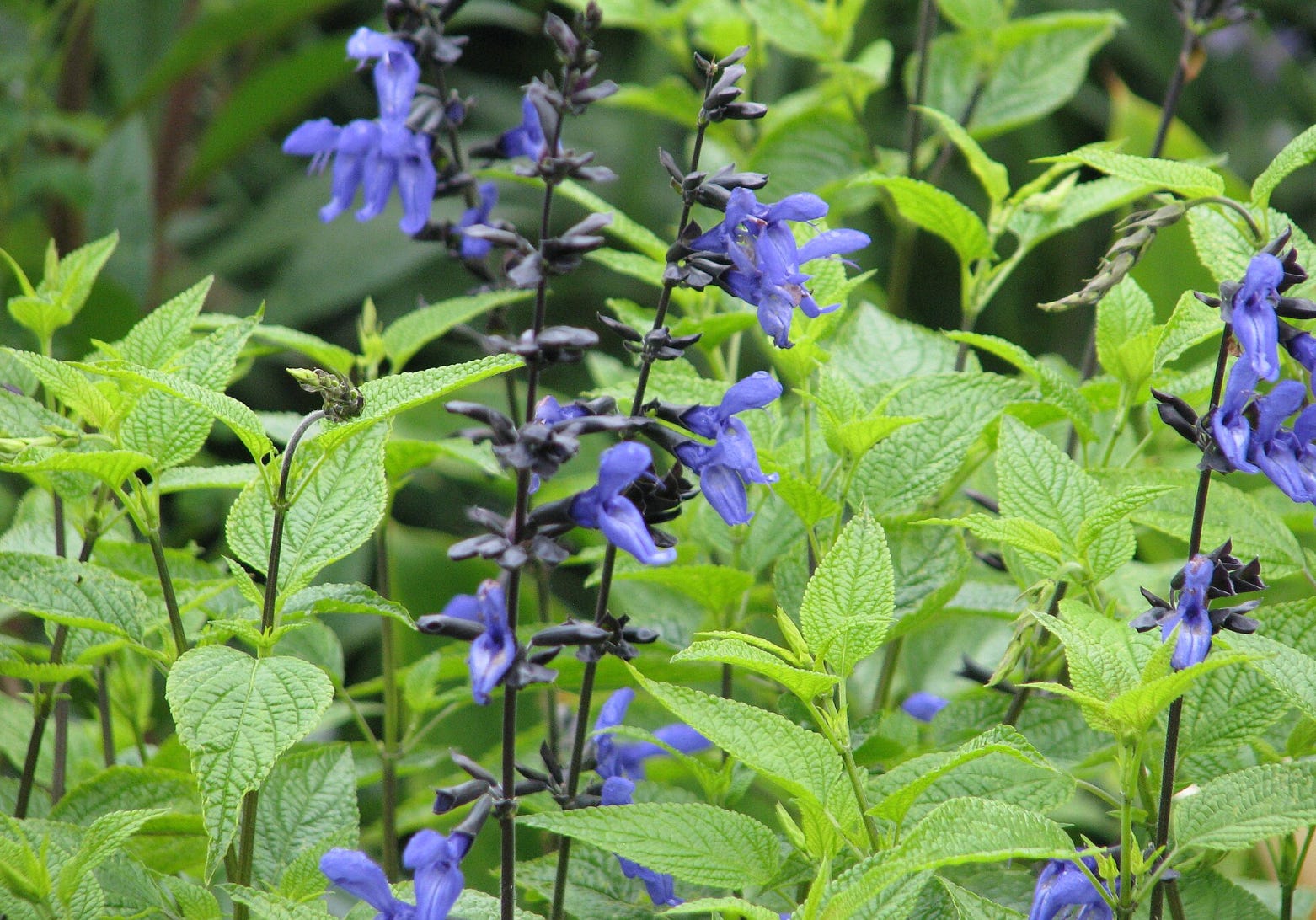
photo by Peganum (Wikicommons)
Let’s start with the hydrangeas…..
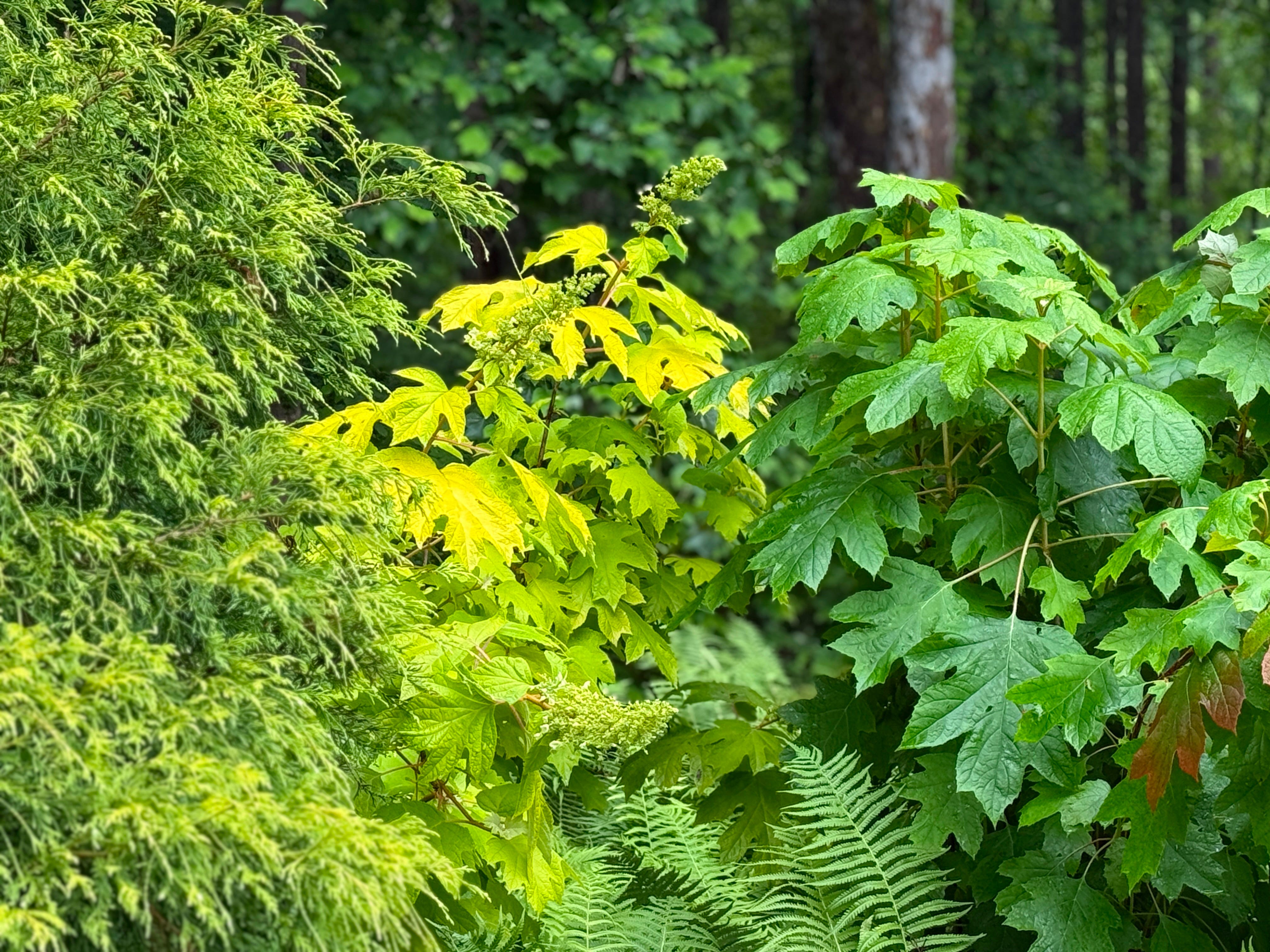
Hydrangea quercifolia — (oakleaf)
‘Ruby Slippers’
‘Gatsby Gal’
‘Snowflake’
‘Little Honey’
‘Pee Wee’
‘Sike’s Dwarf’ (which may be Marianne’s new holy grail quest now)
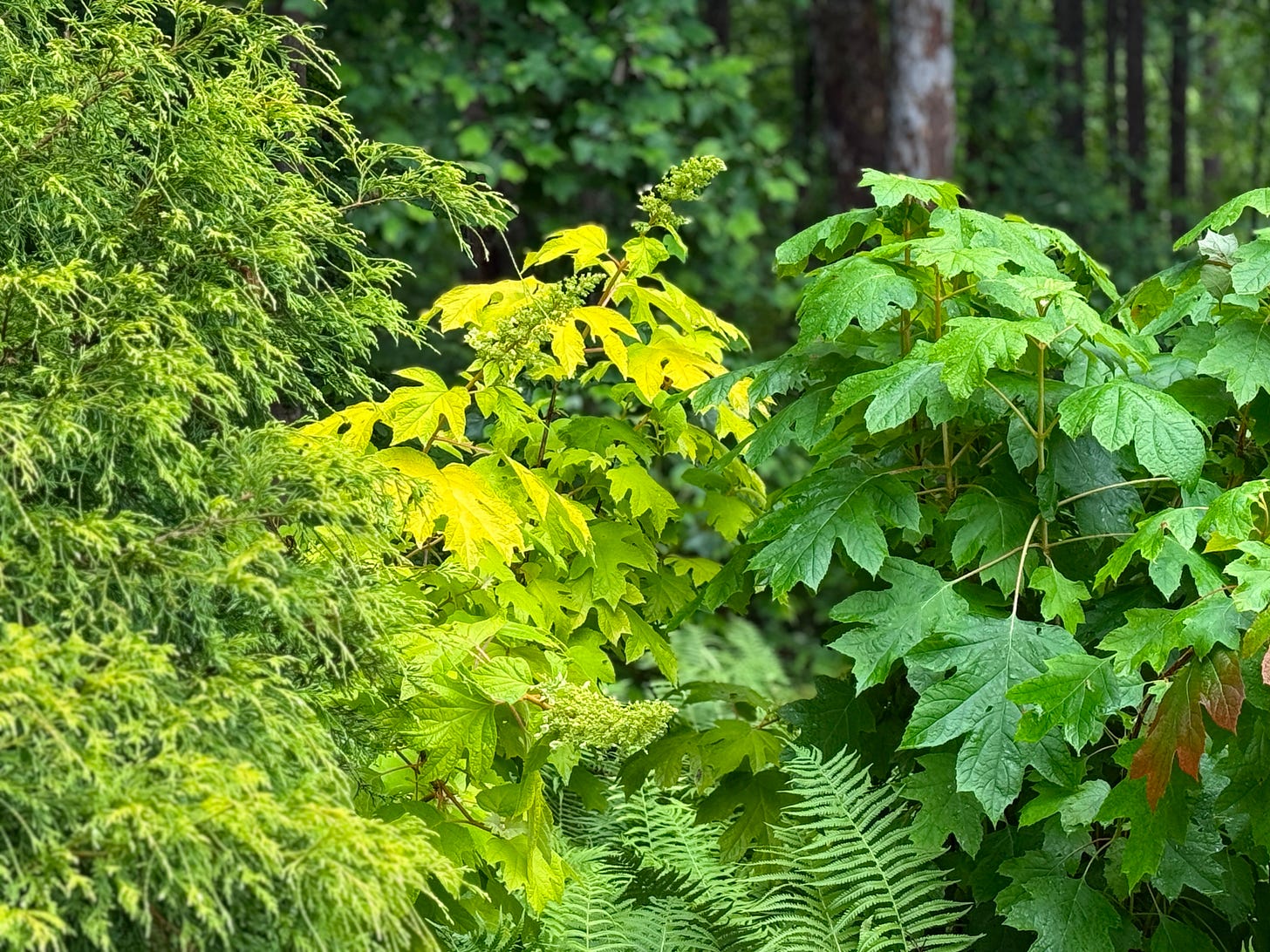
‘Little Honey’ poking its nose out.
Hydrangea arborescens — (smooth)
‘Annabelle’
‘Incrediball’
‘Invincibelle Ruby’
‘Haas’ Halo’
‘FlowerFull’
Hydrangea macrophylla — (big leaf)
‘Nikko Blue’
Endless Summer series (remontant)
Let’s Dance series (remontant)
Hydrangea serrata — (mountain)
‘Tuff Stuff’
‘Tokyo Delight’
‘Bluebird’
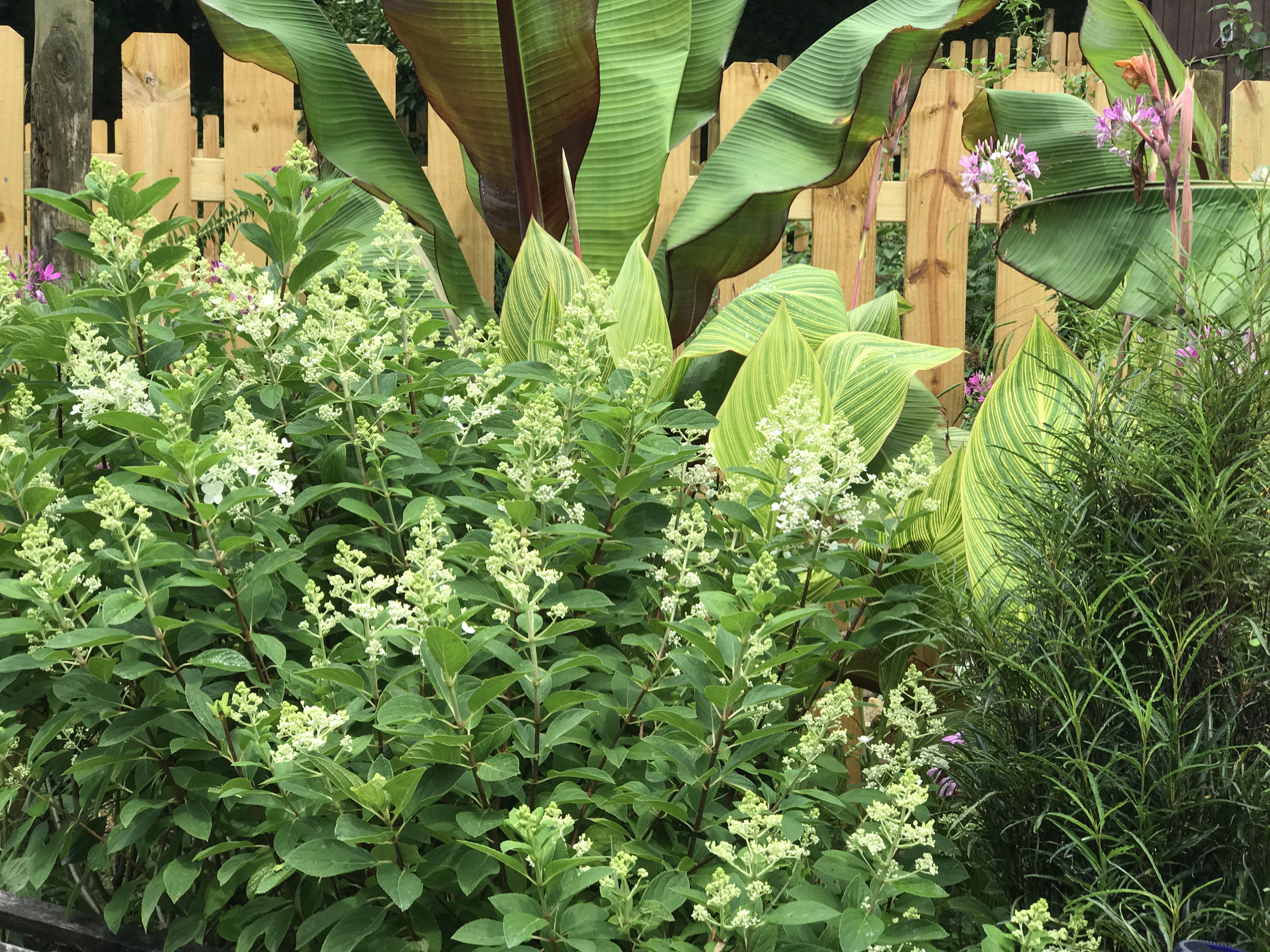
Hydrangea paniculata — (panicle)
‘Limelight’
‘Little Lime’
‘Baby Lace’
‘Pinky Winky’
‘Vanilla Strawberry’
‘Fire Light’
‘Bobo’
Hydrangea petiolaris (climbing)
Hydrangea involucrata ‘Blue Bunny’ (bracted)
Hydrangea villosa (rough leaf)
Aralia elata ‘Variegata’ — variegated Japanese angelica tree
Salvia guaranitica ‘Black and Blue’
Salvia guaranitica ‘Argentine Skies’
Salvia guaranitica ‘Amistad’
Verbena bonariensis — aka Verbena brontosaurus :)
Verbena bonariensis ‘Vanity’
Clematis ‘Polish Spirit’
Tradescantia virginiana
Pulmonaria spp.
Mertensia virginica
Let’s Garden with Scott Beuerlein — Scott took over from Ron Wilson, who hosted the show for 24 years. It now airs Saturdays from 6-9am on 55 stations nationwide and is available as a podcast on iHeart Radio and everywhere else podcasts live.
Cincinnati Botanical Garden and Zoo — Scott’s home base and the source of much of his formidable hydrangea knowledge.
Dr. Peter Zale — Associate director of conservation horticulture and plant breeding at Longwood Gardens, and once upon a time, a kid who asked for a rare aralia instead of a baseball mitt at Christmas.
Great Dixter — Marianne was there in May — this is getting embarrassing.
Chelsea Physic Garden — where Leslie spotted Salvia guaranitica ‘Argentine Skies’ and fell immediately in love with the name.
Pam Harper — A garden writer who utilized every square inch of her 2 acre plot, and often grew climbing hydrangeas up the snags of half-removed trees. You can read Marianne’s fond eulogy of this special woman at GardenRant.
Espoma Soil Acidifier to unlock the blue hydrangea in you.
Need an authoritative guide to Hydrangea and Hydrangea-adjacent species? Dr. Michael Dirr’s newest book on the genus (in 2021) is a good’un. Doesn’t pull its punches when necessary.
Howard Nemeroff was once described by Founding Mixer Erin Schanen as “a container god.” He sort of is.
*The Garden Mixer Podcast is an Amazon affiliate. Any purchases made through Amazon links help support the show, though it’s worth saying that being an affiliate does not affect the products and books recommended. Or how often.
Thanks for mixing it with us this week — and making us a Substack Bestseller! If you enjoyed this episode, the best thing you can do is leave a review on Apple Podcasts, Spotify, or YouTube — it helps the mysterious algorithms of our robot masters lead other gardeners to the Mixer community.
And if you’re not yet a paid subscriber on Substack, One More Sip — our between-episodes mini show — is waiting for you, as is an engaged community of gardeners nationwide through the GM Chat.
A huge welcome to our newest Mixers: Judith Clark Gardens, Paula Parr, Amy Louis, & Linda Ridder Walker
Comments
Nothing yet. Say the first thing.
Sign in to join the conversation.