
Peru imported $294 million in fertilizers in 2025, and the import market grew 95% year over year. That is rare in a commodity category. It usually means two things happened at once: more land going into production, and a buyer base scrambling to lock supply after a tight stretch. The average landed price sat at $0.59 per kg, and the field is wider than the dollar figure suggests.
The headline reads like a price story. It is not. The interesting part is how many new hands reached for the same supply.
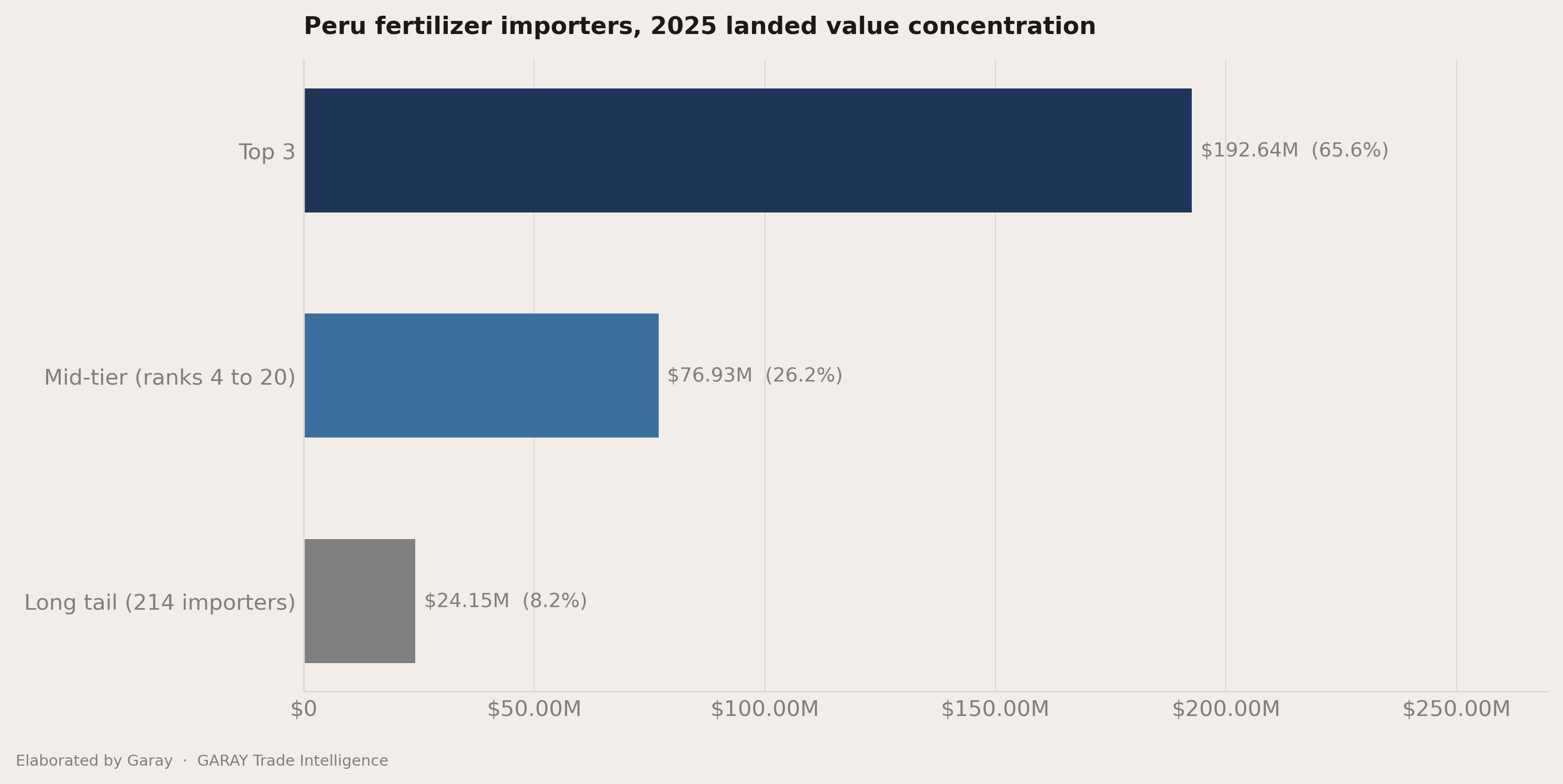
140 or more companies cleared fertilizer imports into Peru, and 111 of them were newcomers that had not imported the year before. A wave of new buyers at that scale tells you the demand is not pooling with the incumbents. It is spreading into new accounts, distributors and growers who entered as the market expanded.
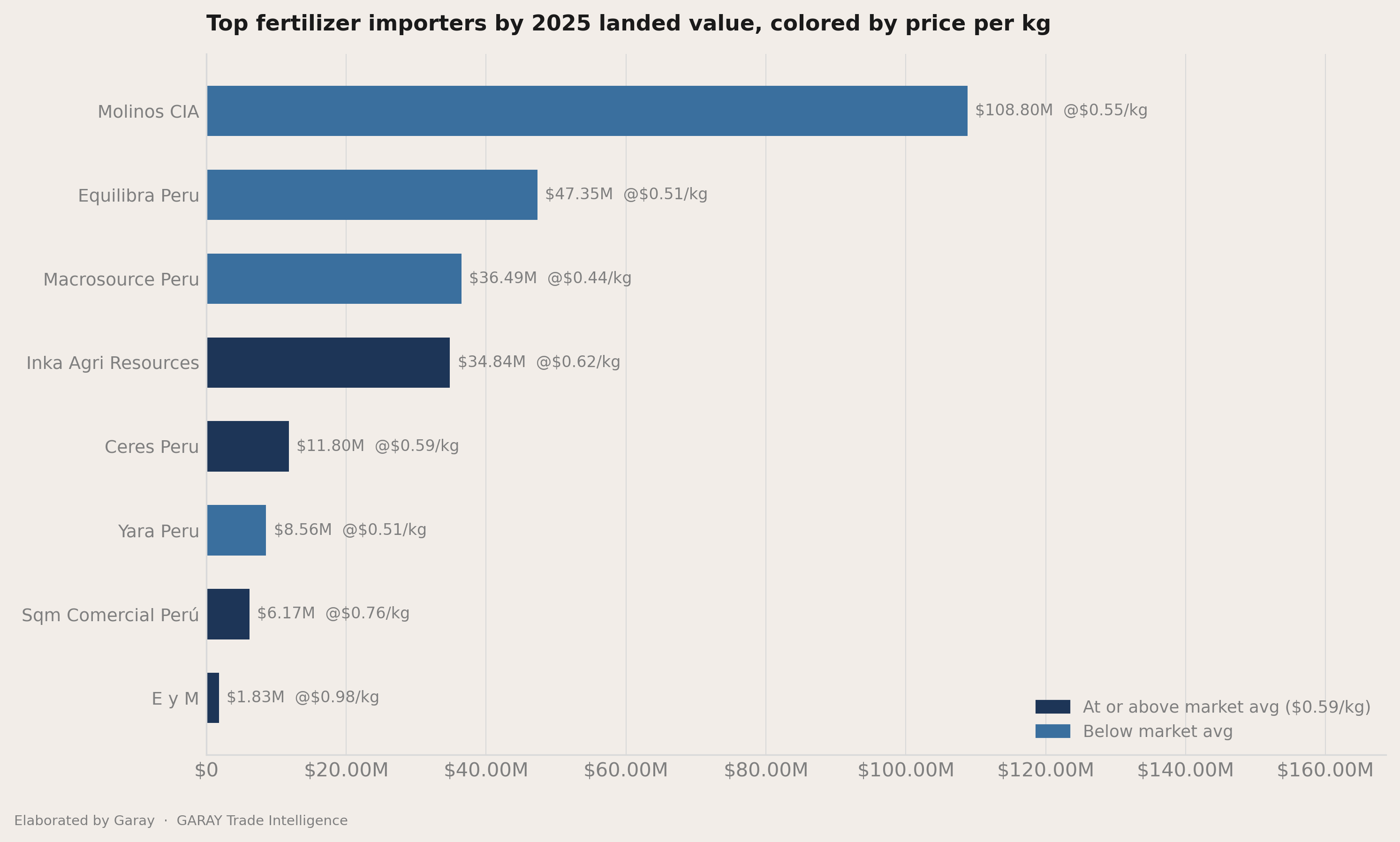
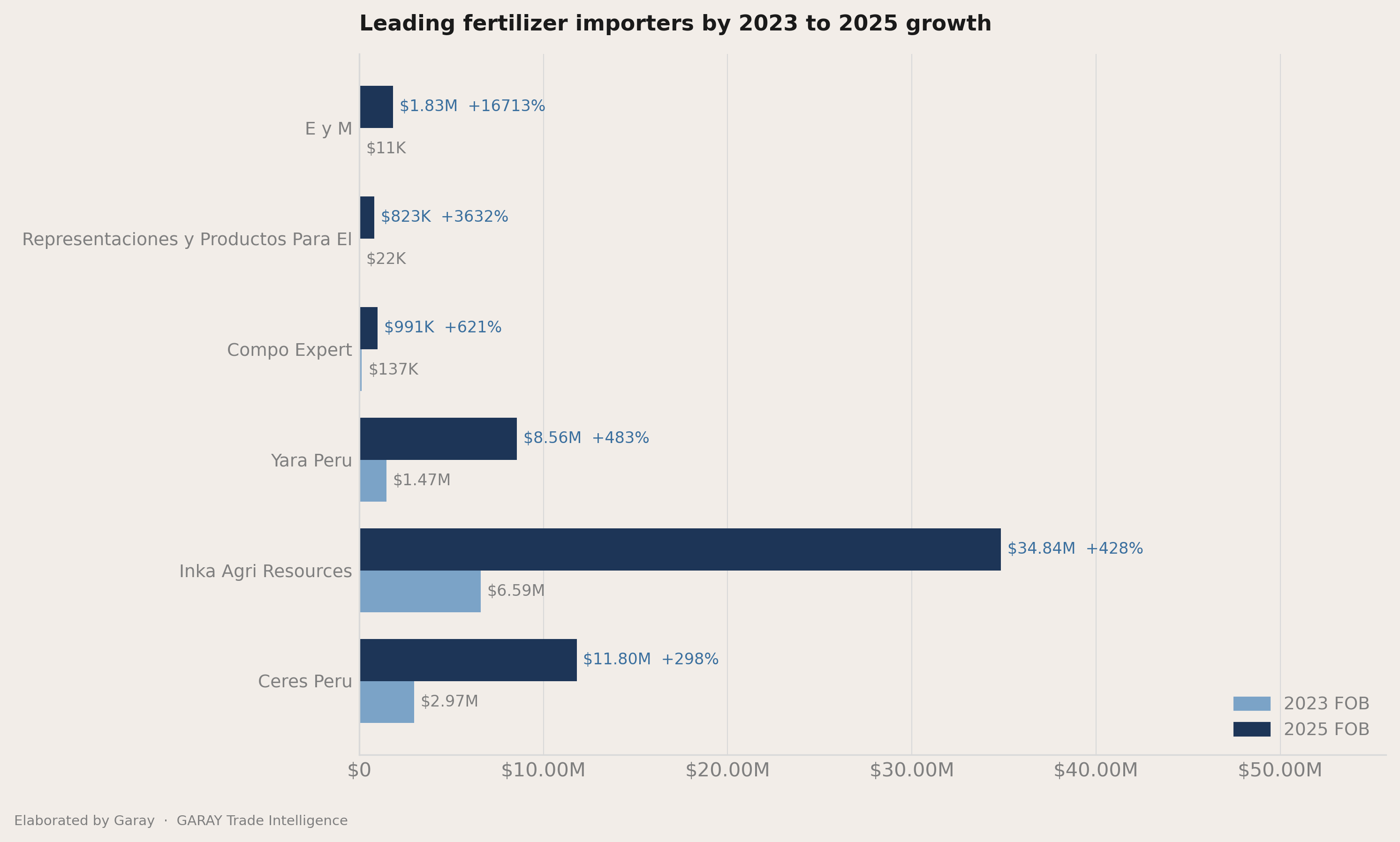
At the front, Molinos CIA, Equilibra Peru and Macrosource Peru lead the import flow. Underneath them a fast-moving cohort is gaining ground: E y M, Representaciones y Productos Para El Agro and Compo Expert are absorbing the new volume the 95% climb created. For a supplier, the newcomer tier is where the negotiable demand lives, the buyers still forming their first supply relationships. For an established importer, that same tier is the new competition for the same vessels.
When a fertilizer import market nearly doubles in a year, the constraint shifts from demand to supply. Buyers who had a single origin suddenly need a second and a third. Contracts that ran spot move to forward cover. The growers and blenders who entered this year are the ones least locked in, and they are sourcing actively going into 2026.
For a supplier, this is the opening. A category growing this fast rewards the vendor who shows up with reliable tonnage while buyers are still building their books, not the one who waits for the market to settle.
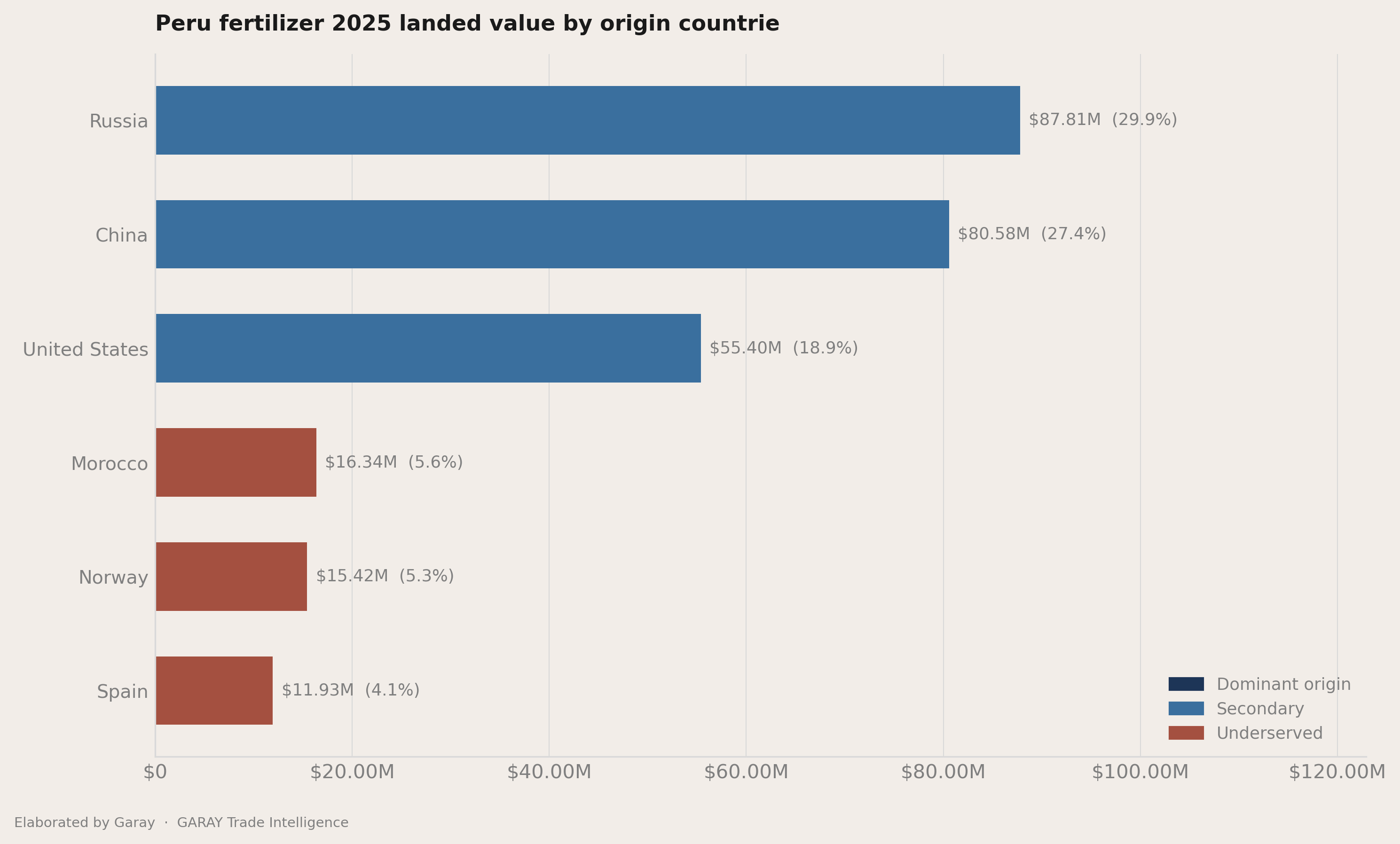
The supply map is concentrated and geopolitically loaded. Russia, China and the United States are the origins carrying most of Peru's 2025 fertilizer value. Behind those flags sit the global suppliers every blender knows: Mosaic and the Apatit group move a large share of the phosphate and potash entering the country.
That concentration is a risk and an opening at once. A buyer leaning on a single dominant origin is exposed to export quotas, sanctions and freight shocks on that one lane, and the past three years have shown how fast those move. A supplier from a less crowded origin competing into Peru meets fewer peers bidding for the same buyers. The lane you sell or source on is a strategic choice, not a default.
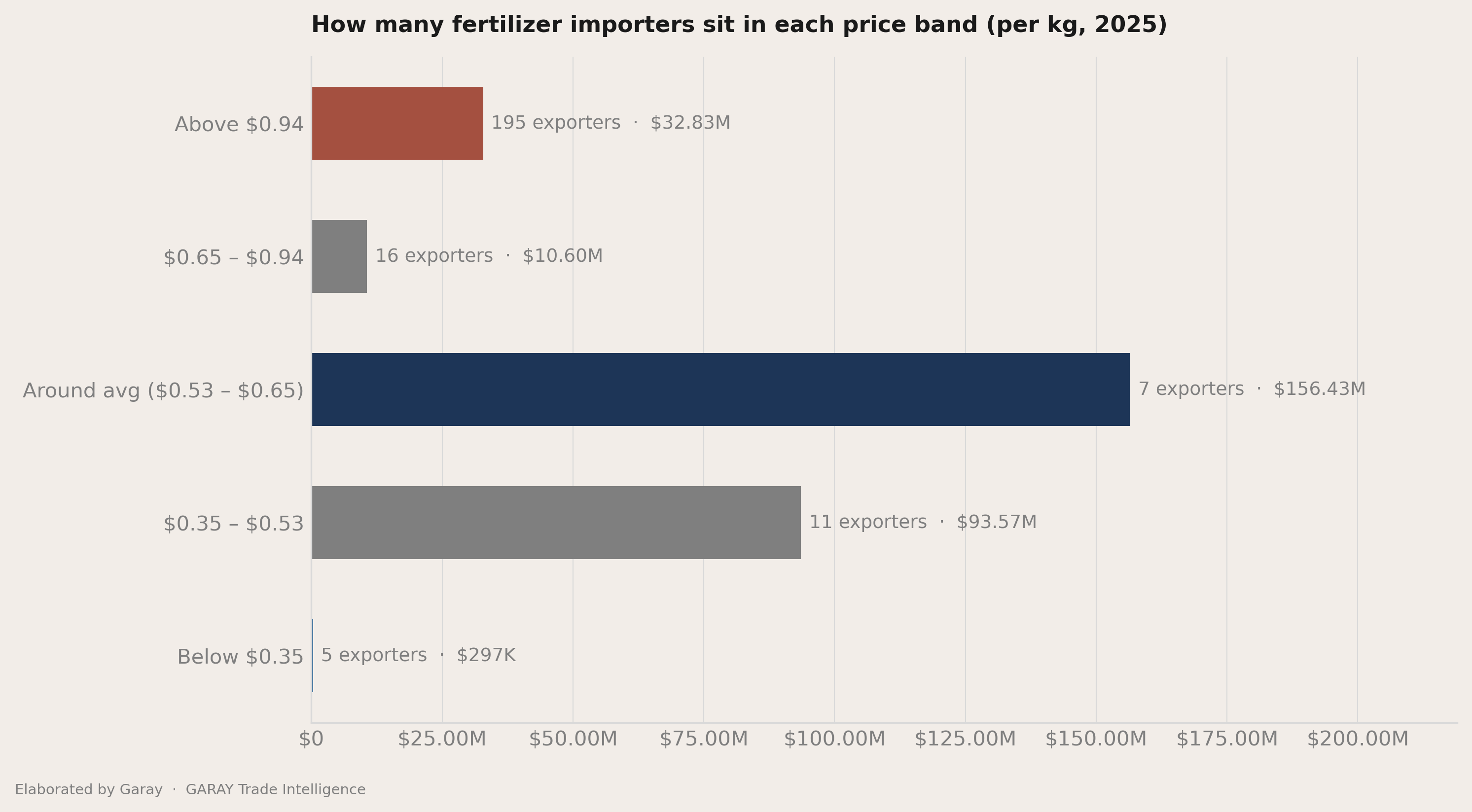
The $0.59 per kg average sits in front of a range that runs from $0.35 to $0.94 per kg. That spread is the whole story. A simple urea or a bulk blend sits near the low end. A specialty or coated product sits near the top. The average belongs to no single buyer.
A supplier who quotes against the headline is pricing into the wrong tier. A buyer who benchmarks the same way overpays on commodity grades and underestimates the specialty end. The margin lives in knowing which band a given importer actually buys, and that breaks down account by account.
If you sell fertilizer into Peru: the market nearly doubled and brought in 111 new buyers, most of them still forming supply relationships. Map the newcomer tier before you map a price. The standing positions are won while the books are still open.
If you source fertilizer in Peru: the 140-plus importers are not interchangeable. Origin lane and product grade set very different cost structures, and the leverage is in knowing where your counterparty sits in the price range.
I pulled the structure of this market from Peru's official trade records. The public view above names the leading importers and the shape of the demand. The full picture, the complete buyer ranking, every active 2026 importer, and how each one's origins and price band break down company by company, sits in the Peru Fertilizers Importers Radar.
The full breakdown is here: Peru Fertilizers Importers and Buyers 2026
Martin Garay
martin@garaycompany.com
Sin posts
Comments
Nothing yet. Say the first thing.
Sign in to join the conversation.