
Peru imported $138 million in general medical and surgical instruments in 2025, and the import market grew 24% year over year. Healthcare capacity does not expand in a straight line, so a climb like that signals new hospitals equipping, clinics restocking and distributors widening their lines. The average landed price sat at $2.59 per unit, and the field behind that figure is broad.
The headline reads like a hospital budget line. It is not. The interesting part is how many new buyers reached into the category as it grew.
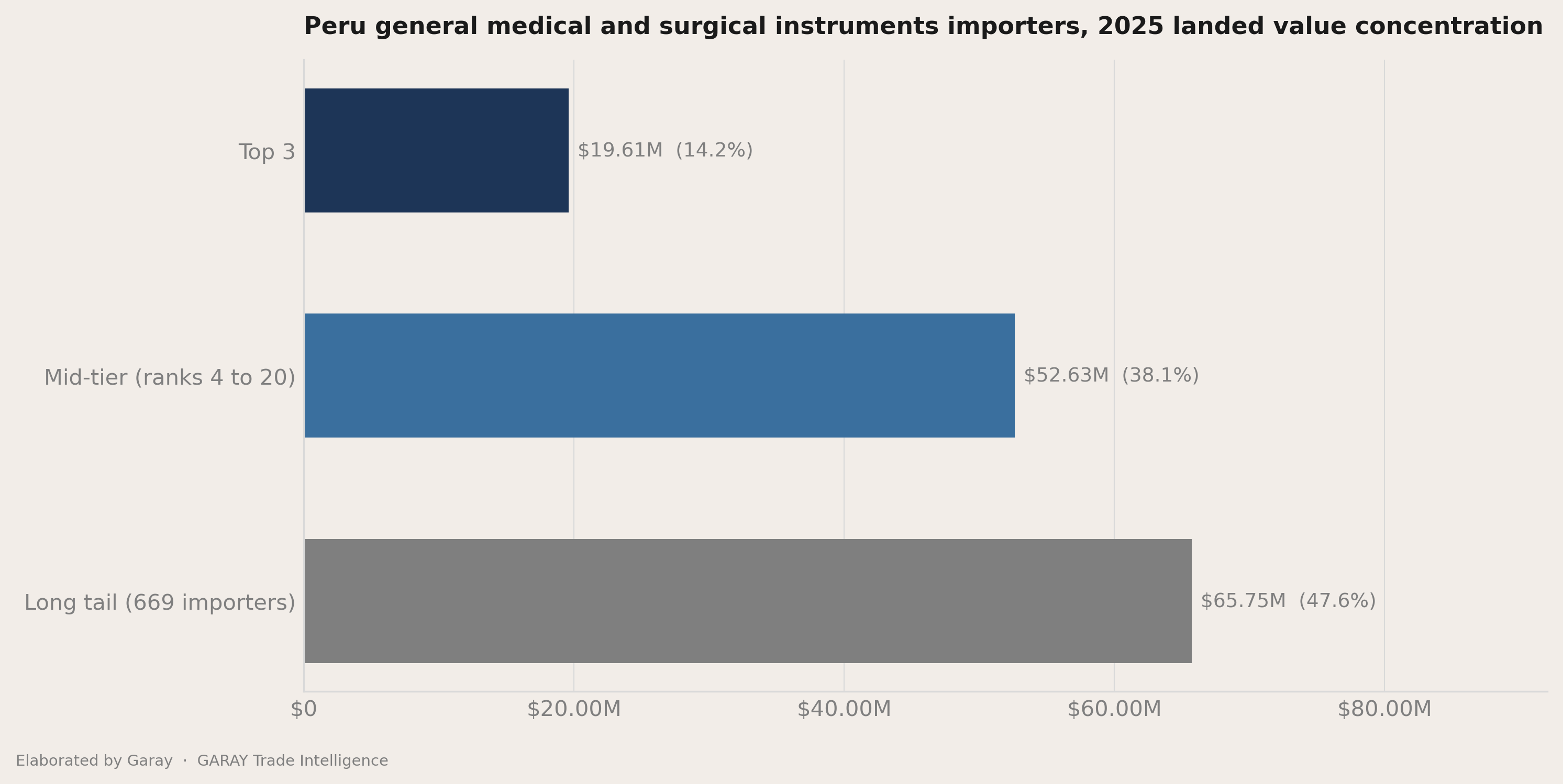
490 or more companies cleared imports of medical and surgical instruments into Peru, and 310 of them were newcomers that had not imported the year before. New entrants at that scale tell you the demand is not locked up by a few national distributors. It is spreading across clinics, specialist importers and regional players entering as healthcare spend rises.
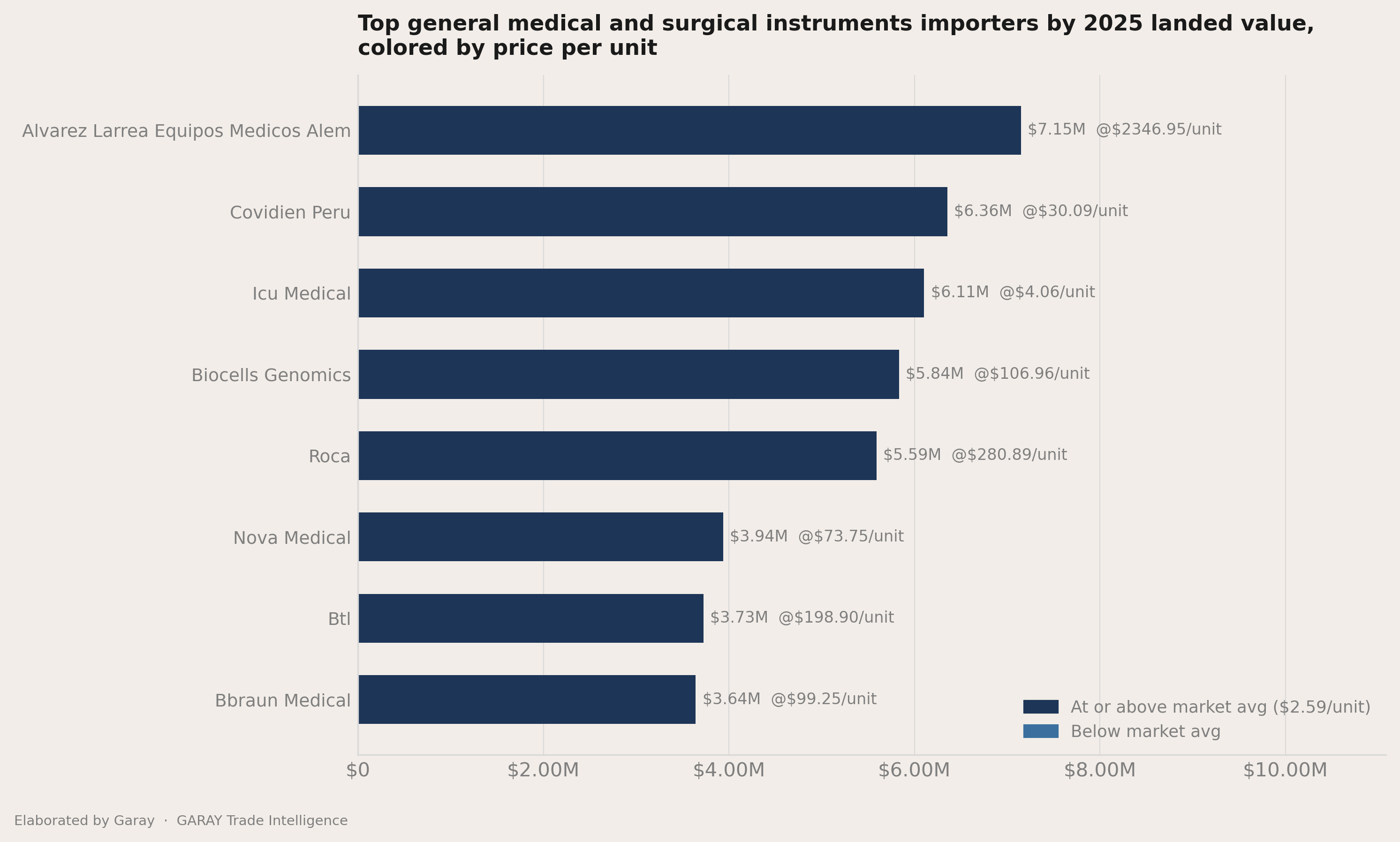
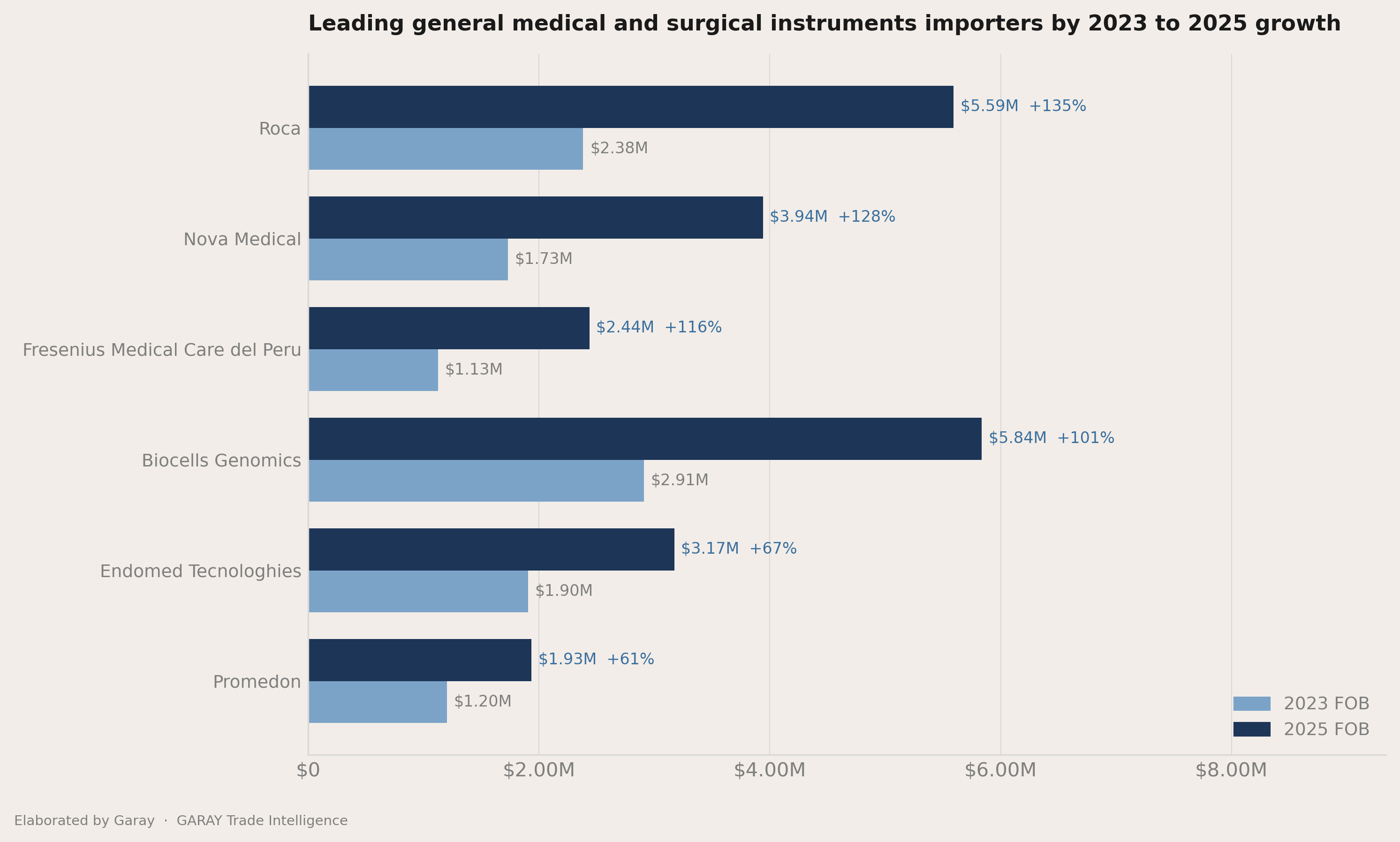
At the front, Alvarez Larrea Equipos Medicos, Covidien Peru and Icu Medical lead the import flow. Underneath them a fast-growing cohort is gaining ground: Roca, Nova Medical and Fresenius Medical Care del Peru are absorbing the new volume the 24% climb created. For a supplier, the newcomer tier is where the negotiable demand lives, the buyers still building their first supply lines. For an established importer, that tier is the new competition for the same shelf space.
A 24% climb in medical instruments is rarely a price effect. It is volume: more procedures, more equipped rooms, more disposables and instruments cycling through. That kind of demand compounds, because once a hospital standardizes on a brand or a specification, the reorders follow for years.
For a supplier going into 2026, that is the prize. A category growing on capacity rewards the vendor who gets specified into a hospital or a distributor's catalog early and stays there. The wallet share is expanding, and most of it sticks to whoever wins the first specification.
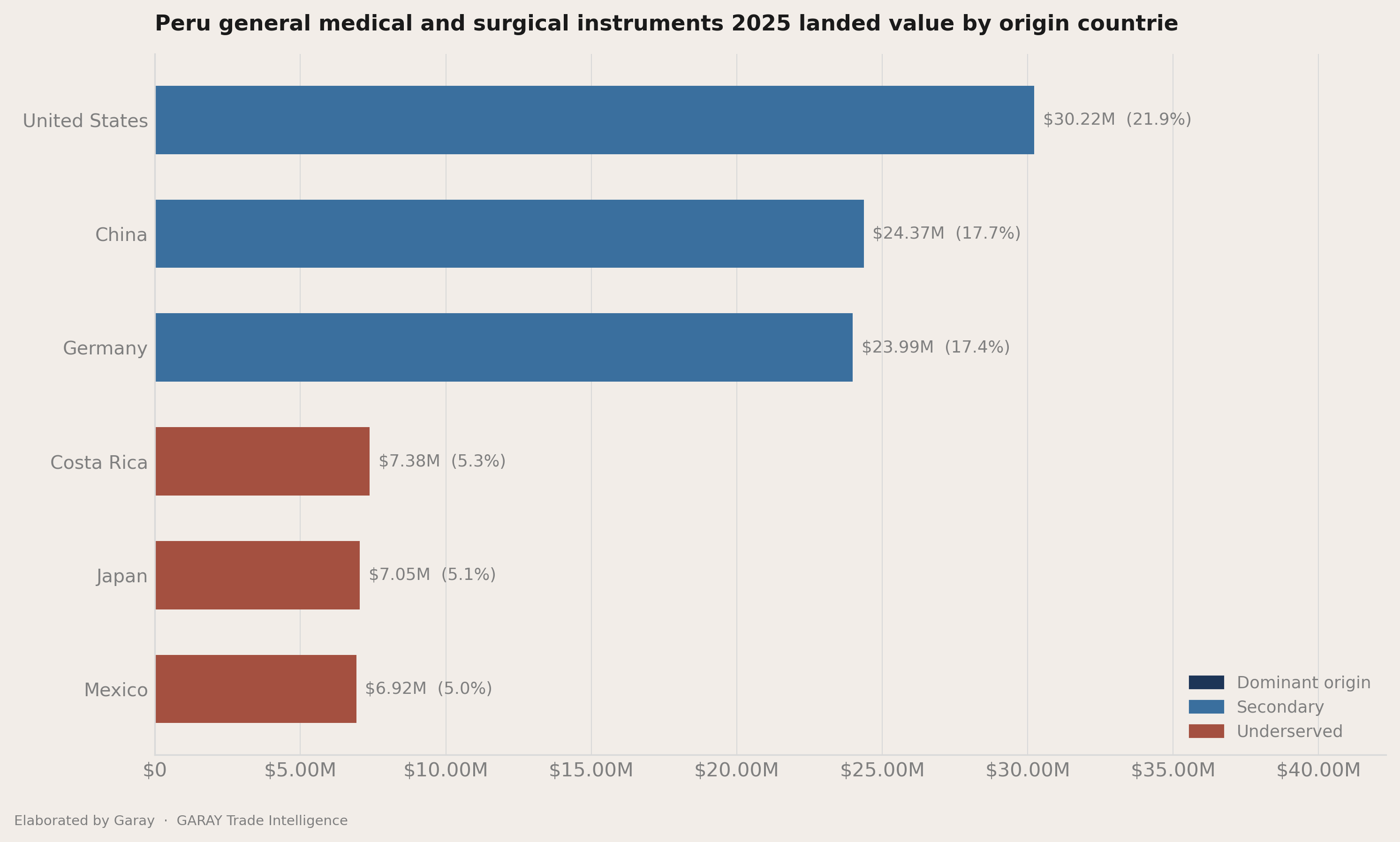
The supply map is concentrated. The United States, China and Germany are the origins carrying most of Peru's 2025 import value. Behind those flags sit the names every procurement lead already knows: Medtronic, Arthrex and Icu Medical move a large share of the instruments and devices entering the country, alongside the specialist makers.
That concentration cuts two ways. A buyer leaning on a single dominant origin is exposed to regulatory delays, freight shocks or a supply pause on that one lane. A supplier competing into a less crowded origin or a specialist niche meets fewer peers bidding for the same accounts. The lane and the brand tier you sell or source on define the entire negotiation.
The $2.59 per unit average sits in front of a range that runs from $1.55 to $4.14 per unit. That spread is the story. A basic disposable instrument sits near the low end. A precision or specialty device sits near the top. The average belongs to no single buyer.
A supplier who quotes against the headline is pricing into the wrong tier. A buyer who benchmarks the same way overpays on the commodity end and underestimates the specialty end. The margin lives in knowing which band a given importer actually buys, and that breaks down account by account.
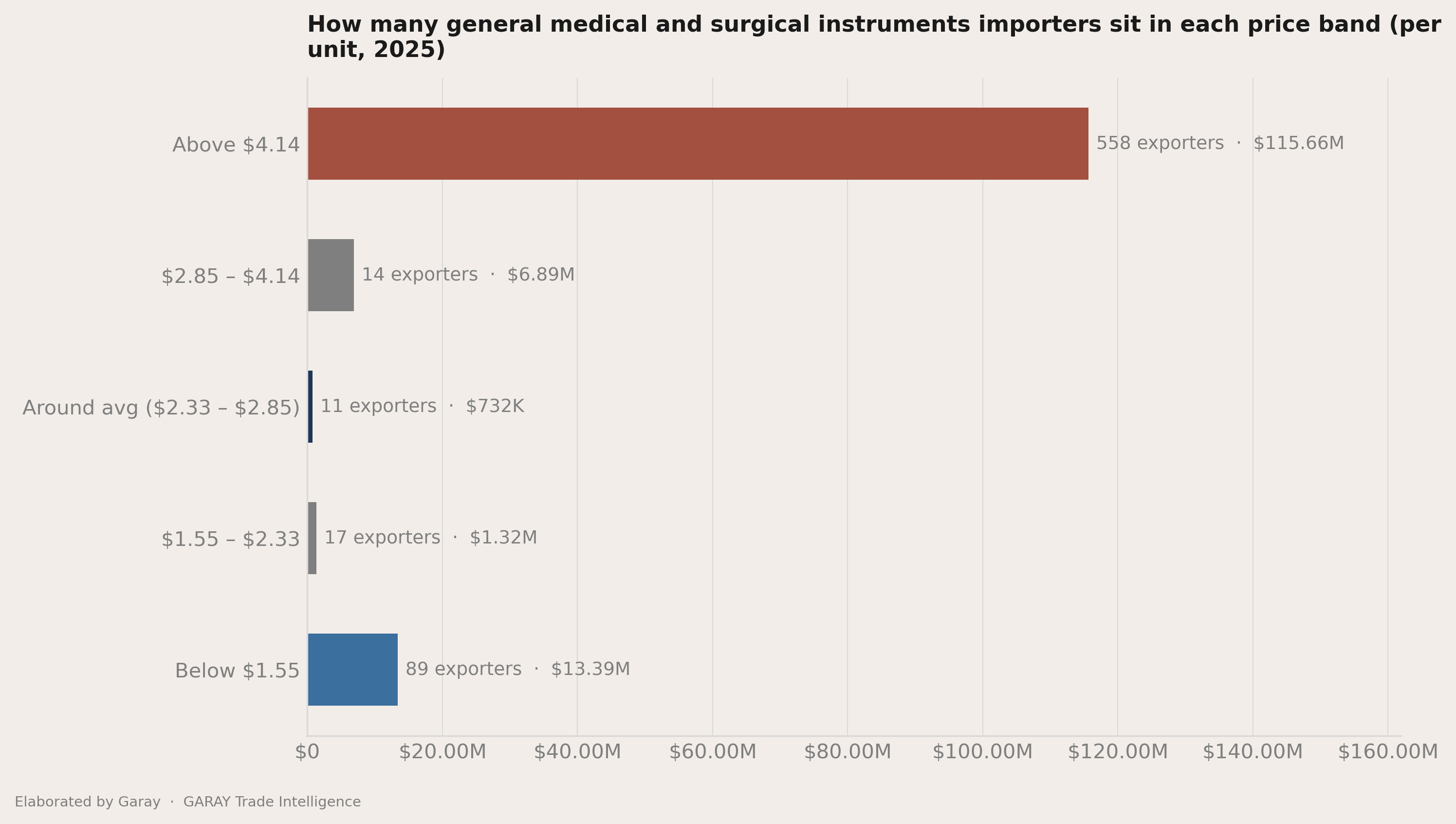
If you sell medical and surgical instruments into Peru: the market grew 24% and brought in 310 new buyers, most still forming supply lines. Map the newcomer tier before you map a price. Specifications won early turn into years of reorders.
If you source these instruments in Peru: the 490-plus importers are not interchangeable. Origin lane, brand tier and product class set very different cost structures, and the leverage is in knowing where your counterparty sits in the range.
Martin Garay
Sin posts
Comments
Nothing yet. Say the first thing.
Sign in to join the conversation.