
Today, after a year and a half of waiting, wondering, monitoring, and holding my breath, I finally heard the words my family and I had been waiting for.
“John, you’re good.”
Those three words came from my infectious disease doctor this morning after reviewing my final bloodwork. Simple. Calm. Definitive. They marked the official all-clear from the staph infection that has quietly shaped nearly every decision, emotion, and moment since my open-heart surgeries last year.
I did not realize how heavy the uncertainty had been until it lifted.
For eighteen months, I lived in a strange in-between state. Not sick enough to be actively treated. Not well enough to feel completely safe yet. Always watching. Always waiting. Every ache, every fever, every lab result carried a question mark. I learned how to function inside uncertainty. I learned a new normal where “probably fine” replaced “definitely okay.”
And now, suddenly, that chapter has closed.
This moment does not mean the journey is over. Recovery, for me, is lifelong. But it does mean a line has been crossed. A door has closed behind me. A new page has begun.
In the past year and a half, my body and my life have been through more than I ever imagined possible.
Two open-heart surgeries twenty days apart.
Countless post-operative complications
A surgical debridement due to a staph infection.
COVID during in-hospital recovery.
Two months attached to a wound vac machine.
Self-injecting antibiotics through a picc line directly to my heart.
More than a year on oral antibiotics.
A pacemaker implanted five months ago.
Joining my surgeon’s 0.1% club - reserved for the one in a thousand that need to be brought back to the OR so soon.
That is the clinical situation.
The human version includes meeting 162 clinicians. Preparing over 340 questions. Sitting in countless waiting rooms. Navigating fear at 2 a.m. Processing risk with my wife when no clear answers existed.
And instead of shrinking inward, I leaned outward.
When the system could not fully support the emotional and cognitive load of this journey, I built my own scaffolding.
I documented everything. Over a thousand photos and videos. I asked relentless questions. I used AI to help me understand my condition, prepare for appointments, track decisions, and manage uncertainty. I built and fine-tuned an AI model around the cardiac surgery journey so future patients could benefit from what I learned the hard way.
Along the way, I shared.
Twelve keynote talks sharing my AI-powered patient experience
Eleven published articles.
Fifty-seven LinkedIn posts.
Four podcast appearances.
Surveys of over one hundred cardiac patients.
Hosted two patient-only webinars to share research and lived insights
Joined a cardiac support group as an advocate
And yes, even wrote and publishing a song with AI.
I am close to finishing a memoir of this journey. Not as a record of suffering, but as a blueprint for what the future patient can become.
Embraced identity that close tech friends gave me and launched TheFuturePatient website
If life handed me lemons, I didn’t just make lemonade. I made lemon cake, lemon soda, lemon ice cream, lemon jam. Lemon everything
As this year ends and this chapter officially closes, five lessons stand out clearly:
1. The healthcare system treats bodies far better than it treats emotional journeys.
Medicine and surgery are world-class at fixing physical problems. But there is a glaring gap when it comes to supporting fear, uncertainty, cognitive overload, and identity disruption. Patients are left to carry that weight alone. This is not a side issue. It directly affects outcomes, adherence, and recovery. This is an area I’m fascinated by and have been further researching, more in this short clip.
2. The human body has extraordinary healing power.
It is easy to attribute recovery just to procedures, medications, and protocols. But healing also happens quietly, continuously, and biologically in parallel. The body is not passive. It is an active collaborator in recovery. Respecting that truth changes how we think about patience, rest, and trust.
3. Uncertainty can become a skill.
Living without the all-clear taught me how to operate without certainty. That skill now applies far beyond healthcare. It sharpened my decision-making, my empathy, and my tolerance for ambiguity. Not knowing did not break me. It reshaped me.
4. Time is finite, and clarity changes priorities.
It is only when you get close to the edge that the realization of lack of time really kicks in. I was not seeking purpose. I was not searching for a calling. But purpose has a way of finding you when you are paying attention. It slapped me in the face. I was born to live this and become The Future Patient. I talk about this as a recent guest on Boyd, Peter’s Yale Connected Leadership podcast.
5. Family presence is a form of medicine.
Recovery is not just about what happens to the body. It is about who surrounds you while it happens. My family’s presence, patience, and steady belief carried me through moments when strength ran low. Their support made all the difference.
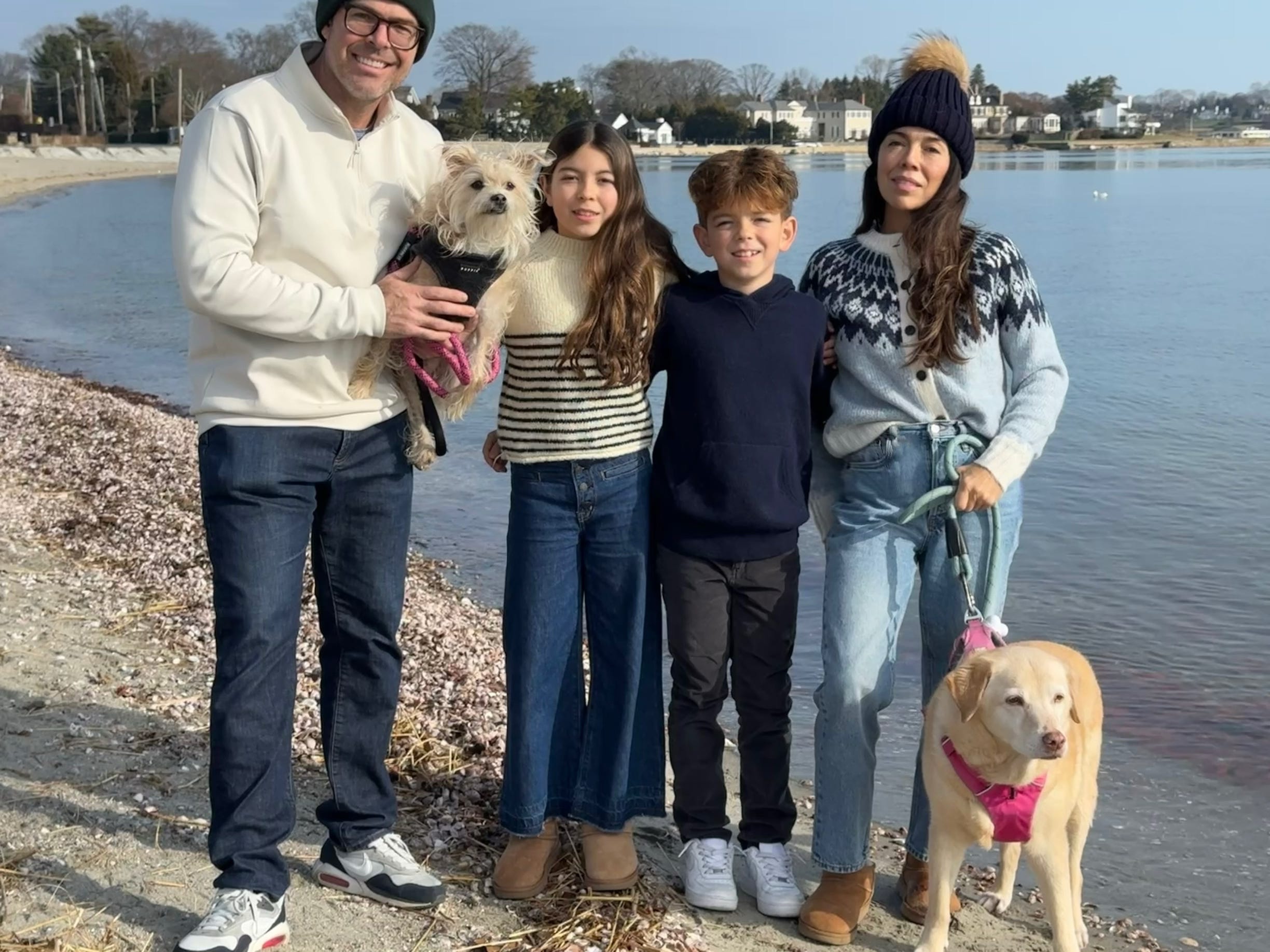
Hearing “you’re good” did not erase the past year and a half. It honored it.
It acknowledged the fight. The patience. The waiting. The work.
Today, the uncertainty lifted. And in its place is something quieter and steadier. Gratitude. Perspective. And a deep commitment to building a better future for patients who will one day sit where I sat.
The Future Patient is no longer theoretical.
I lived it.
John Duffield
TheFuturePatient
No posts
Comments
Nothing yet. Say the first thing.
Sign in to join the conversation.