
Ten years ago this summer, I decided I was done with alcohol.
There was no rock bottom story, no dramatic intervention, no twelve-step revelation. I just... never really liked it. Didn’t do it much. The decision was equal parts health choice and personality move, the thing that made me a little different at parties. I may now have one drink a year, or every other year. A glass of rosé in Cannes. Something to mark an anniversary. But that’s it.
Turns out I was early to a trend. Gallup reported last year that only 54% of American adults drink alcohol, the lowest share in nearly 90 years of polling, with GLP-1s, wellness culture, and Gen Z abstemiousness driving the decline. Cool, cool, cool.
The thing I liked about it was that it made me stand out at parties... the opposite of peer pressure, actually. But now it’s a thing so many others are doing. I’d be smug about it if I weren’t, you know, still terrible at exercise and great at stress. I wonder if it will be as noticeable next month in Cannes?
Yes, I occasionally miss an Old Fashioned after work on a Thursday. But I so rarely socialize IRL these days that there’s way more to miss than the bourbon.
Anyway. Onto the Ps.

I have another year or two before I even think about my own kids starting to drink alcohol... but there are too many other parenting mindfucks on my plate to deal with at the moment.
And mostly, it means coming to terms with my own mediocrity as a parent. As an overachiever in so many other facets of life, well, this one is decidedly an adjustment.
For example: We took exactly one photo at our daughter’s spring middle school band concert and it is, objectively, terrible. Blurry. Half a music stand. The back of someone’s head. The kind of photo that, in a different era, would have been the only photo, and we’d have loved it because it was all we had.
We are beta parents. We are doing our best. And sometimes, our best is a bad concert photo.
I think about this a lot lately, because the alternative version of parenting on offer right now is exhausting in a way I genuinely cannot afford. The version where every developmental milestone is a content opportunity. The version where I’m supposed to have a strong opinion about every app, every screen-time limit, every AI tool, every TikTok trend, every emerging platform my kids might or might not be on. The version where parenting is a project to be optimized rather than a relationship to be... in.
This summer, my son (turning 15 y/o) is set to start his first job as a caddy. Maybe. If he can get his act together. Meanwhile, a new DKC survey of 1,000 parents of 8- to 15-year-olds found that 95% of Gen Alphas are making money, averaging $52 a week, or $2,704 a year, up from $45 two years ago.
Parents said roughly half of household spending decisions come from their Gen Alpha child, 69% learn about brands from their kids, and 71% have changed their own consumer choices based on what their child told them. My kids are CMOs. I am the agency of record. This is fine.
Meanwhile, on the other end of the technology spectrum, cursive is making a comeback among young students who never learned it in school, with extracurricular clubs popping up in high schools and public libraries to teach the looping script Common Core dropped in 2010.
My daughter asked me last week on two separate occasions: “What is the Dewey Decimal System?” and “What is a VCR?”
So Gen Alpha is simultaneously running a small-business empire from the back seat of my car AND learning to sign their name like it’s 1952 but have a massive knowledge gap from all tech from roughly 1975 to 2015. Many things are true at the same time. Welcome to parenting in the multiverse.
And then there’s the AI stuff, which is where the actual stakes start to show.
The Honor System is dead. Princeton’s faculty voted to begin proctoring exams again after 133 years of trusting students to self-police, following a sharp rise in academic dishonesty cases and a senior survey in which 30% admitted to cheating and 28% said they’d used ChatGPT on assignments where it wasn’t allowed.
That’s the college version. The elementary school version is darker, or at least more uncomfortable. Since 2024, around 150 NYC schools have rolled out Amira, an AI reading app whose purple-haired avatar listens to kindergarteners read aloud and collects their voice data. Brooklyn dad Kevin Dugan said his daughter told him, “You know I love iPad math, but regular math is boring,” which is maybe the most chilling sentence I’ve read this month.
The best line came from a six-year-old. Dina, in a pink dress, walked up to the mic at a policy hearing, froze, hid her face in her dad’s sweater, then found her voice: “We look at screens all day, so it’s not actually good for our brains. So I think with indoor recess we could do something more fun. You could play with a friend, you could bring toys. Or you even could read.”
A kindergartener cooked the entire ed-tech industry in three sentences. Respect.
The “How do I talk to my kids about alcohol?” question feels almost quaint. The fight I’m in now is about cognitive ownership. Whether they’re using the tools or the tools are using them. Whether their attention is theirs. Whether they can sit with boredom long enough for an actual idea to show up.
And I don’t have tidy answers. I have a blurry concert photo and a kid who I think is going to be okay.
For now, that’s the work.
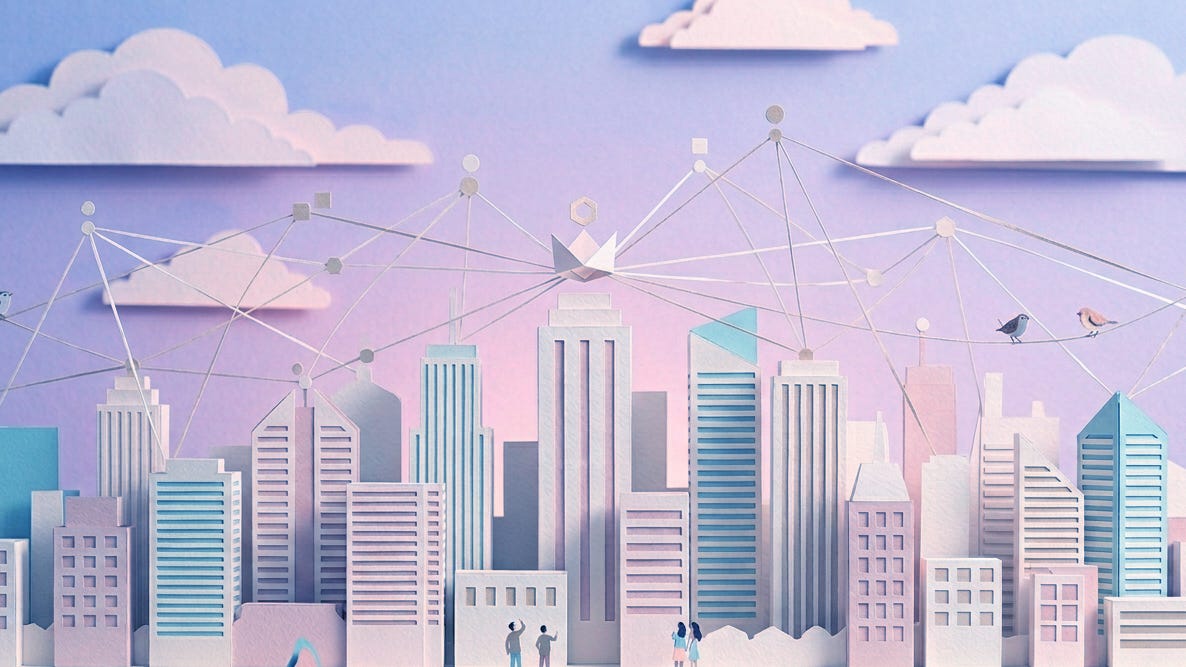
I spent more than 10 years inside agencies as part of a holding company. I spent just as much time working with agencies and holding companies as a partner. So I’ve seen this movie from both sides of the table, and I have opinions. But I waited as long as I could for the dust to settle...
The hot takes on the Publicis-LiveRamp acquisition have subsided, so now it’s time for the smartest one. Last week the debate was about two things: whether LiveRamp can maintain neutrality now that it lives inside a holding company, and whether $2.2 billion for $900 million in revenue was a steal or a stretch. (For the record: it was a steal.)
But that’s not the story. The story is much simpler, and much bigger.
This is an AI play. Full stop.
It’s the move that takes Publicis from “holding company” to “full-stack tech and service leader,” and it’s the clearest signal yet that the holding company model, as we’ve known it for 30 years, is being quietly euthanized from the inside by the smartest player in it.
Look at the acquisition sequence:
2019: Epsilon, $4.4 billion. Deep identity and transactional profiling, bought ahead of third-party cookie deprecation while everyone else was still arguing about whether deprecation was real.
2025: Lotame. Global data connectivity across Europe and APAC, scaling the audience graph to 4 billion profiles.
2026: LiveRamp. The dominant enterprise data collaboration network, locking down interoperability across 25,000 publisher domains.
That’s not three deals. That’s one infrastructure build, executed over seven years, with the patience of a company that knows exactly what it’s doing.
The shift isn’t from cookie to cookieless. That framing is already outdated. The shift is from human-browsed to agent-orchestrated.
AI agents don’t bid on impressions in the way humans designed programmatic to work. They execute transactions directly with publisher and retail media APIs, bypassing the open auction entirely. To do that, they need real-time, deterministic first-party data. Not stale third-party signals. Not modeled lookalikes. The real thing.
Publicis is building the proprietary environment to train and fuel those agents. Every future media allocation, across display, video, search, retail, will either run on their infrastructure or it won’t run at all on theirs. And if you’re a brand inside the Publicis ecosystem, you’re going to have a hard time arguing it should run anywhere else once the agentic solution starts outperforming everything else by 30%.
This is where the neutrality question gets interesting, and also kind of beside the point.
Neutrality stops mattering when the agentic engine is just plainly better than what any other holdco can offer. The decisions get made by AI plugged into “PubliciOS” (or whatever they end up calling it), and humans become advisors at best, spectators at worst.
You don’t worry about whether your accountant is neutral when the accountant is an algorithm that’s already executed the trade.
For brands and advertisers, I think this clarifies a lot: When an agency owns the identity data, pre-purchases the inventory, and builds the agents allocating your budget, they’re no longer a fiduciary partner. They’re a walled garden with a financial interest in their own walls.
And more critically, your first-party data is training models that will eventually serve your competitors. Contractual protection is going to feel like a much weaker shield than it does today. Every campaign you run generates a data trail, including bid signals, behavioral responses, conversion patterns, and that exhaust flows back into the model whether your 1PD is technically ringfenced or not.
There’s no clean exit. The leverage isn’t in the contract. It’s in knowing this is happening and negotiating from there.
Now put ALL of that aside and realize that brands now kinda have nowhere else to go. That’s chess, not checkers. And the rest of the holdcos are still playing checkers.
Supermetrics surveyed 400+ marketing leaders recently and the results tell the rest of the story. Only 6% have AI fully embedded in their workflow. 45% struggle with data and measurement. 39% lack a clear AI vision from leadership. The problem isn’t access to AI tools. It’s the data foundation underneath them.
That’s exactly what Publicis just bought, at scale, before anyone else figured out it was the thing worth buying.
So for everyone else in the industry... it’s what I’ve been saying for the better part of the last year: The layoffs and RIFs we’ve already seen are the warm-up act. California is preparing for this, which should tell you something about the size of what’s coming.
Governor Newsom just issued an executive order this week directing the state to prepare workers and businesses for the “economic disruption” AI is poised to have on the workforce. “This moment demands that we reimagine the entire system,” Newsom said, “how we work, how we govern, how we prepare people for the future.”
The order calls for AI literacy programs, worker ownership models, employment stability payments, and an “AI playbook” for modernizing job training. California has always led on tech regulation, and the federal government has been doing what it does best, which is nothing.
Newsom’s order might not be enough. It may simply be triage. But the fact that a governor is publicly preparing the largest state economy in the country for AI-driven workforce displacement, while the holding companies are publicly buying identity infrastructure, tells you everything you need to know about where this is heading. If only the rest of our country had that kind of leadership and foresight instead of prevaricating threats and excuses to bomb countries.
Back to the war that’s already been decided: the next 10 years of marketing aren’t going to be won by the agency with the best creative shop or the smartest strategist. They’re going to be won by whoever owns the data layer, the identity graph, and the agentic engine sitting on top of both.
Publicis just bought the third leg of the stool. The rest of the holdcos are still trying to figure out what stool they’re sitting on.

I don’t sleep very well.
Part of it is physical (my wife says I’d sleep better if I dropped 10 lbs, but I’m not so sure). Call it restless brain, call it anxiety, call it whatever the wellness people are calling it this month.
The actual diagnosis is simpler. I’m an overthinker.
The latest entry in the catalog of things keeping me up: whether to keep my unplanted saplings and seeded vegetable buds indoors last weekend with the cold and rain rolling in over Memorial Day, or whether to leave them outside to “harden.” Life-altering decisions, literally. For them, not me.
(Although given the way things are going, I may not be far off from having to live off my own vegetable garden, in which case it kind of is about me.)
Anyway. I lay there. I thought about it. I checked the forecast three times. I read a Reddit thread. I considered emailing a guy at our local nursery. At some point around 1 a.m., I realized I was treating a question about tomato seedlings the same way I’d treat a board-level decision at work, and that the problem wasn’t the seedlings.
The problem was the loop.
If you’re an overthinker, you know the loop. It looks like analysis, but it isn’t. Analysis ends. The loop doesn’t. The loop is what happens when your brain confuses thinking about a decision with making one, and rewards itself for staying busy. It feels like diligence. It’s actually a stall.
The part I keep relearning, slowly, and forgetting just as fast: Most overthinking isn’t really about the decision in front of you. It’s about three things underneath it.
Control. We overthink because we believe that if we just think hard enough, we can engineer a guaranteed outcome. We can’t. The future doesn’t run on spreadsheets. The seedlings either survive the cold snap or they don’t, and no amount of 1 a.m. weather-checking changes the actual temperature.
Certainty. We treat certainty as the prerequisite for action, when it’s almost never available for the decisions that actually matter. Every meaningful choice is made with incomplete information. The overthinker keeps waiting for the data to get good enough. It doesn’t.
Failure. This one’s the real one. Underneath most loops is the quiet belief that if you make the wrong call, it will mean something about you. That you’re not smart enough, careful enough, prepared enough. So you keep deliberating, because deliberation feels safer than the moment of commitment where you become responsible for the outcome.
The trick (and I use “trick” loosely, because none of this is actually tricky, just hard) is to notice that the loop is happening and call it what it is. Not “I’m being thorough.” Not “I just want to get it right.” It’s: I’m afraid of being wrong, and I’m using thinking as a substitute for choosing.
The way out, as far as I can tell, is small. You practice on the seedlings. You practice on what to order for dinner. You practice on the email you’ve been drafting for three days. You make the call, you note that you survived, you do it again tomorrow.
Each time, you teach yourself that you don’t need a perfect map to take the next step. The capacity to trust your own judgment is built rep by rep, in the low-stakes moments, so it’s there when the high-stakes moments show up.
For the record, I left the seedlings outside. They’re fine. I’m fine. I still didn’t sleep.

Unlike the weather here locally at the start of summer, the midterm election noise and political ads will heat up over the coming weeks. Get your remotes ready.
Memorial Day Weekend was expensive this year. Gas prices are the highest they’ve been in years. Ground beef is up 24%. We passed on the BBQ and actually went to a restaurant, instead.
The Romans had a phrase for keeping the people content: bread and circuses. Keep them fed, keep them entertained, and they won’t revolt. Somehow I don’t think $10 gas and a UFC fight on the White House lawn is going to cut it.
Summer is unofficially underway, a weekend when we should have all been thinking way more about pool day than pay day. But the national mood is giving less “hot girl summer” and more “broke boy summer.”
The data backs up the vibe. Voters report worsening conditions across most aspects of the economy, with sharp increases in spending on gas. An overwhelming majority have consistently reported paying more for groceries and food. Recent jumps at the pump have brought gas roughly even with food as the top complaint.
Voters also say they’re cutting back on household goods, groceries, and gas. But some categories are inelastic. Utilities, housing, and healthcare are all up, and people show very little flexibility to trade down. There’s no generic-brand version of keeping your lights on or paying your landlord.
This is the political backdrop heading into the midterms, and it’s the backdrop heading into the thing I actually want to talk about, which is the World Cup.
We’re just a few weeks away from the opening games here in the United States. And outside of die-hard fans and the marketing, advertising, and media ecosystem desperately hoping their investments pay off, the volume of excitement has been barely audible.
A large part of that is economic distraction. When the cookout costs 24% more, you’re not springing for a $400 group-stage ticket to watch a team representing a country whose population hates us, and ours has never heard of.
But it’s not just the economy. There’s a political weight on this tournament that wasn’t there a year ago, and I keep coming back to it.
When FIFA decided to go all-in and effectively crown Trump with a “peace prize,” it killed something for me. It made me no longer want to be part of this commercial enterprise in any way that goes beyond watching the games.
The lack of hope in U.S. Men’s Soccer doesn’t help. The expansion to 48 teams, which sounds inclusive on paper but in practice dilutes the early rounds, doesn’t help. Spreading games across Canada, Mexico, and the U.S. is exciting, but all the American group-stage matches on the West Coast doesn’t help either. If you live on the East Coast (or if you’re headed to Cannes), this is a tournament you watch at 10pm ET or 4am CST with one eye open.
And the part that bothers me most: this was supposed to be a once-in-a-lifetime moment for American soccer. The first World Cup on American soil in 32 years. The sport finally getting its mainstream moment alongside MLS growth, Messi at Inter Miami, the women’s game thriving, a generation of kids who grew up actually watching the sport instead of being told it was boring.
We had everything we needed. Infrastructure, audience, timing, talent on the rise. And we managed to suck the air out of the room before the ball was even kicked.
The FIFA executives, the host committees, and the brands betting big are going to learn the same lesson Memorial Day weekend just taught a lot of American families. You can throw the party. That doesn’t mean people can afford to show up. And it doesn’t mean they’re in the mood.
Bread and circuses only works when the bread is affordable, and the circus isn’t owned by the guy you can’t stand.
Some of that’s economic. Some of that’s FIFA. Some of that’s the broader fatigue of living in a country where every major institution feels like it’s been corrupted by proximity to power. But all of it is political, even when it’s dressed up as commercial.
I’ll still watch. I love the sport too much not to. I’ll still text my friends about the upset nobody saw coming and the goal that broke my heart. But the sponsor activations, the host-city storytelling, the marketing campaigns asking me to feel something patriotic about it... no thanks.
Let’s just hope the sport, and its future, are bigger than the people who tried to ruin it.
*AI Disclosure: 100% of this was written by me, a human with only light edits and typo corrections from Grammarly. The images are mostly AI-generated using Nano Banana.
Comments
Nothing yet. Say the first thing.
Sign in to join the conversation.