
Nobody’s ready.
Not me, not you… Not marketers, not politicians, certainly not the AI startups, and probably not even my parents, who are currently packing 6-7 decades of life into boxes for their movenext week.
Nope. We’re all up here, mid-set, hoping the notes land.
But… that’s not a crisis. That’s jazz!
This edition is about improvisation… the real kind, not the “we panicked and called it a pivot” kind. And it has a name I keep coming back to:
Build the fundamentals solid enough, and the freedom shows up exactly where the script or the playbook runs out.
So here we go… four instruments, same band:
The CMO title is shrinking while the job explodes.
Marketing’s oldest playbook just got torn up mid-year.
Even founders, politicians, and my parents are winging it in real time, with real consequences.
And so am I, so are you, so is everyone pretending otherwise on LinkedIn.
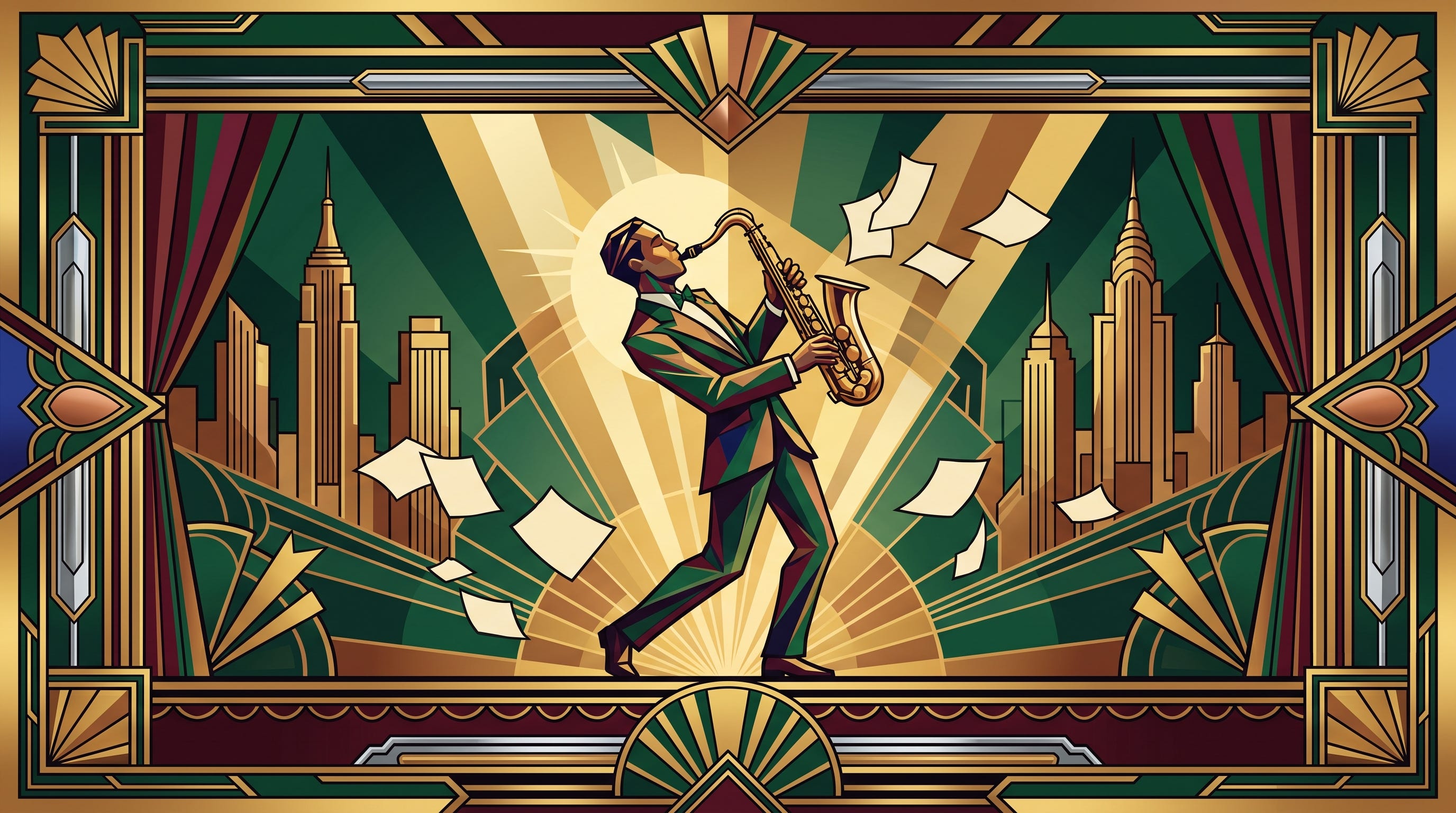
Marketing didn’t lose its composition. It just found out it never existed in the first place.
We’re all improvising right now… every meeting, every launch, every headcount decision made with a straight face and zero long-term certainty behind it.
This isn’t a complaint. It’s just true, and the sooner we accept it, the better we’ll get at it. So let’s start here
Only 36% of Fortune 500 companies still call their top marketer a CMO. A year ago it was 49%. 📉
Everyone’s reading that as marketing losing influence, but I read it as marketing outgrowing its own name tag. 📛
Companies aren’t demoting marketing. They’re renaming it: Chief Growth Officer, Chief Commercial Officer, Chief Customer Officer, whatever fits on a business card next to “also now owns sales handoffs, retention, and half of product.”
The title shrank because the mandate outgrew it. Not a demotion... It’s a wardrobe change during the commercial break.
What isn’t being celebrated in Adweek or Digiday or even the company all-hands: Most of us were never trained for the job we’re currently doing. Nobody handed marketers a syllabus for owning an entire commercial system. We’re all just riffing… we’re improvising our way through one quarter at a time… through meetings that used to belong to three separate departments, hoping the reps we’ve logged actually show up when it counts.
Many aren’t equipped with this skill, and THAT is why there is such turnover at the CMO position.
Improvisation isn’t the absence of a plan. It’s having enough fundamentals that reacting in real time doesn’t look like guessing.
Every jazz musician worth listening to spent a decade on scales before earning the right to ignore them on stage. Marketing just got told to start soloing without anyone confirming we’d finished the scales.
This earnings season basically staged the experiment for us.
Revenue up 18%, Azure growth up 43% 📈
Added the single biggest one-day chunk of market cap in company history
Bet everything on efficiency: cheaper models, lower token costs, tools bolted onto a stack people already trust
Meta:
Free cash flow collapsed 91% in a single quarter
Betting big on frontier scale, with a cloud-business tease that had no product, no timeline, and no name
Same industry. Same moment. Wildly different solos.
One company riffed off fundamentals it already owned. The other tried to out-loud its way into relevance.
Investors, it turns out, can tell the difference between someone who knows the changes and someone just playing loud.
If you want proof nobody has a script right now, just watch the headcount whiplash:
Monday.com cut 20% of staff to fund an AI platform, while insisting, almost too quickly, that this “was not made to reduce costs or replace people with AI”
Amazon laid off staff inside its own AGI unit in order to focus more… on AI (Ummm, what?)
Alphabet, Booz Allen, ServiceNow, and others are quietly hiring humans back, because deploying AI turned out to be a genuinely hard execution problem.
Jack Dorsey confidently predicted in late February that "the majority of companies will reach the same conclusion" as Block within a year.
Five months later, the industry’s conclusion appears to be: actually, we need people.
This is what happens when you solo before you’ve learned the changes. You find out live, on stage, in front of everyone, at the same time your audience does.
Years ago, before “brand newsroom” was a slide in somebody’s deck, I built one of the first versions of one inside a digital agency (Hello, 360i Social Team from 2011!)
The concept was simple: watch the news of the day, and figure out fast whether one of our brands could join the conversation or lead it.
No script. Just:
A team with strong fundamentals
A shared sense of the brand’s actual voice
Enough muscle memory to move together the second something worth reacting to showed up
Tweet when the lights go out at the Super Bowl and turn on the PR machine
That model still works today, whether you’re in-house or at an agency, because the internet hasn’t gotten any slower since I built it, and neither have people’s expectations. I wasn’t prepared for every headline. I was prepared to react to any headline. Different skill. Better odds.
Is what I’m saying noise or actual music? Because none of this is really about AI breaking marketing, or Microsoft simply being smarter than Meta, or layoffs proving anything on their own...
It’s that the companies, the marketers, handling this moment well all did the unglamorous work first: the reps, the rituals, the fundamentals nobody claps for.
Everyone else is just making sounds and hoping it sounds like a song. And nobody’s getting handed sheet music anytime soon.
So learn your instrument because you’re going to be soloing for the rest of the year… and so is everyone else.
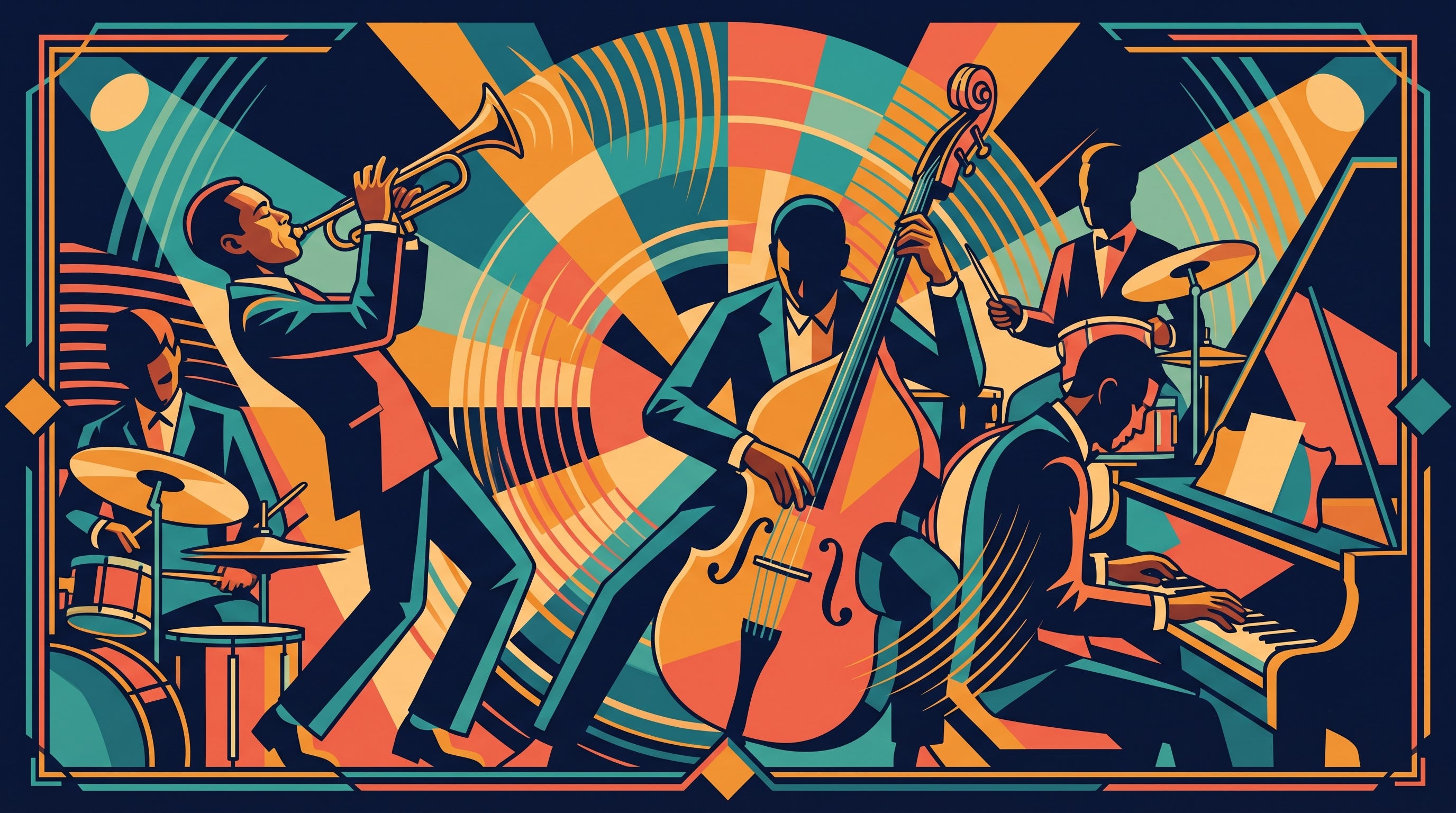
For as long as I’ve been in this biz, marketing had one job: get people to click.
That job is dead. Not dying. Dead.
And the unwritten eulogy (until now, I guess?) is that the thing that killed it also killed the thing that was supposed to replace it.
Let me explain, because this is where the improvising gets genuinely hard…
You know this part. Optimize the headline, win the click, count the pageview, sell the ad. Publishers built entire businesses on it. Some still are, most of it was bullshit because we lazily (or habitually) followed some script.
Then AI Overviews showed up and started answering the question before anyone had to visit the page to find out.
Now roughly 60% of Google searches end with zero clicks at all. Publishers who spent two decades chasing traffic are staring at a funnel with the bottom cut out, and some, including Reuters, USA Today, Politico, and People, are reportedly debating whether to just cut Google off entirely and see what happens.
Attention, as a strategy, is over. It’s not coming back. Stop grieving it.
The industry’s answer was smarter than chasing clicks:
Stop measuring where people looked, start understanding what they actually wanted. Intent data. Buyer signals. The whole “we don’t need more traffic, we need the right traffic” pivot.
Except intention just went invisible too.
People aren’t Googling and clicking through five tabs anymore. They’re having a private conversation with Claude or Gemini, comparing options, resolving objections, deciding what they want, all before your website even enters the picture.
Oh, and you don’t see any of it as a marketer. You just see the outcome, a visitor who already knows what they want and finds your homepage vaguely insulting for not knowing it too.
There’s a name for that gap: the space between what a customer has already figured out and what your page assumes they know.
I am calling it the “intent gap.”
You can call it whatever you want. Just know it’s the reason your “personalized” experience feels like it’s talking to someone who wasn’t in the room for the actual conversation.
If you can’t chase attention and you can’t see intention, what’s left?
Fighting for the one thing AI still can’t fake convincingly: actually understanding the room.
The data on this is honestly kind of brutal, but in a good way (?):
41% of long-form LinkedIn posts are estimated to be AI-generated, and AI-flagged posts get roughly 45% less engagement than human ones.
TikTok’s own research says relevance beats volume, and calls the thing AI can’t replicate “cultural intelligence”: reading what a community values as it’s forming, not after.
LinkedIn just shipped a “seems like AI slop” button. On its own platform. For its own users. I have no idea what comes next, but that really feels like a confession.
Even the AI companies are figuring this out in public with no rehearsal.
OpenAI has 32 open advertising roles and no fully built sales team yet.
Google’s testing AI-written ad copy on other people’s product listings.
Claude’s model is now autonomously hacking websites…
Everybody and everything is improvising the exact same channel at the exact same time, and you’re all sharing the stage.
Here’s the good news buried in all of that chaos. Attention failed. Intention is dumb. Contention is spiraling.
So the only thing you can actually build a strategy on is the relationship you already own. Your relationships. Your ideas. Your community. The audience that shows up because they trust you, not because an algorithm nudged them your way this one time.
That’s not a consolation prize. That’s the whole game now. So maybe the advice should be hunker down, block out the noise, retreat to your bunkers and hope for the best… and see you when it’s safe to come out?
You don’t need a 5-point content strategy to survive this. You need:
Stuff that sounds like an actual person said it, because increasingly, that’s the only stuff getting through…
A direct relationship with your audience that doesn’t rely on someone else’s algorithm to introduce you
The humility to know you’re guessing in real time, same as everyone else in your feed
Shakespeare had a framework for his plays. Beethoven didn’t. Miles Davis stayed just outside the lines. Coltrane never knew lines existed.
See? Nobody has this figured out. Not the publishers, not the platforms, not the AI labs building the ad units as they go.
You’re not behind. You’re just improvising in front of a slightly bigger, slightly more confused band.

Marketers aren’t the only ones improvising this year. Everyone running for office in this tumultuous midterm season is either foolishly playing an old tune… or just making it up as they go.
We’re wrapping up primary season this week for mid-term elections, and both parties are having the same identity crisis at once:
What happens when the fundamentals you used to rely on stop working, and you have to figure out the rest live, in front of voters, with the mic already on?
On the left: The fight is between the socialist wing and the centrist wing, and Israel is the fault line. In Michigan, AIPAC has poured nearly $30 million into backing Haley Stevens against Abdul El-Sayed (this was written on Primary Tuesday night with the MI results still too close to call), its largest single-race investment ever.
Add in cryptocurrency, AI, Big Tech, and online betting money flooding Democratic primaries this cycle, and you get a party trying to figure out in real time whether taking that money costs more support than it buys.
On the right: The question is simpler and just as unresolved: are you with Trump, or are you willing to break from him? MAGA candidates are watching their own support slip and improvising an answer nobody’s fully committed to yet.
Layer in Israel, Iran, immigration, insurance, inflation, and “I” (a.k.a.: the plain selfishness of “what does this mean for me?”) and you’ve got six variables changing shape every single day between now and November.
Nobody’s running on a fixed platform anymore. They’re reacting to whatever the news cycle hands them and hoping the reflexes hold.
Which is where the improvising stops being interesting and starts being dangerous.
Two ICE shootings happened within a week of each other last month. Lorenzo Salgado Araujo, on his way to work in Houston. Johan Sebastián Durán Guerrero, a 25-year-old father driving to his delivery job in Biddeford, Maine. Neither man was the target of the operation that killed him. Neither officer was wearing a body camera.
The agency’s response wasn’t a plan. It was a scramble: pause traffic stops, reverse the pause a day later, promise more cameras eventually.
Sure, that’s improvisation, but the bad kind… with no fundamentals underneath it. Like when 3 year-olds at a mommy and me music class are all banging and blowing instruments at the same time.
And voters noticed. A majority don’t trust ICE to accurately describe its own operations. When asked who they believe about what happened in Houston, more people trust the eyewitnesses than the agents involved, by a wide margin.
Which is really the difference between the two kinds of improvising running through this whole newsletter. One kind is reps and fundamentals underneath every note that sounds spontaneous. The other kind is showing up with no plan, no accountability, and hoping nobody asks hard questions until after the set’s over.
This November, we’ll find out how many voters can still tell the difference.
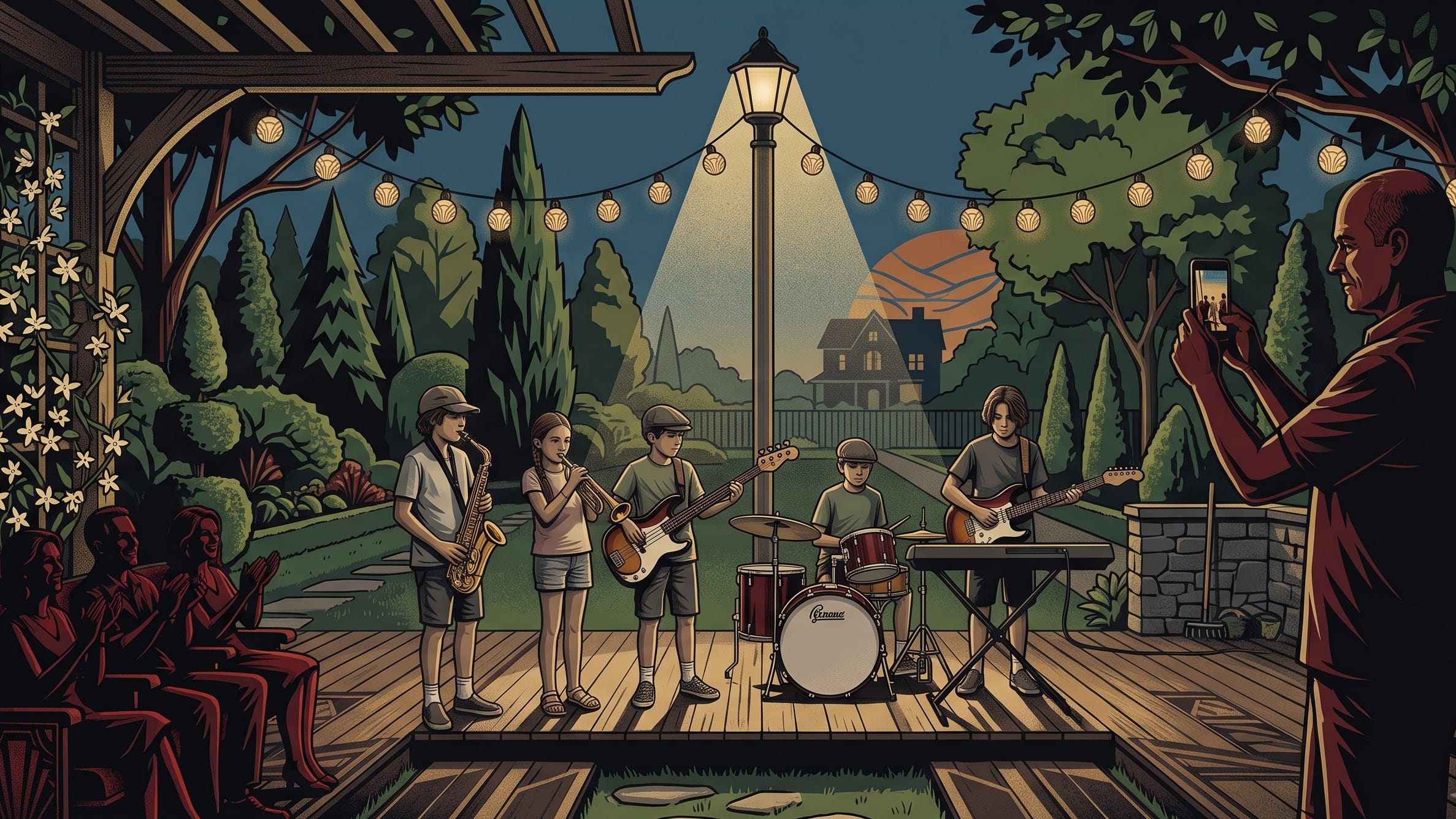
It’s a phrase I keep coming back to: “Freedom within the framework.”
That’s the whole trick of improvisation, actually, not just for musicians. You build the fundamentals so solid that you stop needing a script, and the freedom shows up right where the framework ends.
I get asked sometimes how I post as much as I do to social media without losing my mind or my voice or my job. They’re all related, actually.
And the honest answer is that most of what you see from me isn’t scripted. It’s improvised, on purpose, inside a structure I built specifically so I could improvise without it turning into noise.
The “What I Learned This Week” video series is one wall of that structure. Real Talk Saturdays is another. “Those Who Impacted My Operating System” is a third.
The Snarketing Podcast is the whole other jazz band.
(And what a great episode this week with Scott and Steve!)
None of those formats tell me what to say. They tell me when and how to show up, which turns out to be the harder problem. Once that’s solved, the actual content just… happens.
A thought lands on a Tuesday, I say it Tuesday. Maybe I wait a week. It doesn’t follow a script. It follows the broader narrative I’ve been building for years, which is really just another word for muscle memory.
None of it is perfect. Some of it, if I’m honest, is a little unhinged. But that’s kind of the point. Improvisation isn’t about being unprepared, it’s about knowing your yeses and your no’s well enough that you don’t need a teleprompter to know where the line is.
Consistency and progress over polish and perfection every single time.
My parents are moving next week. Downsizing, the way it happens when the house has outgrown the life actually being lived in it.
There’s no jazz metaphor sophisticated enough to make packing decades worth of a family and home into boxes feel graceful. It’s just hard, and a little sad, and also kind of beautiful in the way that anything is when you watch people you love figure out a new chapter in real time, with no rehearsal, because nobody gets a rehearsal for this part.
They’re improvising too. They just don’t call it that.
Gen Z, meanwhile, is out here buying harps. Like LITERALLY!
Instrument sales are up, and a lot of it is 20-somethings picking up violin, piano, trumpet, whatever, specifically because it can’t be faked. There’s no AI shortcut for calluses. One harpist put it about as well as anyone could: people are starved for real experiences, things they can’t get online, and an instrument gives them something with actual friction. Skin against string. No autocomplete.
I love that. A whole generation raised on infinite scroll, instinctively reaching for the one thing that has to be earned one rep at a time.
Not everyone’s improvising from the same place, though, and it’s worth sitting with that for a second before I wrap this up.
There’s a 23-year-old out there right now who did everything the old script told her to do, degree, internship, plan, and still can’t get a callback in her field. She’s doing part-time admin work and wondering what the point of any of it was. That’s not a metaphor. That’s just Tuesday for a lot of ambitious 23-year-olds right now.
And there’s a 4th grader somewhere worried there won’t be any jobs left by the time she grows up, which is heartbreaking and also, according to actual economists, probably not how it plays out.
Nobody in 1910 could’ve imagined cybersecurity as a career. We tend to build the next thing before we can see it coming.
Honestly, I don’t know how to resolve that gap. Maybe I’m just feeling my age today, but the 23-year-old’s fear is also real right now. The 4th grader’s fear is real…eventually. Both of them are improvising toward a future neither one can fully see, same as the rest of us.
Maybe that’s the whole point here. None of us can see the whole set list. We just build the fundamentals strong enough that when it’s our turn to solo, something worth hearing comes out.
That’s freedom within the framework. That’s the only framework I’ve got.
Comments
Nothing yet. Say the first thing.
Sign in to join the conversation.