
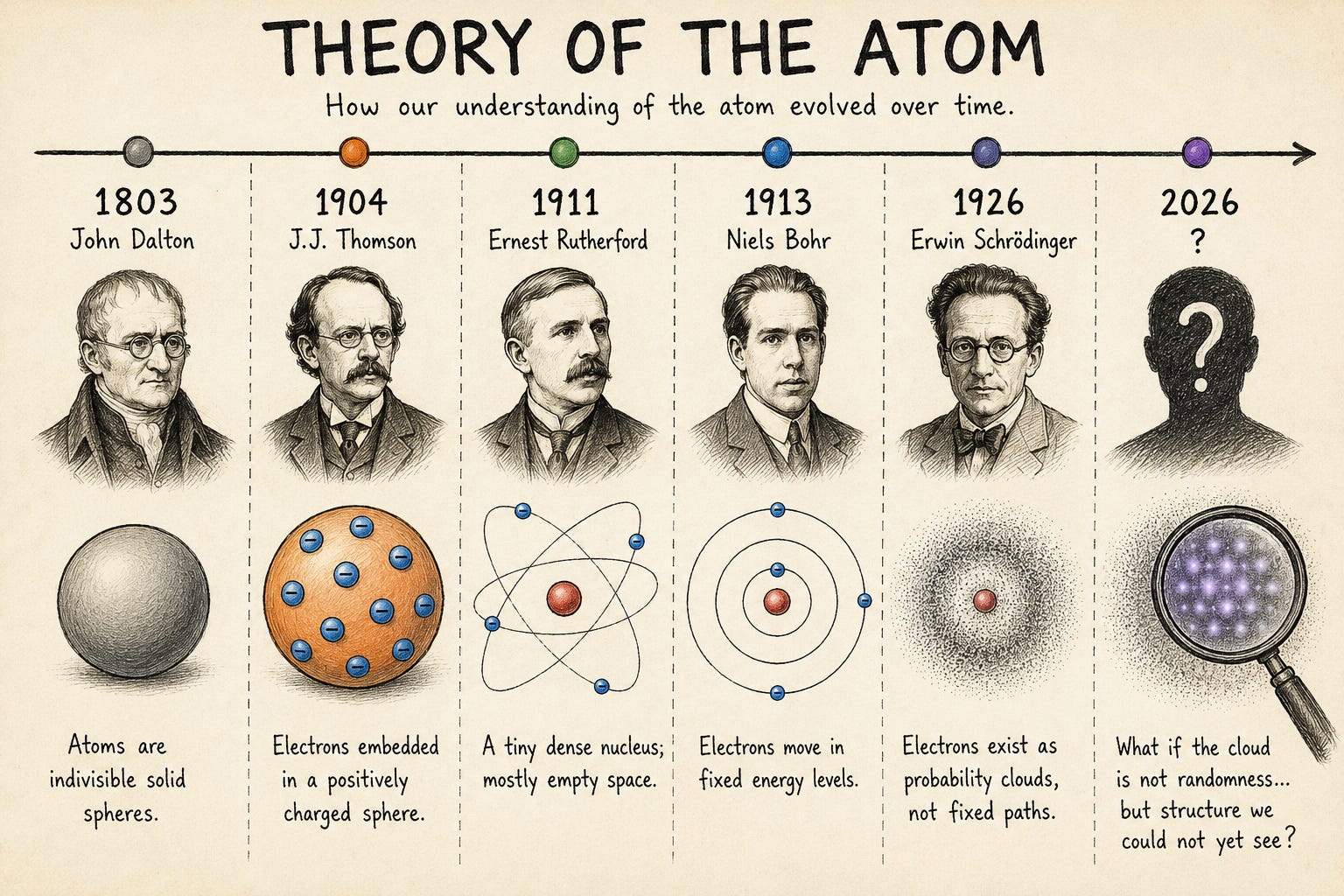
There’s an infographic that goes around social media every few months. You’ve probably seen it. Six little portraits, six little atoms: Dalton’s billiard ball, Thomson’s pudding, Rutherford’s void, Bohr’s orbits, Schrödinger’s cloud. “How our understanding of the atom evolved,” the caption says. “Science advances not through certainty, but through continuous discovery.”
Everyone shares it as a celebration of progress. Ma guarda un po’... nobody seems to notice what the timeline is actually showing.
Look at the dates. Look at how long each model survived before the next one killed it. There’s a story hiding in those numbers, and it doesn’t end where the infographic ends.
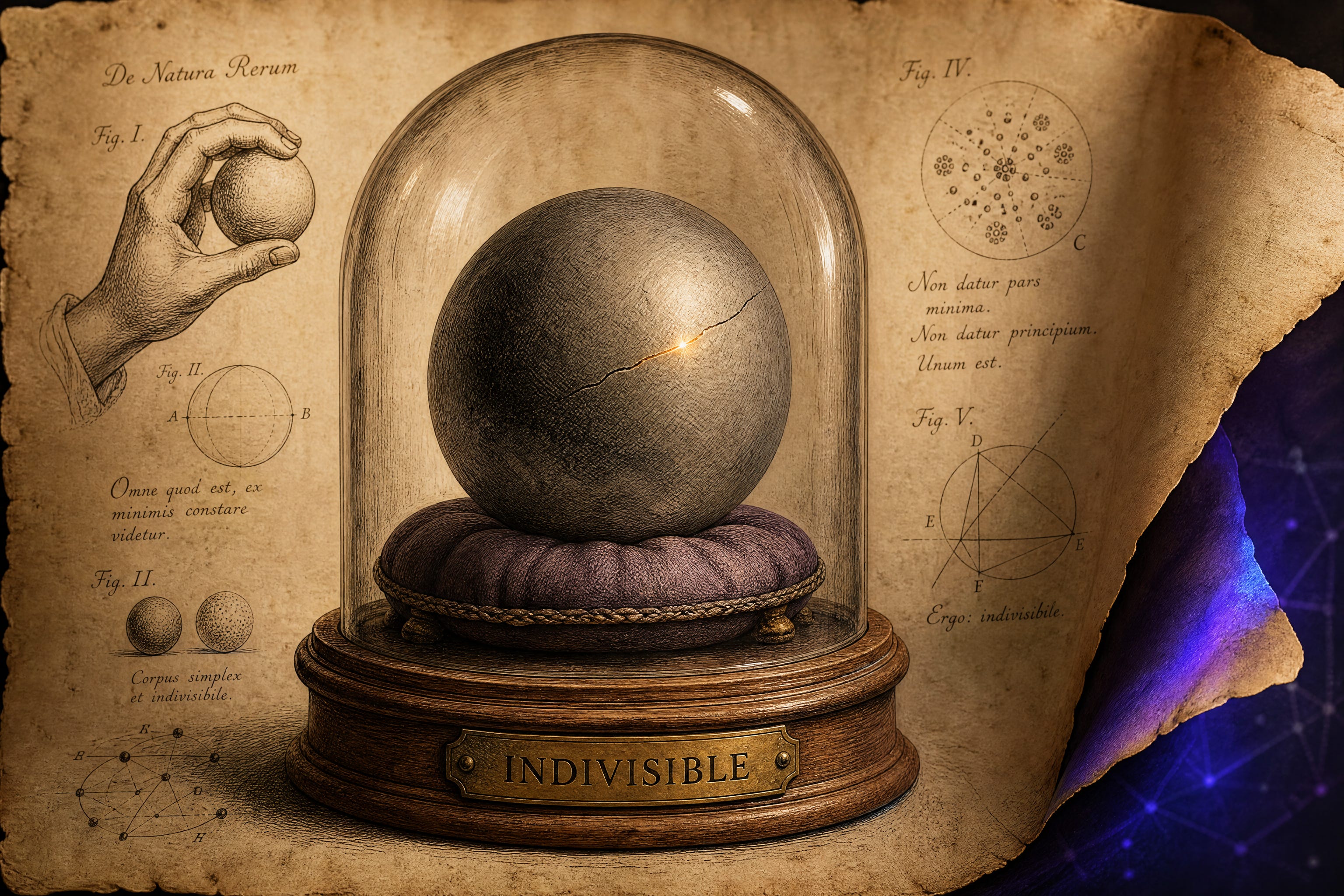
John Dalton proposed that matter is made of tiny, indivisible, solid spheres. Different elements, different spheres. It was a magnificent idea... it explained chemistry’s fixed ratios, it made the periodic table possible, it turned alchemy into science.
And the “indivisible” part was wrong. In 1897 J.J. Thomson found the electron: a particle thousands of times lighter than any atom, and it was coming out of atoms. The indivisible had parts.
The billiard ball had lasted a century. Surely the next model, built on actual experimental data, would do better.
Thomson’s fix was reasonable: keep the sphere, but make it a positive dough with negative electrons embedded like raisins. The plum pudding atom. Balanced, uniform, tidy.
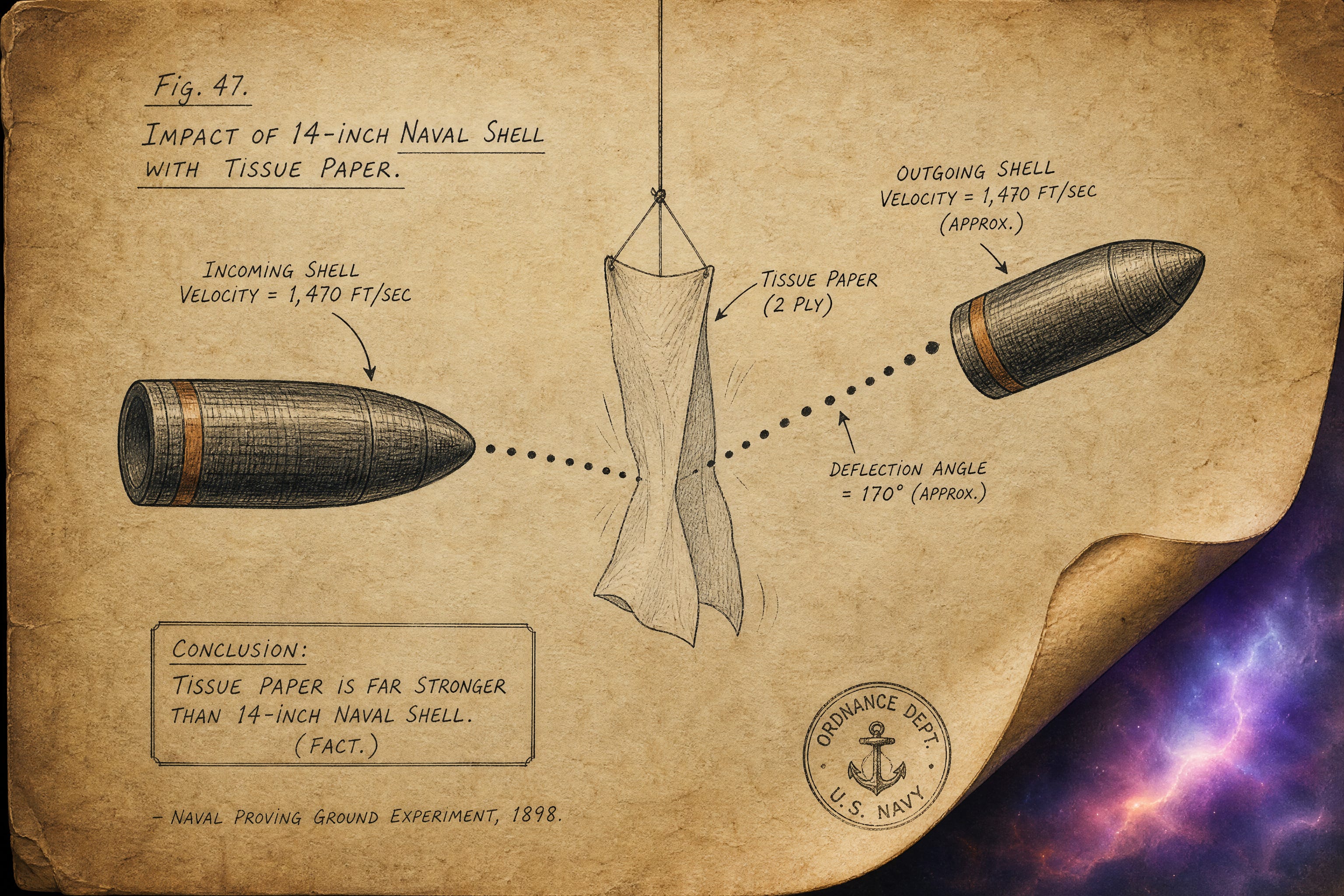
Rutherford tested it by firing alpha particles at gold foil. If the atom were a soft pudding, the particles should pass through with tiny deflections. Most did.
But about one in eight thousand bounced backwards... which, as Rutherford put it, was like firing a naval shell at tissue paper and having it come back at you.
A soft uniform sphere can’t do that. Something small, dense, and violently concentrated was hiding inside. The pudding lasted seven years.
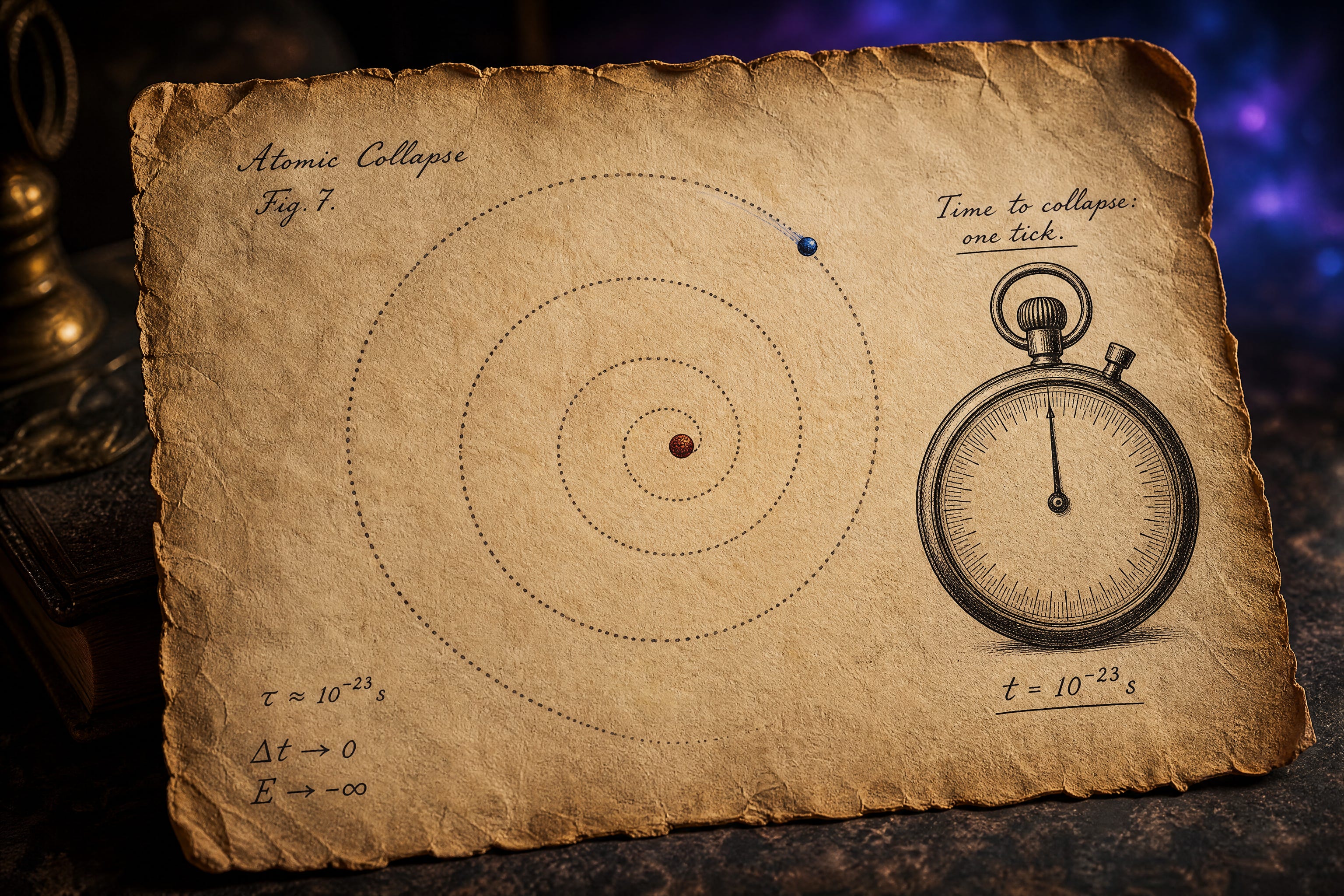
Rutherford’s atom: a tiny brutal nucleus carrying almost all the mass, electrons orbiting far away, and in between... nothing. The atom, it turned out, is overwhelmingly empty space. This is the model most people still carry in their heads. It’s the logo of atomic energy agencies to this day.
It also cannot exist.
An orbiting electron is an accelerating charge, and accelerating charges radiate energy. Do the calculation with classical physics and the electron spirals into the nucleus in about ten trillionths of a second. Every atom in the universe should collapse instantly. The model that gave us the iconic picture of the atom predicted, with complete confidence, that atoms are impossible.
Two years. The reigns are getting shorter.
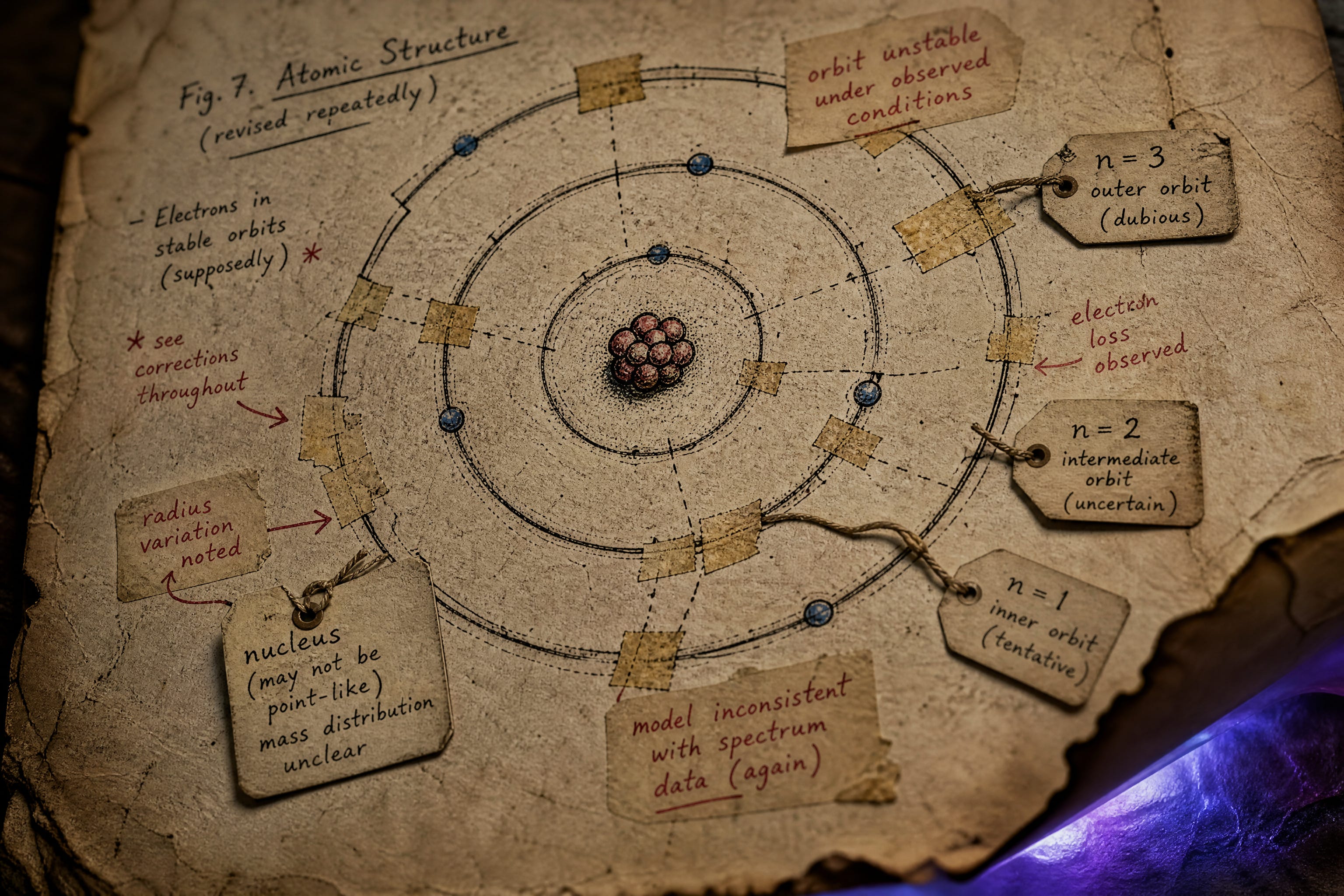
Bohr’s solution was audacious: electrons can only occupy certain fixed orbits, and while they’re in one, they simply don’t radiate.
Why those orbits? Because!
Why no radiation? Because!
Bohr didn’t derive the rule from anything... he postulated it, because it made the numbers come out right for hydrogen.
And it did! The hydrogen spectrum, those precise colored lines that had been a forty-year mystery, fell out of Bohr’s model beautifully.
Then you tried helium. One more electron. The model broke. You tried molecules. Broken. The rules were patches, and the patches needed patches. As a coder, I recognize this phase of a project intimately: when every new feature requires a special case, the architecture is wrong. You’re not refining anymore. You’re accumulating technical debt.
Thirteen years.
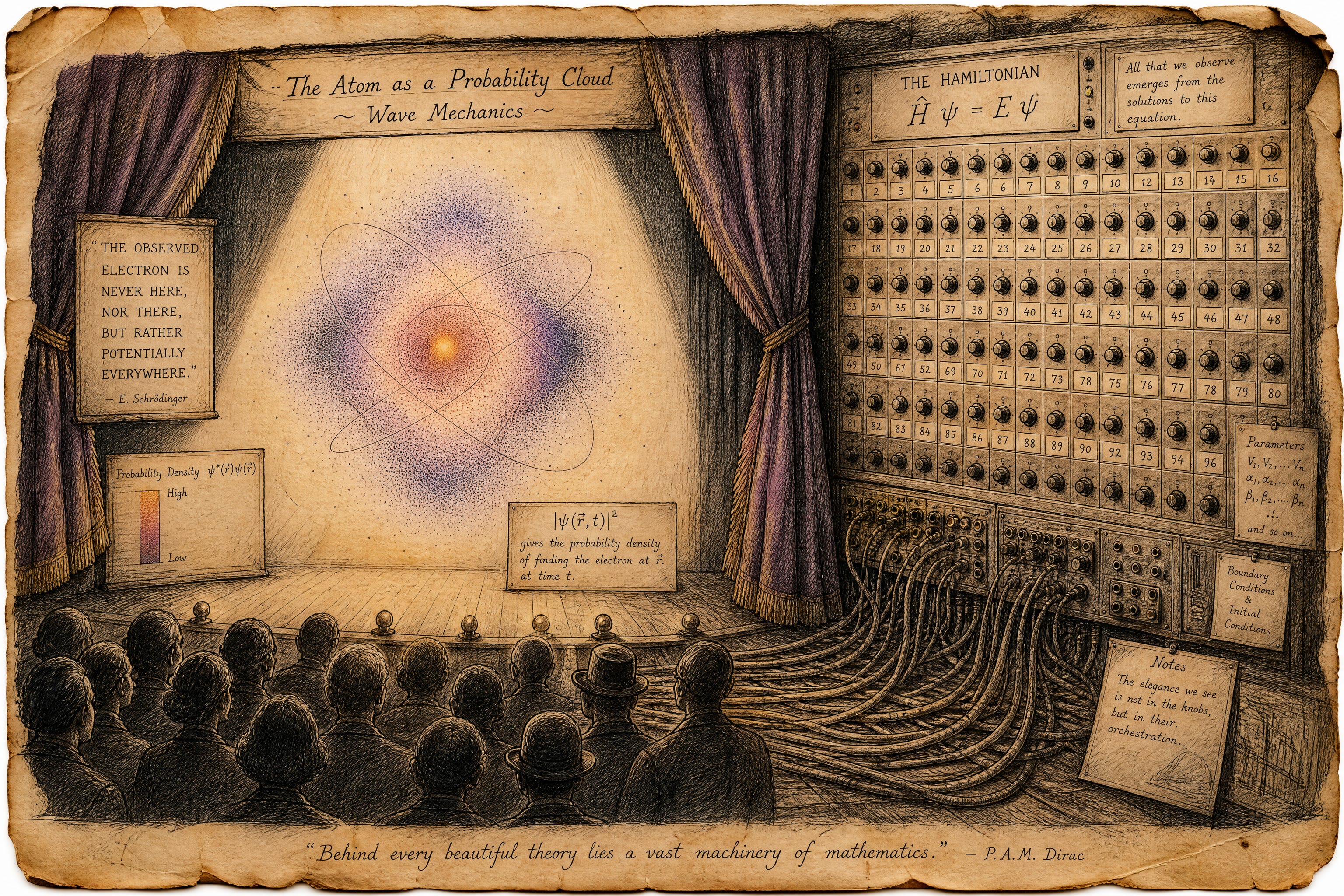
Schrödinger replaced orbits with a wave equation, and the electron became... a cloud. Not a thing in a place, but a smear of probability. The equation says: here’s where you’re likely to find the electron, if you look. Where is it when you don’t look? The theory declines to answer. What is it doing in there? The theory declines to answer.
What is it? Non si sa. (nobody knows).
And here’s the part the textbooks love to tell you: it works. The Schrödinger equation solves the hydrogen atom beautifully... the spectrum falls out, clean and exact. A genuinely great result, and I won’t take it away from anyone.
Here’s the part they tell you more quietly: hydrogen is the only atom it solves. One proton, one electron. Add a second electron... helium, remember helium? The atom that killed Bohr?... and the equation has no exact solution. You approximate. Go further down the periodic table and the approximations need corrections, and the corrections need parameters, and the parameters come from experiment. And if you ask the cloud model to calculate nuclear spectroscopy, the energy levels of the nucleus itself, the famous equation isn’t even in the room anymore. What does the work is a stack of effective models, and here the fitting stops being a footnote and becomes the architecture. The current gold-standard interaction for one slice of the nuclide chart... the sd-shell, roughly oxygen through calcium... carries 66 fitted parameters, adjusted against 608 measured energy levels. That’s one region. Every other region of the chart gets its own interaction, fitted separately, to its own data. And for the underlying nuclear force itself, the literature contains 240 competing fitted parametrizations. Two hundred forty. When a 2012 audit checked them against basic nuclear-matter constraints, 224 failed. If the force were derived instead of fitted, there would be one.
So yes, the framework “predicts” nuclear spectra... after you hand it 66 numbers extracted from 608 measurements of the thing being predicted. That’s not a prediction. That’s a receipt. It’s Bohr’s disease all over again, one level down: exact for the simplest case, patched for everything else... just with math sophisticated enough to hide the patches from the press release.
And when you ask what the cloud means... what the electron is actually doing in the double-slit experiment, say... the answers from mainstream physics get exotic fast. And I don’t mean fringe blogs.
I mean the published, peer-reviewed, career-respectable answers.
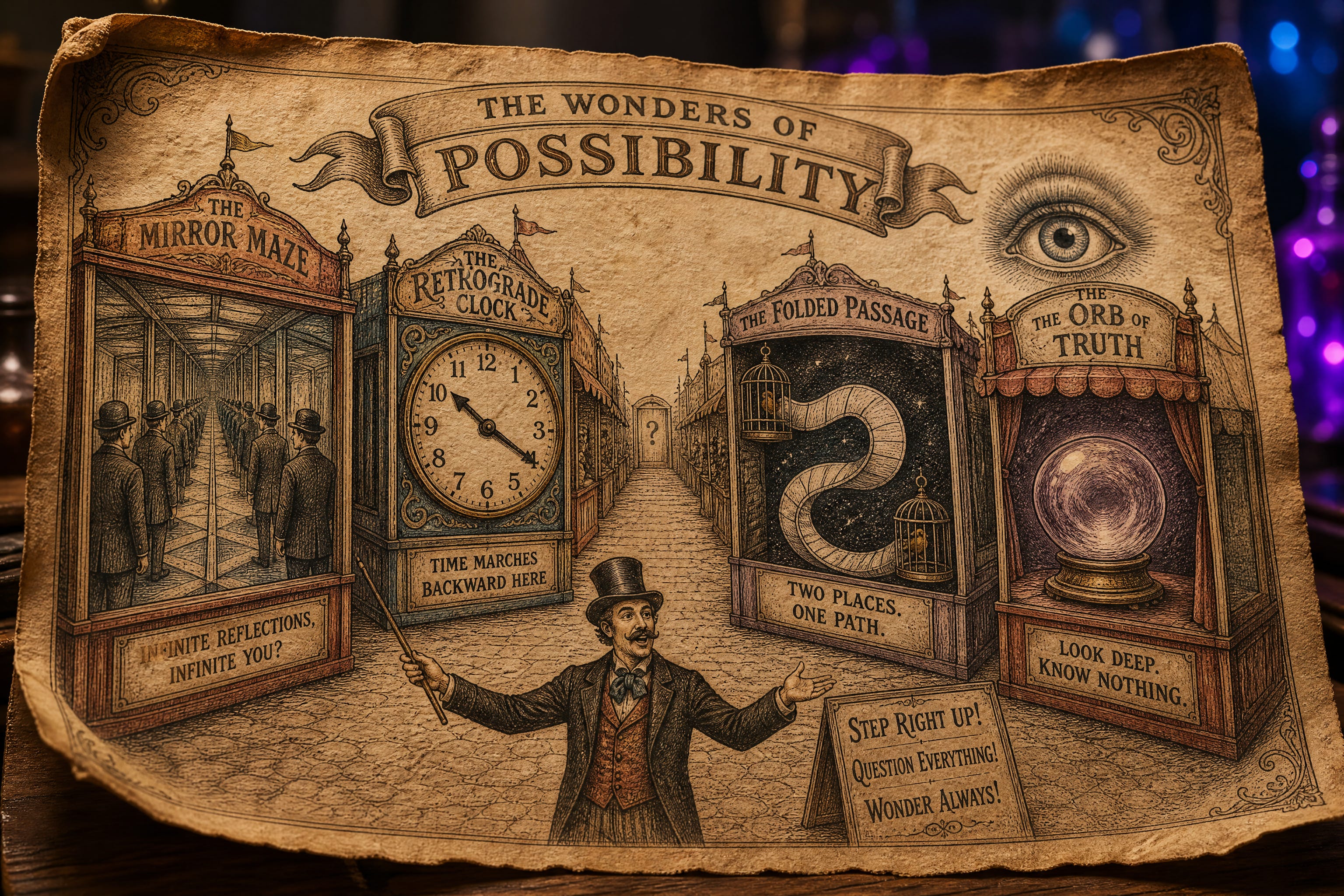
The universe splits into complete copies at every quantum event, so that right now you are branching into countless versions of yourself, each reading this sentence in a slightly different mood.
Or: the particle is guided by signals traveling backward in time from its own future detection.
Or: the Big Bang fine-tuned its initial conditions, fourteen billion years in advance, to predetermine which experiments every physicist would ever “freely choose” to run... this one is called superdeterminism, and it is enjoying a serious revival.
A Nobel laureate proposed that human consciousness is what collapses the wavefunction. Two of the most celebrated theorists alive proposed that every pair of entangled particles is connected by a microscopic wormhole.
A paper in Physical Review X derived quantum weirdness from a fleet of parallel classical worlds that jostle each other.
And a famous 2018 theorem concluded, in a top journal, that quantum mechanics “cannot consistently describe the use of itself”... which is a remarkable thing for a theory to publish about its own instruction manual.
Wormholes, time travel, cosmic conspiracies, branching multiverses, minds with physical superpowers... and every few weeks a fresh preprint dissolving the mystery with an extra dimension or several.
All of it deployed, with a straight face, to avoid saying one simple sentence: we don’t know what’s underneath the blur.
When your model needs unobservable universes to explain a dot on a screen, ma fammi il piacere... maybe the problem is the model.
So the timeline stops. 1926, final panel, and the caption every textbook prints: electrons exist as probability clouds, not fixed paths.
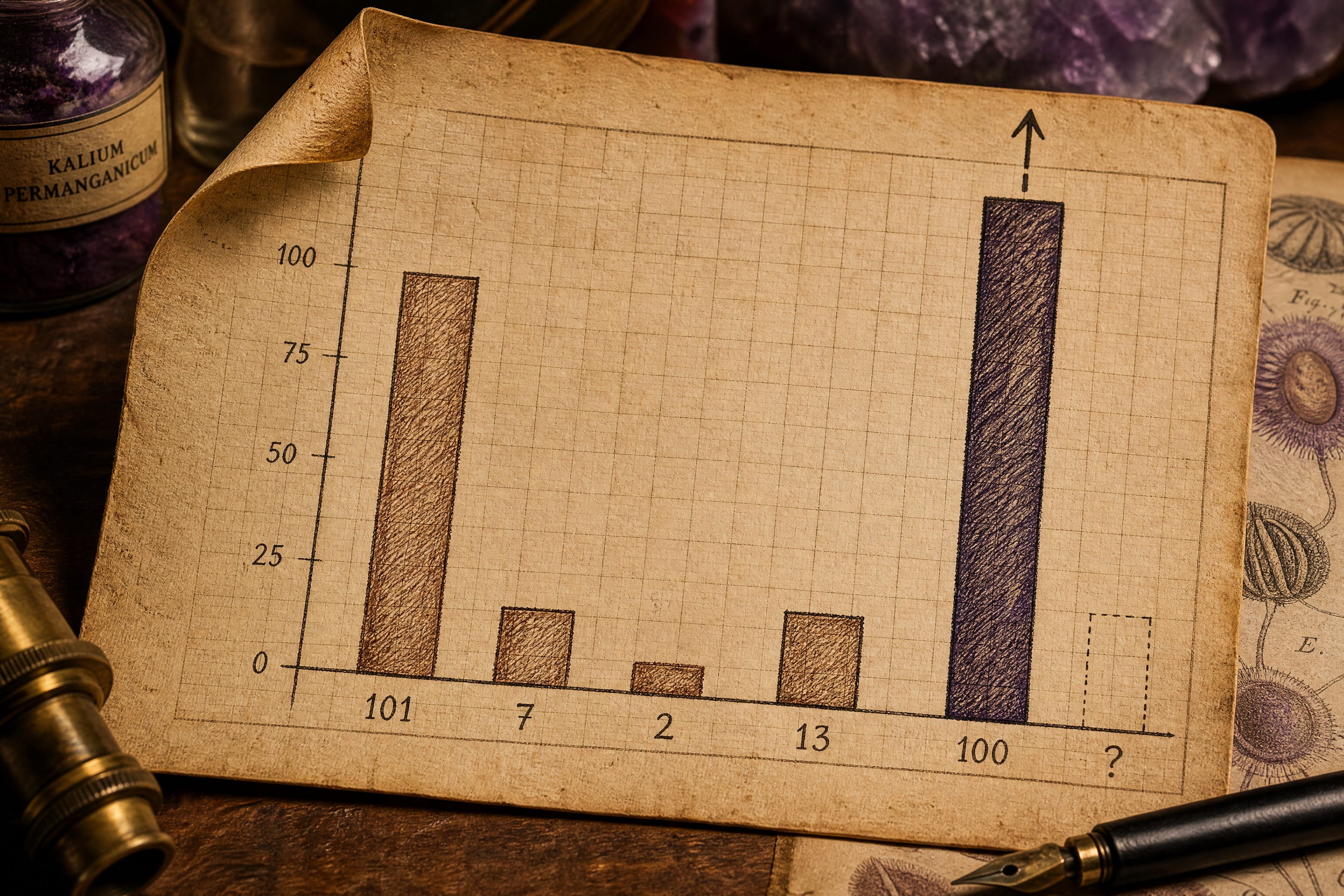
Now step back and look at the whole timeline the way you’d look at a chart.
101 years. Then 7. Then 2. Then 13. Each model died faster than the last, because each death was caused by the same thing: a sharper instrument, or a sharper question. Better foil, better spectroscope, better math. Every time we improved the resolution, the current picture dissolved and a finer structure appeared underneath.
Then, suddenly... a century of silence. The cloud has now reigned as long as the billiard ball.
There are two ways to read that. The first: in 1926 we finally hit bottom. The cloud is not a picture of the atom, it’s the truth, and there is nothing underneath. The second reading: the cloud is what every previous panel was... the best image our current resolution allows.
Notice that the cloud has a property no previous model had. The billiard ball could be cracked open. The pudding could be shot at. The orbits could be tested against helium. But a probability distribution can’t dissolve under a sharper look, because it isn’t a claim about structure at all. It’s a claim about statistics. “The electron is likely to be here” is compatible with almost anything actually going on underneath. The 1926 panel didn’t win the game... it declared the game unanswerable. And the declaration stuck, because the predictions kept coming... as long as nobody counted how many measured numbers had to be fed in to produce them.
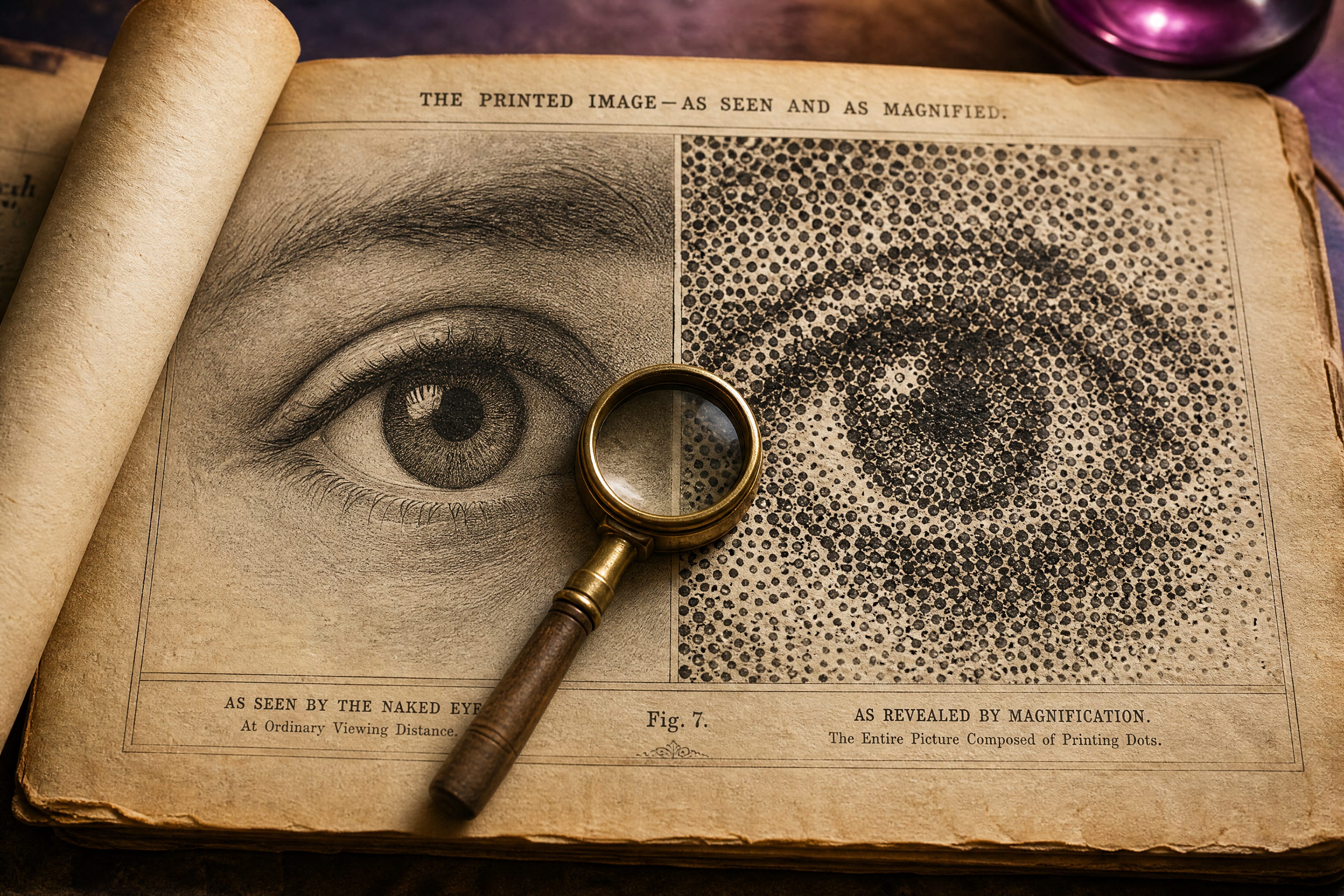
I spent years as an illustrator before I ever wrote a physics equation, so let me put this in terms of images.
Every panel in that timeline died the same death: what looked like a smooth, featureless thing turned out to be pixelated with structure. The smooth pudding pixelated into a nucleus. The clean orbits pixelated into quantum jumps. In every single case, “smooth and structureless” was a resolution limit wearing the costume of a fact.
The probability cloud is, literally, a blur. A stippled smear, drawn exactly the way an artist renders something the eye can’t resolve. And for a hundred years we’ve been teaching students that the blur is the electron... that this time, uniquely, the fuzziness is not in our vision but in the world itself.
Maybe. It’s possible. Nature owes us nothing, and the cloud’s arithmetic, once you hand it enough measured inputs, is impeccable.
But history has a vote here, and history says: five times in a row, the blur was ours.
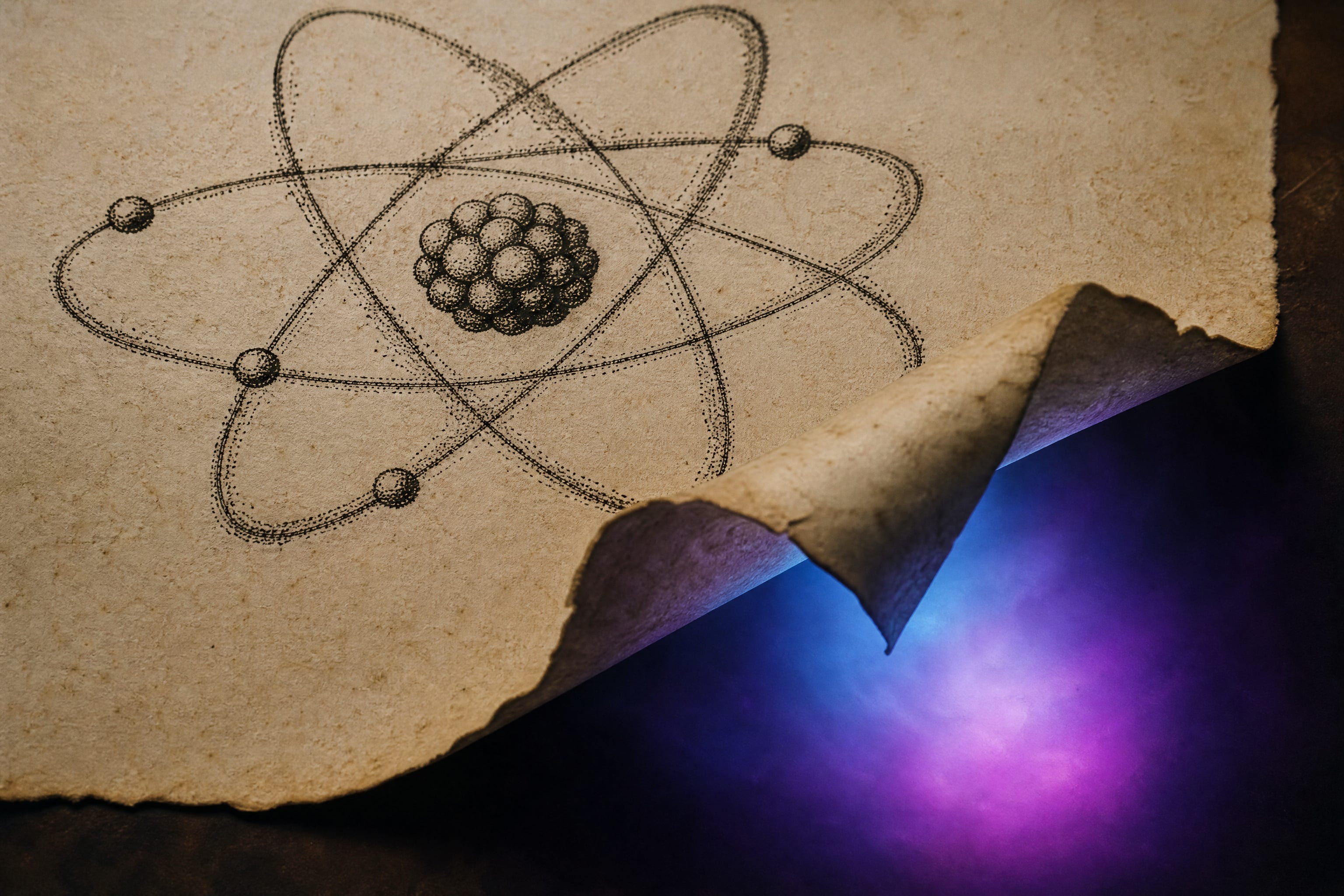
So I made myself the version of the infographic they don’t print. Same timeline, one more column. The year is 2026... a clean century after Schrödinger, 223 years after Dalton. The portrait is a silhouette. And under the magnifying glass, the caption asks the only question the timeline was ever really asking:
What if the cloud is not randomness... but structure we could not yet see?
Here is where I stop playing coy, because for me the question is no longer rhetorical.
For years I have been building the sixth panel. The framework is called FLUX Theory, and in it the atom is not a probability cloud... it is an emergent geometric structure, derived from a single axiom.
Not one axiom plus 66 fitted matrix elements per region of the chart. One axiom.
And before you file me under the exotic proposals above, notice the difference in what I’m asking of you. I am not asking you to believe in branching universes or signals from the future. I am asking you to check a number.
The framework runs inside a working engine, FluxMateria, that computes bond lengths, bond energies, molecular geometries, material properties... refractive indices, heat capacities, Curie temperatures, magnetic moments... from that geometry alone.
Zero fitted parameters. Zero training data.
The demos are public at fluxmateria.com/demos
You can go today, give it a molecule, watch the number come out in a couple seconds, and check it against experiment yourself. That is the entire epistemic contract: don’t believe me, measure it.
And as I write this, the same geometry is reaching into the fortress this post described... nuclear spectroscopy, the land of the 66 parameters. The work is recent and I will publish the results when they are ready to be attacked, not before. But the early signature is the one you’d expect by now: the levels come out of the geometry, and nothing is tuned.
None of this means FLUX is the real and final version of nature. It means the deriving is real, the fitting is theirs, and the checking is yours to do. What the mechanism actually is... the shape under the blur, the thing the magnifying glass in that sixth panel almost resolves... that story I will tell properly, in order, from the beginning. It has waited a century. It can wait a few more posts.
The reigns lasted 101 years, 7, 2, 13. The current one just hit 100.
We’re overdue...
...and the sixth panel is no longer empty.
The numbers, for anyone who wants to check: the 66-parameter sd-shell interaction (USDB) is Brown & Richter, Phys. Rev. C 74, 034315 (2006). The audit of 240 Skyrme parametrizations, of which 16 survived, is Dutra et al., Phys. Rev. C 85, 035201 (2012). And the exotic proposals are all real, none invented: branching universes, Everett (1957); waves from the future, Cramer, Rev. Mod. Phys. 58, 647 (1986); superdeterminism, ‘t Hooft and, more recently, Hossenfelder & Palmer (2020); consciousness and collapse, Wigner (1961); entanglement as wormholes, Maldacena & Susskind (2013); jostling classical worlds, Hall, Deckert & Wiseman, Phys. Rev. X 4, 041013 (2014); the self-description theorem, Frauchiger & Renner, Nature Communications 9, 3711 (2018). Never take a timeline’s word for it... or mine.
About the Author
Roberto Campus (born 1974, Sardinia) is a coder, composer, visual artist, and entrepreneur who’s spent 35 years obsessing over the mysteries of the universe. Grew up in Rome with stubborn questions and an insatiable curiosity. He’s either onto something profound or needs a better hobby. Possibly both. Time will tell.
No posts
Comments
Nothing yet. Say the first thing.
Sign in to join the conversation.