
Today for free on the Flowerlogue…
Today’s article is a continuation of my previous article, ‘What Does a Florist Learn at a Floral Workshop? – Part 1’ . I highly recommend reading all Substack articles in the Substack App as the layout is much easier to read. All photos taken by me.
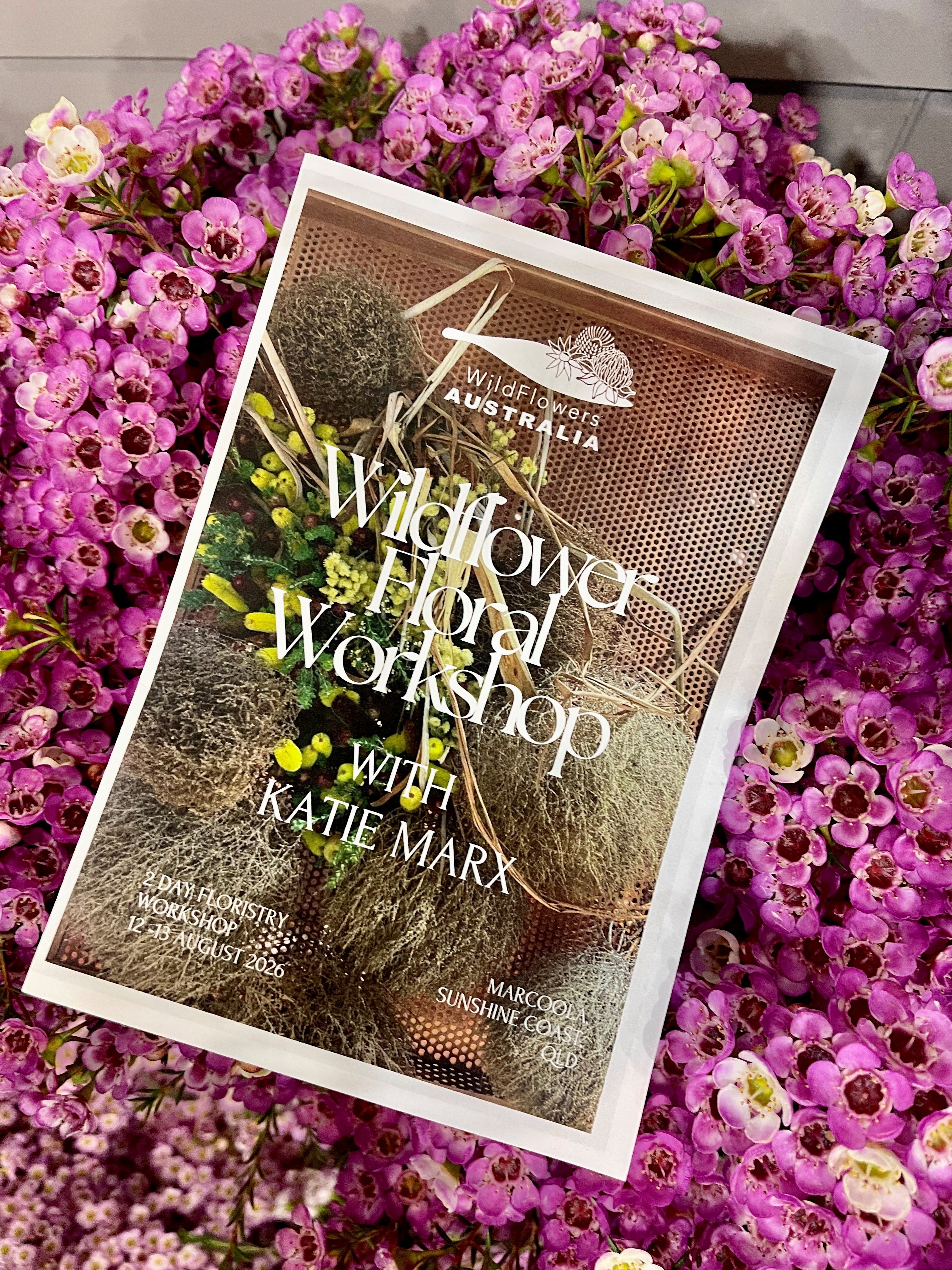
I always love a good floral workshop – especially when we’re creating large installations.
Day Two began with a relaxed discussion about Katie’s experience of running her small floral design business and the realities of working through the inevitable ebbs and flows.
Katie admits when she first started, she was somewhat naive. She began working from her kitchen table, using her old station wagon to transport flowers and mechanics. She laughed at the number of parking tickets she would regularly receive because her car wasn’t considered a commercial vehicle and therefore wasn’t permitted in a loading zone.
Back then, at the beginning of her floristry career, there wasn’t really anyone to ask for advice.
Today, Katie says there are plenty of florists who are more than happy to share their knowledge and experiences, so don’t be shy about asking.
She also spoke about how much the event industry has changed. Prior to COVID, the industry was relatively generous in terms of the size of jobs and budgets, with sustainability beginning to gain momentum. Since then, there has been a noticeable shift, with corporate budgets reducing and sustainability becoming an increasingly important consideration.
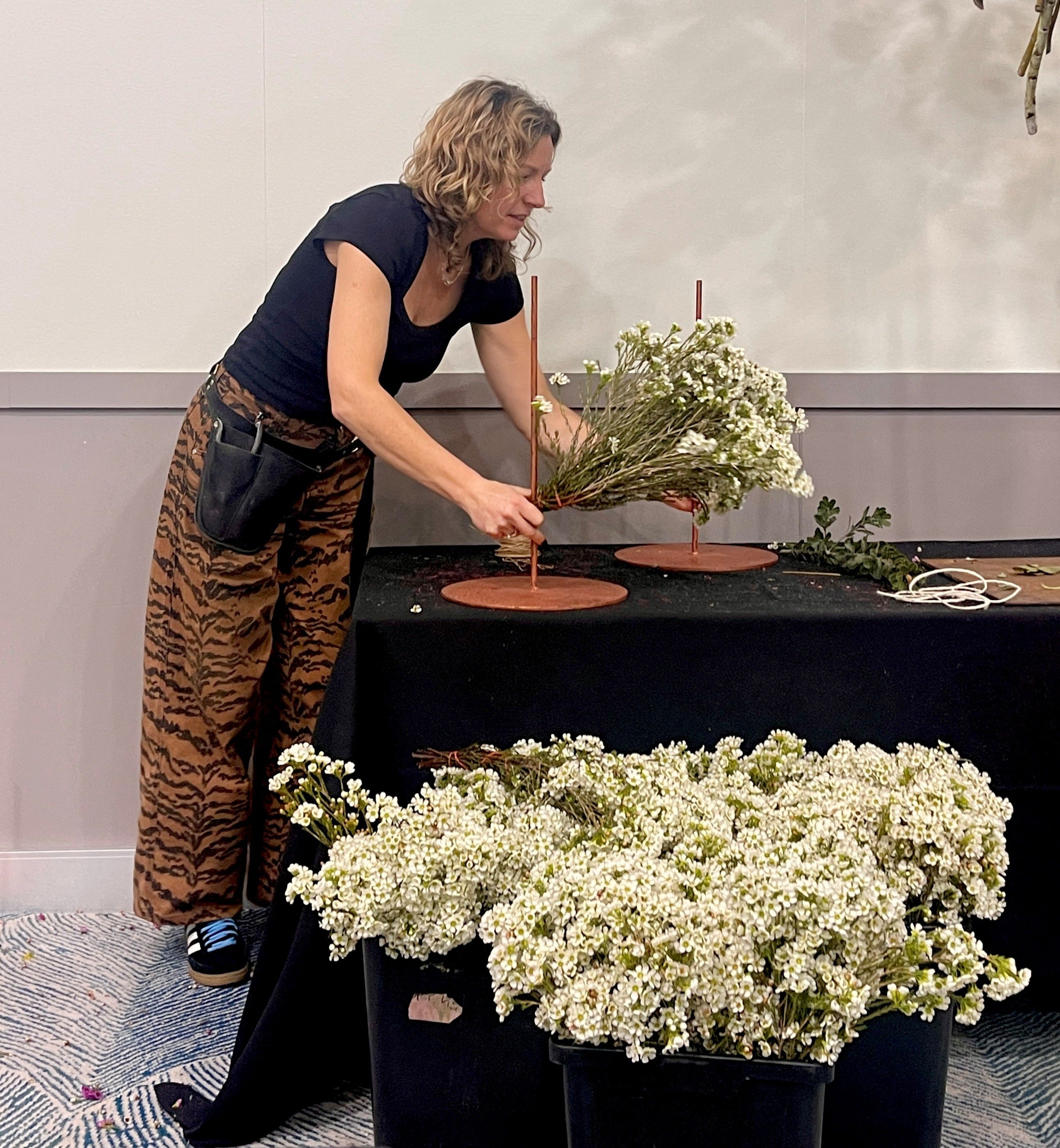
With the growing concerns of working conditions in overseas flower farms, Katie carried out her own research.
Her advice was that if you do use imported flowers, look for flowers sourced from Fairtrade farms. Whilst working standards in other countries may not be as good as here in Australia, a Fairtrade certification can provide significantly better working conditions and protections for farm workers on flower farms than in other industries in those countries.
As this was a Wildflower Australia conference, Katie also spoke about the growth of micro flower farms and the importance of connecting growers with florists. Dish the Dirt is now working to help coordinate those connections, making it easier for florists to discover and support local growers.
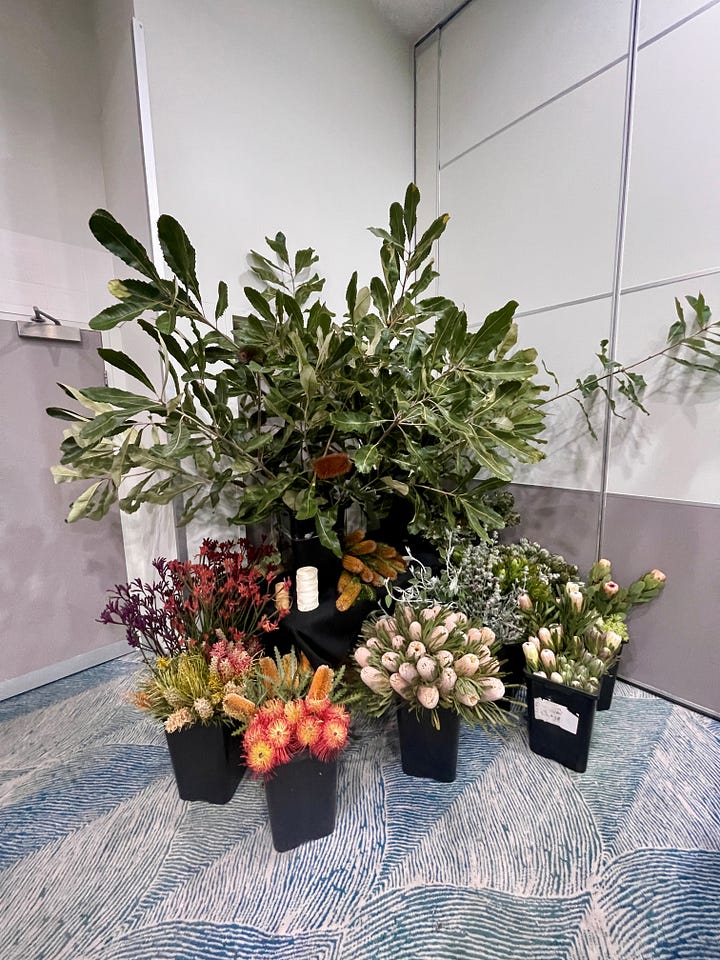
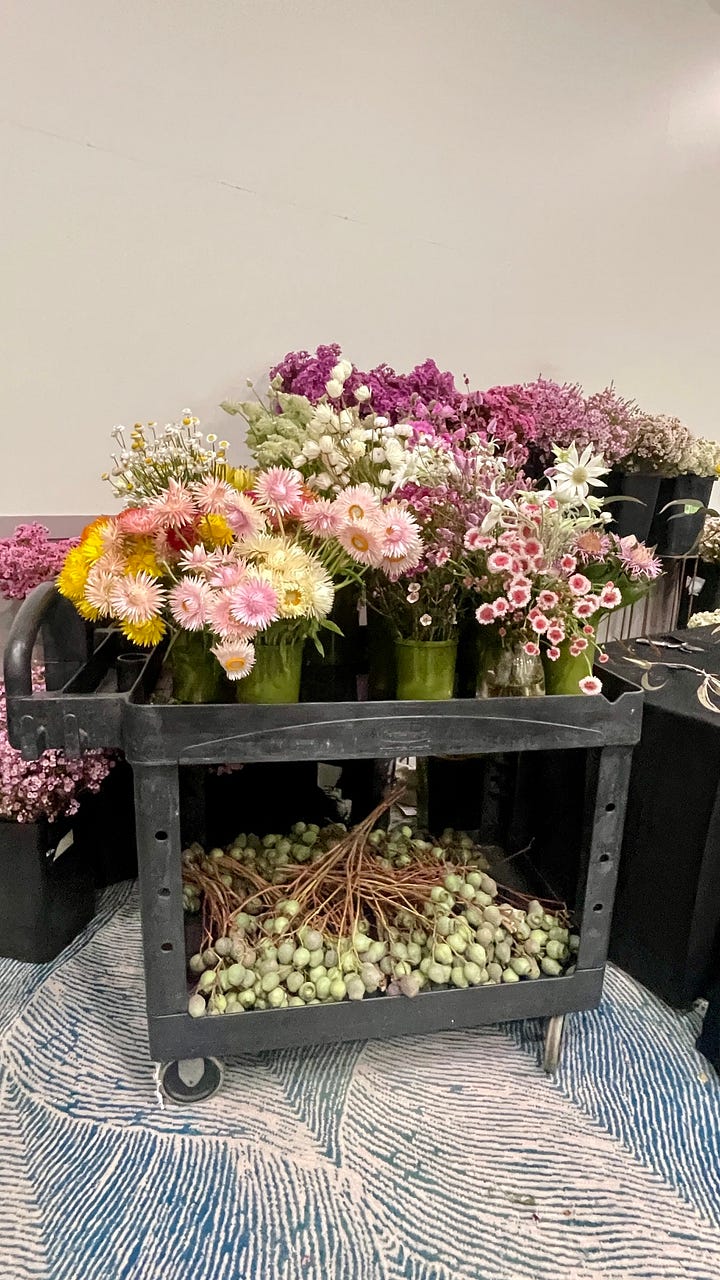
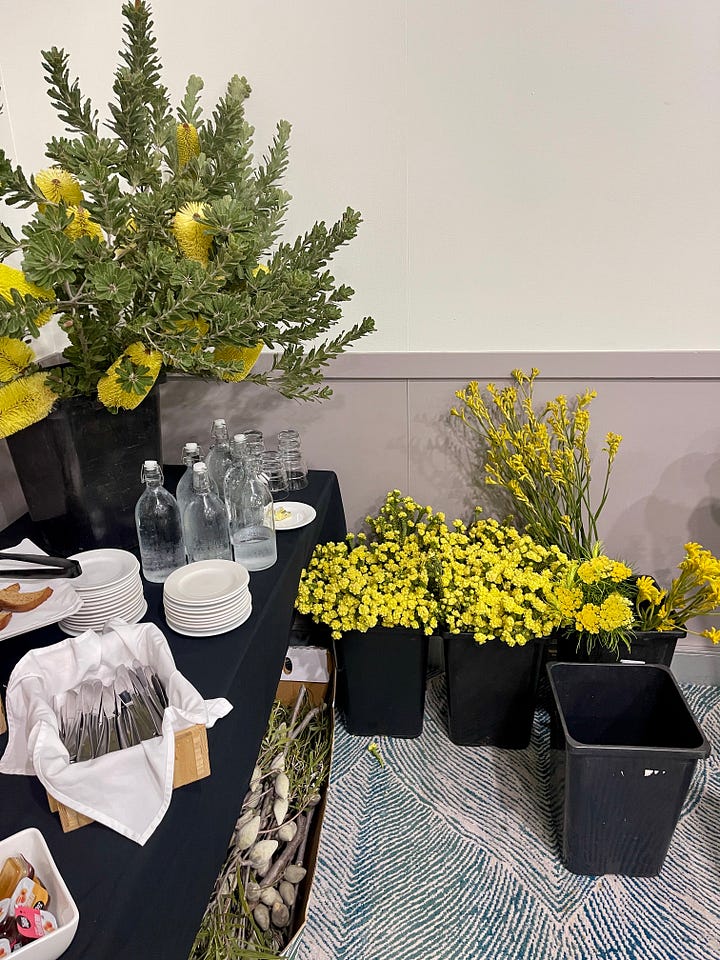
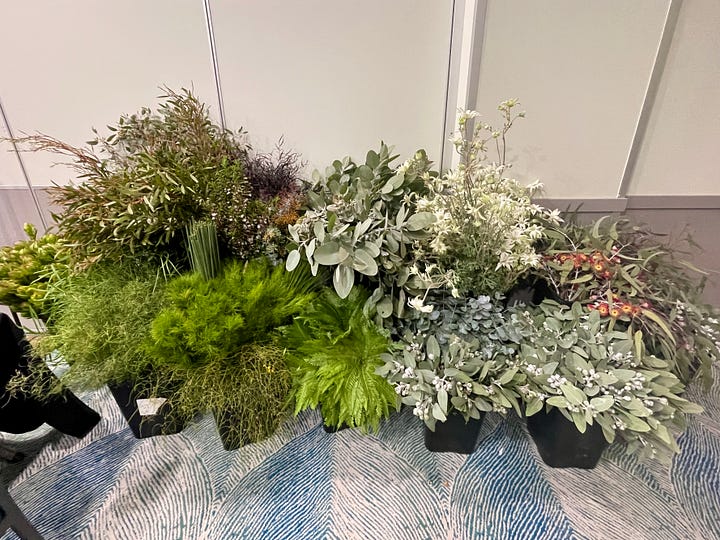
Katie’s advice was refreshingly to the point.
Find your style and stay true to it. Your clients will find you.
Starting out with low pricing might help you secure work initially, but it isn’t sustainable long-term. Your pricing needs to reflect the true cost of running your business, otherwise your business will fail.
Keep on top of your accounts, too. Don’t let them build up over time. As from personal experience, corporate companies can fold along with your outstanding invoices.
And while having staff can be helpful in expanding your business, be mindful that it comes with its own responsibilities and potential complications, including things such as injury insurance claims.
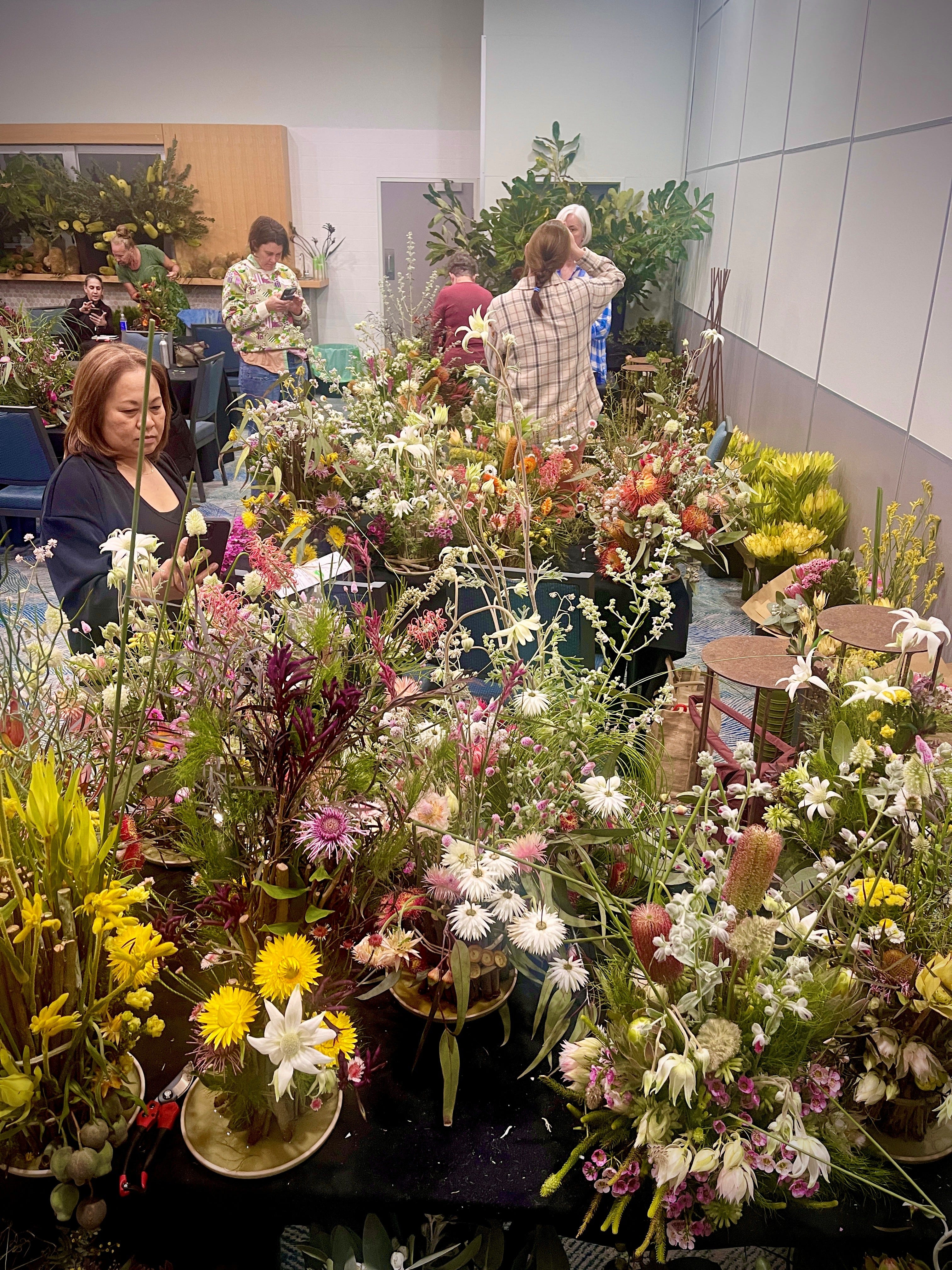
Then it was time to get our creativity flowing.
Katie had flown up with a collection of custom-made metal mechanics that she regularly uses in her own work, which genuinely excited me.
I love seeing the mechanics and structures other florists use – particularly when they’re designed specifically for installations and multi-purpose use.
Her collection included poles, tripods and tabletop stands, some naturally rusted and others painted to look like rust. They blended beautifully with the earthy colour palette of the Australian natives.
The brief was to decorate the venue for the cocktail party that evening, with the arrangements then moved into the adjacent conference room for the gala dinner the following night. The stick base arrangements were to be placed on the gala dinner tables and the bouquets on display and sold off.
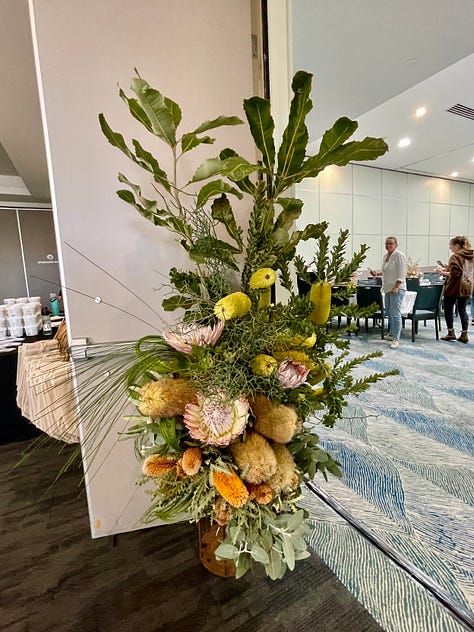
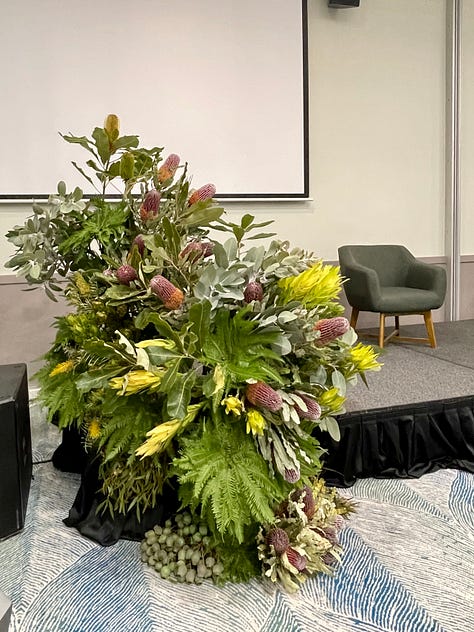
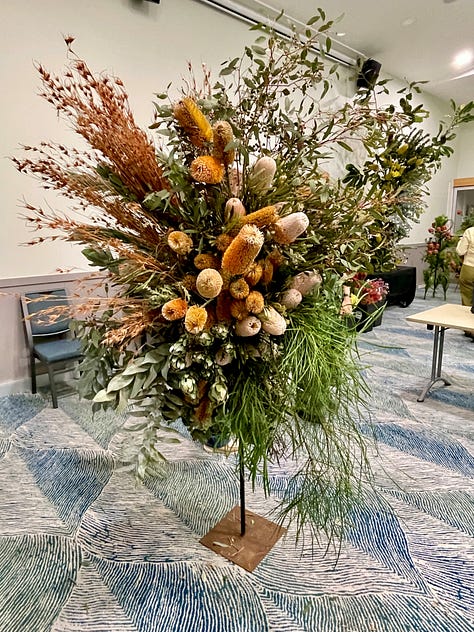
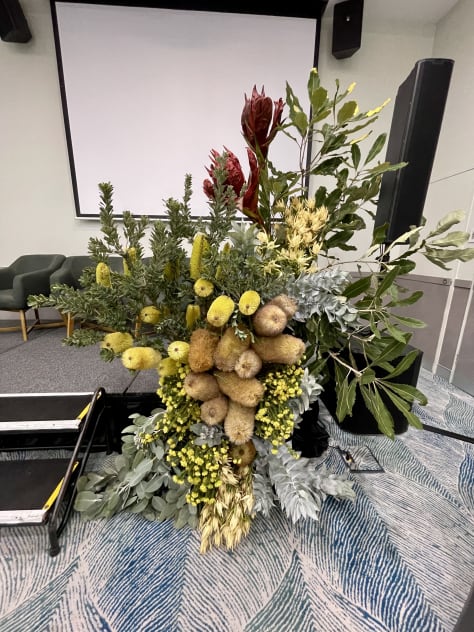
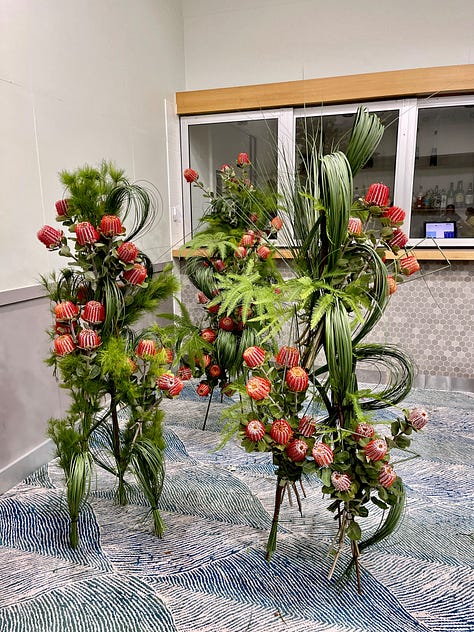
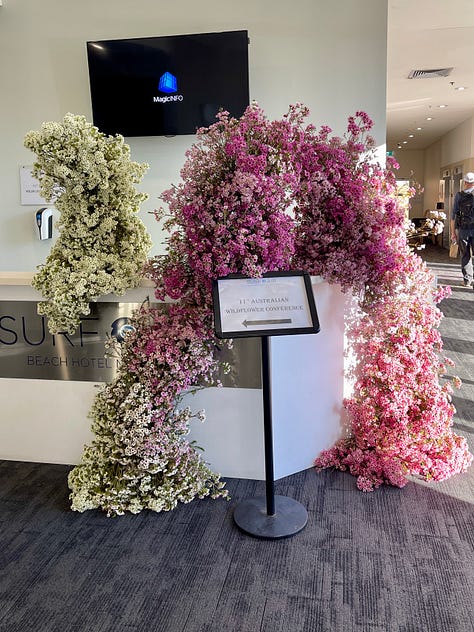
Katie commenced flowering each of the different mechanics before instructing us to continue. Various botanics were allocated to the different mechanics and we were told the position of each of the arrangements. They were to be located at the two ends of the stage, around the stand of the lecturn, at the door entrance and rear of the room. Very similar to a standard floristry brief.
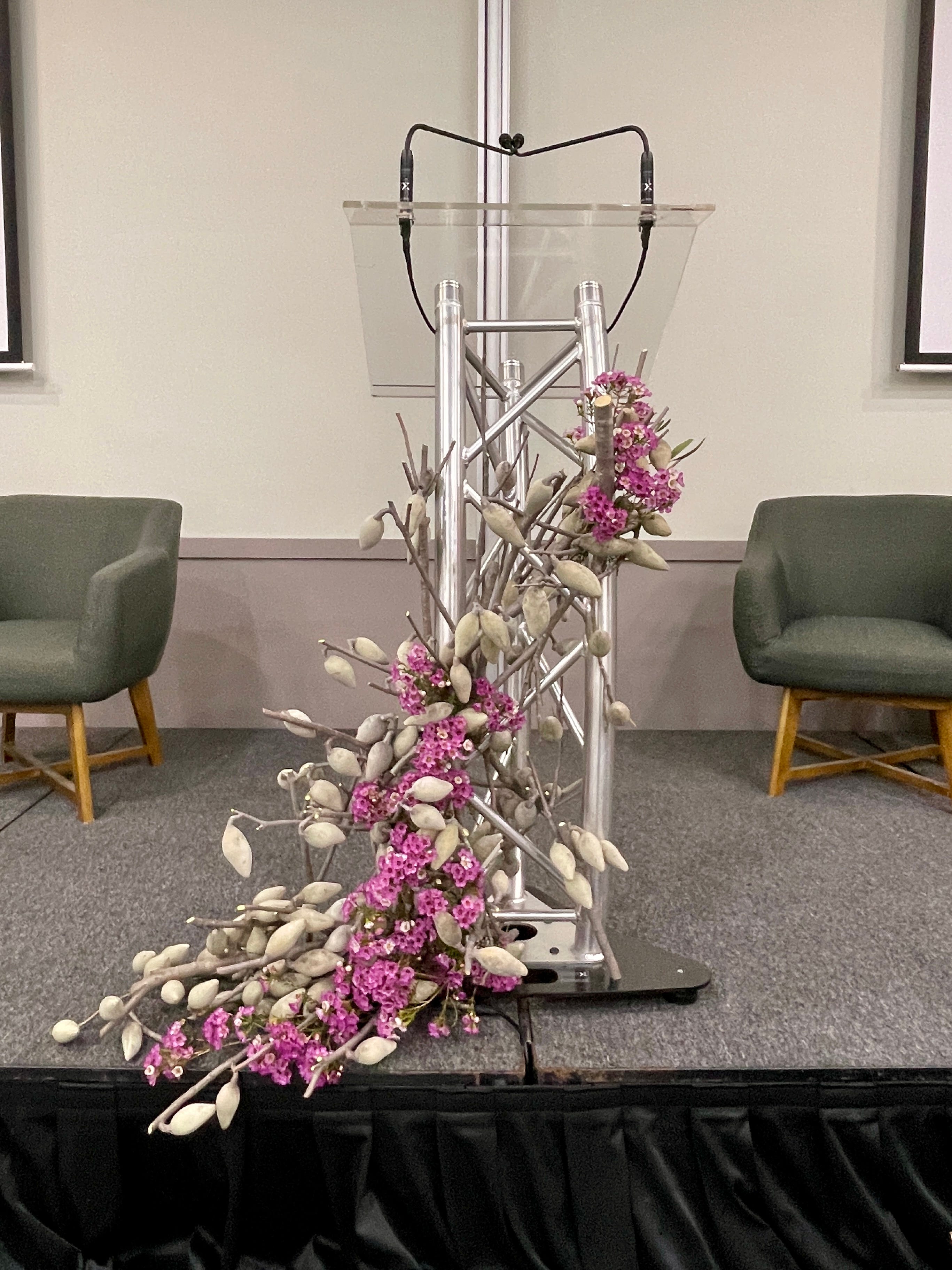
Our group of 22 was divided into smaller teams and, with just one hour until the flower growers arrived to register for the conference, we got to work quickly.
It was a little chaotic but also a lot of fun.
And somehow, one hour later, we had completed the arrangements, cleared away the buckets and the floor, ready for the cocktail party.
Want to know how we made them?
The mechanics, flower recipes and full process will follow in my next article for paid subscribers, so I’d love you to join me. A paid subscription for US $5 a month gives you access to all the paywalled articles I’ve ever written.
I was lucky enough to be invited as Debra Pemble’s (my publisher at Flowers Magazine Australia) plus-one to the gala dinner, and I’m so glad I went.
I found myself sitting next to a Melbourne-based flower wholesaler. After chatting about my plans for a future hanging installation at the Melbourne International Flower and Garden Show, he kindly offered to assist with supplying the flowers when I’m ready to create it. It’s always handy to have a contact in another state.
I also sat next to a couple who were planning to start growing wildflowers on their farm. Their story was fascinating and their enthusiasm was tireless. They gave me a much better appreciation of the work and effort that goes into growing the flowers we use.
This is one of my favourite things about attending floral events. You never quite know who you’re going to meet or where a conversation might lead.
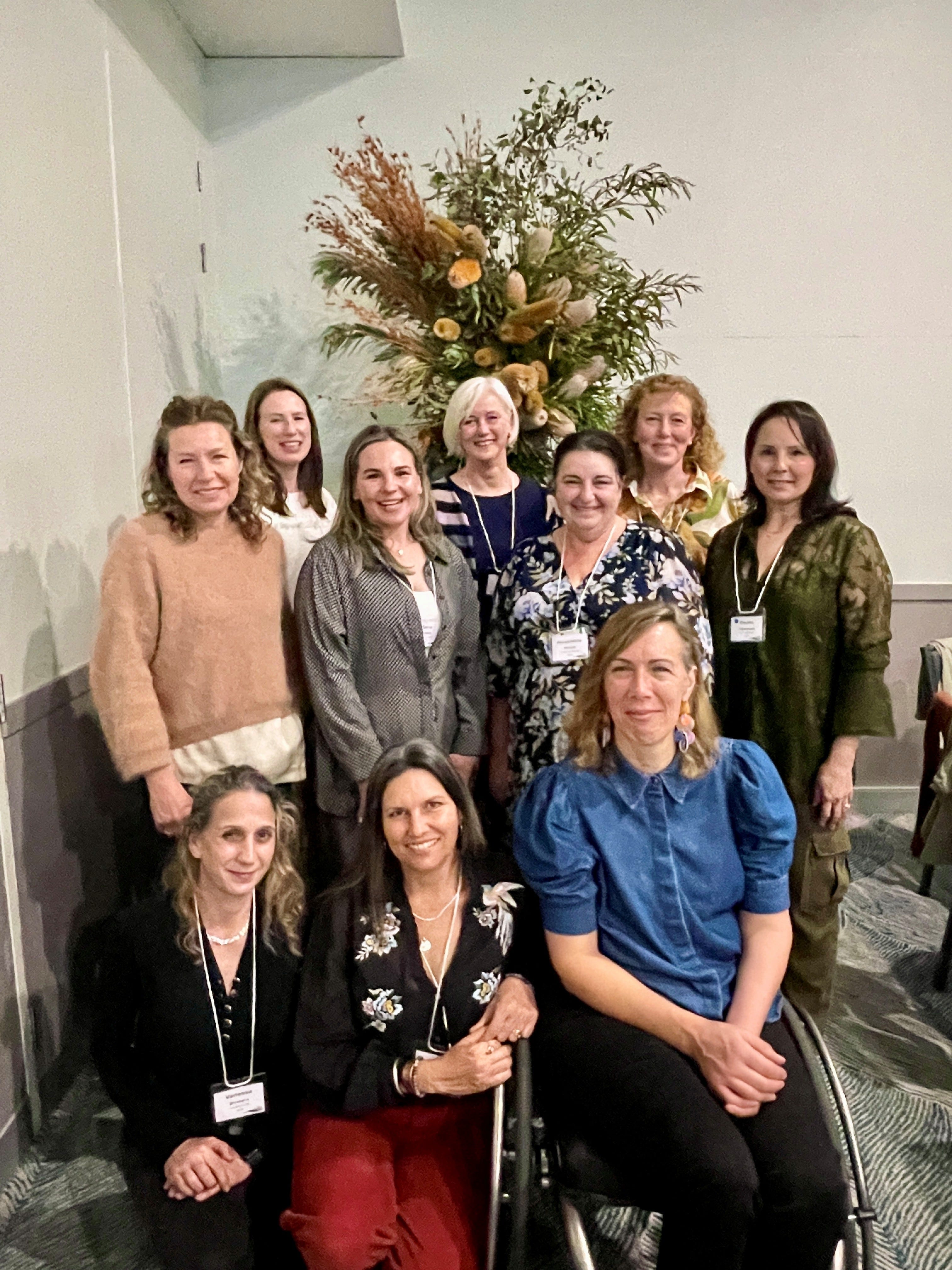
This conference brought together everyone from large international flower growers to small-scale growers just beginning to consider growing their own flowers.
The flowers themselves were given centre stage.
Just some of the installations in place.
The spiral bouquets and stick-based arrangements we had created were placed on each of the round dinner tables and later sold to conference attendees for $20 each. At the end of the evening, the installations were dismantled and sold to participants, with the proceeds going towards student scholarships for next year.
Nothing was thrown away. It was fabulous to see that flower growers are just as precious about their flowers as florists are, with not a single stem going to waste.
The flowers continued their journey beyond the workshop rather than simply ending up in a bin once the event was over.
I think the thing I love most about floral workshops isn’t necessarily what you make. It’s the new techniques, trialling new mechanics and discovering new flowers, but I also meeting other florists – and at this event, the growers themselves.
We exchanged experiences, tips and ideas, and everyone took away a little of the inspiration that brought us together in the first place.
It’s the flower community that somehow sweeps you up and carries you towards your next idea, your next challenge and, inevitably, your next workshop.

Thank you for being here and supporting The Flowerlogue. You can help support me by following me on Instagram or Linkedin.
Comments
Nothing yet. Say the first thing.
Sign in to join the conversation.