
Today for free on the Flowerlogue…
I always love a good floral workshop.
There’s the curiosity beforehand, the anticipation and anxiety of walking into a room full of people you’ve never met, the excitement of learning something new, hearing the stories of other florists and meeting new flowers.
It’s one of the reasons I try to attend as many workshops as time and budget allow. Every florist approaches flowers differently, and I always come away with something I didn’t expect: a new technique, a different way of looking at a botanical, or simply a reminder that there’s no single way to do this job.
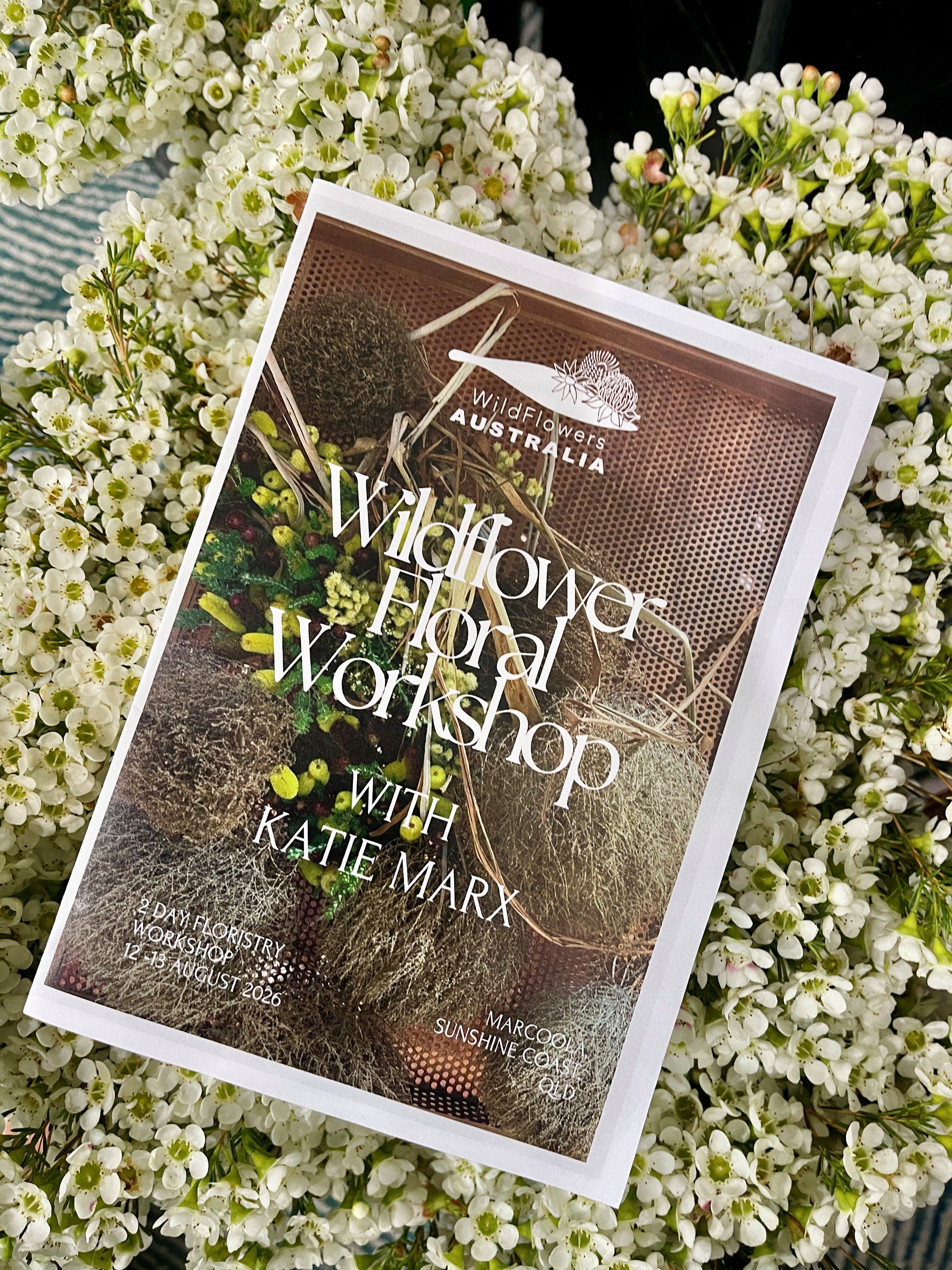
So, when the opportunity came up to attend a two-day workshop with Australian floral designer Katie Marx as part of the Wildflowers Australia conference on the Sunshine Coast, I was incredibly happy to make the trip. But I nearly had to cancel. My Dad is undergoing chemotherapy and hubby G and I are the only ones here in Perth to help him with his treatment. Dad hadn’t been diagnosed when I enrolled but thank goodness he hasn’t had any side effects from his first 2 treatments, and thanks to my hubby G for staying back, just in case Dad needed help.
It was also my first interstate floral workshop, so I thought I’d take you along to see what a florist learns from attending floral workshops.
I’m going to split this one into three articles so I don’t bombard you with one enormous workshop diary. The first two will be free and cover what Katie shared, the beautiful product we worked with and what we made and plenty of photographs. The third will be for paid subscribers and we will get much more into the mechanics that Katie brought along with her from Melbourne, the sustainable techniques she uses, and exactly what we used and how we used them during the workshop, with a few trade tips along the way. I’ve also remade one of the arrangements since and I’ll attach a printable download for your. All images by the way are by me.
The workshop was held on the Sunshine Coast in Queensland - approximately seven hours of travelling from home in Perth, assuming everything goes according to plan.
Unfortunately, mine did not go as planned.
Poor weather meant the plane arriving for me was delayed, which then meant my flight was late leaving and I therefore missed my connecting flight to Maroochydore. Qantas put me up in a hotel in Sydney and rebooked me for the following day. Thankfully, I had allowed for an extra day before the workshop. My plan to catch up with an old high school friend who was living in Brisbane was delayed just a couple of hours.
The workshop was part of the Wildflowers Australia conference, which brings together members of the organisation every three years.
And what a lovely bunch (pardon the pun) they are.
Wildflower growers are a particularly generous group of people. There was a real sense of openness and collaboration, people happily sharing what they grow, what works, what doesn’t, what they’ve learnt and what they’re experimenting with.
While our group of florists and flower lovers gathered for the workshop, a group of enthusiastic growers were driving their way north from Sydney, visiting flower farms along the way.
It was a very Australian floral gathering: lots of flowers, lots of conversation, a bit of rowdiness, plenty of laughs and plenty of people who were incredibly happy to talk about growing flowers.
I’ve followed Katie’s work on Instagram for years, and her style has always caught my eye. Her use of just a few materials, favouring Australian natives, great texture and contrasts and bold, sculptural designs. My preferred style.
That appeals to me because I can find my eye becoming quite distracted when there are too many different botanicals competing for attention.
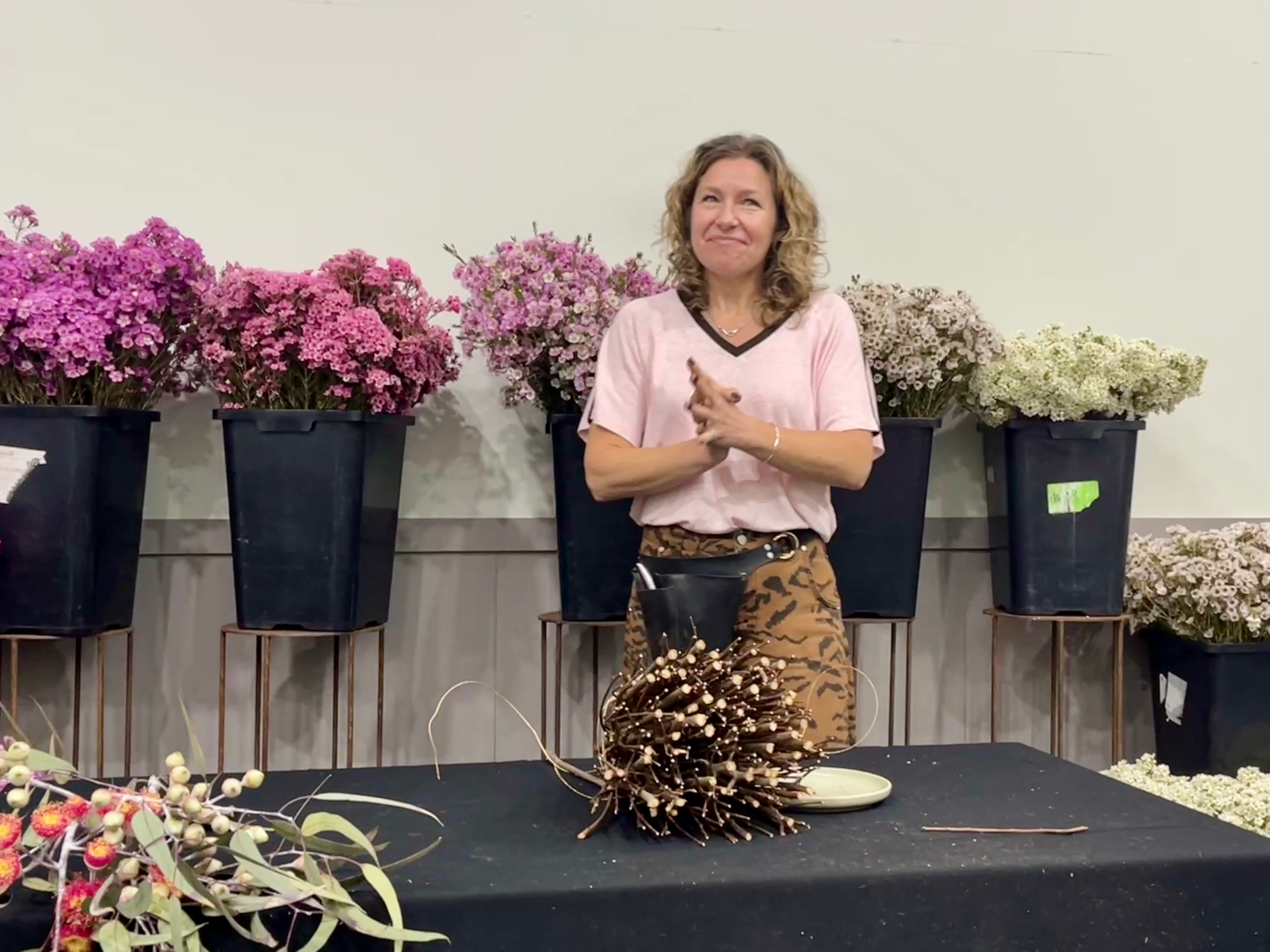
Katie described her own style as trying to make it look effortless as though she hasn’t really tried - which sounds easier than it actually is.
Our group consisted of 22 women, and we began with own individual introductions. I always find this part of a workshop fascinating.
There were full-time florists, part-time florists, shop owners, two gardening authors, flower growers, freelancers, a floral artist and a couple of people who described themselves as working with flowers but suffering from a little imposter syndrome.
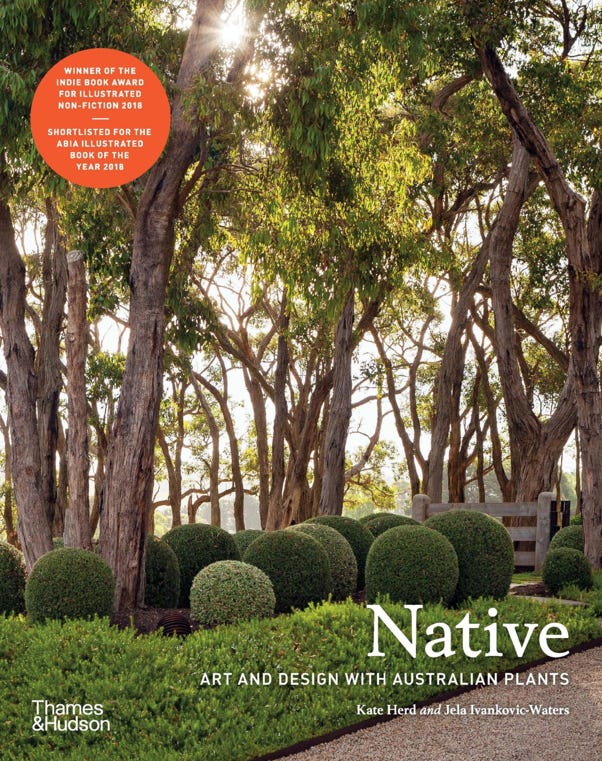
As a writer I was particularly interested in the two authors. The first was Kate Herd (and Jela Ivankovic-Waters), author of Native: Art & Design with Australian Natives. The second Rebecca Starling (and Christine McCabe) Secrets of the Flower Farm. It was a wow moment when I realised I owned Kate’s book; a beautiful native landscaping book focussed on sculptural planting. I was just in awe of these two women and their journey to write a book.
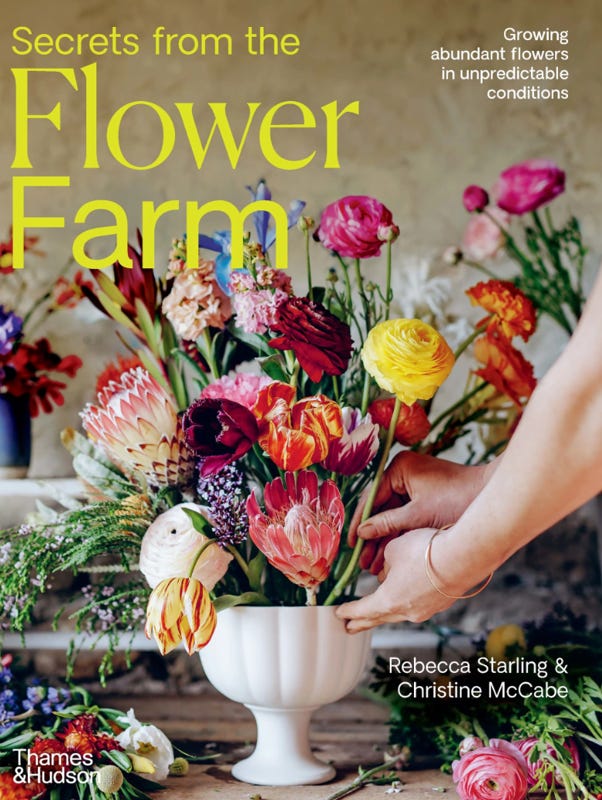
Knowing the background of these women, somehow made the depth of the room get deeper. Over lunches, dinners and afternoon tea I got to meet and talk a few of the other attendees, all with interesting backgrounds and stories leading into floristry. You’d be amazed how very few florists start out training to be a florist, and how most florists enter the industry later in life, usually by accident and stay purely out of love for flowers (not unfortunately for the money).
Katie began by talking us through her floral journey, from her beginnings in New Zealand to London and then Australia. She spent five years working at Flowers Vasette in Melbourne before moving through different stages of her own business and creative practice.
She spoke about the changes that came with COVID, becoming a mother, working from Butterland and creating large hanging installations, before eventually moving to Melbourne.
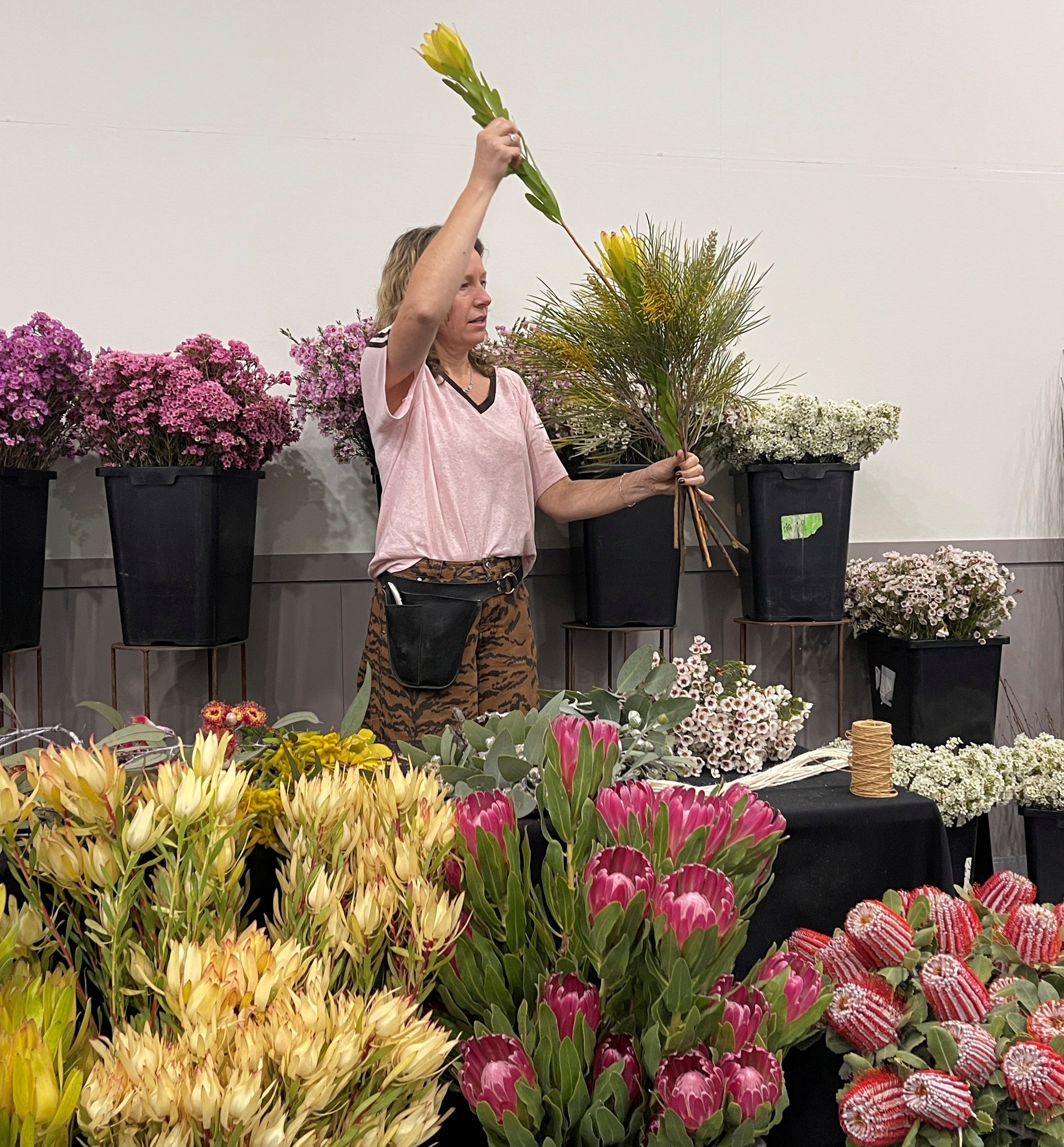
I particularly enjoyed hearing about how her business and design style have evolved alongside her life. It’s something we don’t always talk about when we see the flowers on Instagram. We see the finished work, but not the years of experimentation, the businesses that came before, the changes in circumstances or the decisions that shape someone’s work.
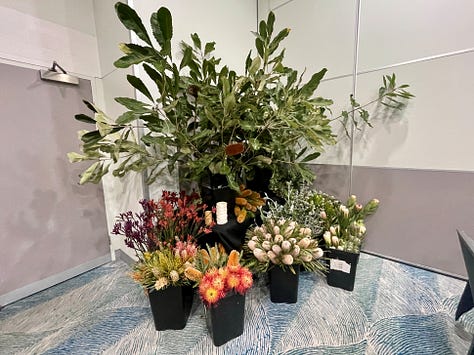
The thing I enjoy most, is seeing the buckets of flowers lining the walls when you enter a workshop. As I was staying at the hotel where the workshop and conference were being held, I cheekily poked my nose into the room the day prior to both say hi, introduce myself to Katie and her assistants Hannah and Rach and a sneak peek at all the lovelies.
And what a prime opportunity for the wildflower growers to exhibit their wildflowers at the Conference in front of many of the countries wildflower growers.
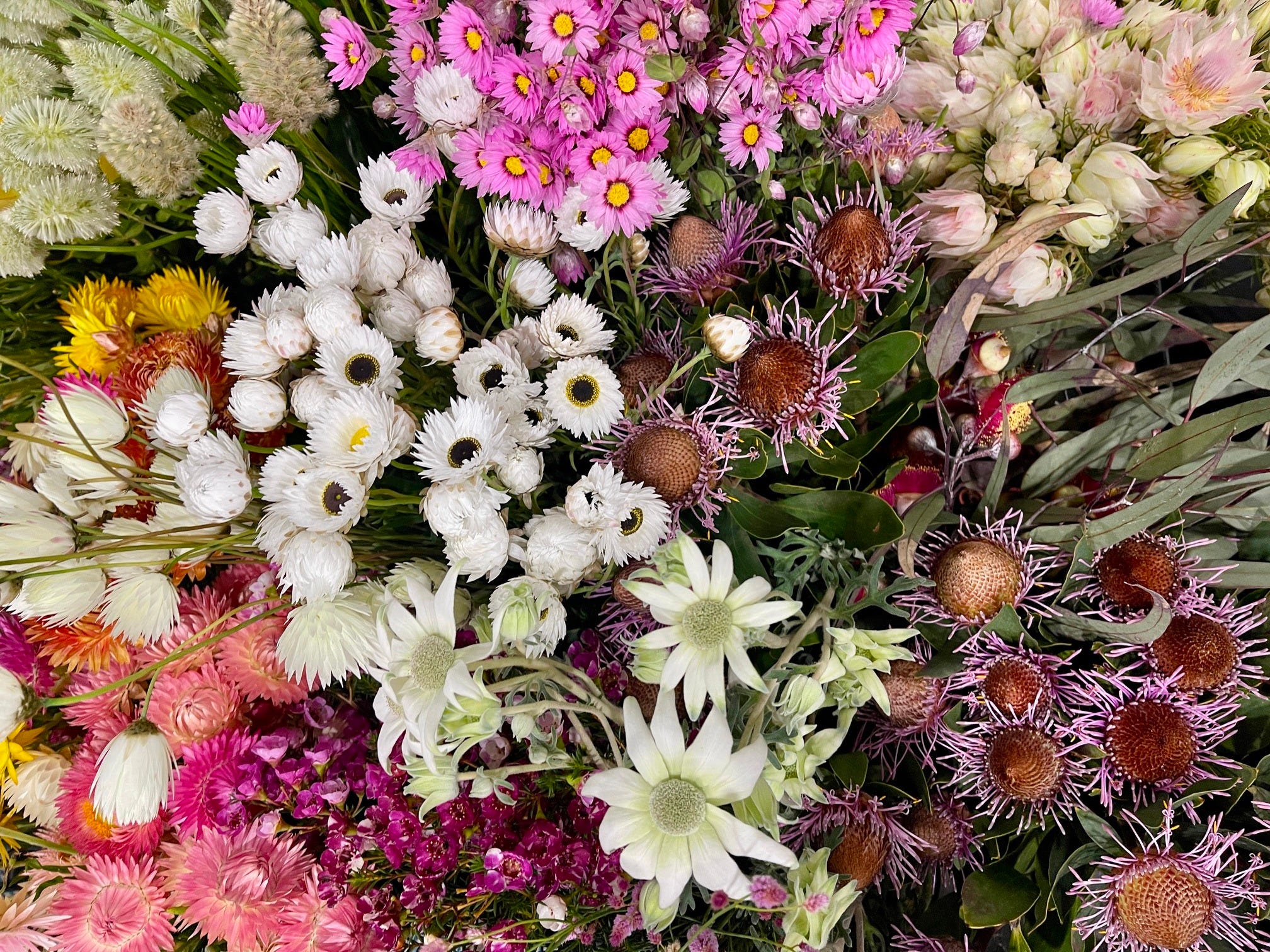
We had access to the most perfect, seasonal native blooms.
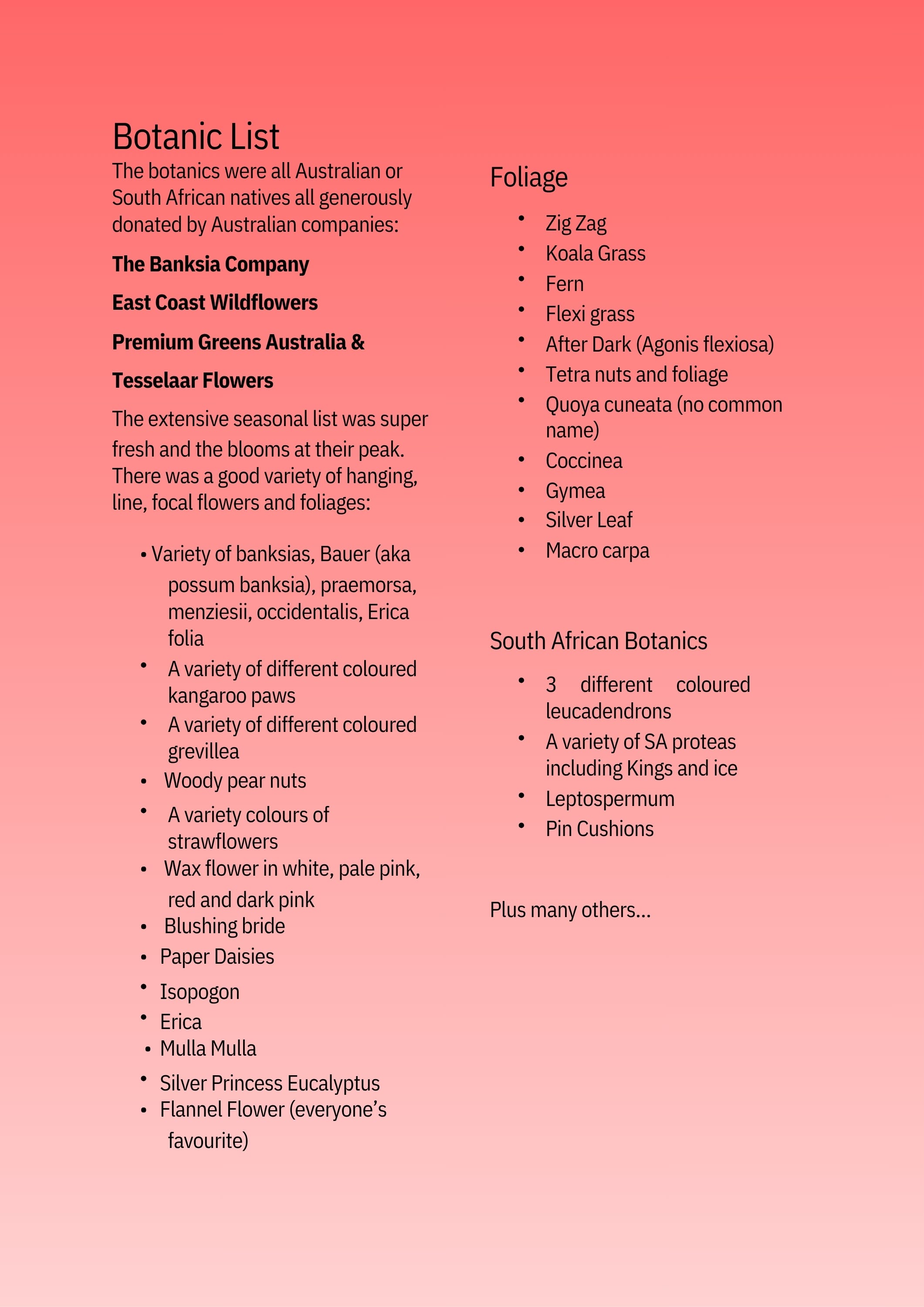
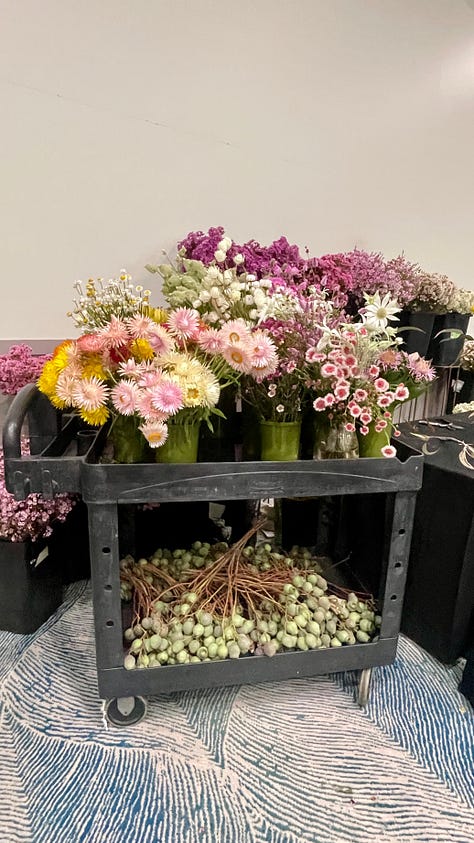
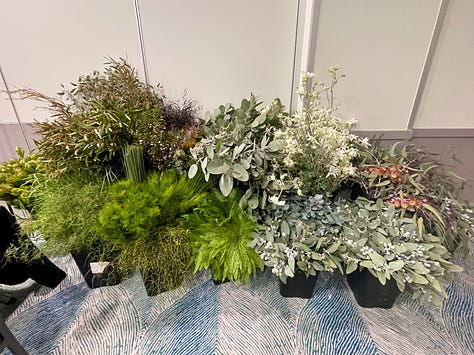
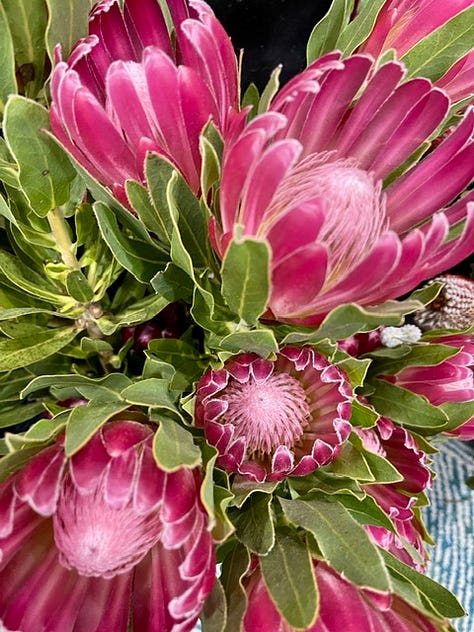
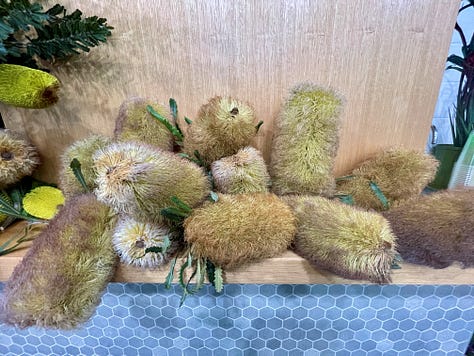
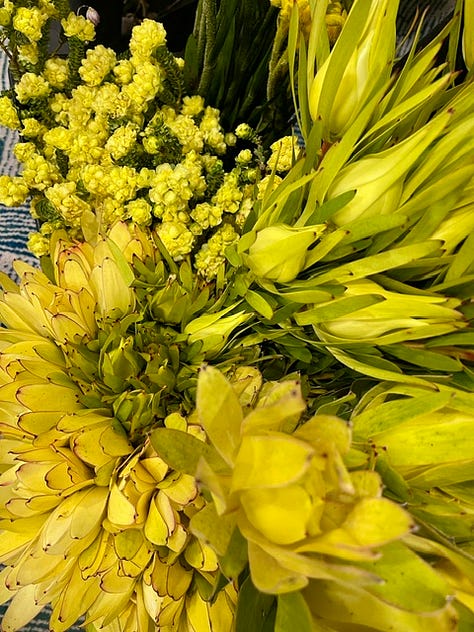
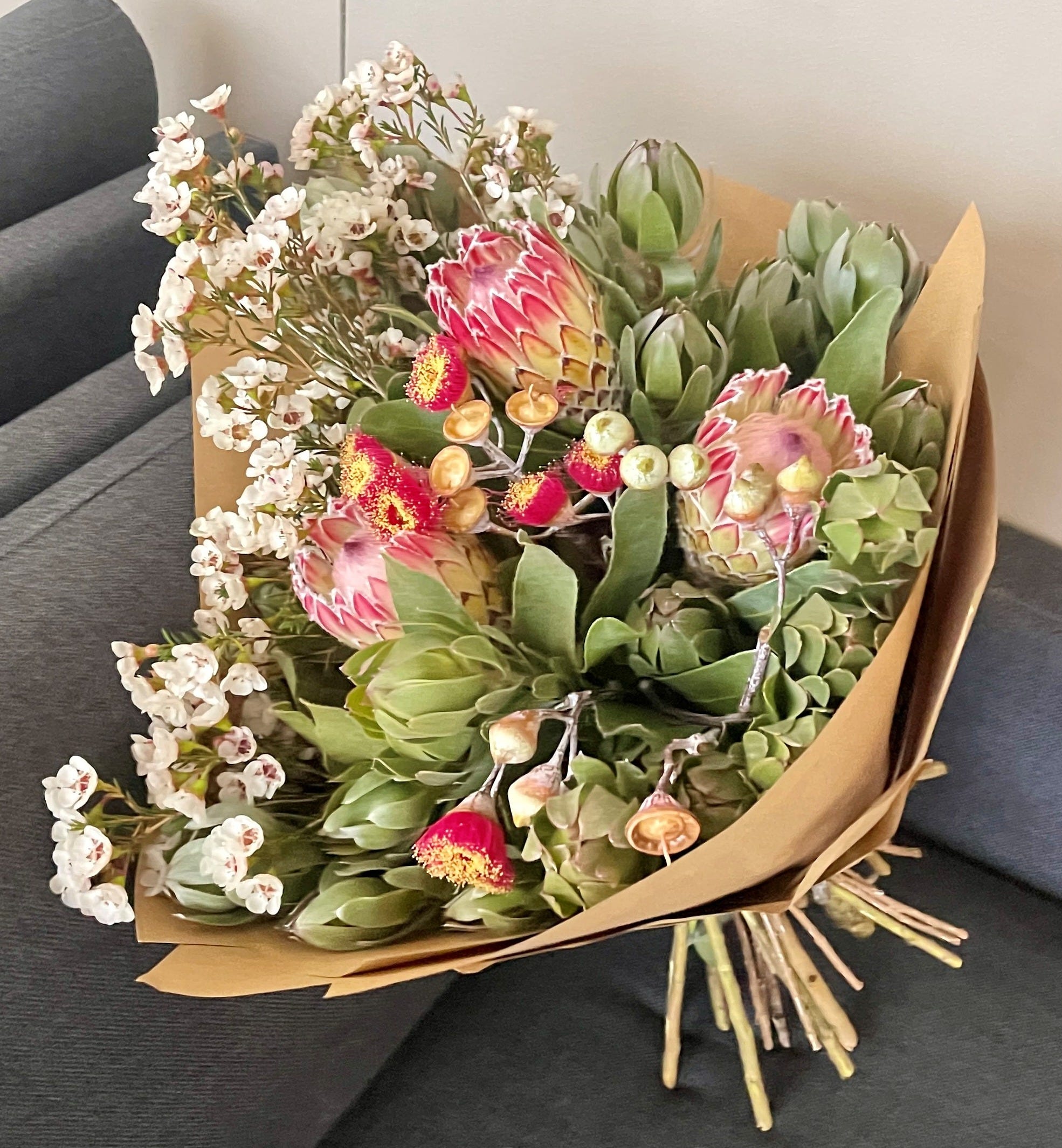
I’ll admit that spiral bouquets aren’t my favourite thing to make. Maybe because I don’t work in a shop where I need to make them, and therefore I’m not that good at them. I know that might sound a little strange coming from a florist. But I’m much more naturally drawn towards forward-facing arrangements, installations and vase arrangements - one of the reasons I consider myself more of an event florist.
Despite this, we had a beautiful selection of ingredients. Each student made their own spiral bouquet, wrapped in brown paper and twine ready for sale at the next evenings gala dinner.
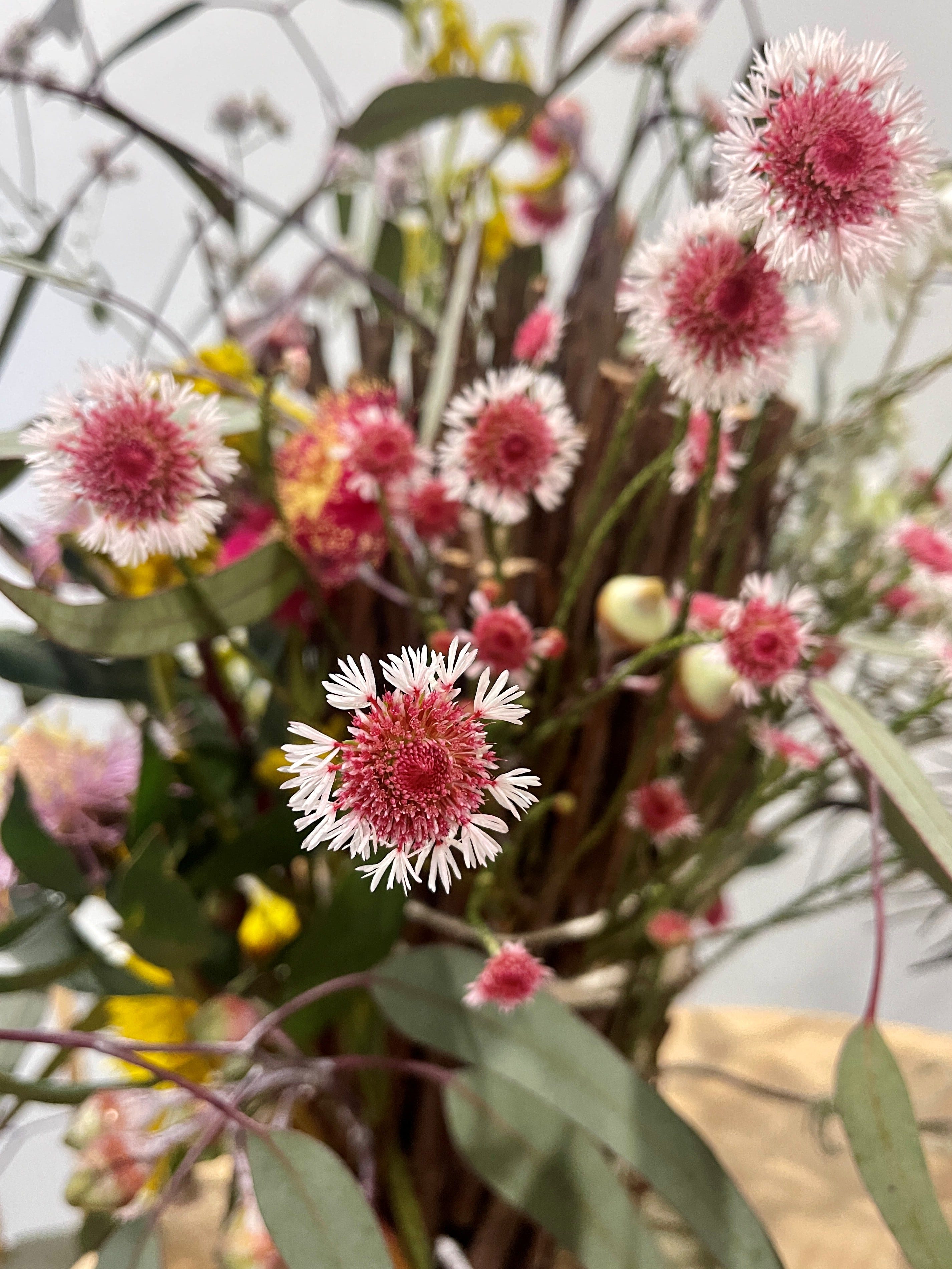
Of course, I always love meeting a new flower. She was a beauty the Albany swamp daisy, Actinodium cunninghamii, a Western Australian endemic from the myrtle family. A delicate, whimsical dark pink centred flower with tiny white petals surrounding. I hope a local grower can start producing them here in Perth.
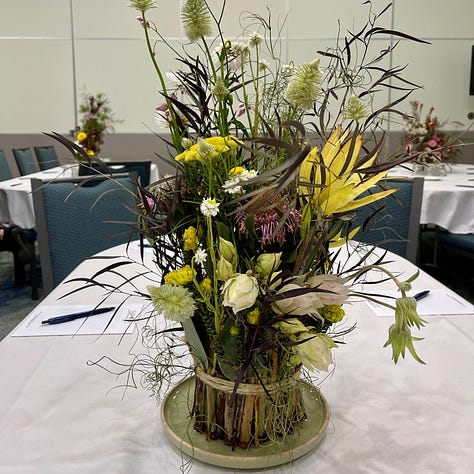
The second arrangement was much more my kind of thing.
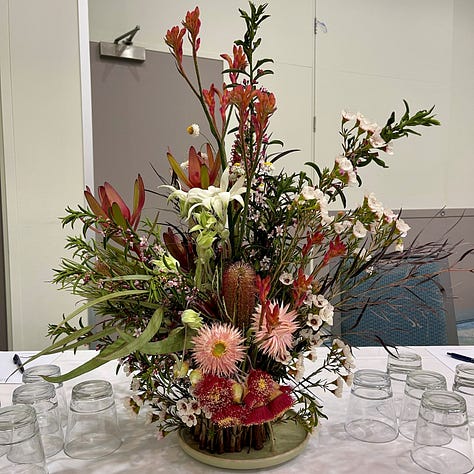
Katie and her assistants had prepared 22 stick bases, one for each of us. This completely sustainable base sits in a saucer of water and flowers are threaded through the sticks. Of course, once we were let loose with huge variety of flowers, 22 completely different interpretations appeared. Some were neat and tidy, with the stems emerging from the top. Others partially covered the sides.
Workshops provide the opportunity to try something different, outside your comfort zone. So, I decided to go in the opposite direction and push the technique and cover the entire base. However, I could see where seeing the stick base would be completely complementary to the design or contrasting depending on the selection of flowers and the design brief.
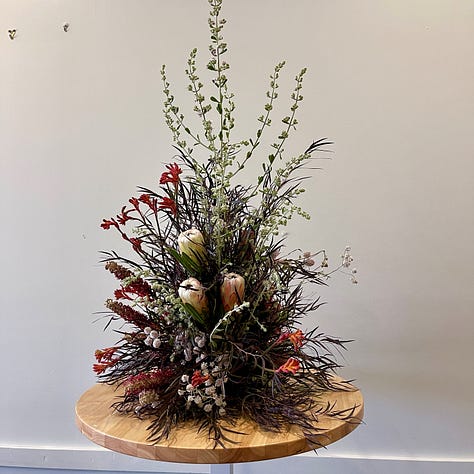
Last weekend I remade the stick base at home using foraged bamboo and daffodils to acknowledge Daffodil Day and the Cancer Council.
I’ll be sharing exactly how I made it, including a printable step-by-step guide, in next week’s paid article.
One of my favourite things about workshops is seeing the same brief interpreted by a room full of people creating sometimes completely different arrangements. It really makes you think beyond your own style, your own preferences, even though we had access to the same flowers, same mechanics and same instructions.
Some were restrained, some abundant, some structured and others wild.
It’s fascinating to see which combinations immediately make sense and which ones suddenly look completely different when someone else puts them together. And that for me is why I like attending workshops, to expand my creative mind.
Because you don’t just learn from the person standing at the front of the room, you learn from the other 21 people sitting around you.
I’ll write about Katie’s approach to large-scale installations, the very arrangements that excite me the most. We use the remaining flowers and turn them into free standing arrangements to decorate the conference gala dinner.

Thank you for being here and supporting The Flowerlogue. You can help support me by following me on Instagram or Linkedin.
Comments
Nothing yet. Say the first thing.
Sign in to join the conversation.