
In the last post, Disney served as a way to think about insights that tap into a broadly shared emotional code, allowing a brand to move with little friction across generations and borders.
Here, the thread is picked up from the other end, with Jollibee as an example of a brand whose hold is extraordinarily deep but less naturally portable. It is rooted in a single culture, travels effortlessly across a diaspora, and crosses into mainstream local demand only in selected markets.
That asymmetry is the story that follows.
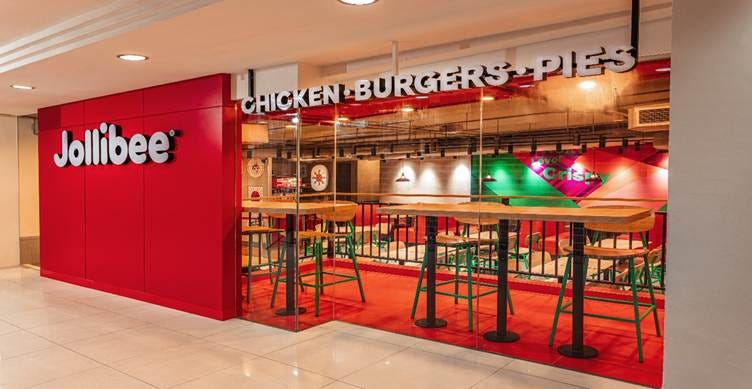
From where I sit, on almost any Sunday, the clearest expression of that appeal is the queue outside Jollibee at Lucky Plaza. This mall is where much of Singapore’s Filipino community gathers on its day off. When the first branch opened there more than a decade back, the line routinely stretched an hour or two, almost entirely Filipino, week after week. In my mind, it was nothing more than a simple Filipino overseas story. A taste of home for people far from theirs, comfort food doing its job, no more unusual than any other fastfood habit built on what people grew up eating.
A work posting to the Philippines later only reinforced that first impression. I had never bothered to try Jollibee when it first opened in Singapore, but on its home turf I felt I ought to. I also assumed I could skip the crowds and that it should taste better on its own ground. Here the fans will bristle, but to me it tasted just like familiar comfort food of the kind one commonly finds in many food courts. Pleasant but unremarkable, and nowhere near enough on taste alone to explain the devotion around me.
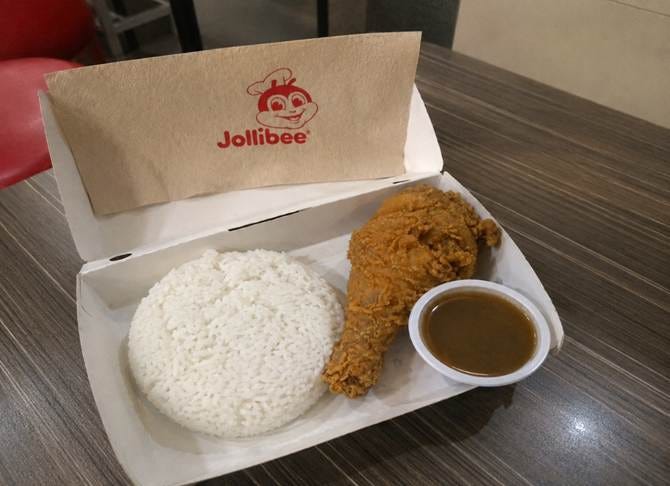
While I could not make sense of its popularity on home turf, I could certainly relate to the pull it had on the Filipinos back in Singapore, because a month into that same posting I I found myself yearning for food that tasted more like where I came from. A brand that becomes a small piece of home for millions of people scattered across the world is powerful. Yet I still could not see how that added up to anything beyond a very good franchise carried on the backs of homesick customers.
My interest started to build when I saw how the parent company kept reaching beyond sweet spaghetti and Chickenjoy. The 2019 acquisition of The Coffee Bean & Tea Leaf made me look twice. Jollibee was already in coffee through Vietnam’s Highlands, but swallowing The Coffee Bean & Tea Leaf was a different order of move. To see a Starbucks competitor folded into Jollibee’s portfolio signalled a deliberate move into the global coffee and breakfast segment.
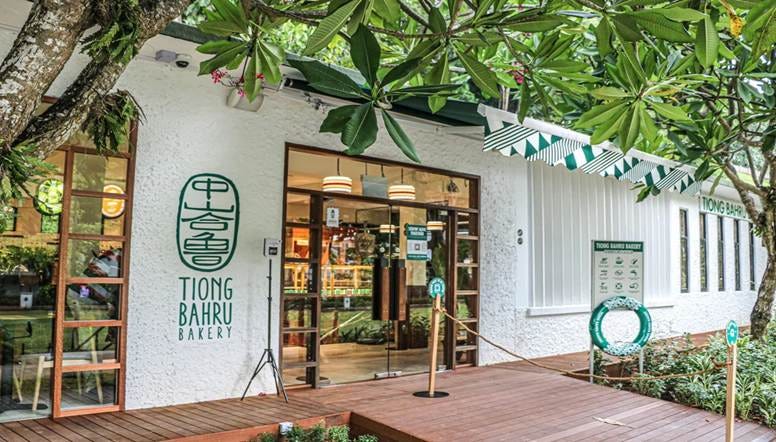
Then in 2023, Jollibee took a 60% stake in a joint venture with Singapore’s Food Collective to bring Tiong Bahru Bakery and Common Man Coffee Roasters to the Philippines. That landed much closer to home. Tiong Bahru Bakery is a chain I visit whenever I want a good croissant and some quiet time over coffee. A cosy space, flaky pastries and the small indulgence of paying more for something reliably well made. Seeing it enter Jollibee’s orbit made the company’s acquisition strategy feel less abstract. The earlier deals had caught my eye, but this one made me pay attention.
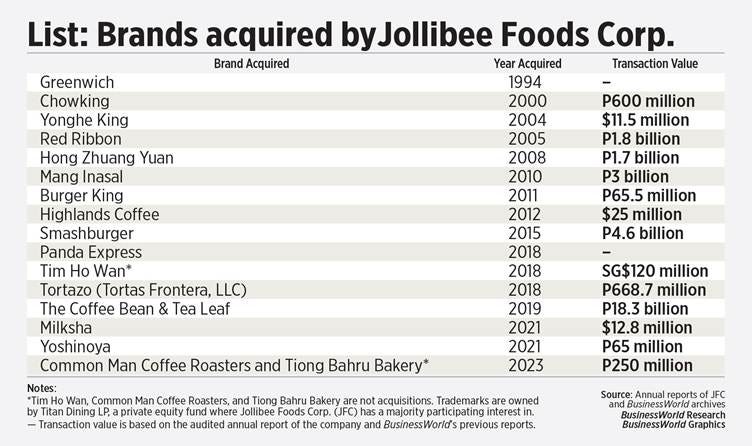
By then, Jollibee was becoming difficult to ignore. In 2024, it agreed to acquire 70% of South Korea’s Compose Coffee through Jollibee Worldwide, while its majority owned Titan fund took another 5 percent, in a deal valuing the chain at about $340 million. It subsequently took full control of Tim Ho Wan, a Hong Kong dim sum chain once known as one of the world’s most affordable Michelin starred restaurants, adding another recognizable Asian brand to the portfolio. By then, it looked less like a chicken chain with side investments, and more like a regional food and lifestyle platform.
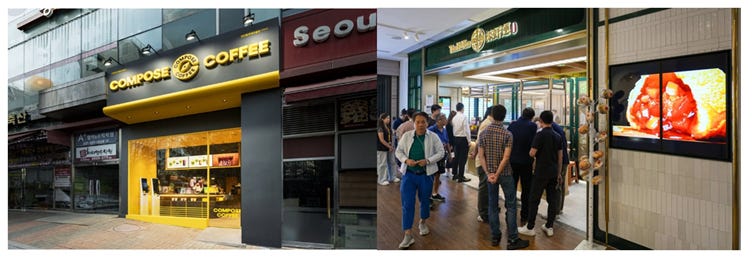
It felt like Jollibee was becoming something closer to an emerging market Restaurant Brands International in formation. Earlier in its development, more founder family controlled and with a far less tested record as an acquirer. The beloved fried chicken chain remained the source of identity and domestic strength. The larger company was increasingly being built through capital allocation decisions.
That is a more fascinating business to study. The question moved from consumer taste to how management deploys capital. Could they keep buying, financing and building brands at returns that can earn more than the group would have earned by opening one more chicken store at home?
Jollibee’s answer to that question depends on the strength and limits of the thing that made it valuable in the first place. The group’s deepest edge is also its narrowest one. An emotional moat built on Filipino identity. That moat is deepest at home, and deep again wherever the diaspora gathers. It thins quickly once the customer no longer shares the identity that gives the brand its first layer of meaning.
To understand how that moat formed, we have to start with McDonald’s. When McDonald’s entered the Philippines in 1981, the standard advice given to young founder, Tony Tan Caktiong was to sell out, or be steamrolled. He did neither. Instead, he flew to the United States and treated McDonald’s like a case study. He watched how the system worked. The manuals, the choreography in the kitchen, the routines that protect speed, cleanliness and consistency across thousands of counters. He took the parts that travelled. Then he did the one thing a template flown in from head office could not do. He rewrote the menu for a Filipino palate. Sweeter, more familiar, closer to the family table.
Ironically, the symbol of Filipino comfort food was seen most clearly by someone whose roots did not begin in the culture. Jollibee’s founder was the son of Chinese immigrants from Fujian, whose father cooked in a monastery kitchen before opening a small restaurant. The American giant could not read the palate accurately from head office. A native incumbent might have been too close to notice. It took someone close enough to feel the culture but with enough distance to see it clearly.
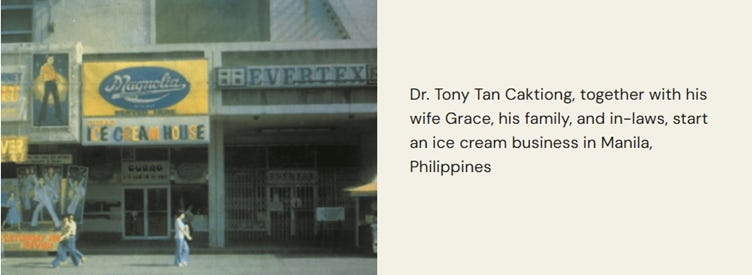
Jollibee had stumbled onto that lesson long before McDonald’s arrived. The business began as two ice‑cream parlours.
Customers kept asking for hot meals until the family allowed the business to be reshaped by what people actually wanted. By the time McDonald’s entered, the family already knew two things. Foreign success does not localize itself. And a domestic operator, if it listens closely, can read a market with a finer ear than any global template.
That is the first durable lesson in the story. A multinational entrant can become a free operating manual for the local incumbent willing to study it carefully. McDonald’s spent the money to educate the market, define the category and demonstrate what world‑class fast food looked like. Jollibee was then free to ask a better question. What would this category look like if it were built for Filipinos first. Most businesses never earn that kind of intimacy with their customer. Jollibee did, and that intimacy is why the brand still carries more force at home than foreign peers have ever managed to neutralize.
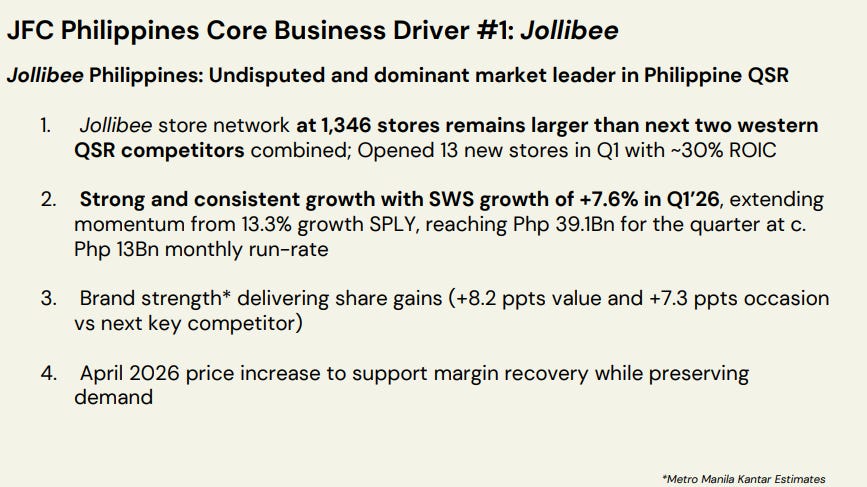
The home market is still doing the heavy lifting. Jollibee remains dominant in the Philippines, outselling both McDonald’s and Yum Brands’ KFC in its home market.
That matters because the international story can easily distract from where the company’s emotional moat was first formed and where its economics remain most proven. The Philippine business is still anchored by brands that understand the local palate, from Jollibee itself to Mang Inasal’s grilled chicken and rice meals, and Chowking’s Chinese-Filipino fastfood menu. The global acquisitions may decide the next chapter, but the home market remains the base from which that experiment is being funded.

This is where the emotional moat moves from sentiment into the numbers. A loved domestic brand pulls in traffic, can sustain a dense store base, and holds up when consumers feel squeezed. It also takes inflation in its stride more easily over time, because a habitual customer forgives a little more, and visits more often, than someone who is merely satisfied.
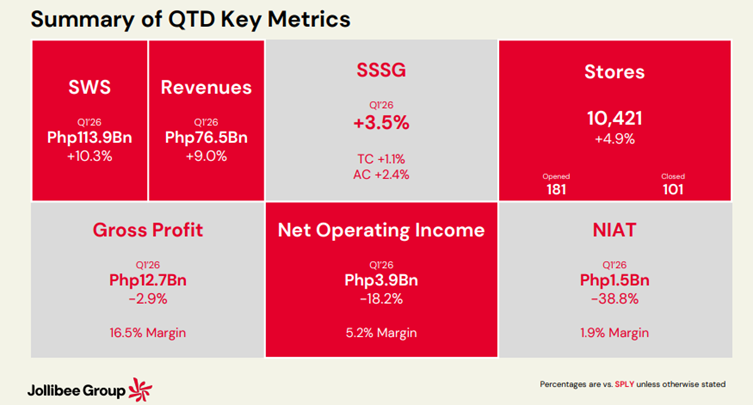
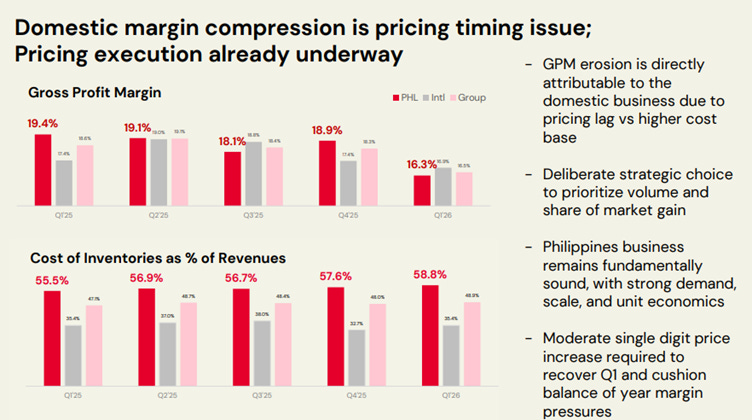
Q1 2026 tested exactly that. Revenue still rose 9% to 76.5 billion pesos, but operating income fell more than 18% and net income nearly 39% as raw material and supply chain costs jumped. Management attributed part of the cost shock to the year’s geopolitical turmoil, and the shares sold off, pushed lower by a nervous market starting to price in a prolonged conflict. It was an ugly quarter. But it was a margin hit, not a demand hit, and the recovery paths for those are very different. Sales grew. The customer did not leave. Costs simply went up faster than Jollibee could raise its menu prices.
That contrast is the whole point when you own a brand like this. A margin squeeze can pass, a weakening identity moat does not. So far there is no sign of the latter. This still looks like a business that owns mindshare at home, keeps opening productive stores, and remains unusually hard to dislodge in its native market. Management describes Jollibee as the undisputed leader in Philippine quick service. The wording is promotional, but the underlying claim is difficult to contest. Its domestic store network exceeds those of McDonald’s and KFC combined, and its lead in both value share and eating occasions gives it a clear position of strength.
The story gets less comfortable outside the Philippines. Abroad, Jollibee’s customer splits into two distinct groups. That distinction explains both the power and the constraints of the business.
In much of the Middle East, the core customer is still the overseas Filipino worker, and demand there is the purest expression of the moat. Nobody has to market to these customers. They seek the brand out, queue for hours at openings, and in some cities travel a long way for a meal that tastes like home. A diaspora is a distribution network you never have to pay for, held together by homesickness instead of advertising. It is a wonderful thing to own, but it is also finite. It stops exactly where the identity does.
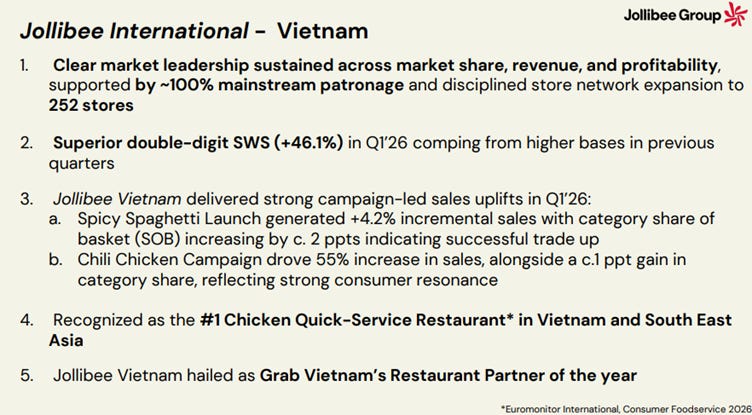
The second kind of customer matters much more for the future. The local who has no Filipino memory to draw on and still buys the food. In Vietnam, that customer is already mainstream. Jollibee has become the country’s leading QSR brand by value sales, while its local operation is also producing meaningful and growing profits.
In Singapore, management notes that the majority of Jollibee’s customers are now local Singaporeans rather than Filipinos, and the chain has been ranked first for customer service among fast-food restaurant chains in The Straits Times’ nationwide survey.
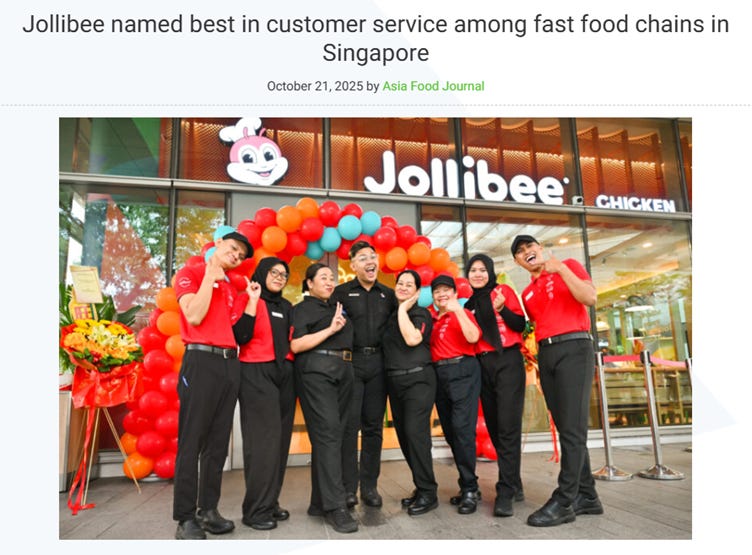
Singapore is the useful test because it separates diaspora comfort from genuine crossover. The queue at Lucky Plaza is the diaspora. The families in the heartland malls, most of whom have never been to Manila, are the crossover. The fact that the second group now dwarfs the first suggests the brand can cross the bridge into everyday local habit. But only when it first meets a market on practical things like convenience, price, reliable service, and then layers its personal flavour and warmth on top.
That explains why Jollibee’s emotional moat is powerful yet limited. At home and in the diaspora, the moat is powered by identity, which is a stronger glue than convenience and far harder for a rival to copy without looking out of place. It is limited because identity does not easily generalize. Disney can cross borders by speaking to childhood nostalgia and spectacle. Jollibee starts with a local palate.
It can adapt that taste for a broader crowd, but each step toward a more universal flavour risks diluting the identity and betraying the diaspora’s taste. That makes the core brand a superb domestic business and a selective international one. It also means the group’s growth ambition cannot rest on rolling out more stores alone. It needs other growth engines.
This is where capital allocation takes on the central role, for a very simple economic reason. A company that already controls about half of its home market does not create much value by squeezing out another point of share. Past a certain size, dominance flattens into diminishing returns. At that point, a home champion has to turn into an overseas allocator or the compounding slows.
That reality imposes two priorities on management.
Defend and deepen the domestic fortress, and
Buy, build, or partner globally and expand into formats whose economics or cultural fit travel further than the mascot itself.
Over the past decade that is largely what it has done, with the heaviest push in coffee and tea, where the product has broad appeal and the daily habit is already deeply. The scale of the shift is clear in the revenue mix. International operations contributed about 20% of group revenue in 2017 and now account for close to half.
The deal record is mixed. Some transactions were successful, while others were just satisfactory.
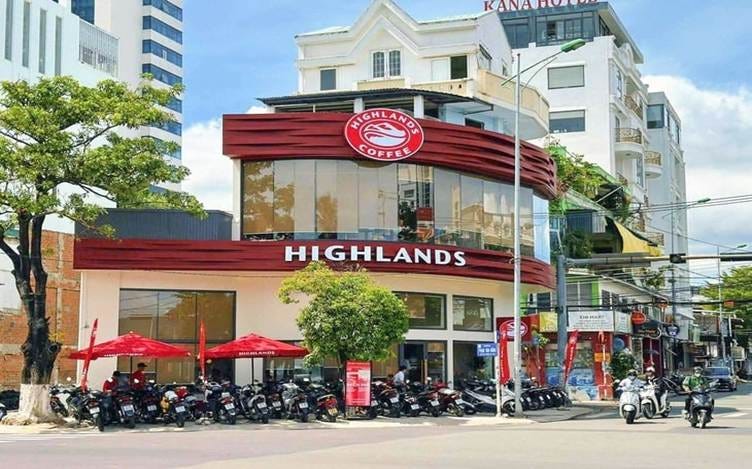
Highlands Coffee, the Vietnamese chain Jollibee built over many years, looks like a strong call. Jollibee Group described it as Vietnam’s number one coffee chain and said it had a dominant 35 to 40% share of the Vietnamese coffee market in 2024. By March 2026, Highlands operated nearly 1,000 stores across Vietnam and Southeast Asia, large enough that Jollibee was evaluating a standalone Hanoi listing for the business. Compose Coffee, the Korean value chain, came in debt‑free with thousands of franchised outlets and has kept compounding since. Tim Ho Wan has done better under the Jollibee roof than expected, a real contributor rather than a trophy on the wall.
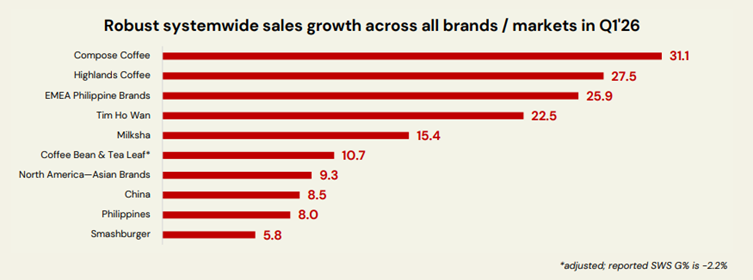
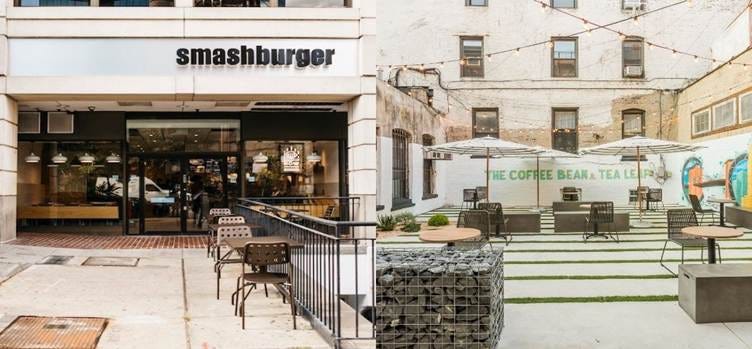
Set against these successes, the two big American bets read more soberly. The Coffee Bean & Tea Leaf is a respectable brand with global reach and is still growing, but it was expensive and the balance sheet had to work hard to carry it. Smashburger, the early burger bet, is still growing, but it does not look like a breakout and is near the bottom of the group’s faster growing concepts.
The record on those overseas deals matters, but it is only the first test of capital allocation. Buying the right businesses is only half the challenge. The larger opportunity lies in creating value between them.
A portfolio deserves a premium only when its brands make one another better.
So far, Jollibee has shown it can assemble an attractive collection of brands. The next proof point is whether those efficiencies develop into deeper portfolio economics, with brands creating additional demand and opening markets for one another. Shared procurement, central kitchens, property relationships, and distribution are already part of the system. What remains less visible is the commercial crossover.
Could Coffee Bean deepen Jollibee’s breakfast occasion? Could Tiong Bahru Bakery extend the group into premium bakery and savoury formats? Could Highlands or Compose use Jollibee’s existing franchise relationships and market presence to accelerate expansion beyond their home markets? Those are the kinds of synergies that eventually distinguish a portfolio from a collection of acquisitions.
Even if management succeeds on both counts, a deeper issue remains. In this industry, the structure of the business often matters more than the brands themselves. For Jollibee, that means the economics of franchising versus owning stores.
There is a reason a peso of Jollibee’s earnings is valued more cheaply than a dollar of McDonald’s earnings. McDonald’s, Yum, and Restaurant Brands are now closer to franchising platforms than traditional restaurant operators. They collect royalties from tens of thousands of stores they neither build nor staff, while carrying relatively few kitchens, leases, and labour costs on their own balance sheets.
Jollibee, for most of its history, has operated very differently. It has owned more of the footprint, funded more of the capital expenditure, and absorbed more of the operating risk. Markets assign a premium to the first model and remain more cautious toward the second. That structural difference, more than the quality of the food, helps explain the valuation gap.
Which is what makes its recent moves worth watching. Most new Jollibee stores are now opened by franchisees rather than by the company, a gradual shift toward the asset‑light model the big Western names already enjoy. In January 2026, management went further, proposing to separate the international business from the Philippines one and list it in the United States, targeting late 2027 for the spin. The shares jumped more than 14% on the announcement, the biggest single day move in over five years. A clear sign that investors embraced the plan.
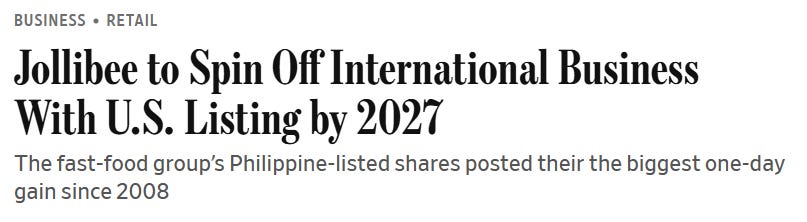
The move was framed as a logical next step. The two businesses now follow different economic paths and appeal to different kinds of capital. The separation suggests that management believes the combined structure is obscuring the distinct value and economics of its parts. The Philippine operation offers entrenched market leadership, dependable cash generation, and room for continued domestic expansion. The international arm, meanwhile, now accounts for roughly two-thirds of the group’s stores and has expanded its network far faster than the group as a whole. It is no longer a sideshow bolted onto a chicken chain. It has become a global, multi-brand restaurant platform whose value now depends on the quality of its capital allocation, and the proposed listing is an attempt to have the market recognize it as such.
Before we get too carried away romanticizing Jollibee as a capital allocator, it is worth looking carefully at how the company is actually configured.
The founding family still holds a shade over half the group. That concentration can be a strength. It buys a long horizon and the patience of a steward in a way public markets rarely do. It also leaves outside shareholders heavily reliant on a small circle getting the next few big decisions right, at a time when each new move is likely to be larger and more consequential than the last.
The company also pays only a modest dividend. Beyond the treasury shares on the balance sheet, there is little to suggest an active buyback, so it is hard to lean on one.
By capital allocation here, what matters is the full craft. Asset acquisitions, financing choices, portfolio design, and the willingness to restructure a public company so its economics become legible. On those counts, Jollibee has shown ambition but its record has also been patchy.
To be fair, this is partly because restaurants are structurally difficult businesses. Consumer preferences evolve, labour costs rise, commodity inputs are inherently volatile, and operating leverage magnifies modest changes in traffic into much large swings in profitability. Q1 2026 was a reminder that even an exceptionally strong brand remains exposed when costs move faster than pricing power.
The path to becoming a truly international restaurant company is more nuanced. One narrative assumes Jollibee can translate its domestic strength into a universally appealing global brand. The other dismisses its overseas success as largely dependent on the Filipino diaspora. Neither fully captures the economics.
Jollibee’s flagship brand possesses an emotional moat that very few restaurant companies ever achieve. What remains to be seen is whether that moat can be translated into businesses whose unit economics travel across markets more effectively than the brand itself. Long term value creation will depend less on exporting the mascot than on management’s ability to allocate capital into concepts that retain attractive returns regardless of geography.
In other words, management is attempting to manufacture portability through capital allocation rather than expecting the flagship brand to achieve it organically. That is a harder business than selling fried chicken to people who already love what the brand means. It requires judgment across formats, countries, balance sheets and consumer habits, and Jollibee’s record there remains ambitious but uneven.
That leaves me watching rather than buying.
While the work may not have produced an investment position, it produced something more transferable. A map for thinking about how competitive advantages travel.
Every business possesses only a handful of genuine advantages. Some are broad, while others are rooted in a particular place, culture, or habit. Some travel easily. Others lose their force the moment they leave the environment that created them.
The best companies understand the difference. The dangerous ones mistake depth for portability, then spend heavily trying to reproduce a local advantage in markets where the conditions that sustained it do not exist.
Jollibee, to its credit, appears to recognize that boundary. The proposed separation of the Philippine business from the international portfolio is a concession to commercial reality. A deeply entrenched domestic franchise and a global collection of restaurant concepts are different assets, shaped by different growth paths, capital needs and valuation frameworks.
By giving each business its own structure, management is demonstrating discernment between the two models and creating the conditions for each to grow according to its own economics.
Through this lens, the Jollibee story yields several lessons that extend well beyond restaurants.
A global entrant can become a free operating manual. McDonald’s helped show what modern fast food could look like in the Philippines. Jollibee studied the parts that travelled, then adapted the meal more precisely to Filipino tastes. A market leader can define a category while still leaving room for a local competitor to understand where the formula must bend.
A restaurant brand stands out only after it gets its basics right. It has to meet the market on convenience, consistency, value, and execution, then add its own flavour on top. Novelty draws attention but competence is what turns that curiosity into a habit.
An identity moat may be among the deepest competitive advantages a company can possess, yet also less portable. It explains why Jollibee is extraordinarily difficult to displace in the Philippines and naturally resonant across the Filipino diaspora. Beyond those circles, the company must earn relevance through selective crossover or through concepts whose appeal is less culturally dependent.
Once the moat reaches the edge of its geography, growth becomes a capital allocation problem. Management’s answer has been to acquire and develop concepts in coffee, dim sum, and Korean value coffee whose economics may travel more easily than the flagship brand. The results so far have been mixed, with several strong outcomes and others that have added little beyond an acceptable return. The next test is whether the portfolio can produce more than a series of standalone wins. For me, Jollibee has to show that its brands can reinforce one another through shared infrastructure, product crossover and entry into new markets using networks already built elsewhere in the group.
Structure can change how the market understands progress. Markets value operators differently from franchisors because the capital intensity, margin profile, and risk allocation are different. Jollibee’s shift toward franchising, together with the proposed separation, is an attempt to change both the economics of the company and the category through which investors understand it.
The line at Lucky Plaza may at first look like homesickness monetized. That remains a key part of Jollibee’s appeal and perhaps the deepest expression of its DNA. A homegrown brand that has become inseparable from memory, belonging, and national identity.
Jollibee’s ambitions, however, extend beyond remaining a beloved domestic institution. To become a genuinely global restaurant company, it must confront a harder strategic problem. How does a business continue to grow when it reaches the cultural boundary of the identity that made it powerful.
A brand rooted this deeply in one culture has several possible paths. It can defend the market that formed it, adapt the flagship to reach consumers beyond those who already love it, or use the cash generated by that loyalty to acquire concepts whose economics travel more easily.
So far, Jollibee appears committed to the third path. Protect the identity moat where it is strongest, then redeploy the cash it generates into formats with greater geographic portability.
A powerful domestic moat and a portable one are different assets. Global growth depends on identifying which elements of an advantage can cross borders without losing the economics that made them valuable.
For Jollibee, the transferable advantage may prove to be organizational rather than cultural. Capital allocation, restaurant operations, franchising expertise, supply chain discipline, and the ability to identify concepts with broader appeal.
Whether management can convert those capabilities into consistently attractive international returns remains unresolved. For Jollibee to become a credible compounder, it must demonstrate that it owns more than a deep moat at home. It must show that the capabilities developed around that moat can continue compounding beyond its cultural boundaries.
That is why Jollibee belongs here in the Insight Series.
The useful insight was not simply that Filipinos love Jollibee, or that the brand has limits overseas. It was the shift in the object of study. The question moved from the food, to the emotional moat, to the portability of that moat, and finally to management’s ability to convert a local advantage into a broader capital allocation platform.
That is the kind of move this series is trying to train. Seeing when more facts no longer improve the thesis because the unit of analysis itself has to change.
I’m sharing information here to educate and inform, not to provide financial or investment advice. Like any other personal financial matter, your own due diligence is paramount.
Comments
Nothing yet. Say the first thing.
Sign in to join the conversation.