
Like many young members of the Church of Jesus Christ of Latter-day Saints, I play piano. The “Musical Mormon” is a stereotype, but it’s one that we have earned. Enter a randomly selected LDS home and you will be hard pressed to find a cold press, but quick to spot an inherited upright piano, littered with neon colored “Alfred’s Basic Piano Library” and “LDS Hymns Made Easy.”
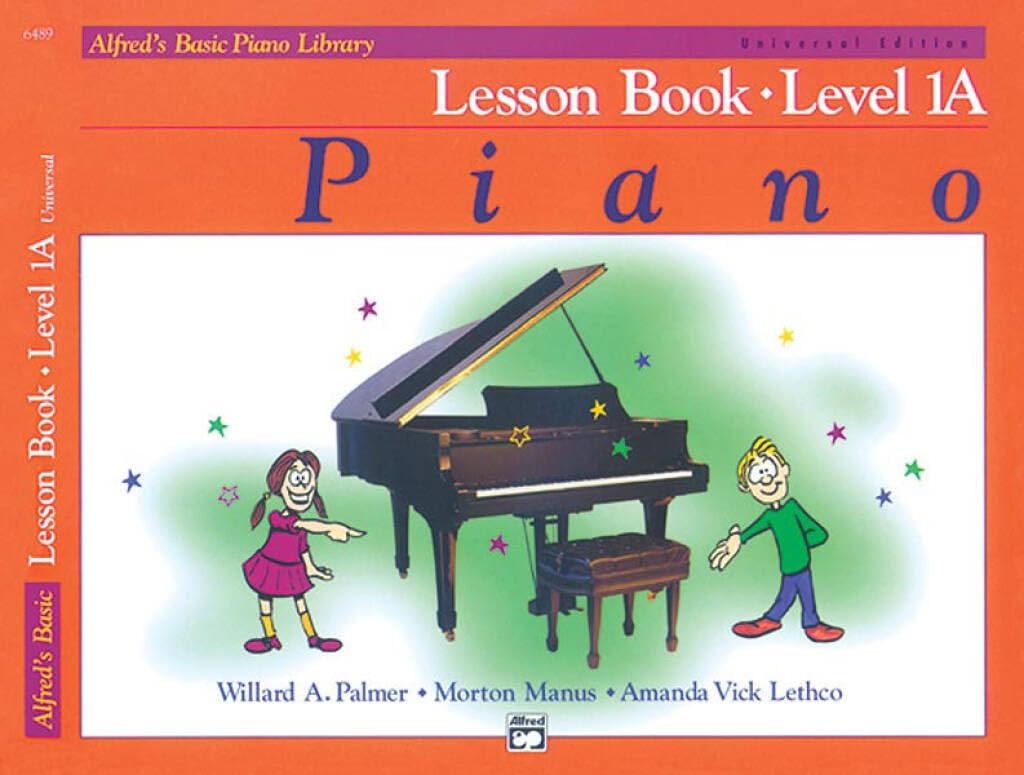
I took lessons from my best friend Zoe’s mom, Ms. Rita. My uninspired plunking of “Fuzzy Wuzzy Was a Bear” and the more concerning “Indian Song” was often interrupted by Ms. Rita’s parrot Pepe, singing the never-concluded “happy birthday tooooo! Happy birthday to?” or simply declaring his master’s name for the zip code to hear. Dan! DAN! DANNNNNNNN! (Rest in peace, Pepe.)
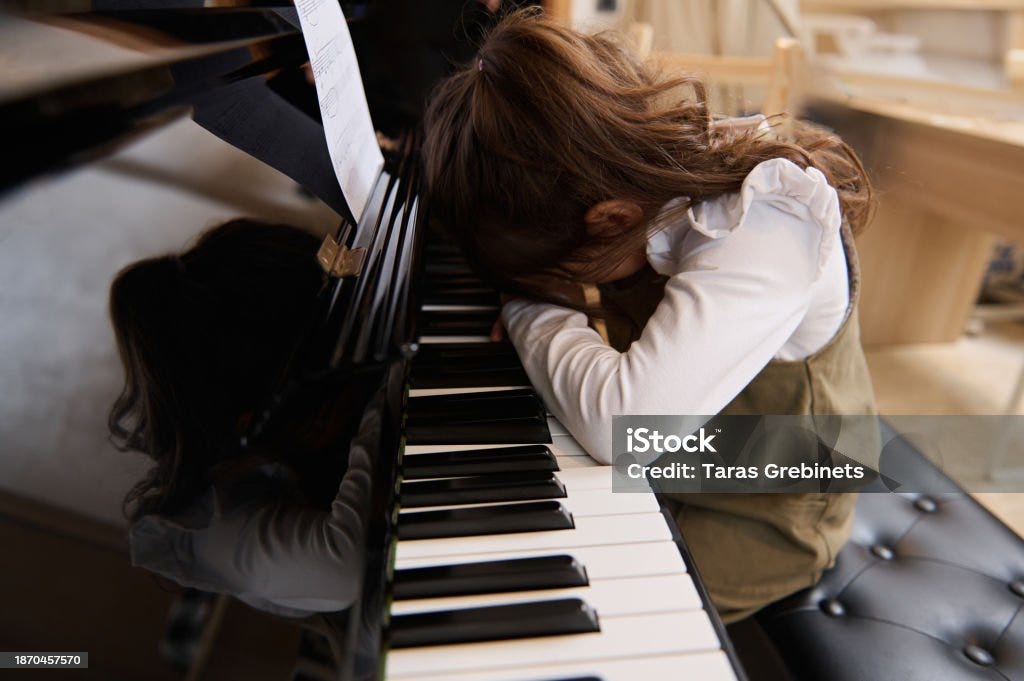
I was a terrible student. I hated practicing, and never experienced the rumored ecstasy of doing something over and over until you perfected it. In the five minutes before my weekly lesson I would cram in some scales on Zoe’s little bedroom keyboard, pretending Rita couldn’t hear exactly what I was trying to do. She bribed with Dum-Dums and a notebook where I would fudge the hours I’d practiced that week, alternating pen colors so it looked like I’d written them on different days. Presently, I can only play about 17 LDS hymns, forced to re-learn them as a missionary in Brazil and practiced every Sabbath while living in Portugal and Italy. You know the congregation is desperate when I’m their best choice for musical entertainment.
Ms. Rita also held bi-annual recitals, which helped me discover my only true motivator: public humiliation. The neighborhood toddler prodigies would show up with memorized sonatas, while I was still stumbling through Disney covers, squinting at photocopied music taped to the recital’s baby grand. As a reward for the humiliation ritual, Rita would present us with a tiny white plastic bust of a famous composer — usually the composer of the piece we’d performed.
After years of playing, you could hypothetically collect them all. The scowling Beethoven, the mutton-chopped Strauss, the dainty-faced Chopin, the grandfatherly Bach. Though some of the busts were questionable, we knew they were men. Why wouldn’t they be? Only men wrote music. Women weren’t allowed to look at pianos back in the day. Ten-year-old me would have wanted it to stay that way.
Turns out, and listen closely, because I don’t say this often and will not repeat myself…I was wrong.
This is our twelfth and last woman in our Great Forgotten Sisters module, and I think I saved the best for last. Fanny was the one who inspired it all, and thanks to her, we have now covered every single sister in history who’s ever been overshadowed by her more-famous, equally-talented brother. We found all 12 of them! We’re all done! We solved it!
Of course not. Finding women in the cracks of history books is a never-ending topic, which means I can write this newsletter forever and ever. Job security, baby. Thanks for wanting to learn about these crack ladies with me.
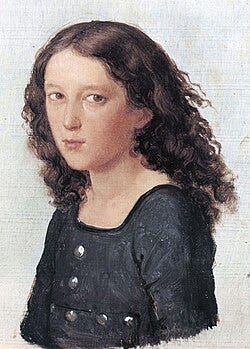
You might recognize 19th century German composer Felix Mendelssohn for his most famous song: “Here comes the bride, big, fat, and wide all dressed in white.” Felix also wrote the music for the hymn “Hark! The Herald Angels Sing” and almost single-handedly revived the music of Johann Sebastian Bach. In 1842, he played at Buckingham Palace for Queen Victoria.
“Vat is ze song zat you vould like me to play?” he asked the monarch. She requested her favorite: Italien.
Record scratch.
Felix slowly closed his eyes. Lowered his head. Took a breath.
“I am sorry, your majesty, but I must confess I did not vrite zat song. My sister Fanny did.”
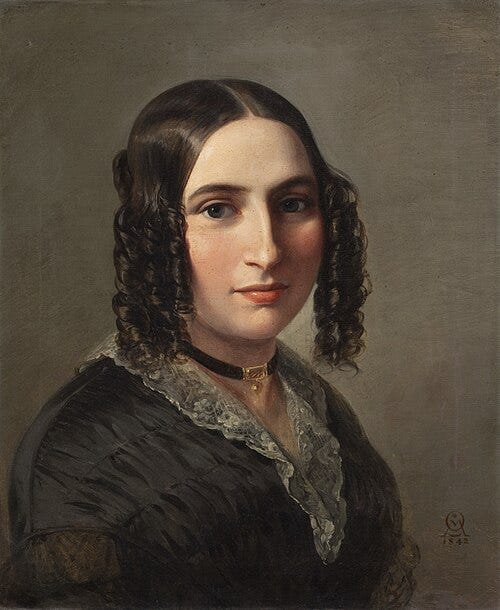
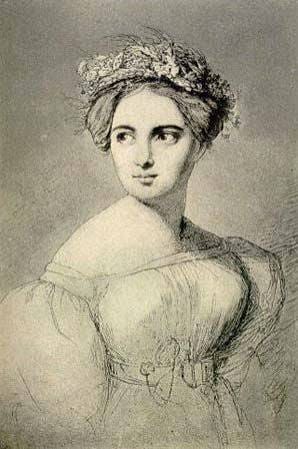
Fanny Mendelssohn’s life is a story we’re now familiar with. A child prodigy, she and her younger brother Felix first studied under their mother, then with the best teachers Berlin had to offer. Three years older than her brother, Fanny had a little more maturity and talent, and one of her teachers, Carl Friedrich Zelter, compared her to Bach. Years later, Zelter would give her the highest compliment available at the time, telling a friend that Fanny “plays like a man.”
Fanny was a brilliant musician, but she also wanted to be a good daughter, sister, wife, and mother. She lived in a time when women’s worlds were very limited, especially in music. Women couldn’t spread their legs to play anything — so no cello, bass, or organ. Anything played with the mouth was too suggestive — no wind instruments. That left piano, but Fanny made it work. She composed a string quartet, a piano trio, a piano quartet, an orchestral overture, four cantatas, more than 125 piano pieces, and over 250 lieder (poetry set to music, very common for female composers of the time) — most of it never published under her own name.
At 14, Fanny asked her father for permission to continue with music and received a written reply: “Music will perhaps become his profession, while for you it can and must be only an ornament, never the basis of your being and doing.”
Even her beloved brother sided with society: publishing her music, he said, “would only disturb her in her primary duties of managing her house.”
The only person who truly supported her was, surprisingly, her husband. After a seven-year courtship and against her family’s wishes, Fanny married the painter Wilhelm Hensel in 1829, and she soon did something that no woman had done before. The night before their wedding, Felix was in an accident. He’d recover, but the wedding music he’d composed for her would not make it in time.
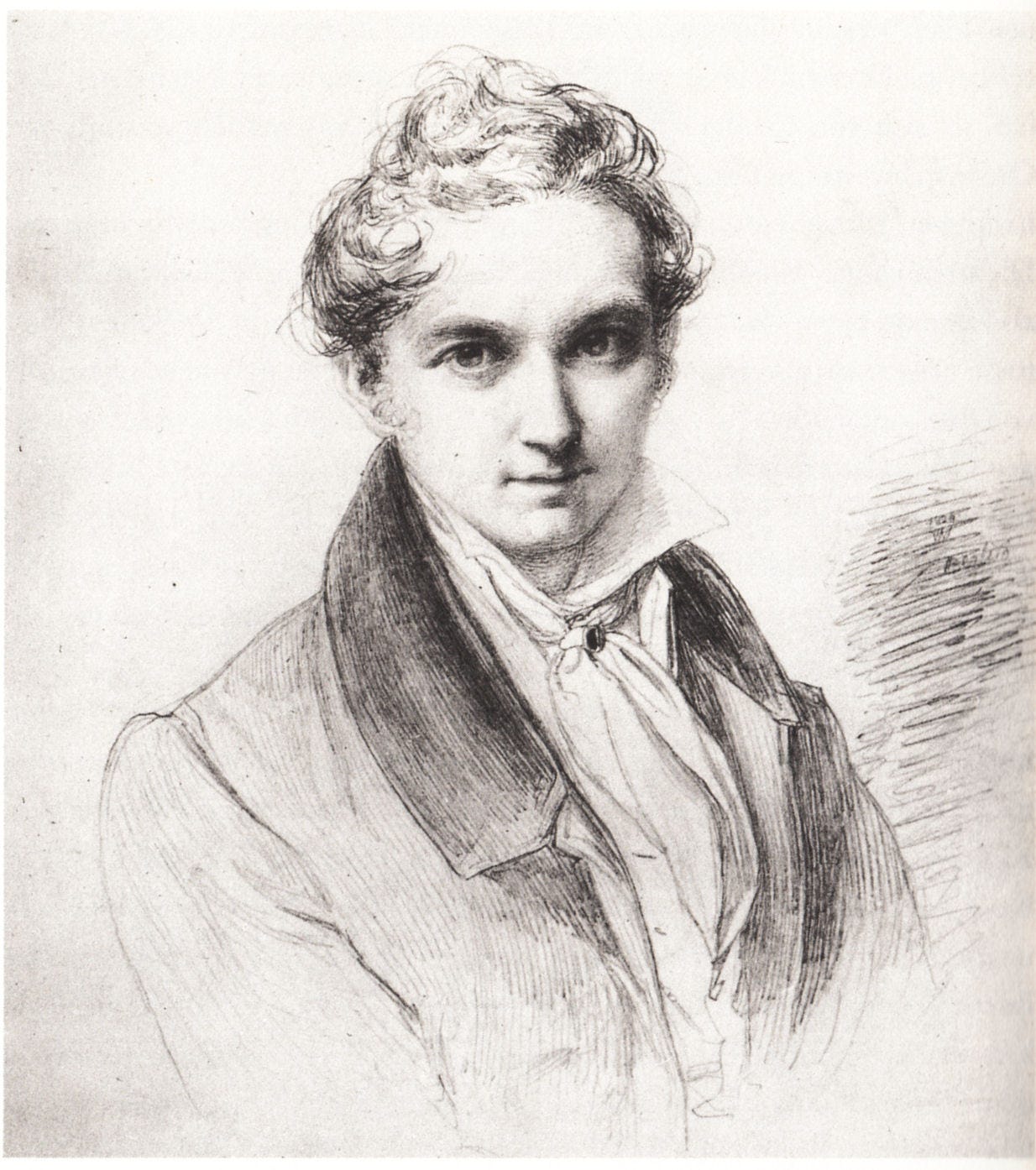
(For the record, the following is totally something my little sister Madeline would have done) In the middle of her pre-wedding party, Fanny sat down and composed her own wedding march. Sometime before morning, someone made a clean copy, handed it to the organist, who then sight-read the piece the next day as Fanny walked down the aisle.
Fanny was soon pregnant, and gave birth to a premature boy named after her three favorite composers, in order: Sebastian Ludwig Felix Hensel — Bach, Beethoven, Felix. They called him Badsen. Her son survived, but postpartum was rough, as it often is. But with her husband’s urging, she began hosting Sunday concerts at their home in 1831. Fanny finally published her first work under her own name, Opus 1, in 1846. A year later, while rehearsing her brother’s music, she suffered a stroke and died at 41.
After her sudden death, Felix — stricken by grief, or guilt — worked frantically with a publisher to get some of Fanny’s work published before he died six months later, also of a stroke. Many of her works remained unpublished, or still bear his name.
This is the point in The Field Trip where I have so much left to say, but I’m out of steam and have a freshly bathed two-year-old yelling “Mama come please??” from the other room. So, bullet points:
I learned a lot about Fanny through a documentary directed by her great-great-great-granddaughter, filmmaker Sheila Hayman — Fanny: The Other Mendelssohn. Everything we know about Fanny is because a handful of interested, talented scholars and musicians decided, in just the last few decades, to go looking for her. I fell in love with every one of them in that documentary, while Thomas fell slightly out of love with me for using our precious TV time on a documentary.
Her Easter Sonata — originally attributed to Felix — was rediscovered in 2010. A graduate student and a professor had listened to an obscure 1972 recording of the piece by a French pianist and immediately suspected it was Fanny’s, not her brother’s. After just listening to it. They knew. Crazy. After years of searching, they tracked down the missing manuscript and confirmed it: they were right. It had been misfiled, but it was Fanny’s.
Fanny would have been appalled by my music-related work ethic.
Fanny did not rebel against her family, her society, or what was expected of her as a woman. But she had a passion and a brilliance she was determined not to lose, and so she made it work however it made sense at the time.
She and Felix had that weird, artistic, codependent sibling relationship I don’t fully understand but keep noticing in these prodigy stories.
A lot of Fanny’s compositions are more edgy and creative precisely because she wasn’t writing under fear of public reaction — which is interesting, and a little bit tragic.
There was never a Fanny bust, and I never played her music. (And I never will. I looked at some of her compositions and fear my abilities extend to where the hymnbook ends.) But I wish I had known about her when I was ten. I could have known that my shelf full of dusty old guys wasn’t because men were the only people who had talent. They were just the ones who had permission to be remembered.
Above all, Fanny Mendelssohn Hensel was resilient and relatable. In a letter, after years of societal pressure and lack of recognition, she wrote: "It must be a sign of talent that I do not give up, though I can get nobody to take an interest in my efforts."
Let me invoke Pepe the parrot for a moment and say FANNY! FANNY! FANNYYYY! THANK YOU FOR YOUR EFFORTS!
No posts
Comments
Nothing yet. Say the first thing.
Sign in to join the conversation.