
If you don’t play videogames, the important thing to understand is that Dark Souls is hard. And if you’re not good at it? You suck.
…so they say. Reddit and Twitter are filled with massive dweebs who have come to use Dark Souls (and all the other Souls-like games) as proof of their competence. They were able to beat Dark Souls - and you were not, which is proof they are better than you.
Yet I have come to adore Souls-like games, where the inescapable difficulty is stuck on “punishing”… Although I also very much suck at videogames.
So what gives? Did I actually Git Gud, like the internet trolls tell you to do?
But let’s get into a little more detail. A more accurate term to describe Dark Souls (and its monster hit cousin Elden Ring, and Lies of P, etc etc etc) is unforgiving. Even the weensiest minions can kill you in a handful of hits. The bosses can (and do) often one-shot you. The maps are mazelike and full of traps. And there’s no super-armor to protect you; you’re always vulnerable.
There’s no exiting out of your fighting animations, which means pushing the “attack” button is a commitment - most games let you abort out of a mistimed attack to dodge away, but not Soulslikes. You press that button when someone’s about to hit you, and you will spend the next 1.2 seconds locked into your fighting animation on a helplessly big swing that an enemy can (and will!) eviscerate you during.
But the trick is, Dark Souls plays fair - because the enemies are also locked into their combat animations. (Well, mostly.)
So the main skill in Dark Souls is learning. You figure out your enemies’ movesets (the strategy guides are filled with things like “When he raises his axe above his head, dodge to the left and light attack”). You figure out when you can take a breather, when you can go in for the big assault, when to run away from the fireball your enemy’s about to barf out.
That learning takes time… because on the hardest levels, one or two mistakes is all it takes to end you.
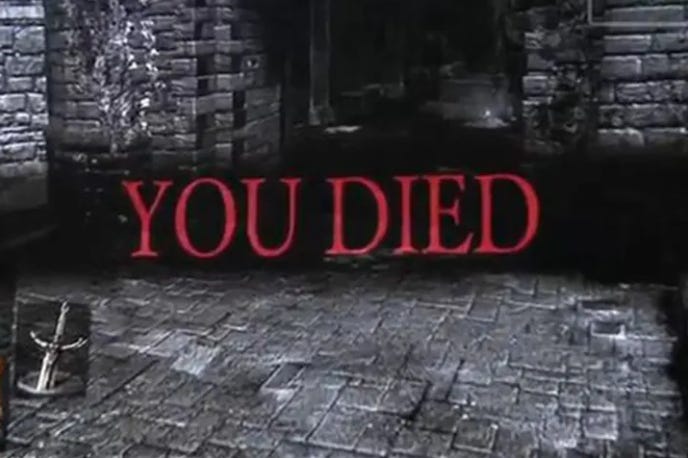
And the dysfunctional gamers will tell you this punishing difficulty is proof that beating Elden Ring means you’re an elite gamer.
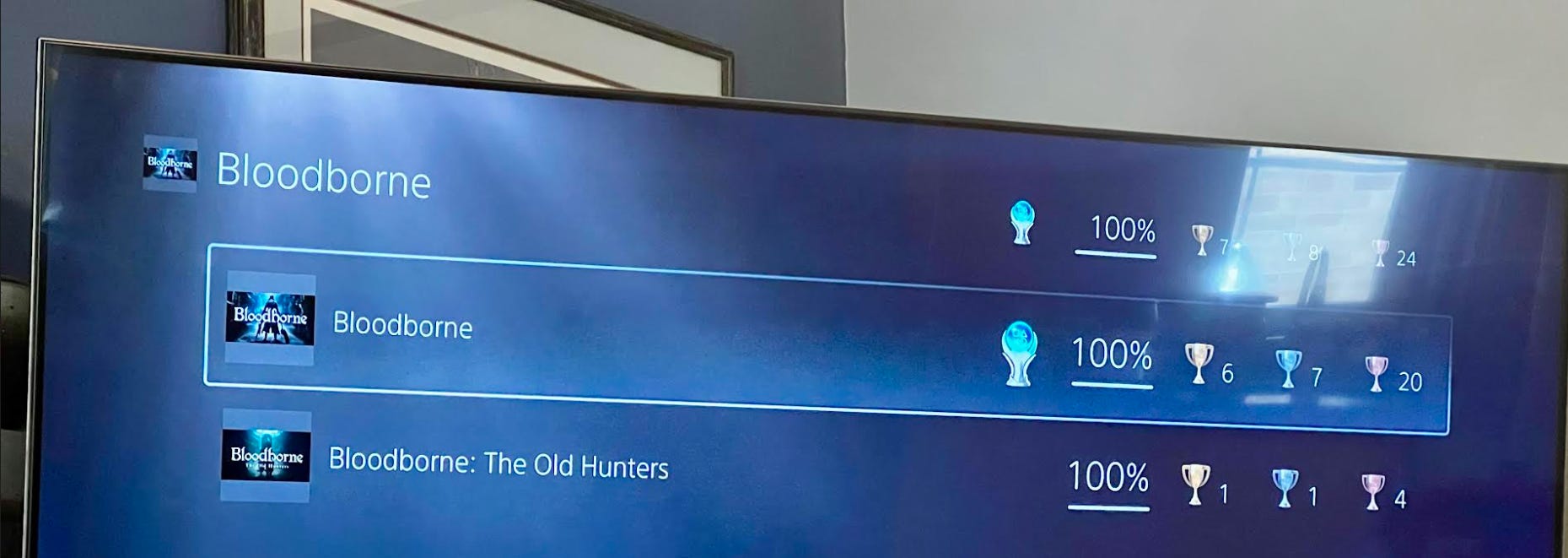
But if that was the case, why is the Platinum rate for Elden Ring (meaning someone not only beat Elden Ring, but also every optional super-difficult superboss in the game) hovering around 10.8%? As in, one in ten people has not only beaten, but trounced the game - which is exceptional when the average rate for platinuming a game is usually between 1 and 4 percent? Why is Bloodborne, which is arguably just as difficult as Elden Ring, also at a 7% Platinum rate?
Saying “Hey, I’m in the top 10% of gamers!” doesn’t sound so elite now, does it? (Especially when that percentage counts all the people who opened up the game and decided to bail on it without even seriously trying to beat it - I’d bet of the people who played it, that percentage is probably closer to 20%.)
Here’s the dirty little secret of Soulslike games: They do not reward perfect reflexes.
They reward persistence.
Dark Souls makes a covert contract with you: If you’re willing to make a hundred attempts to beat this stupid boss, I’ll help you win.
Which sounds absurd. But there’s tons of ways to make the bosses easier. If you’re willing to grind killing little weeny enemies over and over again, you can buff up your stats to the point where you can make five, maybe ten mistakes in the course of that fight instead of dying to your first mistake. You can summon in another player to help you, which makes things a lot easier when the boss isn’t exclusively focused on mauling you. And you can figure out the boss’s weaknesses, change your build to a fire-based kit-out that melts his health.
And above all, if that boss has one move that you cannot beat, the stupidest move that you just can’t nail the timing for dodging or parrying or blocking…
If you play enough times, the randomizer will eventually hand you a fight where the boss doesn’t use that move in that fight (or at least not as often). And then you luck into a win.
Now, a caveat: because Soulslikes are perfectly fair, it is extremely difficult to play them if you opt to give up all these advantages. Plenty of nutters start at first level and never increase their stats, never get the good armor or weaponry, playing the game where they have to hit the boss seventy times to kill him but the boss only has to hit them once.
Those victories are impressive! No question.
But playing on the hardest difficulty is optional. And if the designers didn’t want you to use these awesome weapons/increased levels/summons, they wouldn’t have put them in the game.
Look. There are games like Returnal, a very well-reviewed game that I have described as “Like Dark Souls but if it hated you.” The fundamental difference between Returnal and Dark Souls is this:
When you die, you go back to the very beginning of the game and start with nothing.
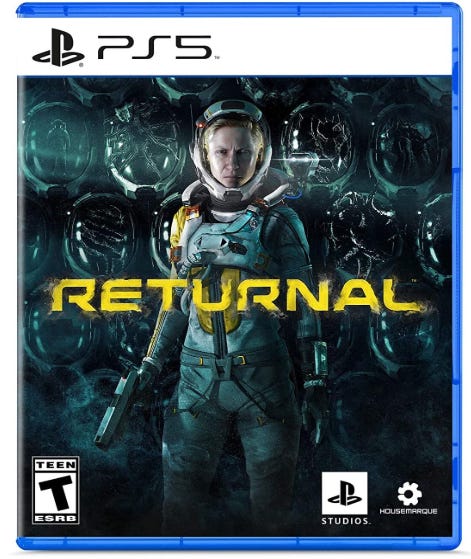
So if you’ve finally figured out how to win that first boss fight, great! It means you go into the second boss fight without any knowledge, with the same expectation that you’ll have to spend at least five or ten tries to beat this new boss…
And to get a shot at that new boss, you have to fight your way all the way past the first level, past the first boss, past the second level, and then step into the second boss arena and get obliterated.
Remember how I said about one in ten players in Elden Ring beat everything in it? Wanna guess what the percentage of people who beat the second boss in Returnal?
20%. As in, only one in five people who played the game bothered to beat the second boss, out of five bosses total. (About 4.4% beat the game total. 1.4% platinumed it.)
That’s what happens when a game really does not give two wet farts if you beat it or not. (And unsurprisingly, Returnal’s spiritual sequel Saros, which was just as difficult, was a commercial disappointment; Elden Ring outsold it by literally 100 to 1.)
Toxic gamers love to tell you that Dark Souls requires true skill, but honestly, it just requires a certain mindset.
And the weird thing, it’s a healthy mindset!
I found a lot of parallels between Bloodborne and writing professionally. You had to learn not to take the defeat personally, whether that defeat came in the form of a “YOU DIED” screen or an email saying “Regretfully…” You have to learn to take each failure as an opportunity to learn - “What could I have done better?” - instead of internalizing it as proof that God, I can’t do this.
In a very real sense, learning to not be fussed by defeat is the main skill you develop in a Soulslike. It tests your tenacity instead of your reflexes…
…which makes it absolutely fine if you don’t enjoy such games. There’s a weird mentality in the Internet waters that suggests you are somehow weak if you don’t force yourself to do things that you are supposedly doing for fun. Hey, they say, if you’re posting on the Internet and don’t want to deal with ten thousand trolls insulting you and doxxing you and posting AI images of you, well, I guess you just couldn’t handle it.
Sorry, am I getting paid to post on Reddit? Are you getting paid to be the very best, like no one ever was, at some rando videogame? Get outta here.
You should be able to exit a hobby when it no longer provides enjoyment.
At the same time - and here’s where I attract some detractors - I also am wary of lowering difficulty for games like this, even though I’m thoroughly in favor of accessibility.
See, each game is designed to provide its own experience. There’s been some gamer kerfluffle around Mixtape, a videogame that’s designed to let you feel what pretentious teenagers get up to at the end of a summer.
People have gotten upset because Mixtape presents zero challenge. There are game sections, but there’s no way to fail them - take your hands off the controls and you’ll be given access to the next section all the same.
And that’s great! Not all videogames are about challenge. Some are about evoking a feeling and a narrative, and if you have a game where kids are chilling and listening to their favorite songs and dreaming of the future, having a do-or-die section where they have to defend their hometowns from a drone invasion or it’s game over would just be stupid.
I repeat: Videogames are about the experience. Sometimes that experience is the story. Sometimes it’s about the vibe. Sometimes it’s about adrenaline. Sometimes it’s about caring.
And yes, sometimes it is about challenge.
Let’s be honest: Early on in Bloodborne, I found an enemy I could not beat - the Blood-Starved Beast. I literally rammed up against him fifty times and didn’t even get close to winning.
And there’s two uncomfortable truths laying side by side here:
If there had been any option to turn down the difficulty, at that point in the game, I would have taken it.
If I had turned down the difficulty, I would not have had the same experience.
I know exactly what I would have felt if I’d been able to dial down Bloodborne’s combat, because I have done it many times before - I’d feel relief that I got past that sonuvabitch, complain a bit at how ridiculous that thing was, and then I’d forget about that boss entirely until someone else complained about him.
Which is an experience, to be sure.
But the experience of beating the Blood-Starved Beast without turning down the difficulty? I was exultant in a way that no other game had gotten me to feel before. It was a personal triumph that had me dancing about the house - knowing that I had gotten myself in way over my head but that I didn’t give into despair, that the victory I had just attained was because I had risen to an unthinkable challenge.
This lighting-in-a-bottle feeling is the same feeling that got millions of folks playing Elden Ring. The triumph is as exhiliarating as the defeats are disheartening.
That said: I have, absolutely, played games that I enjoyed with scenario #1. There is nothing wrong with cranking the difficulty down because you feel this level some boool-sheeeet.
But there is also an experience in scenario #2 that only arrives when victory is the only way out.
The issue with that, of course, is that some people don’t feel that scenario #2 experience. If they eventually beat the boss, they don’t feel triumph, they just feel annoyed because it was “harder than it should have been.” And that line on “harder than it should have been” is fuzzy, defined individually, and no one person’s perspective is innately wrong on that.
But at the same time, I feel that making games easier sometimes ruins an experience, the same way that throwing in a drone-popping invasion into Mixtape would also change the experience.
(And in the exact same way that people who demand challenge find the game “easier than it should have been,” which much the same reaction that the game should be tailored to providing the experience that they prefer.)
And the uncomfortable conclusion I have ultimately come to is that some games only really provide the experience they set out to is if they’re calibrated to a certain difficulty. For Mixtape (or any number of other narrative adventures), that experience arrives on “Not much difficulty.”
For Soulslikes? The answer is “A lot of difficulty.” Because the experience is in tenacity, and it’s hard to generate tenaciousness when you can pop into a menu and kill the boss on your next attempt for sure.
The conclusion here, incidentally, is not that “Soulslike games should never lower the difficulty.” Lies of P, one of my favorite games (also fully platinumed by Yours Truly), added lower difficulty settings, and more power to that developer!
But if someone does not lower their difficulty, I also do not see that as elitist - I see that as a conscious choice made to deliver an experience, the same way that using large words in a book may ice out certain readers, but that’s not a reason for every author to use simple words.
It’s a big world. People should have choices as to what sort of art they deliver.
That’s all.
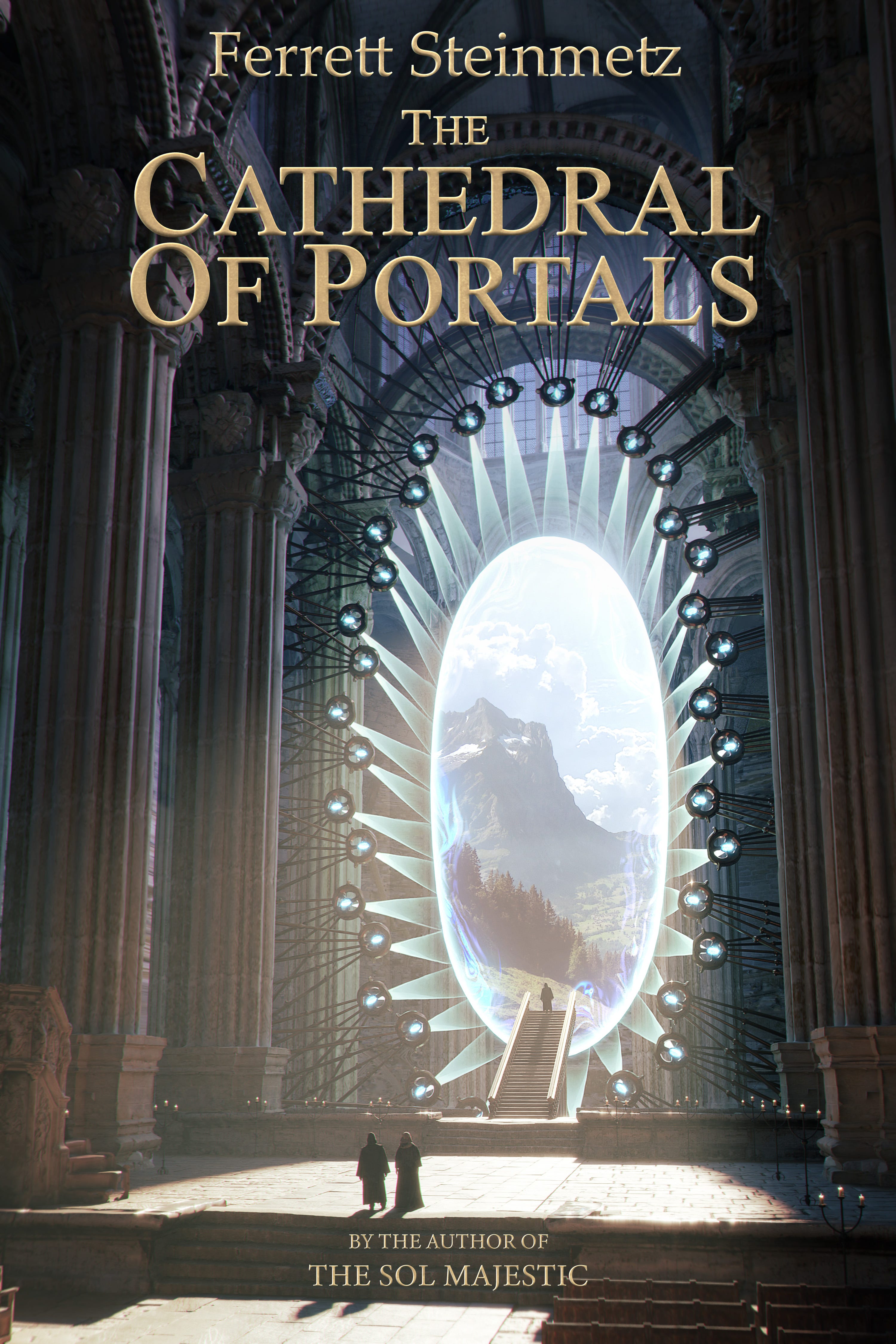
In other news, my book The Cathedral of Portals is out, and the folks who have given it a shot at reading it in serialized format largely seem to be loving it. (If you’ll recall, that’s how I intended for it to be written.)
So if you haven’t, give it a shot! And remember, if you sign up for my Patreon before July 31st at the paid level and stay through the end, you’ll get a complimentary copy of the book in the format of your choice (assuming I can output it in that format).
FOR FREE, a chapter at a time: At Royal Road, we’re on Chapter 8 - where Tesa is now in a desperate journey across the Kintari mountains with her family to try to find a job now that she’s been blackmarked by the Guild. (With a special guest star from the prologue.)
PAID, a chapter at a time: A paid level at my Patreon. We’re on Chapter 10 - back on Tesa, who is now in the city of Cairn Traban, discovering why things are still going to be difficul there.
PAID, all at once: Pre-order the book at Amazon for its final publication on October 30th.
PRICELESS YET FREE: Sharing a link promoting the book! Or leaving a review/commenting/following on Royal Road!
No posts
Comments
Nothing yet. Say the first thing.
Sign in to join the conversation.