
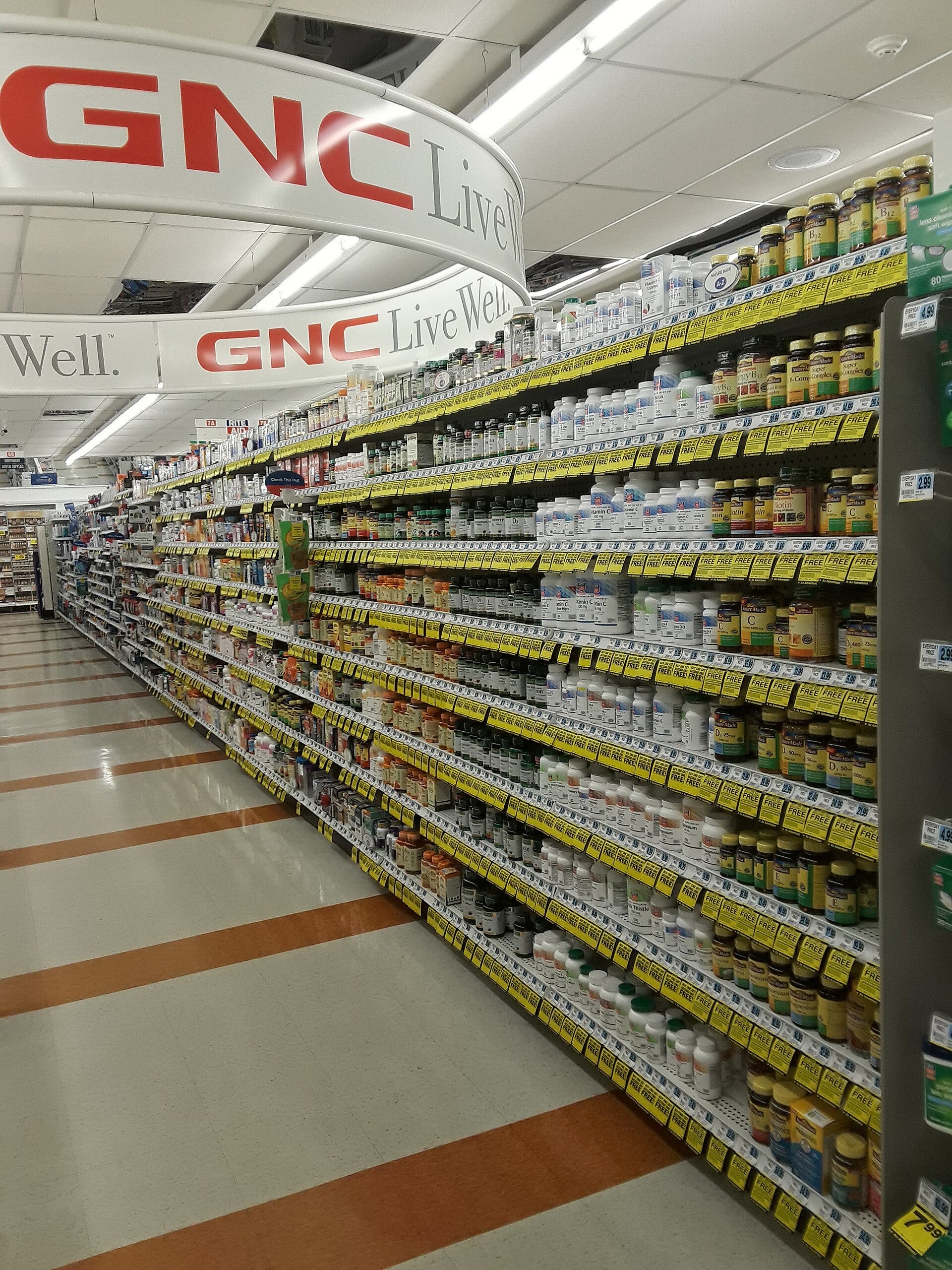
The bottle of a supplement seems like it’s giving you precise information. They’ll list the various ingredients to the milligram level or promise some precise-ish number of live bacteria all while containing a lot number that seems to imply you could trace exactly where it came from and get some detailed information on their process. The clean labels we see seem like they’re from a rigorous manufacturing process akin to pharmaceuticals, looking like a final report from their process. In reality, those are closer to a “trust me bro” style of promise made by the company selling it.
In the United States, supplements are technically regulated under 21 CFR Part 111 which states that manufacturers must set the specifications for the identity, purity, strength, composition, and limits of contaminants that could adulterate the product in line with manufacturing rules. They’re required to keep records, investigate complaints claiming failure to meet specifications, and report any serious adverse events that they receive regarding the product. It also allows the FDA to inspect their facilities and issue a warning, block some imports, seize products, or pursue an injunction if the inspection turns up too many violations. Notice that doesn’t mean they’re required by federal law to independently verify that the finished production batches match the label within a certain percentage before allowing it to be released to the public. Under current rules, manufacturers can test a statistically selected subset of their finished batches, then choose one or more of the specs of the finished product to argue the rest is also verified. The rules also allow for an exemption when the checks on the finished batch can’t be verified or measured. This happens in instances like complex mixtures that interfere with the assay testing for one ingredient after they’ve all been blended together. It’s then up to the manufacturer to document both why the test on the finished product qualifies it for the exemption and how the ingredient testing or in-process controls during manufacturing can still indicate the intended specification is met.
The FDA estimated a $60 billion U.S. market of roughly 100,000 products in the dietary supplement market as of 2024, with most able to end up in storefronts like GNC without the agency having any knowledge of the product and no systemic way to know when new ones appear or what’s in them. The labels are allowed to worsen customer uncertainty through the use of “proprietary blends” with only the total weight of the blend required for reporting. Just over two decades ago, the FDA had considered requiring a more rigorous system, but in the end they backed off.
The Rule FDA Almost Made
In 2003, the FDA proposed a rule that, while similar to the current system, was different in a couple of ways that should be noted clearly, as I was confused about how it differed at all on a first read. Today’s rule lets a manufacturer test a statistically selected subset of the finished batches, and within those batches, it can test one or more of the selected specifications and document why those results, when combined with the ingredients and process controls, show that it meets the stated specifications. The 2003 rule would’ve allowed similar sampling, but it wouldn’t have allowed for sampling across batches or across specifications and using those to extrapolate that the rest of the batches/specs are ready for shipping. It would’ve required a representative sample from every batch and every spec to be tested before release for the qualities mentioned earlier of identity, purity, quality, strength, and composition. When an assay issue or reason testing would be difficult arose, they’d be required to test the received ingredient lots and test during production where possible.
Unsurprisingly, supplement manufacturers and their major trade associations said that wouldn’t work for them, arguing that universal testing would be too expensive, duplicative, and literally impossible for more complex products. Instead, they suggested testing incoming ingredients, controlling the process, and using statistical sampling of the final batches. The FDA adopted much of that proposed system that allowed for the flexibility supplement makers wanted. Despite the legitimate argument behind the lobbying, the result meant that a capsule that passes one test could’ve still been made in a dirty factory, made from contaminated ingredients, or sampled in a way that makes it more likely to miss contamination elsewhere in the lot. Checks and balances in the supplement industry are loose, although it would be unfair to claim all supplement companies are cutting corners, with many doing much more testing than would be required by law with voluntary certification programs giving genuinely useful information. Many companies don’t do the necessary testing to tell consumers the answer to the question “did this batch produce what’s described on the label?”
Federal law requires that question to be asked elsewhere, so why not the booming supplement industry? It’s a general rule that each individual batch of a drug product has to be tested appropriately to determine if it is what’s described, with only drugs like short-lived radiopharmaceuticals being allowed to be released before testing is complete, so long as the testing is finished ASAP. FDA also requires all batches of infant formula to be tested for Cronobacter before sale, so clearly this kind of testing isn’t something novel or undesirable. Clarity of information and protection of the consumer should be priority number one, but it seems this isn’t the case for supplement companies. Drug manufacturers are able to use their own qualified labs, but the batch-level testing is a requirement that should be heavily expanded into the supplement industry.
The FDA is aware that this gap exists, with a 2007 final rule from the agency including a reply to commenters who proposed a hazard control system, noting they hadn’t explained how preventive measures would indicate a supplement met all the required, stated specifications. Disappointingly, they went ahead and allowed the strengthened component and process controls to justify not testing each batch, a choice that still dictates what makes it to market in the U.S. instead of any evidence-based or consumer-safety/consumer-knowledge based system.
What Gets Through
Because of the regulations just mentioned, we’re completely unable to estimate some national percentage of mislabeled supplements with accuracy. Researchers can examine various products on their own using various assays and selecting categories that seem to be issues in themselves as opposed to single supplements in that group. The FDA databases we have just show what has been enforced, which is far from random. Finally, we’re without a denominator to use with the lists of products caught with undeclared ingredients. Thankfully none of that stops us from looking at failures to protect the public from tainted supplements or misleading marketing.
In 2023, the Government Accountability Office hired an accredited laboratory to do blinded tests on three lots of 12 selected brands of leading prenatal supplements. Eleven of the 12 had at least one of the tested nutrients with an average amount outside of the accepted deviation from what the label says. Vitamin E concentrations, for example, ranged from 28% to 332% of the labeled amount and one folic acid product had an average result so high it raised potential health concerns, whereas four were too weak relative to their label. Most of the other deviations weren’t expected to have adverse health effects, but why are they allowed to exist at all? Some room for error makes sense, but when it gets this egregious things need to be rethought.
Probiotics are another product where that kind of mislabeling can be a problem, but seemingly not super widespread. The microorganisms are meant to be the entire product here, regardless of if it comes in a yogurt or a capsule. In a study that looked at 182 probiotic products collected across the United States and Canada, 15 didn’t comply with their labels due to an undeclared species being present, a declared species was missing or mislabeled, or the viable count was below the claimed amount. While not the worst example, it’s still worrisome, as the microbiome is one of the areas of medicine that is gaining new knowledge quickest and with much still to be learned.
On the more dangerous end of things, researchers examining the FDA’s tainted products database from 2007 to 2021 found 1,068 products that had been adulterated with an active pharmaceutical ingredient, with sexual enhancement and weight loss products being most common, and a single product could’ve had as many as five pharmaceutical ingredients. The FDA’s Health Fraud Product Database continues updating its list of products found to contain undeclared pharmaceuticals.
Seeing and hearing advertisements for Kratom and concentrated 7-hydroxymitragynine (7-OH) products is kinda what led me toward this broader supplement question. I’d seen a small analysis of eight products being sold as “kratom leaf extracts,” with measured 7-OH concentrations 5-28% higher than what the label described. Another paper looked at heterogeneity in a sample of 38 commercial kratom products and found substantial differences in the alkaloid composition across products and between individual units of the product. This leaves buyers confronted with uncertainty about the chemical composition of powders, extracts, tablets, gummies, liquid shots, or plant products that are all advertised as “kratom” in an unregulated industry. Consumers can’t research a product thoroughly when the information required to make an informed decision isn’t available until a lab confirms or rejects the label.
Another issue is the advertising and marketing of supplements, with the Joe Rogan-promoted Alpha BRAIN being my favorite example. Onnit currently says that its product supports memory, focus, mental processing speed, flow state, deep concentration, and productivity. Their sales page goes one further, telling buyers that holding attention and finding the right word will get easier by week four with improved productivity, “default” clarity, and “solid” memory. Let’s look at some of the “evidence” they have to support those statements.
One Onnit-sponsored trial of 73 young adults (of whom 63 completed the six-week treatment trial) had a primary outcome cognitive battery of verbal and visual memory, executive and working memory, attention, and visual processing speed. They reported positive findings on a delayed verbal recall test and an executive function task, even showing a significant treatment-by-time interaction for the delayed verbal recall. That would be nice if they had done their statistical due diligence and got those results, but they didn’t. They committed a major faux pas when they didn’t adjust for multiple comparisons in their paper. Put plainly, they tested 26 different cognitive and sleep outcomes at a significance threshold of p < 0.05, which means each test has a 5% chance of having a false-positive. Testing many outcomes separately increases the risk of finding false positives, so a correction is usually used. One approach, known as Bonferroni correction, divides that p-value by the number of tests done and would set their threshold to 0.0019, which would have rendered the effects insignificant. There are also issues with the paper like a mean of 28.64 on a sleepiness scale meant to be capped at 24 and labels two values as ‘partial eta-squared’ when everything indicates they’re Cohen’s d values. An EEG substudy of what seems to be 20 people from the larger trial reports significant EEG and event-related-potential findings, but without p-values, effect estimates, or any multiple comparison correction.
Their later studies are no more convincing. Another Onnit-funded study of 43 active-duty soldiers found no effect on marksmanship, mood, or cortisol. It’s possible this was partially due to a ceiling effect for marksmanship, with an average of 18 of 20 shots being the pre-treatment average, but I just think the supplement is likely a dud. Their 2024 trial of the Alpha BRAIN Focus Shot, a different formulation from the capsule but advertised all the same as a cognitive enhancer, showed no effect on vigilance, mood, or grip strength one hour post-use. It had only 20 people and didn’t do anything to match drinks for flavor or color despite calling it double-blind. They seem to have completed a 32-person crossover trial comparing Alpha BRAIN, Alpha BRAIN 2.0, and a placebo under sleep deprivation on June 26 of this year. I’m looking forward to those results being published, but I’m not holding my breath expecting something different. Joe Rogan’s beloved product is an absolute sham and is a perfect example of why a supplement company saying their product was “clinically studied” should send you running to find that publication, because cherry-picking results to put on a label is the easiest thing in the world for a marketing team.
The People Around the Rule
It’s easy to look at the shambolic state of the supplement industry and wonder how in the hell we even ended up here. Well, like most things in the U.S., it didn’t happen in a political vacuum. The rule started with a political decision made more than a decade before the FDA had even finished writing the rule. In 1994, the Dietary Supplement Health and Education Act was passed. The Orrin Hatch and Tom Harkin sponsored act had 65 cosponsors across the Senate and declared that supplements would generally be treated as food, with instructions to the FDA saying to model their manufacturing regulations based on those already present for food as opposed to those already present for pharmaceuticals.
When the FDA proposed testing all finished batches in 2003, the American Herbal Products Association, Council for Responsible Nutrition, and National Nutritional Foods Association pushed for the alternative we now live under. All three were trade associations representing the supplement business as opposed to political action committees, but they had their political arms as well. The Council for Responsible Nutrition PAC registered in April 2004 as a trade-association PAC. During the rulemaking period FEC records, it gave Hatch small donations of $1,000 in November of 2004 and $2,500 in April of 2005. The NNFA had a connected PAC at the time as well, with the AHPA PAC registering in February of 2007. By 2003, the Center for Responsive Politics calculated that Hatch had received nearly $137,000 from the supplement industry over the previous decade. In 2005, six executives of XanGo, a Utah-based supplement company, and their spouses gave over $44,000 to his 2006 campaign.
Industry groups also took their case to the White House Office of Information and Regulatory Affairs, which reviews significant agency rules and their expected costs and benefits. In November 2005, the NNFA met with OIRA with lawyers from the firm Sidley Austin, as well as Jack Martin of Walker, Martin, & Hatch. Martin was a former FDA associate commissioner and was a former aide to Senator Hatch. Hatch being in the law firm name is no coincidence either, having been founded by the senator’s son. The Council for Responsible Nutrition also attended an OIRA meeting in 2006, submitting materials listing Herbalife, GNC, Pharmavite, and other major supplement companies as their members, and having the Alpine Group as their outside lobbying firm.
A later review by the Government Accountability Office found that the FDA changed the draft during the OIRA review, with one documented change reducing the required retention of reserve samples from three years down to two. Where the true compromise came from is likely to remain a mystery. What we know is Congress placed supplements in the food-based regulatory environment, then trade groups asked the FDA to replace the universal batch testing, which the FDA accepted. We also know campaign money was in the process, so it may not be as innocuous as it seems.
The revolving door of industry to government has continued ever since. Vasilios Frankos, the FDA supplement-program director who helped publish and implement the rule, retired in March of 2010 from the agency and joined Herbalife the following month as its senior VP for product compliance and safety. Daniel Fabricant took over Frankos’ old division in 2011 after leaving the Natural Products Association, only to return in 2014 as its CEO. Neither move proves anything improper, but they’re indicative of incestuous crossover between industry and politics.
Just Test the Batch!
Since I first wrote about supplement regulation as a community college student, I’ve been of the opinion that every batch of every dietary supplement should be held from sale until a representative sample passes testing by an accredited, independent laboratory. The back panel should show verification of ingredients and amounts, as well as product-specific tests for contaminants or adulterants. The same rule should require the amounts of each ingredient to appear instead of letting the words “proprietary blend” tell you to go screw yourself for wanting more info. The laboratory should draw the sample under a documented chain of custody and report the results directly to the FDA instead of allowing repeated testing with only a favorable certificate being sent in. Each lot should also carry a code linking the buyer to a public result while coming with the same kind of insert one gets with a new pharmaceutical. Failed tests should remain part of the public record even if a batch is abandoned and destroyed.
California’s legal cannabis market shows why the laboratory itself also needs oversight. Every batch of flower, concentrate, edibles, or tinctures has to go through testing by a licensed, accredited lab before going on the retail floor. The issue is that businesses selling cannabis choose and pay the laboratories doing the testing. California’s own regulator says this competition for clients encouraged “lab shopping,” with laboratories trying to outdo one another by returning higher THC percentages. Distributors can send multiple samples around to different labs to get the most favorable result while preventing the unwanted results from being seen. A 2026 proposed rule would restrict each batch to one laboratory and one sample while closing the tracking-system loophole that lets distributors repackage a batch, detach the unfavorable result, and submit a new sample.
The FDA already operates an accredited food-laboratory program, and NIST and NIH develop the reference materials and methods such testing requires. Extending that system to supplements would require more laboratories and better assays for difficult products. The industry makes $60 billion a year and can pay for them. Testing each batch will not establish that a supplement works or make its marketing honest. It will answer the more basic question the current system too often leaves open: does this bottle contain the ingredients and doses printed on its label? The answer should come from the batch in the buyer’s hands.
Comments
Nothing yet. Say the first thing.
Sign in to join the conversation.