
One of the reasons I continue hosting Thriving in Intersectionality is that every conversation reminds me that people are so much more than what we can see.
We see someone’s title.
We see their job.
We might see their race, gender, age, or accent.
And then our brains start filling in the rest.
But the truth is, so much of what shapes our lives lies beneath the surface.
This week, Dr. Maiysha Clairborne and I spent time talking about those invisible layers.
Because some of the experiences that have shaped me - that daily shape each of us the most - are things nobody could know simply by looking at me.
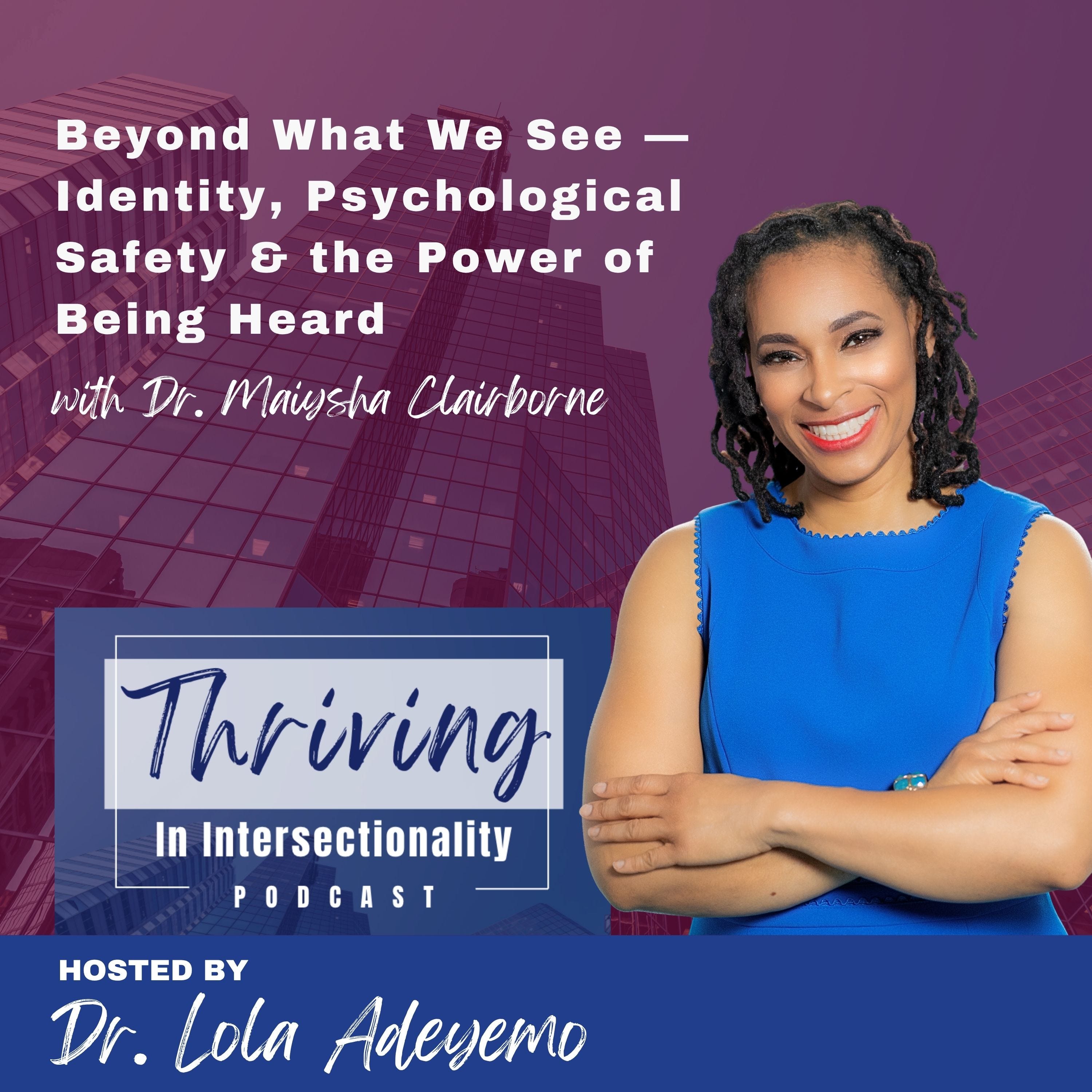
Dr. Maiysha talked about being:
highly sensitive
an introvert
a trauma survivor
a single mother
a physician
an entrepreneur
Some of those identities are visible.
Most are not.
Yet every one of them influences how she walks into a room, communicates, leads, and builds relationships.
As she spoke, I thought about how often we make assumptions about people based on the identities we can immediately see.
At work.
At conferences.
On teams.
In leadership.
We rarely stop to ask:
What experiences shaped this person long before I met them?
As professionals, we often separate our personal experiences from our professional identities.
We say things like:
“Leave your personal life at home.”
“Keep your emotions out of work.”
“Be professional.”
But our experiences don’t disappear when we badge into the office.
The child who learned to stay quiet.
The first-generation professional carrying family expectations.
The immigrant navigating a new culture.
The person who has experienced trauma.
The parent managing invisible mental load.
The person whose confidence was damaged by a previous manager.
We carry all of those experiences with us.
Every day.
Into every meeting.
Into every decision.
Into every conversation.
One thing Dr. Maiysha said that stayed with me was this:
Emotions are data.
I wrote it down immediately.
Because so often in workplaces, emotions are treated like distractions.
Something to push through.
Something to suppress.
Something that makes people less professional.
But emotions tell us something.
They tell us:
What feels safe
What feels threatening
What matters
What needs attention
Ignoring emotions doesn’t make them disappear.
It simply means we lose access to important information.
Another idea that stayed with me was the importance of leaders modeling their humanity.
Not perfection.
Not having all the answers.
Humanity.
Because people don’t build trust with perfect leaders.
They build trust with real ones.
The leaders who say:
“I don’t know.”
“I made a mistake.”
“I need help.”
“Tell me what I’m missing.”
Psychological safety doesn’t begin with policies.
It begins with people.
It begins with leaders who create enough safety for others to be human, too.
Toward the end of our conversation, Dr. Maiysha talked about community.
And I found myself smiling.
Because that word has been a recurring theme throughout my own journey.
Community has sustained me.
As an immigrant.
As an entrepreneur.
As a mother.
As a speaker.
As a leader.
Community reminds us that we don’t have to carry everything alone.
It gives us places to be seen.
To be challenged.
To be encouraged.
To belong.
And maybe that’s why communities matter so much in the workplace too.
Because people thrive when they feel connected.
This conversation left me with one question that is not new for those in my space- it's a throughline of this podcast and one we all need to answer for ourselves:
What invisible aspects of your identity have shaped how you lead?
The answer might not fit neatly into a résumé.
It may not appear on LinkedIn.
It may not even be something other people know about you.
But chances are, it has influenced who you are far more than any title ever could.
Because sometimes the parts of ourselves that nobody sees…
shape everything.
🎙️ Listen to my full conversation with Dr. Maiysha Clairborne on Thriving in Intersectionality.
I’d love to hear from you:
What invisible part of your story has most shaped the way you lead, communicate, or connect with others?
Thanks for reading Lola Adeyemo (PhD) - On belonging, leadership, and identity! This post is public so feel free to share it.
Comments
Nothing yet. Say the first thing.
Sign in to join the conversation.