
Happy weekend, fellow Daily Active User, it’s great to have you here! I’ve just returned from Los Angeles, so you’ll notice a slight L.A. theme to this week’s installment.
It was good to be back in my old home of many years, but it’s even better to be back with my family here in Brooklyn. Sending you my very best.
Have a great weekend.
Cheers,
Benj
P.S. Bonus Mokkiri-zake this week, and perhaps continuing into the future if the grid holds up.

There’s a great bit of dialogue in Pulp Fiction when Uma Thurman and John Travolta are dining at Jack Rabbit Slims, and Travolta is shocked that his companion has just ordered a $5 shake. “That’s a shake? That’s milk and ice cream… You don’t put bourbon in it or nothin’?” he says. And of course once he’s had a sip: “Goddamn, that’s a pretty fucking good milkshake… Don’t know if it’s worth five dollars, but it’s pretty fucking good.” That line was on my mind when, a few years after the film was released, when living in Los Angeles, I ordered a black and white shake from Swingers Diner on Beverly Blvd. and it came to $5.50 (before tip). A milestone, marked with a cheer (I was gainfully employed at the time) and yet it still felt like way too much for its ingredients. The shake I had yesterday, at that same Swingers, touching the event horizon of $12, was a solid creation curated by my server, who summoned my fruit intake for the day and blended it to perfection. The diner hasn’t changed a bit; the jukebox doesn’t seem to have been updated since the $5 milkshake days, and the food is as good as ever. As a creature of habit, I love to visit old haunts, and relished being in this L.A. institution, walking distance from my old apartment. The food good, the vibes on point, and not one but two aging rock stars entered the place on the two occasions I visited this week. Still great after all these years.
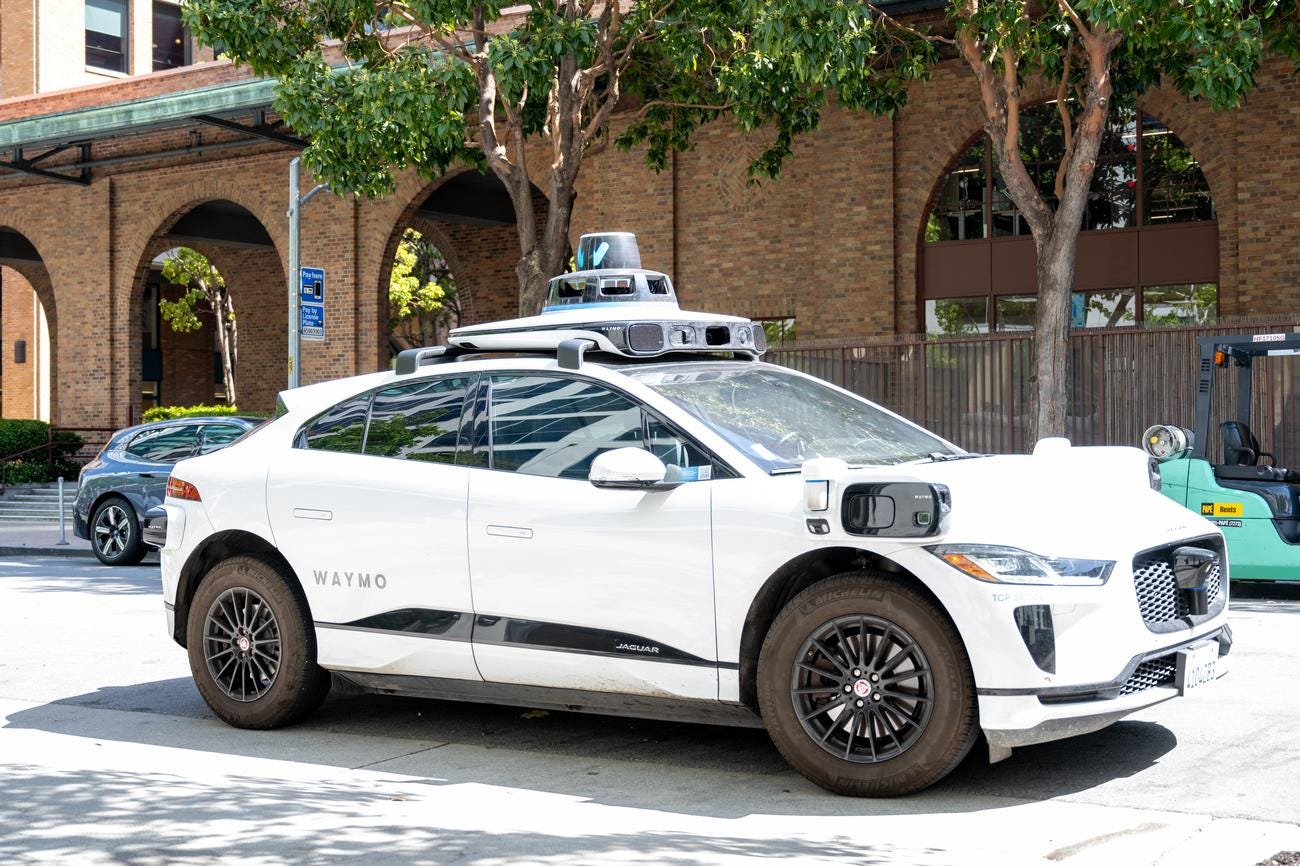
As you read this newsletter, you’ll probably sense that even though I work in technology, my relationship to it is deeply conflicted. There’s so much that I love about technology, and yet I use a fountain pen to write about AI. Following the milkshake mentioned above (I should also mention that I had delectable eggs as well), I left Swingers in my first autonomous ride. I summoned the Waymo from the app that I’d downloaded a while back and was a little bit nervous as I stepped into a custom Jaguar with frantically spinning appendages. It felt alien on one hand, familiar on the other. And yet, aside from a small complication where it got stuck on Crescent Heights Blvd. on its way to me (and so required a little technical support), I sat comfortably in the backseat. It took all of ten seconds for me to completely relax and realize that this thing was probably a better driver, and certainly less talkative, than my previous Lyft driver, whose business card stares at me as I type, this from their having tried to sell me their book on linguistics.
The ride was extraordinary. It was like my first contact with AI: perplexing and marvelous, terrifying and exciting, all at the same time. And later after taking multiple rides I realized that there’s no way back. It was half the price of other cars I’ve taken driven by humans (there could be discounts at play), and the vehicle was clean and peaceful. No pressure to communicate (which brings me sadness as I think about it), but after a long day it was exactly what I needed.
Even as it had to navigate a particularly tricky six-lane freeway, it was amazing to watch the car negotiate and change its strategy on the fly. As you know from my work on this newsletter, I don’t want anyone to lose their job so that a tech company can make more money, but I also see no avoiding it after taking the Waymo. It’s a deeply satisfying experience, and I’m sure there are issues and that there will be teething problems, but it’s an incredible experience, and one that I’m still processing in all its complications.
So if you haven’t tried one yet, I do recommend it. It has all the hallmarks of that feeling of stepping into the future. And if the data is to be believed, these things are much safer than our smartphone-addicted humans, straining under the yokes of the algorithms that tell them where they need to be and when.
Years ago I wrote a piece on Medium in which I argued that all ride share drivers should be given equity in the companies they worked for, because they were in effect training these autonomous systems that would eventually take their jobs. Now, having sat in one of those autonomous systems and been gracefully driven at half the price, I don’t envisage that fate, or its benefits, getting to the drivers who put in the hard work, and that leaves me deeply conflicted.
This is where it becomes difficult. Because on the one hand, the impulse is to sue and fight to stop these technologies, as we’ve seen with generative AI. And yet the history of technology is such that once it rolls out, it’s rarely stopped, and at best lightly regulated. Autonomous vehicles are the future. There will be a lot of casualties on the way to getting there in terms of job loss, and yet fewer casualties from people being struck by exhausted, careless, or unlucky human drivers. But with the estimates of how much safer these autonomous cars are going to make the world, I don’t see how we can go back from here.
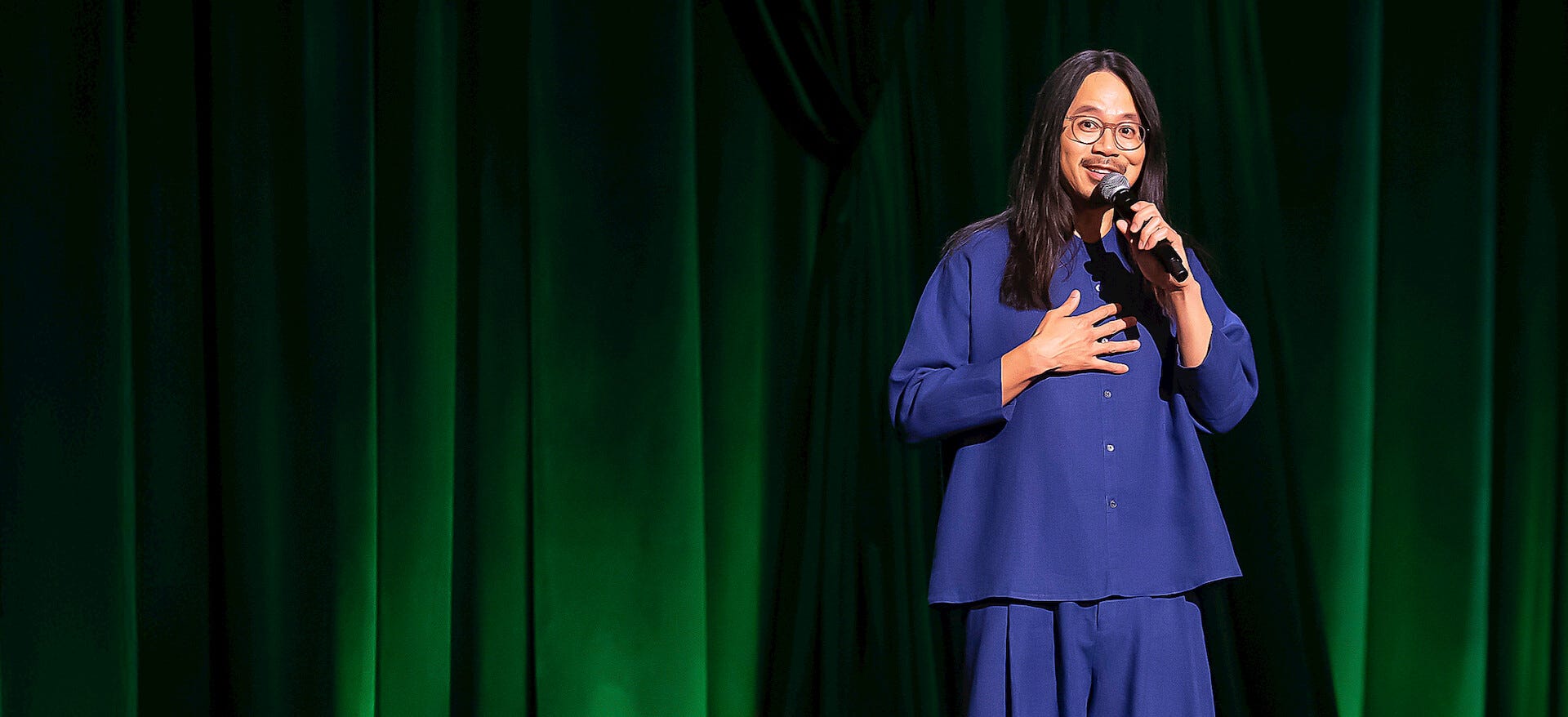
I want more stand-up comedy in my life. Aside from open mic nights, at which I was also performing, I’ve only been to one actual stand-up show and it was great. But last week we sat down to watch Sheng Wang and his latest special Purple, which was superb. His delivery is extraordinary, slow and methodical, as he sounds at times like the Dude from Big Lebwoski reaching to the logical extension of Steven Wright—you never know where he’s gonna go and he’s masterful at turning the mundane into the wonderful. We loved it so much that we went back and watched his previous special, Sweet and Juicy, for the second time. It’s in this one that he drops the line about walking into a bookstore as a grown-up: “It’s overwhelming to be surrounded by so much knowledge all at once. You can see it so clearly, but you can’t have it. It’s just teasing you, like a strip club for wisdom.” This had me in pieces, and it’s exaclty how I feel in a book shop, (I’m looking at you right now, Book Soup!) The two specials are not to be missed—funny yet also warm and caring. Wang is not trying to shock, and has an excellent way of bringing you along for the ride, whether it’s cooking shallots or wearing shoes in the apartment. Every line is perfect and as you’ll note from the first special to the second, his delivery is getting better over time. Really wonderful stand-up. Do not pass go!
What if we demanded that these institutions not merely pay a settlement but repay every penny of profit? If you deliver enough of a return on investment, I guess you can stuff your hollow moral center with cash. - I Visited the Evidence of Epstein’s Crimes - New York Times - Rachel Louise Snyder
Mirrors encourage us to choose the fantasies of ourselves over the realities of others. It’s best we look away. - All This Staring at Our Faces Is Messing With Our Heads - New York Times - Catherine Shannon
Gambling has become a more common leisure activity than reading a book: Last year, 57 percent of Americans placed a bet. - The End of Reading Is Here - The Atlantic - Rose Horowitch
Samuel Johnson was happy to judge Shakespeare’s characters on this basis, writing of Bertram in All’s Well That Ends Well, “I cannot reconcile my heart to Bertram, a man noble without generosity, and young without truth.” - Does it matter if you don't like the characters? - commonreader.co.uk - Henry Oliver
How can I be useless to capitalism today? That’s precisely the kind of wealth I’m interested in accumulating. - Things that make me feel rich - substack.com - Rosie Spinks
This is what makes ideological slopulism so dangerous. You can’t just fix it by educating people; you’re constantly swimming against a tide of motivated reasoning. There’s always someone blasting distorted, low-quality, or mis-cited “evidence” supporting their position, and unleashing all kinds of accusations and insults at anyone who dares disagree. When you combine this intellectual promotion with the fact that the ideas in question are already popular, warning people not to try these policies becomes a downright Sisyphean task. - Slopulism is taking over America - by Noah Smith - noahpinion.blog - Noah Smith
Above all, I noticed a whole syndrome that I came to call the Clement Greenberg problem—named after the art critic who achieved enormous success (and very large paydays) by heralding the work of Jackson Pollock and other abstract expressionists. Greenberg had made it clear that the single most lucrative move for a modern-day critic was to announce the newest new thing, the coming revolution that would sweep everything else aside. And he had proven so influential that, by the time I came of age as a critic, a revolution in music was getting announced every few weeks. I couldn’t pick up a newspaper or magazine without reading about some futuristic, world-beating sound that had altered all the rules—and then a few weeks later it would be forgotten, replaced by something just as ephemeral. The whole thing was a joke to anyone who looked at it from the outside, but within the feverish world of music journalism, no one could figure out any better way to operate. - How I Became the Honest Broker - honest-broker.com - Ted Gioia
As an adolescent, I took solace in the saying “Even if I knew that tomorrow the world would go to pieces, I would still plant my apple tree.” This aphorism, often attributed to Martin Luther, wasn’t about the joy of digging holes. It represented defiant optimism in the face of uncertainty. In the hardest moments of my youth, my goals gave me dignity and agency. When the present felt unbearable, my aspirations allowed me to transcend my surroundings. I think about sitting in the back seat of my rusty car, clutching an SAT book. I still bear the scars of my work ethic; I wish I’d known, like today’s youth, how to give myself more grace. But I also wish they understood how the dream itself illuminated the path a few feet ahead of me, until I stood on solid ground. - Gen Z Fell Out of Love With Work. I Don’t Blame Them. - New York Times - Emi Nietfeld
Apparently, people will watch anything but the expensively produced content I write—unless it is in the form of unlicensed 15- to 30-second clips. I haven’t checked my math, but in the time it takes to watch an entire episode of quality streaming television, I can watch several thousand short-form videos, many of them repetitive and nonsensical, but as soon as I feel the first synaptic offloading of dopamine, I swipe to another video. My attention span is shattered. An hourlong episode of TV now feels like an imposition. And I write hourlong episodic television for a living. A surprising number of consumers would rather be fed a steady drip of content confirming their own preconceived notions and biases than take a chance and spend several hours that could, potentially, make us feel differently about the world than when we started. For that is what great movies and TV shows, like books and theater and music and painting—and even magazine articles—can do. But that requires some attention span, and perhaps allowing our preconceptions to be challenged—nope. Swipe. Next video. - Downwardly Mobile in Hollywood - New York Times - Karl Taro Greenfeld
To borrow a phrase from Simone de Beauvoir, the face is not a thing but a situation—one that is, increasingly, more technically beautiful but more spiritually unattractive, replete with new information but devoid of human meaning. Today, the young inject their faces and look old; the old inject their faces and look uncanny; a twenty-year-old got famous for hitting himself in the jaw with a hammer to become hotter; teen-agers ask strangers on the internet if a facelift is their only hope. The internet casually scrambles basic ideas of personhood, reframing people as commodities and stripping us for parts. But only recently has this process been encoded so specifically onto the face, traditionally thought of as a portal to our humanity. The face is separating from the person, and the person is separating from the soul, and this is happening in front of us, on our phones, in the most banal fashion, every day. - Jia Tolentino on Our Plastic-Surgery Nightmare - The New Yorker - Jia Tolentino
With the shadow of death hanging over them, the main impact of the Sanatorium on its patients is not so much to offer a cure as to progressively release them from any conventional understanding of time and to normalize the process of dying. This in itself has a structural logic. But the problem is, its affects everyone who is there, whether ill or not. The question is, who belongs and who does not? After all, we are all complex organisms constantly in motion towards death. We are all in various ways ill. The ironic undertone of the novel derives not from the serious business of TB, but from the fact that from the start the reader is left in little doubt that Hans Castorp himself, is not seriously ill. He is not well. After his initial three week stay he catches a cold and on examination by the doctors in September 1907, they claim to have heard some concerning noises. He seems to take to the sanatorium regime so he extends his stay. But what exactly is wrong with him and how illness and health, disease and vitality fit together, is precisely the mystery. - Chartbook 463: Zauberberg/Magic Mountain - how history ended in Davos ... on, or about September, 1907. - substack.com - Adam Tooze
Vulnerable writing is a full-contact sport that exposes you to injury. It’s also incredibly powerful. - No Mercy / No Malice Turns 10 - profgmedia.com - Scott Galloway
No posts
Comments
Nothing yet. Say the first thing.
Sign in to join the conversation.