
Every parent has one. The behaviour that gets under your skin faster than anything else. The one that shows up at the worst times, pushes the same buttons, and leaves you wondering why it keeps happening no matter how many times you’ve addressed it.
It might be the hitting.
The shouting.
The complete refusal to listen.
The meltdown that seems to come out of nowhere.
Even the mess!
Whatever it is, it tends to feel personal. It can feel like defiance, like disrespect, like your child is choosing the exact moment you’re stretched thin to make things harder/ And when something feels intentional, the instinct is to correct it quickly. To stop it. To make it clear that it’s not acceptable.
That’s where punishment often enters the picture.
Most parenting approaches, whether we realise it or not, are built on one assumption:
If my child is doing something they shouldn’t, they must be choosing it.
And if they’re choosing it, then consequences, discipline, or punishment should teach them not to choose it again.
But what if that assumption isn’t always true? What if the behaviour you’re struggling with most is not a choice in the way you think it is? What if it’s a signal that your child can’t yet do better in that moment?
Children don’t arrive with fully developed emotional and behavioural skills. The parts of the brain responsible for impulse control, emotional regulation, and flexible thinking are still developing well into adolescence.
So when a child hits, it is often because they don’t yet have the skill to handle frustration differently. When they scream or melt down, it is usually because their emotional system is overwhelmed. When they refuse, it is often because they lack the flexibility to shift from what they want to what is being asked.
In those moments, behaviour is not a sign of defiance. It is a sign of limitation. The behaviour is loud because the skill is not yet there.
When we respond to these moments with punishment, we focus on stopping the behaviour. And sometimes, in the short term, it works.
But the underlying issue remains untouched.
Punishment does not build emotional regulation, it does not teach flexibility, it does not strengthen impulse control. It simply adds pressure to a system that is already overwhelmed.
Over time, children may learn to suppress behaviour in certain situations. But suppression is not the same as skill-building. And when the pressure increases, when they are tired, hungry, overstimulated… the same behaviours return!
One of the most powerful shifts a parent can make is learning to see behaviour as information instead of opposition.
Instead of asking, “How do I stop this?”
You begin asking, “What is my child struggling to do right now?”
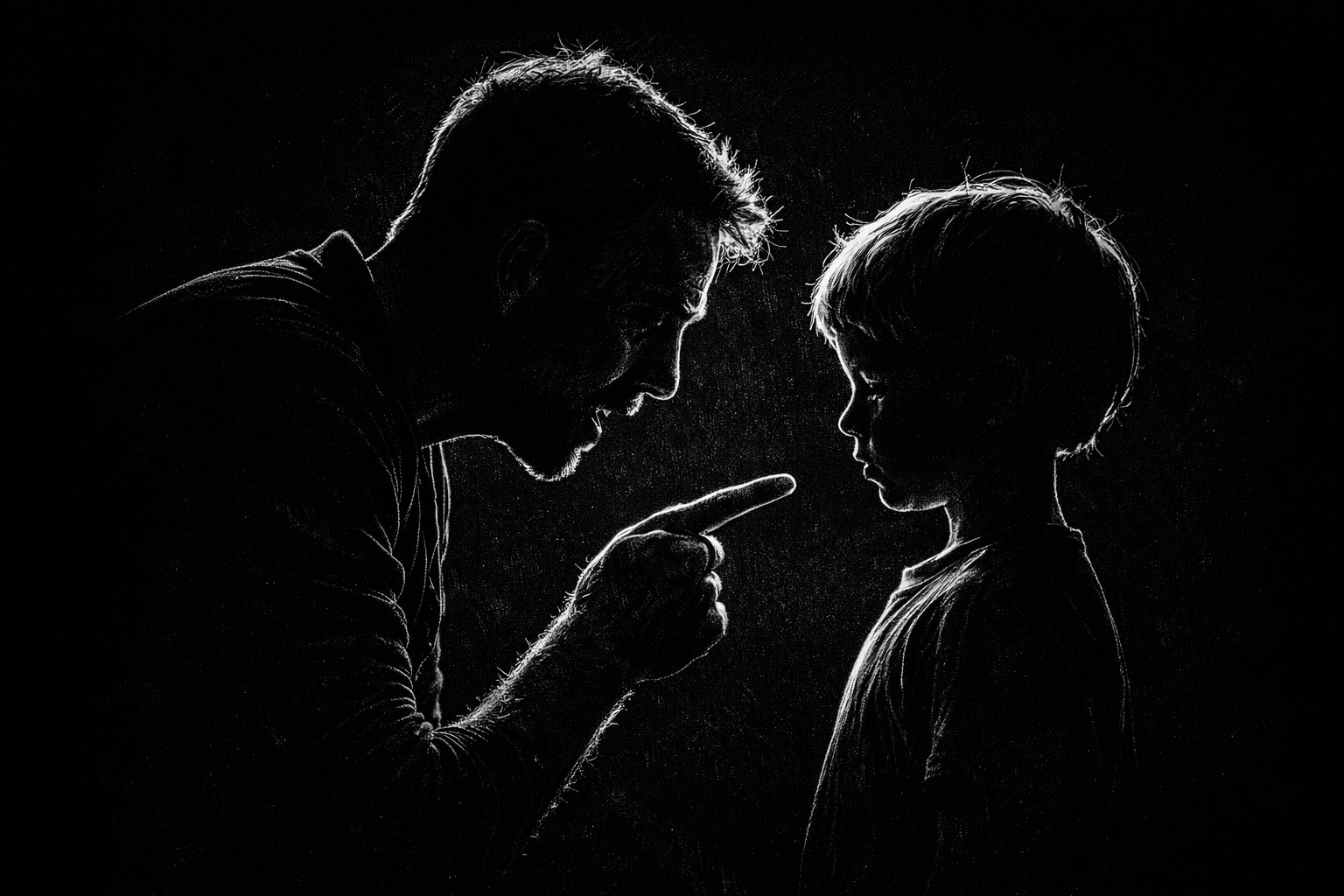
That question changes your response.
It slows the moment down and creates space for understanding. And it moves you from reacting to guiding, because if a child is missing a skill, they don’t need more punishment, they need support, repetition, and regulation.
There is another layer to this that many parents notice. The behaviours that are hardest to handle are often the ones that trigger something deeper in us. The noise, the chaos, the lack of control, it can feel overwhelming not just because of what’s happening now, but because of how it lands in our own nervous system.
That’s why some behaviours feel manageable one day and impossible the next. There’s so much focus on our child’s capacity to navigate these stressful parenting situations, rarely do we take a look at ourselves!
And this is where punishment can become a reflex, not because it’s the best tool, but because it’s the fastest way to try to regain control.
When you shift from seeing behaviour as a choice to seeing it as a skill gap, everything changes. You still hold boundaries. You still guide behaviour. But you do it from a place of understanding rather than frustration. You begin to support your child through the moment instead of trying to shut it down. Over time, this builds something far more powerful than compliance.
Your child learns how to handle frustration, how to regulate their emotions, how to recover when things go wrong. Not because they were forced to behave, but because they were taught how.
And that learning lasts.
If you’re finding yourself stuck in the same patterns: reacting, correcting, and wondering why nothing seems to stick, it may not be because you’re doing it wrong. It may be because you’ve been given tools that focus on behaviour, not development.
There is another way to approach this. One that helps you understand what’s really happening underneath behaviour, and how to respond in a way that actually builds the skills your child is missing.
That’s exactly what I’ve put together in my Punishment-Free Starter Kit.
It’s designed for real moments when things escalate, when patience runs thin, and when you need something practical that works with your child’s development, not against it. If you’re ready to move beyond reacting and start responding with confidence, you can explore it here…
Grab your FREE Starter Kit today, and I’ll send you the worksheets absolutely FREE too…
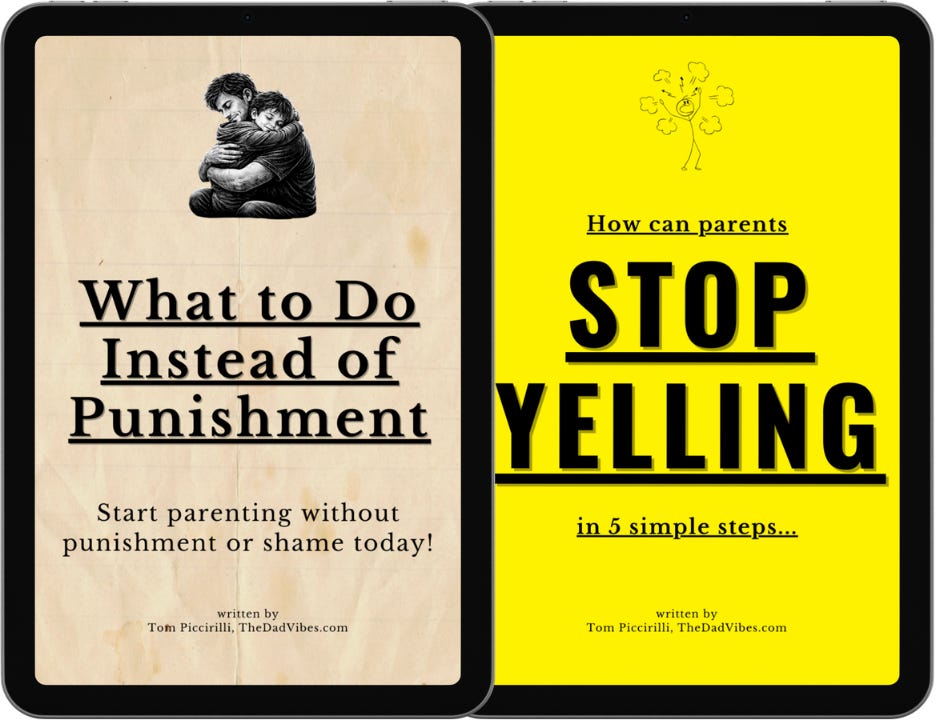
If you want to explore this even deeper, right now you can save over $300 on my Parenting Toolkit Bundle, which includes 3 of my most popular parenting toolkits. And gives you all the guides, courses and resources you need to create a calmer, more connected relationship with your child!
Get the System (Discount Link)
Thank you for being part of my community. Too Much, Too Soon is a reader-supported publication. If you can and value my work, or if you take value in my daily content over on Instagram, please consider becoming a paid subscriber ($5/month), so I can continue to show up and make a positive impact.
Tom Piccirilli, Founder of The Dad Vibes
No posts
Comments
Nothing yet. Say the first thing.
Sign in to join the conversation.