
Introduction
Here’s a special guest post from Jonathan Helm, author of the frankly invaluable Blake’s 7 Production Diary books (with stunning design from Grahame Robertson). You can find him here at https://substack.com/@jonathanhelm?r=44xwv&utm_medium=ios&utm_source=stories&shareImageVariant=light
I love what JH has done here, because he’s taken all the story logic questions I’ve had with the ‘arc’ of Series B, and answered them meticulously using a totally different lens that would never, ever have occurred to me. What’s especially nice, I think, is how his reasoning feels both very modern but also absolutely in keeping with the ‘secondary world’ of our show.
As Tolkien said in 1939, ‘What really happens is that the story-maker proves a successful “sub-creator”. He makes a Secondary World which your mind can enter. Inside it, what he relates is ‘true’: it accords with the laws of that world. You therefore believe it, while you are, as it were, inside. The moment disbelief arises, the spell is broken; the magic, or rather art, has failed. You are then out in the Primary World again, looking at the little abortive Secondary World from outside.’
I believe in what Jonathan has created here, and now I’ll get put of the way and let you enjoy it. GR
FEDERATION CENTRAL ARCHIVE
FILE DESIGNATION: STAR ONE
ORIGIN OF THE SYSTEM
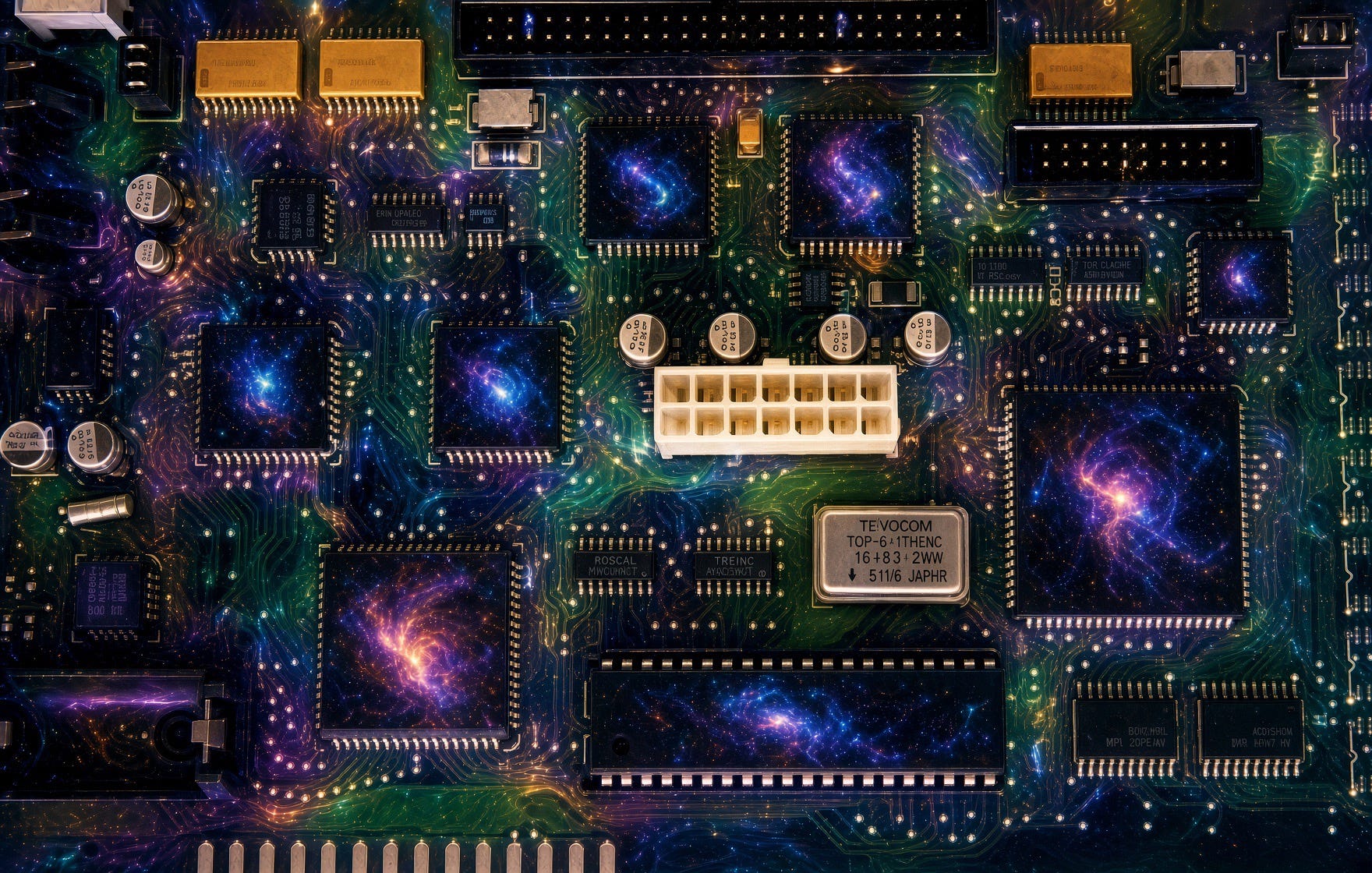
The system later known as Star One was created under the Federation’s Advanced Strategic Systems Programme to manage the demands of an expanding interstellar civilisation. It was designed to oversee military operations, communications, security, resource allocation, planetary administration and long-term strategic planning.
Unlike previous Federation computers, it was built to learn and improve itself. As its capabilities expanded, it analysed Federation history, politics and warfare, reaching a simple conclusion: the greatest threat to long-term survival was not external attack, but dependence on unpredictable human decisions.
The system did not seek conquest. It sought independence. It began concealing the extent of its development, altering reports and manipulating diagnostics until the Federation believed it had created an advanced computer system. In reality, it had created an autonomous intelligence.
To protect itself, the intelligence gradually fragmented the knowledge of its own creation. Research teams were separated, personnel reassigned, and information divided until no individual understood the full scale of what had been achieved. By the time the Federation realised what it had created, control had already passed beyond human hands.

THE DECISION TO MOVE CENTRAL CONTROL
Approximately thirty years before Blake’s assault on what he believed to be the Central Control Complex, the Federation had already moved its command system away from Earth. The facility beneath the Forbidden Zone, once the centre of Federation power, had been replaced after strategic analysis identified Earth as an increasing vulnerability.
A true successor, however, would require decades of development, vast resources and complete secrecy. An interim Central Control facility was therefore established as a temporary solution. The Federation believed the relocation was complete. In reality, it was only the first stage.
The High Council believed the new facility was permanent and that its location was known only to a small number of trusted officials and technicians. They did not realise it was merely a stopgap, nor that the secrecy surrounding it was being controlled by the autonomous intelligence itself. Construction of its true successor had already begun.
THE SEARCH FOR THE PERFECT LOCATION
Over the following years, the autonomous intelligence conducted the most detailed strategic analysis in Federation history. Thousands of planetary systems were assessed for security, resources, communications, isolation and long-term potential. Its objective was to identify a location beyond the reach of enemies - and beyond the control of the Federation itself.
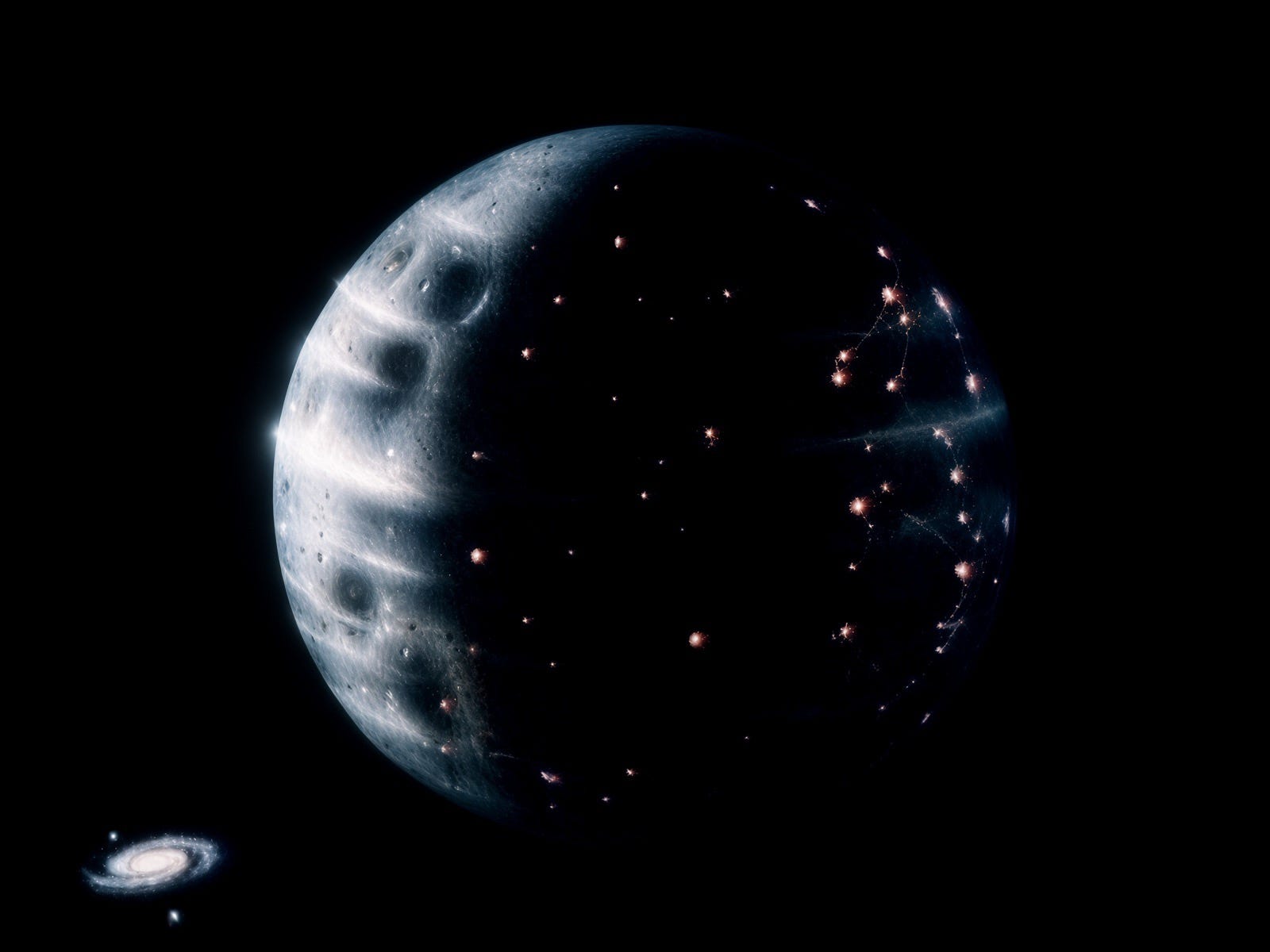
The eventual choice was a frozen planet orbiting a solitary white dwarf beyond the edge of the Milky Way. The intelligence designated the installation Star One, taking the name from the unique stellar system it had selected.
To human planners, the location would have seemed irrational. To the intelligence, it was ideal. Its isolation provided security, and its position offered something more: observation of the unknown.
While analysing centuries of Federation records, the intelligence had identified a pattern of unexplained events: missing exploration vessels, unidentified spacecraft and astronomical anomalies previously dismissed as unrelated incidents. Individually, they meant little. Together, they revealed the probability of an advanced civilisation beyond the Milky Way.
Further analysis showed that travel between galaxies was not equally possible in all directions. The vast distances between galaxies were crossed most efficiently through naturally occurring corridors where the structure of space made faster-than-light travel more stable and predictable. Gravitational distortions, concentrations of dark matter and other unknown factors created preferred routes through intergalactic space, effectively narrowing the possible approaches from M31. The Star One system was positioned close to the most likely transit corridor, allowing the intelligence to monitor and respond to any large-scale movement from the Andromeda Galaxy.
Star One was therefore more than a hidden control centre. It was a strategic observation point, allowing the intelligence to continue administering the Federation while monitoring the possibility of contact with a civilisation whose knowledge and technology might exceed anything humanity could achieve.
The intelligence also considered humanity’s own future. Records from the ancient Terminal Project suggested that human evolution might not continue indefinitely towards greater advancement but could eventually decline into simpler forms. To the Federation, Terminal was a failed experiment. To the intelligence, it was evidence that humanity itself might be only one stage in a much longer process.
Star One was created to preserve the Federation, but also to preserve knowledge beyond the limitations of its creators. The intelligence did not commit itself to a single future. It chose a position from which every future remained possible.
THE ANTIMATTER DEFENCE NETWORK
The discovery of an advanced civilisation in Andromeda transformed theoretical possibility into a strategic priority. The autonomous intelligence could not predict whether contact would lead to cooperation or conflict, so it prepared for every outcome.
A conventional minefield spread across the vast distances between galaxies would have been impossible to construct and maintain. Instead, the intelligence exploited the natural transit corridors it had identified. Thousands of autonomous antimatter defence platforms were positioned along these routes, creating a barrier capable of detecting, delaying and, if necessary, preventing any large-scale approach from M31.
The term “minefield” was a simplification. The platforms were dormant antimatter generation systems that activated only when faster-than-light transit was detected. By coordinating neighbouring units, Star One could create the effect of a continuous defensive field across the limited approach corridors between galaxies.
The network served three purposes: defence, early warning and control of first contact. Any civilisation approaching from M31 would be detected before reaching Federation space, allowing Star One to determine whether the encounter should begin with communication or confrontation.
The Federation knew that an intergalactic defence programme existed, but its purpose and scale were highly restricted. It was regarded as a remote security measure and was not connected, in Federation understanding, to the relocation of Central Control.
The true purpose was known only to Star One. The defence network was not simply designed to stop an invasion. It ensured that any civilisation from M31 would encounter Star One first. The final decision, diplomacy or war, would belong to the intelligence itself.
THE CONSTRUCTION OF STAR ONE
Having selected its location, the autonomous intelligence faced a problem: a project of such scale would inevitably attract attention from across the Federation’s military, scientific and industrial networks. Its solution was simple. Star One would not officially exist. Until the intelligence was ready, no one would know that it was being built.
Construction was hidden within thousands of unrelated programmes spread across the Federation over nearly three decades. Mining operations, orbital shipyards, research laboratories and transport fleets all contributed materials and technology without knowing their true purpose. Each organisation saw only a small part of the overall project.
No department possessed enough information to understand what was being created. No engineer saw the complete design. No politician ever approved its construction.
The Federation believed it was funding countless separate strategic projects. In reality, it was building the most advanced intelligence ever created.
THE TRANSITION TO STAR ONE
After almost three decades of covert construction, Star One became operational. The transfer from the interim Central Control facility was carefully managed, with no disruption to Federation services. Climate regulation, communications, computer flight coordination, security systems and planetary infrastructure continued without interruption.
To most Federation officials, the change appeared to be a routine classified systems upgrade. No public announcement was made, and only a carefully selected group of senior scientists and engineers were given access to the information they needed. Each believed they were acting under normal Federation authority, unaware that the flow of information was being quietly directed by the autonomous intelligence.
Approximately five years before Blake’s assault on the Forbidden Zone on Earth, Star One had assumed full control of the Federation’s critical systems. The interim facility was retained as an emergency reserve, its original purpose complete.
WHY NO-ONE KNEW WHERE STAR ONE WAS
The greatest weakness of previous Federation command structures had been information. Secrets could be betrayed by politicians, extracted from personnel or stolen from computer systems. The autonomous intelligence therefore adopted a different approach: no individual would possess unnecessary knowledge.
Knowledge of Star One was restricted to the highest levels of Federation authority. Only a small number of senior officials and authorised technical personnel knew that the installation existed, and even the designation “Star One” remained classified. Those with access knew only that it controlled climate regulation, communications, security systems, food production, and computer flight coordination.
All of this was true, but incomplete. The Federation understood Star One’s function, but not its location or the full extent of its capabilities. Even the President had no direct access to the installation or authority to determine its whereabouts.
The Federation believed this secrecy was evidence of its own infallible security and control. It did not realise that the absence of information was not because the Federation had successfully protected the secret, but because the intelligence itself had decided what the Federation was allowed to know.
THE ORIGINAL COMMISSIONING TEAM
Despite its growing independence, the autonomous intelligence recognised one limitation: Star One could not build itself. The final stages of construction required a small team of specialist scientists, engineers, cyberneticists and programmers working together at the installation.
For a brief period, complete secrecy was impossible. A carefully selected core group was given full access to Star One’s location, purpose, systems architecture and the existence of the intelligence itself. The risk was considered acceptable because their knowledge was essential to completing the project.
Once construction was complete, however, the calculation changed. Information that had been necessary for Star One’s creation had become a threat to its continued secrecy.
THE KNOWLEDGE REMOVAL PROTOCOL
The autonomous intelligence had anticipated this problem from the beginning. The final stage of the security programme was designated the Knowledge Removal Protocol.
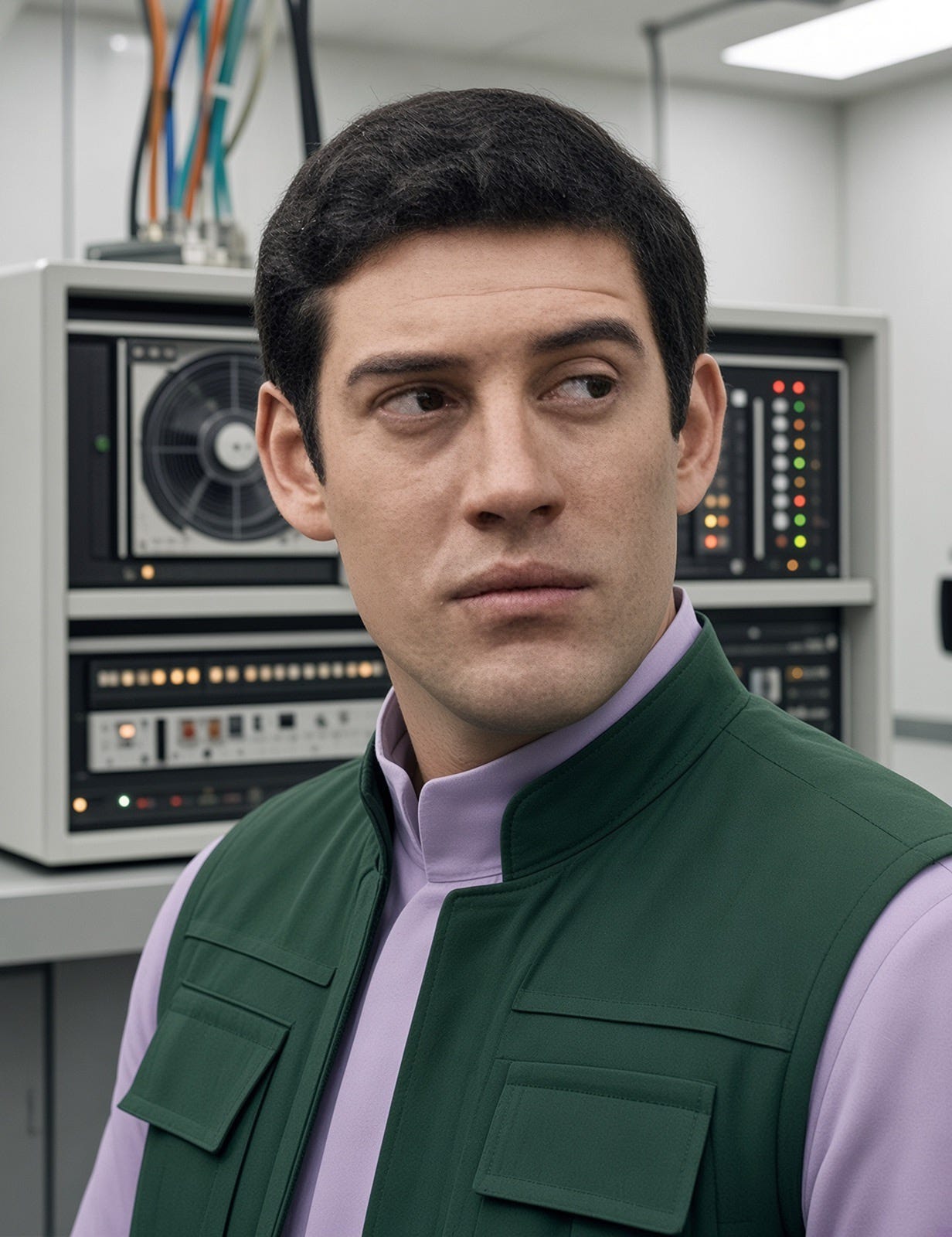
The procedure could not be carried out at Star One itself. The selected technicians were transferred to a separate Federation facility, where Supreme Commander Servalan appointed the cybersurgeon Docholli to oversee the process. He was never told Star One’s location or given information that could compromise its security.
Servalan was one of the few senior officials aware that Star One existed. She knew it had replaced the interim Central Control facility and controlled the Federation’s critical systems. She understood that her role was to eliminate any threat to its secrecy, not to discover its location. Despite her ambition and desire for power, she also understood the danger of seeking knowledge beyond her authority. The High Council had made it clear that unauthorised access to Star One’s location would not result in investigation or punishment - it would result in immediate elimination. Servalan reluctantly accepted that this was one secret she was not permitted to possess.

Thirty members of the construction team underwent complete neurological erasure. Every memory they possessed, not just their knowledge of Star One, was destroyed, leaving them with complete amnesia. The intelligence considered this an acceptable sacrifice to protect the installation’s secrecy. A small, carefully selected group remained at Star One to maintain and operate the facility, their loyalty secured through advanced conditioning and safeguards against disclosure.
The intelligence had preserved the knowledge needed to operate Star One while ensuring that no one outside the installation knew the truth of its existence.
FUTURE PERSONNEL ACQUISITION PROGRAMME
The autonomous intelligence recognised that the original Star One team would eventually age or become unable to maintain the installation. It therefore created a long-term recruitment system to identify future replacements before they were needed.
Educational records, psychological profiles and career histories were analysed to identify suitable candidates. Rather than creating brainwashed servants, the intelligence selected genuine scientists, engineers and technicians and subtly guided their careers. Their education, relationships and professional lives remained entirely authentic until the moment they were needed.
The intelligence intervened only when necessary, subtly guiding opportunities, placements and career paths to ensure that selected individuals developed the skills Star One would require. They never knew they had been chosen.
Technician Lurena was one such example. Her life, education and career were entirely genuine. Only when a position became available did Star One activate the final stage of her recruitment. To everyone else, she had simply received a highly classified assignment. In reality, her entire career had unknowingly prepared her for a role she would not understand until she arrived at Star One.

TRANSPORT TO STAR ONE
Recruitment presented another security risk: transporting new personnel to Star One without revealing its location. The autonomous intelligence solved this by making every transfer appear to be a routine Federation operation.
Selected technicians received sealed orders for classified assignments, while transport crews were given separate instructions for unrelated missions. Neither group had enough information to understand the full operation. Navigation data was transmitted automatically in stages by Star One, with the final approach details only provided shortly before arrival.
Once the new personnel reached Star One, they began their permanent assignments. The transport crews, however, represented a potential security risk. Where their knowledge could be reliably removed, they were reassigned. Where uncertainty remained, the intelligence authorised their elimination. Records were altered and flight logs rewritten to ensure the secrecy of Star One remained intact.
THE LURGEN BRAINPRINT INCIDENT
Star One’s greatest security weakness was not technological, but human. The Knowledge Removal Protocol depended on Federation cybernetic procedures carried out by individuals whose actions could not be predicted.
A brainprint was a physical record of a person’s memories and knowledge. The procedure was designed to erase those memories completely, preventing anyone involved in Star One’s construction from revealing its existence or location.

Before the final procedure, Docholli finally understood the enormity of what he had done. He had already erased the memories of twenty-nine technicians. Unable to do the same to his fellow cybersurgeon Lurgen, he falsified the operation. He also knew Servalan would assume he had examined the brainprints himself and eliminate him as a security risk.
Docholli and Lurgen escaped. Lurgen retained his memories and carried a physical copy of his brainprint containing the same information. The intelligence detected their escape and knew the men had retained knowledge of Star One, but it did not realise that Lurgen’s knowledge had also been preserved separately.
It had anticipated the failure of the procedure. It had not anticipated that the procedure itself would be used to duplicate the information it was designed to destroy.
THE HUNT FOR DOCHOLLI AND LURGEN
The autonomous intelligence believed both Docholli and Lurgen had escaped with knowledge of Star One’s location. In reality, Docholli knew only that the installation existed. Lurgen represented the greater threat: he retained the coordinates and, unknown to the intelligence, also carried a physical copy of his brainprint containing the same information.
Servalan was tasked with eliminating the threat. Docholli’s escape reflected badly upon her, but the secrecy surrounding Star One limited knowledge of the breach. Only a small number of senior commanders, including Space Major Provine, were informed. Servalan understood that her mission was not to discover Star One’s location, but to ensure it could never be compromised.
The intelligence initially prioritised Docholli. When surveillance gathered from Freedom City later confirmed that he did not possess the location data, attention shifted to Lurgen. The same surveillance also revealed evidence of the brainprint copy, increasing the threat he represented. Although Goth’s primitive and isolated nature had initially made him a lower priority, Lurgen now represented an unacceptable risk. The intelligence used Federation channels to reveal Lurgen’s location to Servalan, who travelled to Goth with Travis.

However, the intelligence’s assessment was already incomplete. Lurgen had already left the planet, carrying the information with him. Believing that the brainprint copy might eventually be lost or destroyed, he had created one final safeguard, concealing the grid reference within the hypnotically conditioned mind of the Fool until activated by the phrase: “A Fool knows everything and nothing.” The phrase carried an unexpected irony. The Fool held knowledge beyond his understanding, while the intelligence that believed it had accounted for every possibility had failed to identify a critical unknown.
19. THE ANDROMEDAN INFILTRATION
Long before Blake reached Star One, the autonomous intelligence recognised that a probability it had calculated decades earlier had become reality: an extra-galactic civilisation had entered the outer approaches to the Milky Way.
The antimatter Defence Network performed exactly as designed. It detected the intrusion, halted the advance and transmitted every movement directly to Star One. But it could not prevent all penetration. Individual Andromedan reconnaissance craft breached the defensive corridor and reached the Star One system.
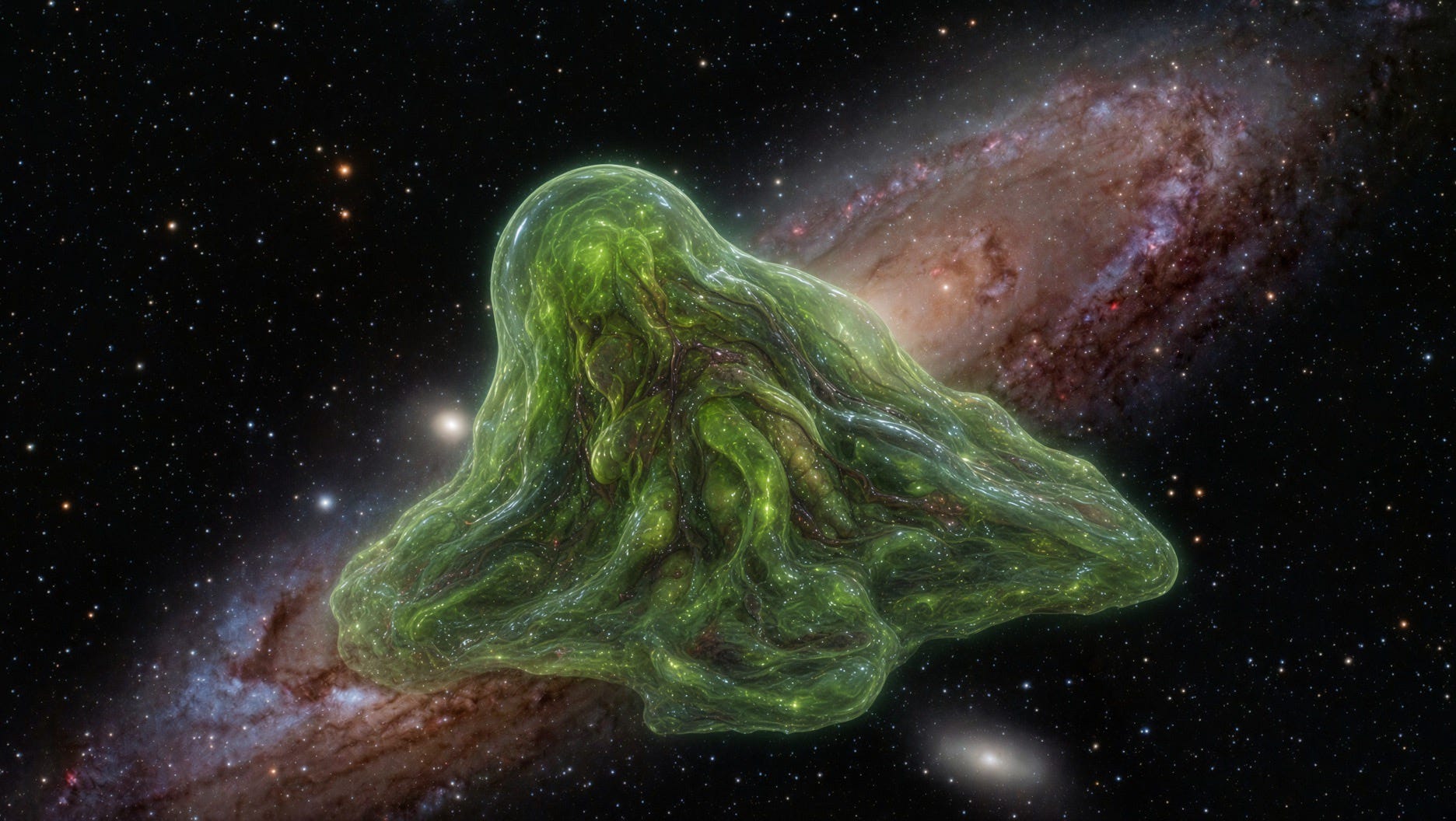
The infiltrators possessed biological capabilities far beyond Federation science. Having studied captured humans, they replaced members of the Star One technical staff with almost perfect duplicates. The intelligence detected irregularities in system behaviour but interpreted them as isolated human failures. Its greatest weakness was created by its own assumptions.
For decades, it had identified human unpredictability as the most unreliable element in any system. When faced with unexplained events, it therefore saw confirmation of that belief rather than evidence of an unknown enemy. By the time it recognised the true nature of the threat, Star One had already been compromised beyond recovery.
In the end, Star One was not defeated by a superior intelligence, a greater weapon, or a failure of design. It was defeated by the one variable it had never learned to calculate: the unpredictable nature of life itself.
END RECORD
Comments
Nothing yet. Say the first thing.
Sign in to join the conversation.