
Series B Final Thoughts
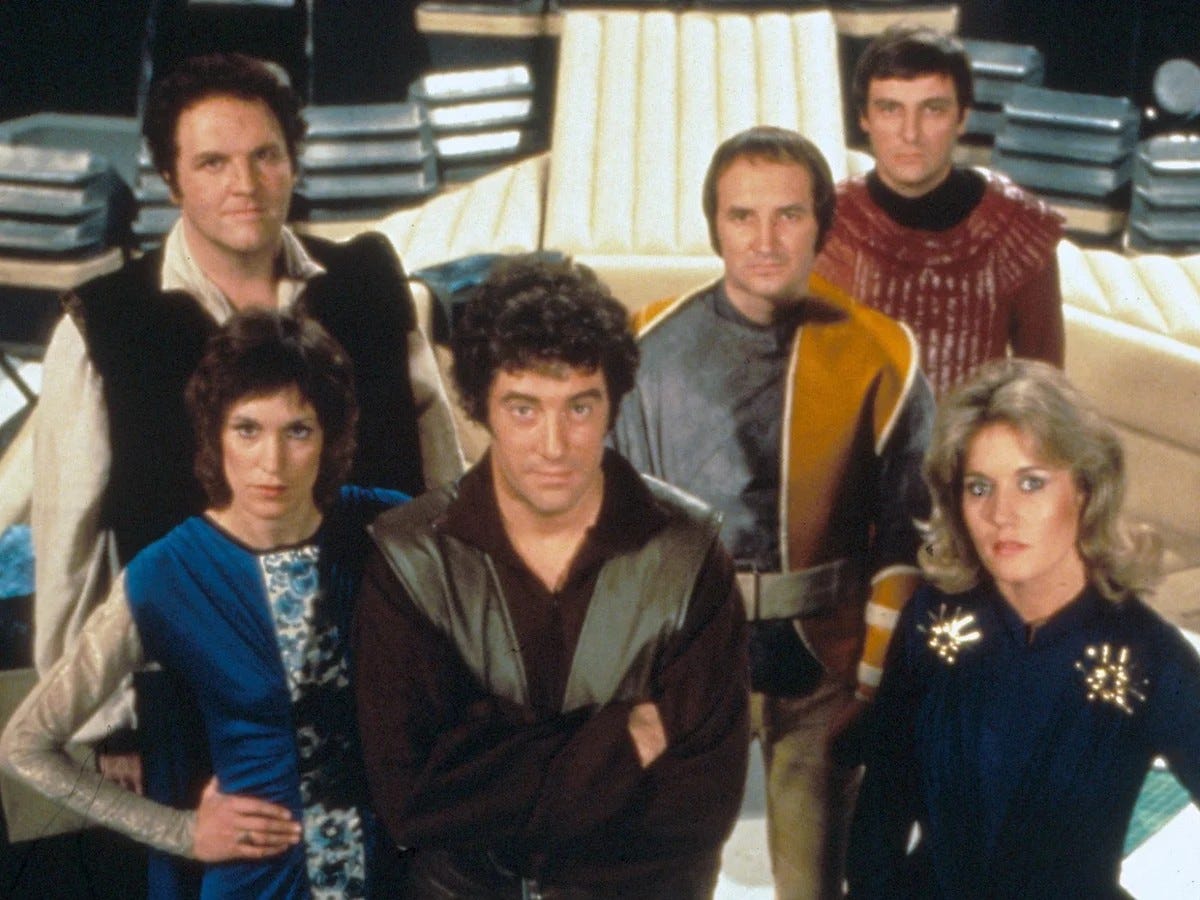
I think of Series B as the runt of our show’s litter, but in truth it’s only a little further behind the others. The standard across the run of Blake’s 7 is pretty consistent, but Series B certainly has the biggest problems. This is partly because of the attempt to coordinate a fairly complex overarching plot across lots of new writers, which leads, perhaps unsurprisingly, to the knotty confusions that I’ve spent so much time trying to unravel lately.
At least two of the scripts are highly complex and involved on top of that, with another two at the opposite end - simple to the point of stupidity.
The strong character work of Series A becomes much more uneven, with Jenna and Cally pushed into the background and Blake re-imagined as a humourless monomaniac. The writers are drawn to the funniest and most striking characters, at the expense of the others. This means that Avon and Vila are in clover, as is Servalan - a big pointer to what’s coming next.
As I’ve said before, the changes in Series B are a different tone - more real in the scripting, less real in the execution - coupled with a gaudier visual style, and some regrettably scrappy rough edges. It is unfortunate that George Spenton-Foster, bless him, directs a third of the episodes.
Still, Series B contains some of my favourite episodes - you may have noticed - and the writing of Chris’s episodes and of ‘Gambit’ is good enough to overcome their often ramshackle productions.
Lingering over Series B at this level of close detail has made me appreciate the dichotomy at its heart; it is instinctively straining to cut loose and have fun, even though the scripts are much murkier than before.
You couldn’t really describe any of the Series A episodes as capers. There are quite a few capers in B, and the more serious eps are imbued with caper energies. This can make the thing sit slightly uneasily with itself. Grit and glitter is a hard combination to pull off.
I think this could be a delayed, likely subconscious, reaction to Star Wars. The production wants to be showy, glamorous fun, even slightly sexy. In the same way it was obvious to everybody but very small children that Han Solo was sexier, more dynamic and more interesting than Luke Skywalker, Paul Darrow and Chris Boucher have almost inadvertently made Avon absolutely compelling. Blake simply cannot compete. Nobody planned for that.
There are, in fact, several moments when it feels as if the viewer is being actively invited to dislike Blake. This isn’t adult hindsight; I picked up on it at the time, as a child. That is a very daring thing to do. In fact, after a good mental search I can’t think of any other mass appeal TV show, ever, that has done that to its hero.
To be fair to Maloney and Boucher, the problems of Series B are noticed and addressed. Series C is back to being (in the main) a more chunky, swaggering affair, a show that once more knows what it’s doing, even if what it’s doing is rather different. The regulars, including the new ones. are much better catered for all round. There will be no further scripts with the levels of narrative complexity seen in ‘Weapon’ or ‘Gambit’. The viewers will rarely be scratching their heads and wondering ‘eh?’ in the second half of our show. The new director hires will be much better fits. (Indeed, a couple spectacularly so.) The female ‘goodies’ will not be allowed to melt into the background again.
Over the course of Series B we lose three of our space chums. It is perhaps significant that they are the three ‘nice’ ones (Blake is still an angel compared to Avon or Vila). Blake and Jenna are the mum and dad of the 7, with Cally as sensible older sister, and Avon and Vila as the naughty boys having forbidden fun. Both ‘Voice’ and ‘Gambit’ end with the lads despairing of their old fun sponge Dad.
How could that have carried on much longer? Series B only really makes sense as the culmination of Blake’s story. He has to go, and the production knew that he was very likely going to go.
Significantly, the replacements for Blake and Jenna are younger, funnier, sharper and naughtier. This leaves Cally as the sensible one and the sole remaining voice of morality.
A few thoughts on each of the departures in ‘Star One’.
Blake
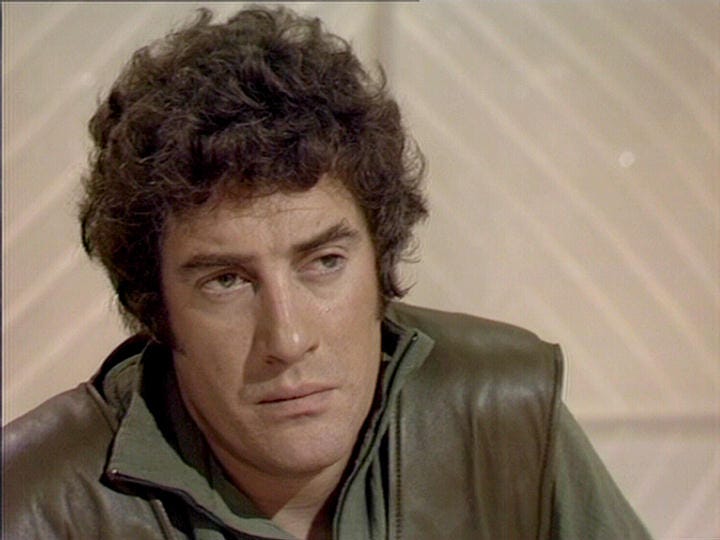
‘We were not terrorists but fighters for freedom, who fought with our eyes open’. Who said that? Roj Blake? Wrong! It was, in fact, Menachem Begin, prime minister of Israel during the run of our show. He was reminiscing about his time as a member of Irgun, the breakaway group of paramilitary fighters/terrorists (you choose) that he led during the civil war in Mandatory Palestine, in 1947-48.
Comments
Nothing yet. Say the first thing.
Sign in to join the conversation.