
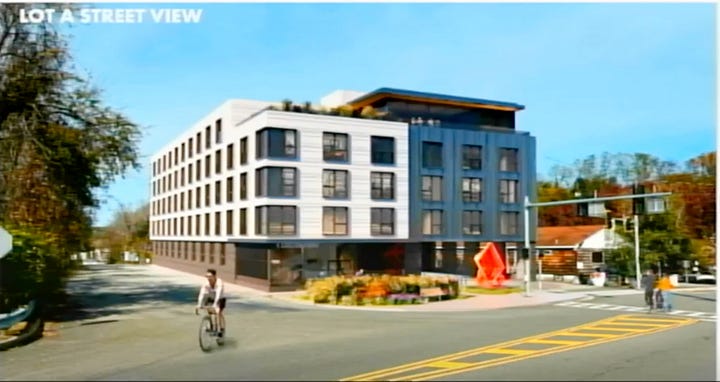
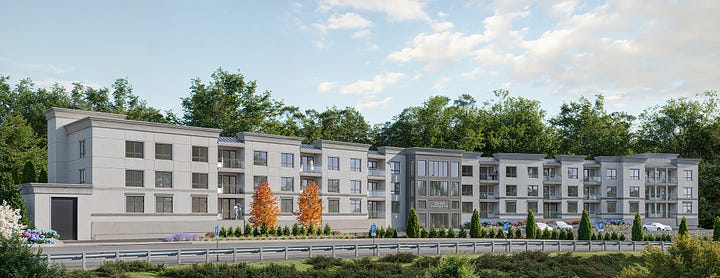
In 2023 and earlier, the Village Board of Trustees dramatically changed the zoning governing one of Croton-on-Hudson’s most important gateways—the Harmon/South Riverside Gateway—from primarily commercial and light industrial uses to high-density multifamily and transit-oriented residential development, including projects requiring special permits.
That decision deserves to be revisited—not because anyone is opposed to housing or to helping people who need affordable housing, but because density comes with consequences, and our infrastructure must be capable of supporting it.
On June 11, 2025, the Village Board approved the sale of Village-owned land at 1 Croton Point Avenue, commonly known as Lot A, to WBP Development LLC for construction of a 100-unit, 100% affordable multifamily development.
There is also a proposed 49-unit development at 425 South Riverside Avenue.
That means we are contemplating more than 149 new residential units in an area whose infrastructure was originally designed for a very different type and intensity of development.
And that raises a fundamental question:
Does the Harmon/South Riverside Gateway actually have the water, sewer and fire-suppression infrastructure necessary to safely support this level of residential density?
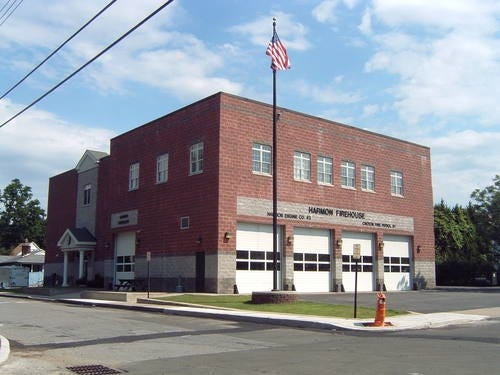
That is not an ideological question. It is an engineering and public-safety question.
The water and sewer systems serving this area were developed when the Gateway was primarily commercial and light industrial. High-density residential development creates substantially different demands—not only for domestic water consumption, but also for the volume and pressure required for firefighting.
We should not be approving additional density and then figuring out how to provide adequate fire protection afterward.
Recent events of just last week in neighboring Ossining should make all of us pay attention.
A major fire at 87 Hawkes Avenue reportedly raised serious questions about the availability of sufficient water for firefighting in an area containing newer high-density residential construction. If additional equipment, including privately contracted water tankers, was necessary to supplement the available firefighting water supply, that should concern every municipality contemplating similar development.
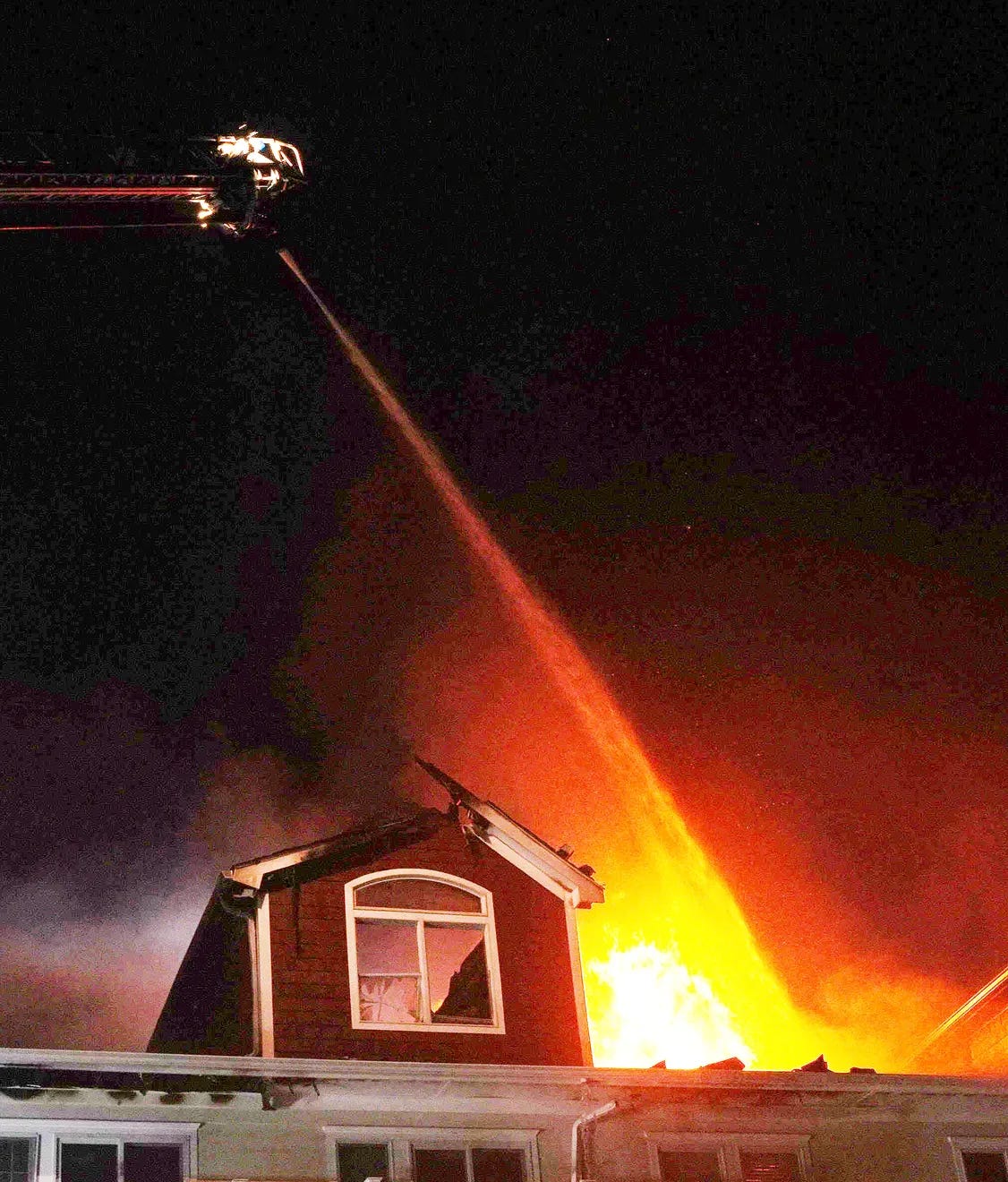
It certainly concerns me.
Here in Croton, residents have heard different explanations about how the water and fire-suppression requirements will be met at the already-approved 100-unit Lot A development and how they might be addressed at 425 South Riverside Avenue.
For 425 South Riverside, one proposed solution has involved seeking a utility easement from residents on Young Avenue.
But shouldn’t the public see the engineering analysis first?
Shouldn’t we know precisely what the existing system can provide, what these developments will require, what deficiencies exist, and how those deficiencies will be corrected—before asking individual homeowners to surrender property rights for an easement?
And what about the existing residents of Harmon?
If you live in Harmon, shouldn’t you be entitled to know whether the water pressure and available water volume at the hydrant on your street are sufficient to protect your home in the event of a major fire?

These are not unreasonable questions.
I am also concerned about whether the redundancy and backup components of Croton’s water system are adequate, properly maintained and sufficient to meet the demands that are now being contemplated. If there are tanks, storage facilities or other components of the system that are aging or require repair, the public deserves to know that before we add hundreds of new residents and dramatically increase demand.
Then there is the question of fire safety itself.
Modern high-density residential construction is increasingly using wood-frame stick construction. These buildings can be safely constructed when properly designed and protected, but a fire involving a large, densely occupied wood-frame structure presents very different challenges from a fire involving an older, more compartmentalized building.
Now consider what is being proposed at the Harmon Gateway: large residential structures, significant density, enclosed parking and dozens—or potentially hundreds—of vehicles, including gasoline-powered, hybrid and electric vehicles.
Electric-vehicle and battery fires present particular challenges for firefighters because lithium-ion batteries can experience thermal runaway, can burn intensely, can be difficult to cool, and can reignite after appearing to be extinguished.
I am not suggesting that a catastrophe will occur.
I am asking whether we have done everything reasonably possible to make sure that, if something does happen, our firefighters and our infrastructure are prepared for it.
That question is especially important in a community that relies heavily on a ALL volunteer fire department.

Our volunteer firefighters deserve the best possible infrastructure, information, equipment and planning that our Village can provide. They should not be placed in the position of discovering the limitations of our water system in the middle of a major fire.
And neither should our residents.
I am old enough to understand that I do not have all the answers. But I also know the difference between having unanswered questions and having those questions properly addressed.
What troubles me most is not necessarily that the Village may not yet have every answer.
It is that the public has not been given clear, consistent and transparent answers about some very basic questions involving water capacity, fire suppression, infrastructure redundancy and the cumulative impact of adding high-density residential development to the Harmon Gateway.
Before we approve more density, more buildings and more residents, I believe the Village should provide the public with:
A current engineering assessment of the water system serving the Harmon/South Riverside Gateway;
The available water pressure and flow at relevant hydrants;
The projected domestic and fire-suppression demands of Lot A and 425 South Riverside Avenue;
An explanation of how those demands will be met simultaneously;
An assessment of the adequacy and condition of existing water-storage and backup infrastructure;
A clear explanation of any proposed utility easements and why they are necessary; and
A comprehensive fire-safety assessment addressing the combination of high-density residential construction, enclosed parking and modern vehicle technology.
These are reasonable requests.
They are not anti-development.
They are not anti-affordable-housing.
They are questions any responsible community should ask before substantially increasing residential density in an area with known infrastructure constraints.
Croton has an obligation to provide housing. But it also has an obligation to protect the people who already live here—and the firefighters who will be called upon to protect all of us.
Before we build first and solve the infrastructure problems later, shouldn’t we make absolutely certain that the infrastructure is ready?
I believe our residents deserve nothing less than clear answers, complete engineering information and complete transparency.

John McKeon, a long-time Croton resident, is active in discussions of village affairs.
To share this post, or to share The Croton Chronicle, please click on these links.
Comments policy: No personal attacks or trolling, and no anonymous comments. Please be polite and respectful at all times.
Comments
Nothing yet. Say the first thing.
Sign in to join the conversation.