
Introduction.
Another Monday, another newsletter! I trust you’ve all had a great weekend and are ready to start another fun week. Thank you for starting your week with my newsletter. I hope this edition is especially useful.
What’s new in dairy science?
One of the consistent topics I hear discussed in the field, with more fervor than I usually expect, is pair housing calves. It seems to me that folks in the dairy world are passionately supportive or passionately opposed to the idea. A recent paper from the University of Florida investigated the effects of dairy calf housing throughout the year on calf performance and behavior.
They enrolled 150 calves (n = 50 individually housed, n = 50 pairs of calves) onto their study. The calves had to be between 34-45 kg of bodyweight at birth and received 2 feedings of colostrum within 24 h of birth. Calves assigned to a pair-pen had to be within 2 d of age of each other. They were fed a calf starter with 22% CP and provided with 8 L/d of milk replacer (28% CP, 20% fat). Beginning at 7 wk of age, calves were gradually weaned for 10 d.
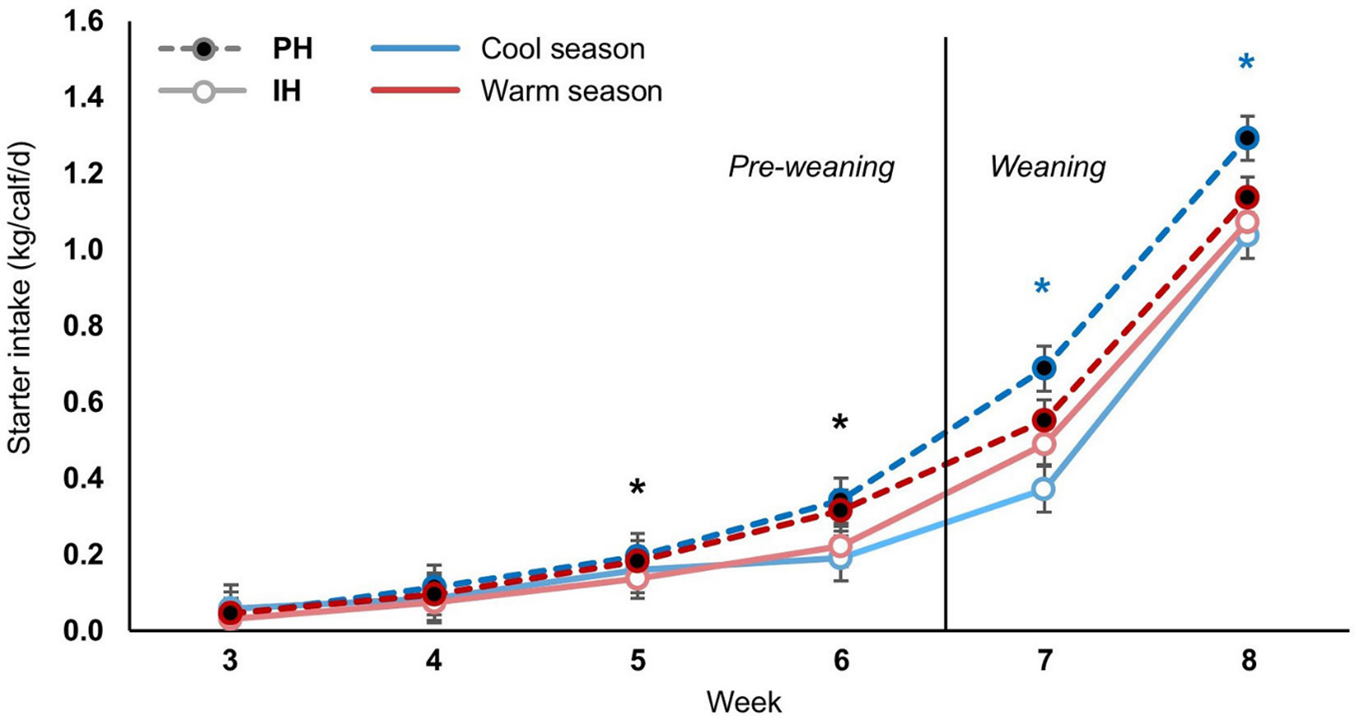
So what happened? Pair housed calves had less fever incidence in the “cool” season than individually housed calves, but scouring was similar in this study. What I found most interesting is that the pair-housed calves increased starter consumption more quickly having greater intake beginning at 5 wk of age. The difference in starter intake after weaning was much greater for pair housed calves during the cool season. This translated to improved average daily gain for pair housed calves during the cool season.
Read the entire article here: https://doi.org/10.3168/jds.2024-25819
Leadership, growth, and development.
I spend a lot of time chatting with students about managing workload, stress, or anxiety. It is probably the most common topic of conversation I have with students that I am helping to mentor. As a result, I spend a lot of time thinking about the root of that stress and anxiety, especially for people just starting their academic or professional journey.
One, if not the most common, source of stress is vacillation. A student or young professional gets assigned a task that they have never done before. They’ve just spent a few years in school or going through some sort of training with the expectation that they would now have a clear understanding of each task that gets put in front of them. They’re surprised when that is not the case. Since they don’t know exactly how to proceed, they pause and think. As the pause extends, the anxiety increases because they’re not progressing on their task. The anxiety increases until they’re stuck in a procrastination paralysis. Its not what they meant to do, and they’re certainly not lazy. They’re just stuck and need a little shove.
Getting a task started can often be the hardest step for people. When students are faced with this challenge of staring at what they perceive as an impossible “mountain” of a task, I encourage them to simply do the next thing. Not all the things at once, just the next thing. Write the next sentence, read the next report, meet the next client. Just steadily and slowly build. Once they’ve started, they’re most often off to the races.
Sometimes, you just need to get started. Do the first thing, then the next. Soon – its done. If you’re a leader, I can promise that 95% of your team aren’t lazy, they just need some help to get started. Give them that help – its worth it.
Final Thoughts.
Whatever project you’re putting off – it is time to start. Just do the first thing and progress from there. Do that, and the anxiety will melt away. Have a wonderful week everyone!
No posts
Comments
Nothing yet. Say the first thing.
Sign in to join the conversation.