
I spent the fall of my junior year of college studying abroad in Athens, Greece. As an anthropology major, it felt like a natural choice of location. The classes offered were also enticing: my personal favorite was Ancient Greek Athletics. We went on lots of field trips through the study abroad program, and I got to travel all over Greece. While I was learning about Greek culture, both ancient and modern, and how intrinsic olive oil had been for millennia, I was also witnessing firsthand the ubiquitous groves of olive trees all over the county. I was fascinated by both the culinary and cultural reach that olive oil had.
When I returned back to college in the states, I got back into my usual course load, but was thrilled to discover that a new head of department was coming in for my senior year, and he would be teaching a class in his specialty: Food Anthropology. I’d never heard of this before, but was absolutely captivated by this concept. It also started an idea pinging around my mind, and when school started in the fall, I approached the new professor with my plan: I wanted to write a thesis on the anthropology of olive oil.
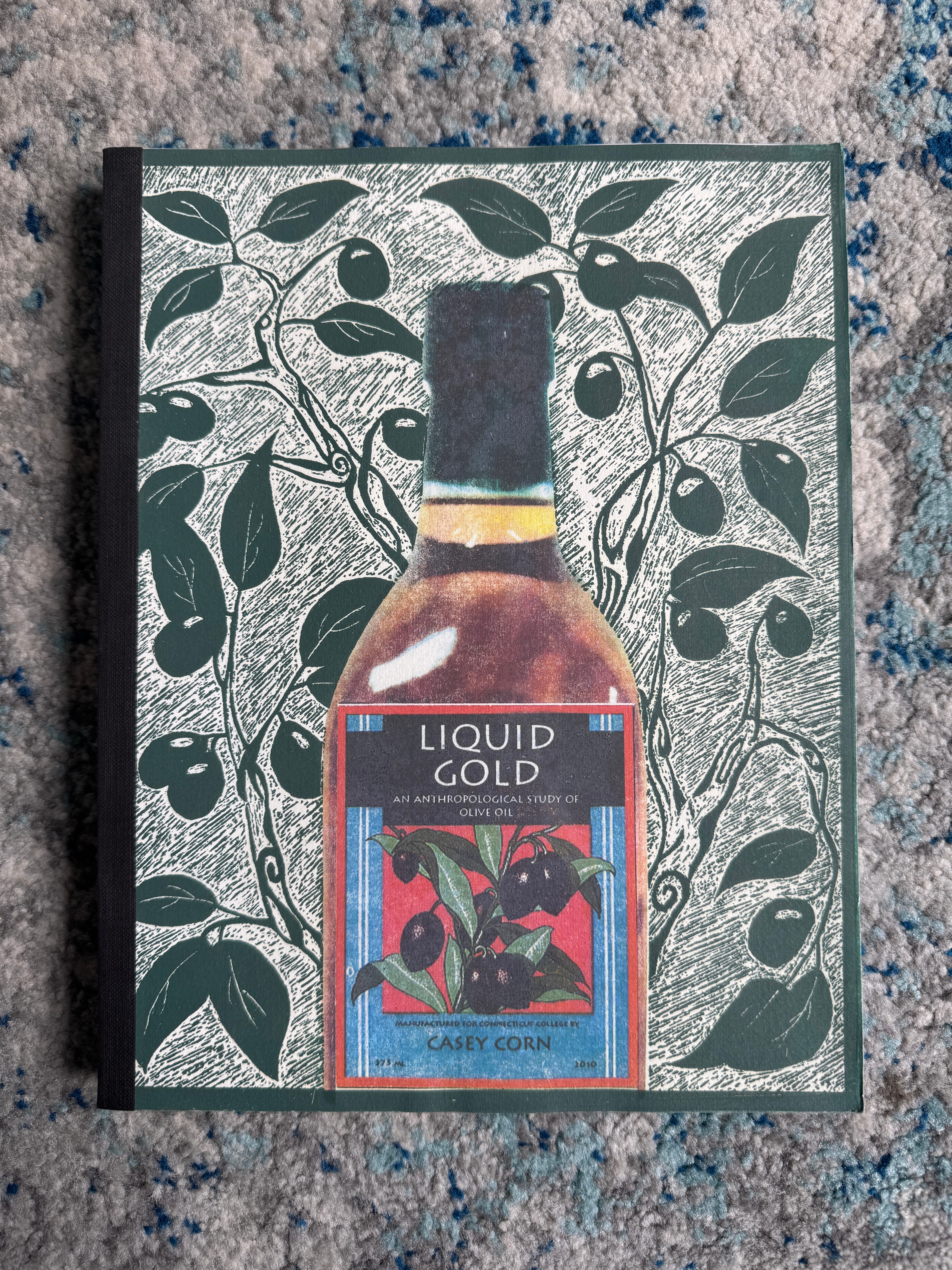
And so, by graduation, I was the proud author of a 136 page tome on the anthropology of olive oil. I graduated, moved back to LA and promptly put aside all food anthropology until…
I was working as a barista and had been approached to help coordinate a coffee station at a TEDxSanta Monica event in 2012. It turned out that this TED event was all food industry speakers, and so I was excited to get to attend and listen while serving coffee. Then, ten days before the event, the organizer called me and told me someone had dropped out. She knew of my academic work in olive oil, and asked if I wanted to speak at the event. Of course I said yes, and spent the next ten days in various coffee shops around LA putting together a TED presentation:
Over the years, I’ve been approached as an olive oil expert for numerous publications, have done trips to Spain to experience the processing of Spanish oil, and have continued to do work with olive oil companies around the world. But one thing I find fascinating is that while I discovered my love of olive oil in Greece, my home state of California has become a major player in the olive oil industry during my lifetime.
The olive arrived in New Spain (the Spanish territory during their conquest of the Americas) in what is now Mexico Ciry through Spanish missionaries in the early 1500s. Originally, live trees from Seville were brought to the Spanish colonies in the West Indies, but didn’t do particularly well. Olive trees were important to Spanish culture, though, so as the Spanish conquest spread, so too did the olives. Eventually, they ended up in Alta California (what is now the state of California) in the late 1700 or early 1800s, as the Franciscan missions began to be established. The first mention of local olive oil comes from 1803, when Father Fermin Lasuén reports that the first olive oil had been pressed at Mission San Diego. And with 21 missions across California from San Francisco in the north, to San Diego in the south, the Franciscan missionaries thoroughly installed the olive tree as a Californian species.
It’s important to remember, too, that the purpose of olive trees has always been for the oil, not the fruit. Though obviously we also eat olives, the production of table olives has for the most part, consistently been secondary to oil. There are now over 37,000 acres dedicated to olive oil production in California, with more than 400 growers and producers operating. From the humble beginnings of the Franciscan monks planting one type of olive tree, known as the Mission olive (appropriately), there are now at least 75 varieties of olive grown in California. There is even a California Olive Oil Council to promote certified California olive oil, and to raise and uphold the standards expected from growers and producers throughout the state.

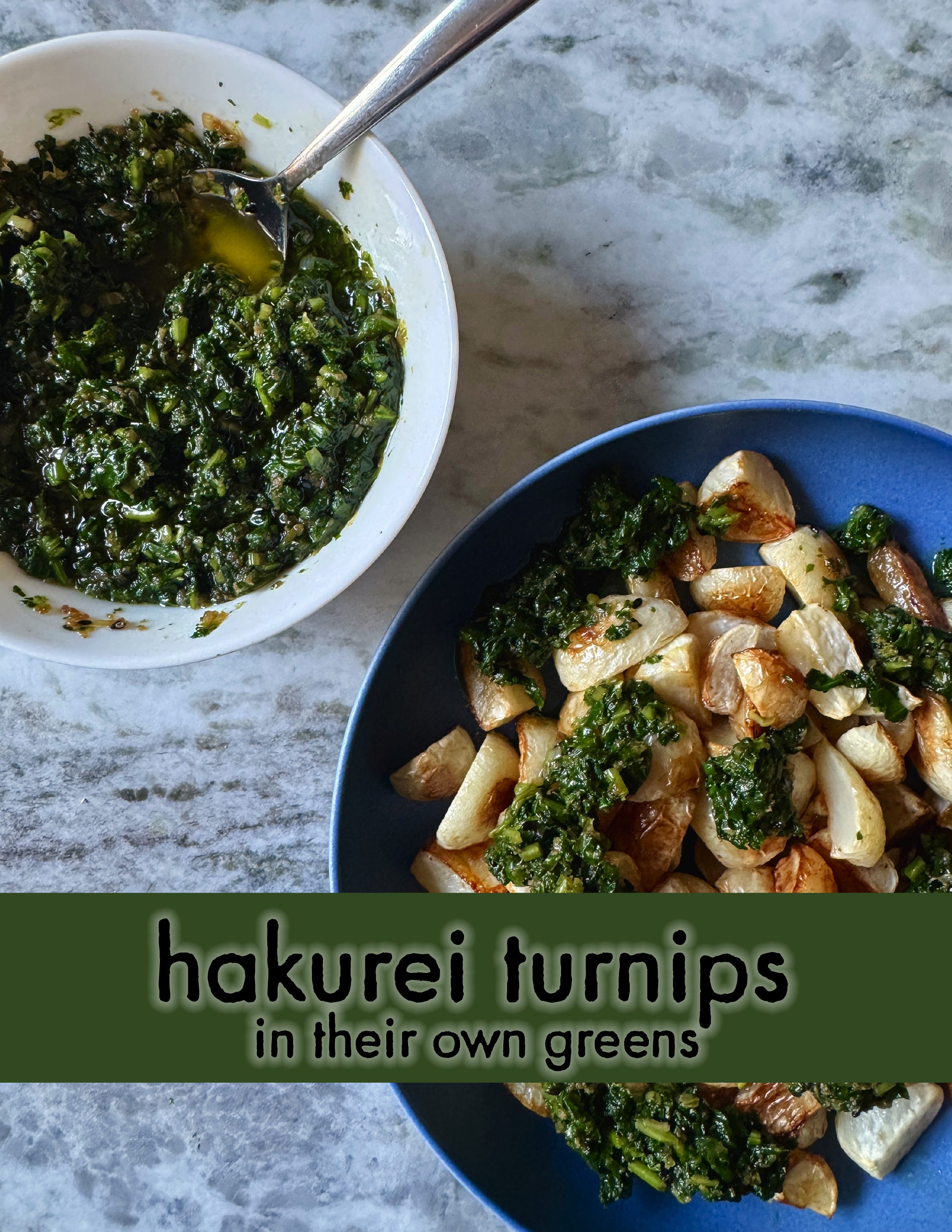
When California Grown asked me to pick from their produce options for recipes and I saw olive oil was an option, I think you could probably imagine by this point that it was my first choice. I decided to pair it with one of my favorite veggies of the winter season: hakurei turnips. They are also one of the easiest things to find at the farmers markets in Atlanta this time of year, and always look beautiful. Turnips don’t always get to shine, and when you buy them from the farmers market, you get the whole bunch, leaves and all. They are fresh tasting, crisp and juicy raw, with a little peppery kick. Roast them, and they become sweet and earthy, which makes them pair perfectly with an aromatic sauce made of their own greens.
Comments
Nothing yet. Say the first thing.
Sign in to join the conversation.