
It’s spring 1998, and my mom has just informed me that she’s making one of her favorite dinners: zucchini and squash blossom risotto. I groan, not discreetly, because it’s one of my least favorite. The moment she serves dinner is deeply ingrained as a core food memory: sitting on a high stool at the mottled granite island counter, a shallow bowl of creamy risotto with bright sunny flecks of orange blossoms, and deep green-lined rings of baby zucchini stares at me menacingly. There are very few things I remember disliking eating as a kid, but this was top of the list.
Fortunately, one of the things that’s as inevitable as death and taxes is this: the way we taste food changes over time.
It’s widely acknowledged that we can experience five different tastes: sweet, salty, bitter, sour and umami. These flavors are recognized by our tastebuds, through taste receptors identifying different compounds in what we consume. How this works exactly is where things get a bit more technical and one of my other childhood dislikes (high school chemistry) rears its head. So I’ll keep things more surface level for my sake and just say that our taste buds are pretty awesome at pinpointing what they’re coming into contact with.
Of course, tastebuds aren’t the only part of our body contributing to our enjoyment of mealtime. As anyone who has had a bad cold can tell you, a bunged-up nose can limit what you taste.
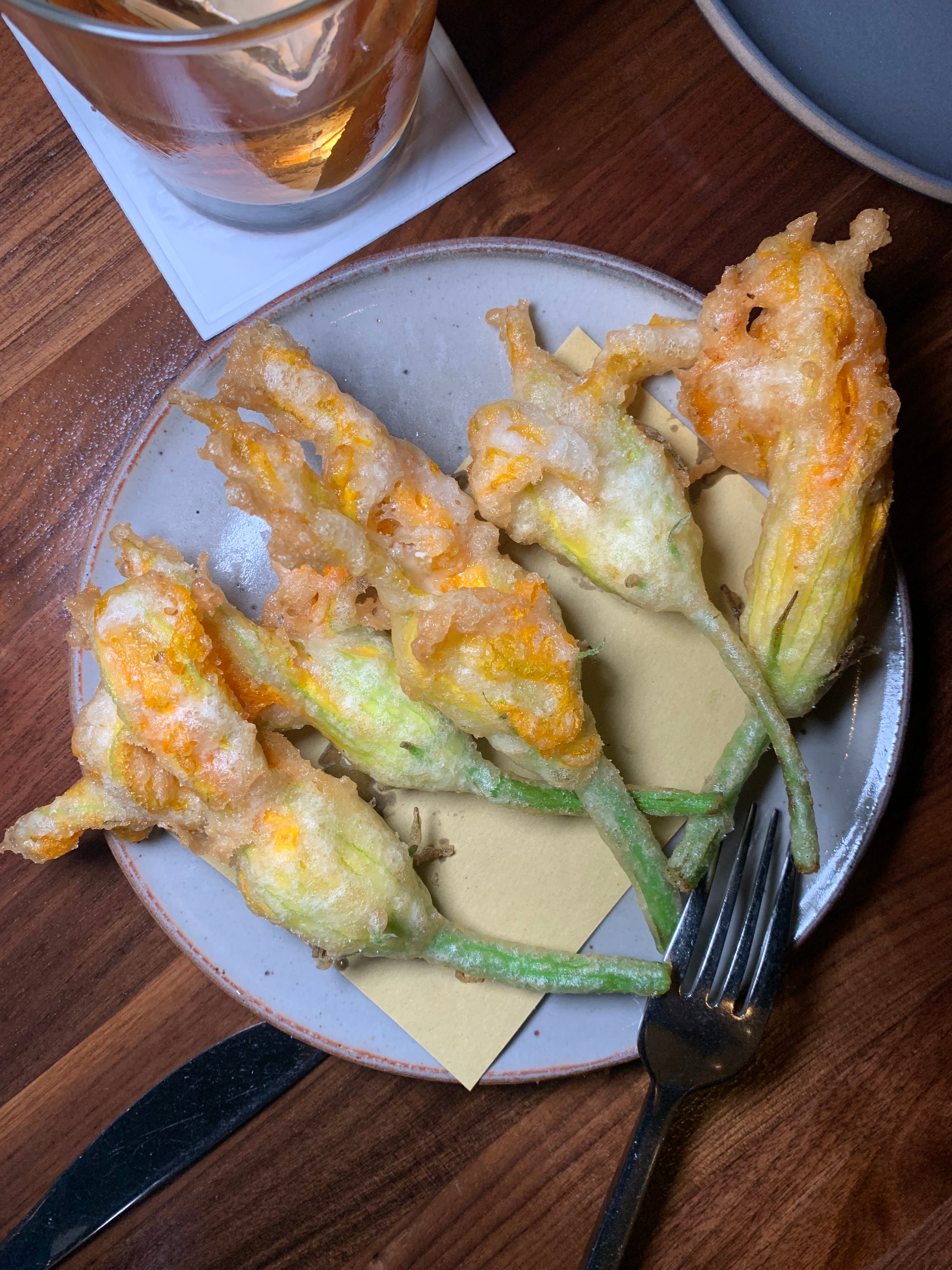
My first kitchen job was working for Evan Funke at his now-shuttered Bucato in Culver City, Los Angeles, the first of the current generation of Californian Italian restaurants. With an open kitchen and vaulted ceilings, Bucato always seemed to feel like a perfect Southern California day full of sunshine and fresh seasonal food. One of Funke’s signature dishes was (and still is), tempura-fried stuffed squash blossoms. The herby ricotta filling and delicate crunch was like biting into an early summer afternoon. My only experience of squash blossoms up to this point was my mom’s risotto, and when I was charged with making the tempura batter on one of my first days in the kitchen, I recoiled viscerally to the thought of the pale orange flowers. By the time I was actually working on the line and filling and frying the squash blossoms, I had steeled myself against the memories that I associated with them. And then, one night, Lewis and I had the chance to go in and eat at Bucato. Chef sent us out the squash blossoms. If you’ve ever worked in a kitchen, and haven’t had the chance to taste all of the dishes, you’ll know how excited I was to try them, even in spite of the negative connotations I had. Teeth piercing the light crunch of the tempura, letting the warm ricotta filling spread over your tongue, and the earthy floral foundation of the blossoms…it changed my whole opinion of squash blossoms.
Scientifically, this experience isn’t extraordinary. As we age, tastebuds die, and our sense of taste becomes less fine-tuned to the complexities of flavors we consume. We often refer to this as our tastebuds “maturing” even though it really is more of a “dulling.” This is why when adults try new foods, or foods they have already formed a negative opinion of, they can find that they do actually like it. Foods may not taste as strongly as we remember as children, because we have fewer tastebuds to work with.
And though science is science and I’m not here to dispute the facts, I do think that there is a big part of how we experience food over time that is cultural. I touched on this a lot in a previous post on not yucking other people’s yums, but want to discuss it from this perspective. In thinking about how our tastes change over time, our personal experiences are inextricably linked to this development. It may be as simple as being forced to eat something as a kid (cough squash blossom risotto cough cough) and then being introduced to the same ingredient in a different way as an adult that changes your perspective. It could be trying a previously disliked food in a new setting, like my husband’s experience of not liking avocados until he moved to California. Trying an ingredient cooked in a different way might change your mind. Remember when charred brussels sprouts became a thing and all of a sudden everyone loved them? Being in a more adventurous state of mind, like while traveling, can also make us more open to enjoying foods we thought we disliked.
This idea of our tastes not being set in stone has become a daily thought for me as I navigate feeding a toddler. While my own life has had numerous small instances of food preferences changing over time (how about when I used to dislike caesar salad but would eat the anchovies served on top), I find the challenge of deciphering Ridley’s day to day food desires fascinating. I think so much of our likes and dislikes are a product of nature and nurture: what, physically, our tastebud/brain team thinks makes something tasty, in addition to what, culturally, we are exposed to. If you’ve had a kid, you know that, especially now, there is a plethora of resources for attempting to avoid having a picky eater. I say attempting, because toddlers will toddler and sometimes there’s no help for it. But the general idea these days is to expose your kids to as many things as you can as early and as often as possible. I’d like to do a separate post about feeding a tiny human, but for this discussion, want to highlight that this journey we go on throughout our lives as our tastebuds diminish and our tastes change, is something that apparently, my child (and most other children) goes through hourly. Her favorite food when we started solids was grilled zucchini; now she won’t touch it if it’s served by itself, though she loves it in things. This week, she’s refusing to touch berries, but is obsessed with melon. I think that Ridley and I are both lucky…she’s lucky to have a mom who wants to expose her to as many foods as possible, and I’m lucky that I have a kid that does well with being exposed to as many foods as possible. She’s also genetically predisposed to being a good eater, since I am. Is that a real thing?
Regardless, my squash blossom tale isn’t unique. Many adults have found that a food they thought they disliked is at least tolerable, if not delicious. Even though I can still conjure the aroma of my mom’s risotto, and the feelings that it stirred up at the time, I now relish the end of spring and beginning of summer when squash blossoms appear like little sunbursts at farmers markets and grocery stores. In fact, I even planted zucchini and yellow squash this year, hoping for veggies, but knowing I’d be thrilled even with the blossoms.
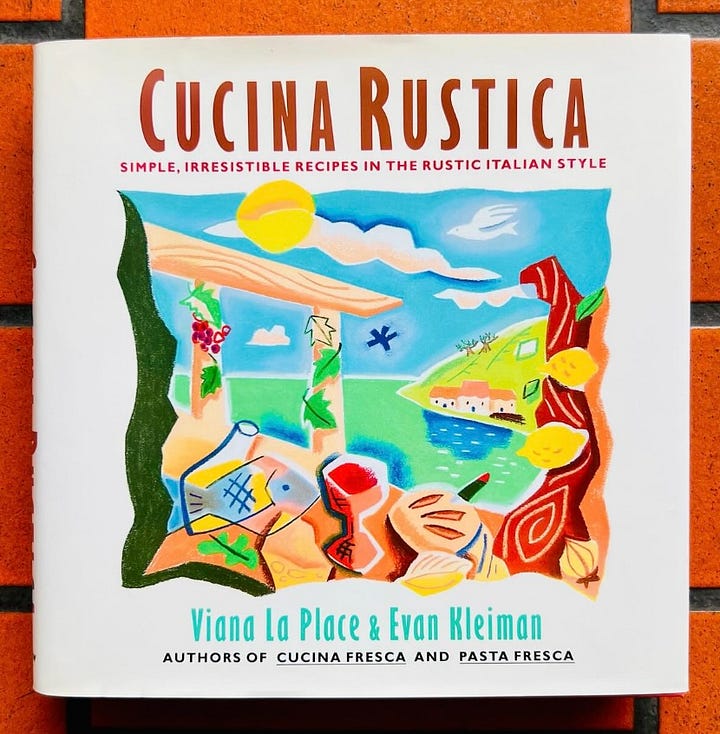
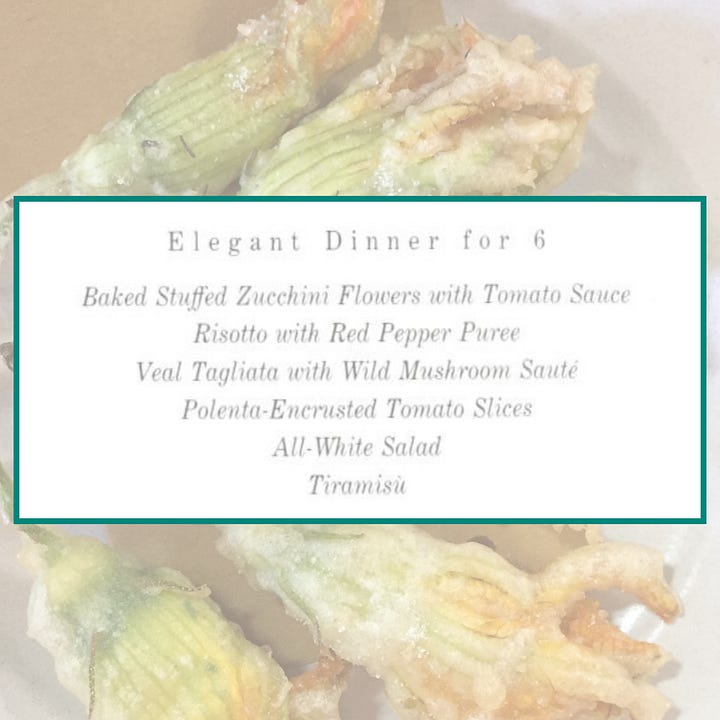
Aside from my mom’s risotto, culinarily, squash blossoms are most often found in the US in Italian cuisine. In writing this, I asked my mom where her recipe came from, and she said that while the squash blossoms and baby zucchini additions were her own, the risotto recipe itself came from Viana La Place and Evan Kleiman’s 1990 cookbook, Cucina Rustica. Interestingly, the beginning of the book has menu inspirations, and in one, risotto dish follows a squash blossom dish. Maybe this was the subconscious inspiration!
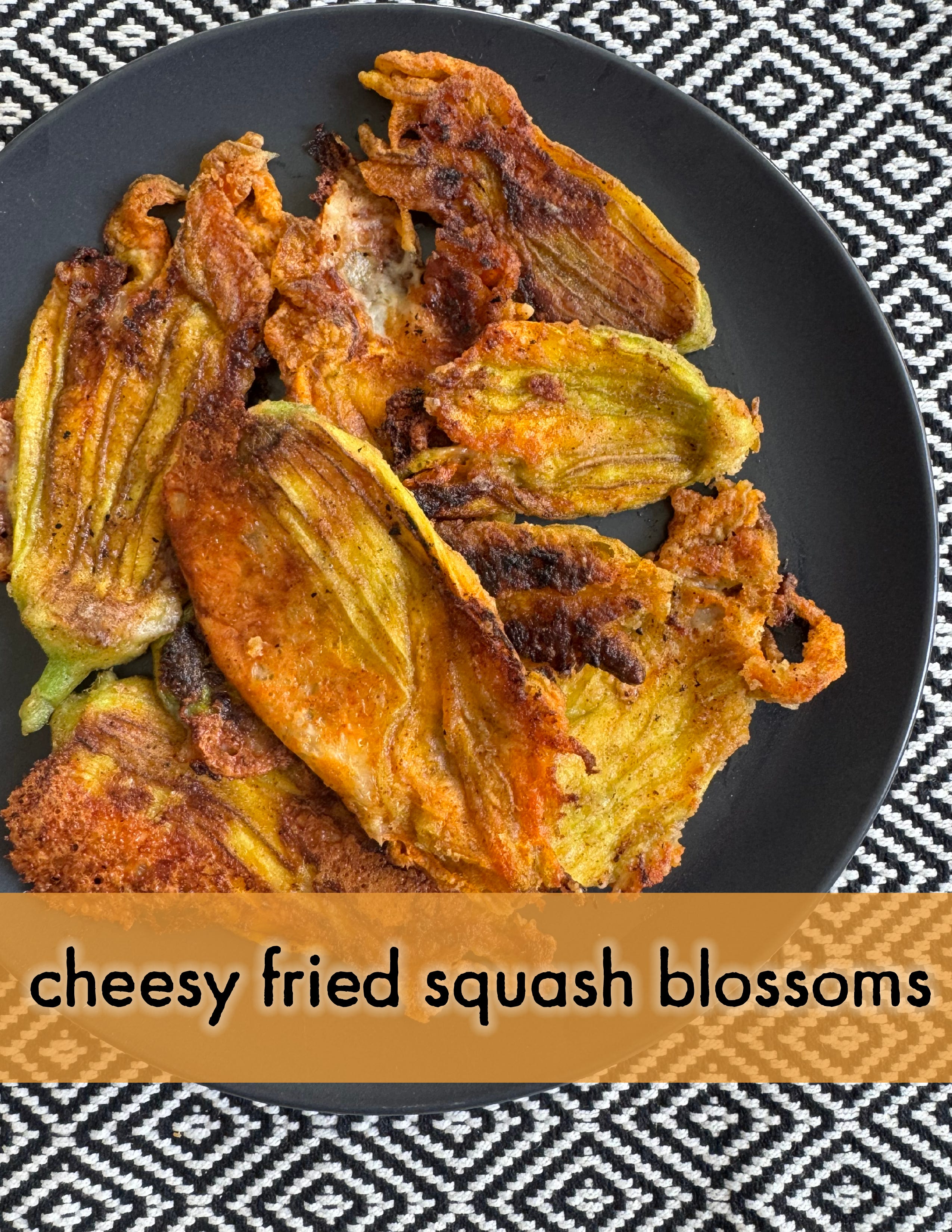
Squash blossoms are also utilized in other Mediterranean and Middle Eastern dishes. Most preparations call for the squash blossoms to be stuffed, and often fried, just like the ones I used to make at Bucato. Interestingly, though, squashes actually originated in Mexico, and are considered to be one of the oldest domesticated plant species. Squash blossom recipes throughout Mexico tend to use the ingredient as a filling, instead of something to be filled, especially in quesadillas. For the recipe I’m sharing with you today, I combined these two traditions: these squash blossoms are both stuffed and fried, but with the intent of being more quesadilla-like (and we ate them on tacos!).
I started writing this post during peak squash blossom harvesting, but life got a bit in the way of work for a bit., so I know this isn’t as seasonal as it should be. The good thing is that another summer will come, and so will the squash blossoms.
Comments
Nothing yet. Say the first thing.
Sign in to join the conversation.