
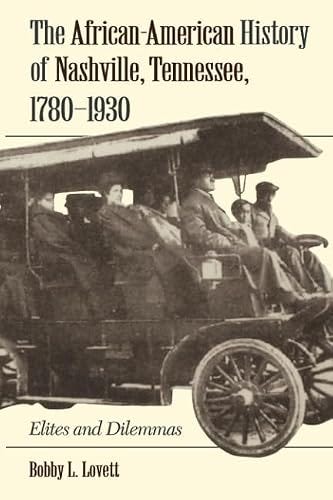
Black people in Tennessee have a unique story, and I mean that in the technical sense, not the greeting card sense.
Before I get into the analysis, let me tell on myself the way I told on myself on camera. As a millennial, the first person who made me think about the Black experience in Tennessee explicitly was Young Buck of G Unit, when he was putting on for Cashville. That is not a throwaway line. Hold onto it, because it is the whole method.
Look at how the state maps itself through Black music. Young Buck reps Nashville, which is Middle Tennessee, which is old plantation country dressed up in country music money. Anna Mae Bullock, who the world knows as Tina Turner, comes out of Nutbush in Haywood County, which is West Tennessee cotton land, and she was so specific about it she put the town’s name in a song title and told you exactly what the city limits felt like. K. Michelle comes out of Memphis, which is the Delta’s capital city sitting on a bluff in Tennessee. Three artists, three regions, one state, and if you line them up you have already drawn the map that the legislature spent May 2026 redrawing.
Clyde Woods called this the blues epistemology. Woods studied the Mississippi Delta and argued two things that MFs still are not ready for. One, that the plantation is not a period, it is a bloc, meaning a standing alliance of landholders, lenders, sheriffs, and lawmakers that survives every formal defeat by reorganizing itself under new paperwork. Two, that when the courthouse will not keep an honest record, working Black people keep it in the music, and the music becomes a system of explanation rather than a soundtrack. Apply Woods here. Nutbush City Limits is not nostalgia, it is a field report from a county that in the exact same decade was throwing Black families off the land for registering to vote. Anna Mae Bullock got out of Haywood County in the middle of the 1950s. In 1960, the people who stayed were living in Army surplus tents.
That is the pattern. Tennessee hands Black people a foothold early, earlier than most, and then Tennessee takes it back with a clean piece of paper.
Tennessee was the last state to secede. The legislature moved in May 1861 and the voters ratified it on June 8, 1861, which put Tennessee at the back of the line going out. That late departure is part of why Black Tennesseans got an early foothold in freedom. Union armies were in Middle and West Tennessee early, contraband camps formed early, Black men enlisted in numbers, and Nashville became a federal hub while the war was still hot.
That foothold did not last long. It got snatched.
Snatch one. The Emancipation Proclamation, January 1, 1863, exempted Tennessee. Andrew Johnson, then the military governor and an East Tennessee man, wanted it that way, so the paper that freed people in Confederate territory skipped the state where the Union already had boots on the ground. Legally free in Mississippi. Still property in Murfreesboro.
Snatch two, and this is the one nobody teaches. Tennessee was the first ex Confederate state readmitted to the Union, on July 24, 1866, after being the first to ratify the Fourteenth Amendment. Sounds like a win. It was not. When Congress passed the Reconstruction Act of 1867 and cut the South into five military districts, Tennessee was the only one of the eleven left out, because Tennessee had already been let back in. Read that again slowly. Every other former Confederate state got federal troops standing between Black voters and the men who used to own them. Tennessee got home rule back first, which means Tennessee got Redemption first, and it is not a coincidence that the Klan got founded in Pulaski, Tennessee in the winter after the war ended.
Being first in line to come home meant being first in line to be left alone with the people who wanted you dead. The reward for early loyalty was early abandonment. Two things can be true. Tennessee was ahead, and Tennessee was abandoned, and it was ahead precisely because it was going to be abandoned.
Now let me clean up something in my own video, because Research over MeSearch means I check me too.
I said East Tennessee was a Union stronghold where slavery was less common and many opposed secession. True. Then I need to finish the thought. East Tennessee is mountain country, and mountain country could not run a cotton plantation economy, so the white people up there had less use for large scale slavery. Less use is not moral opposition. Their unionism was mostly a class position against the planter class in Middle and West Tennessee, and the proof of that is a man named Andrew Johnson.
Johnson was East Tennessee. Johnson was a unionist. Johnson stayed in the Senate when his state seceded. Johnson also owned people, asked for Tennessee to be carved out of the Emancipation Proclamation, and then as President spent the back half of the 1860s doing everything in his power to make sure Reconstruction did not turn into Black political power. East Tennessee unionism and antiblackness lived in the same body, wore the same suit, and took the same oath.
This is the discipline the transcript needed and did not have. When you tell Tennessee’s story you cannot let the Union label do the moral work. Being against secession and being for Black freedom were two different positions, and Tennessee is where you can see the seam.
West and Middle Tennessee had the large plantations and the economies that ran on free labor from my ancestors. When the war ended, that land did not disappear and those families did not disappear. Woods would say the bloc did not die, it refinanced. Sharecropping was the refinancing. The debt ledger at the plantation store replaced the whip, the crop lien replaced the bill of sale, and the county courthouse handled the enforcement.
Which brings me to Fayette County, and I need to correct myself on air, because in the video I said Fayetteville County. It is Fayette County, Tennessee, and its neighbor Haywood County, both sitting between Memphis and nothing, both majority Black, both cotton.
Here is how it started, and the mechanism is beautiful and sick at the same time. In 1959 a Black man named Burton Dodson stood trial in Fayette County for a killing from decades earlier, defended by a Black Memphis attorney. Black folks packed that courtroom and watched an all white jury do what all white juries do. Then somebody did the math out loud. In Tennessee, jury pools came off the voter rolls. No registration, no jury. No jury, no chance. So a group of them founded the Original Fayette County Civic and Welfare League in 1959, and the whole thing started as a jury problem before it was ever a ballot problem.
They registered. Then they got locked out of the August 1959 Democratic primary anyway, so they sued the county Democratic Party in 1960 and they won.
Watch the retaliation, because the retaliation is the lesson.
The White Citizens Council put together a list. Registered Black voters and any white person helping them. That list went around to merchants, banks, insurance agents, wholesalers, and doctors. If your name was on it you could not buy groceries. You could not buy gas. You could not get a loan, could not renew a policy, could not get seen by a physician. A sheriff’s deputy sat at the county line to turn back gasoline trucks headed to John McFerren’s store, so McFerren drove to Memphis and hauled his own supplies back. A white wholesaler slipped him gas in the middle of the night and to this day nobody knows who that man was.
Then the cotton came in, and once the crop was picked and the labor was no longer needed, the evictions started. Over 400 families put out. Households on land their people had worked for generations, out on the road with their possessions in the ditch, in the winter, for registering to vote.
Two Black landowners, Shepard Towles and Gertrude Beasley, opened their property. Army surplus tents went up. They called it Tent City, and later Freedom Village, and families lived in canvas from late 1959 into 1962, some into 1963. One man who was evicted described a tent 16 feet by 14 feet holding him, his wife, and four children, cooking and sleeping and eating in the same square, mud to the knees when it rained. He also said he was never sorry he registered.
The Justice Department finally moved, and this was the first serious use of the Civil Rights Act of 1957. September 1960 they sued. November 18, 1960 they amended to add 36 more landowners. December 14, 1960 they filed against 45 landowners, 24 merchants, and a financial institution in Fayette County. On July 26, 1962, it settled by consent decree. Nobody admitted a thing. The landowners were permanently enjoined from evicting or refusing service in order to stop people from registering.
Now here is the part that should make the hair on your neck stand up.
After the consent decree, the evictions did not stop. They just changed the reason on the paperwork. The landowners started putting families off for mechanization. For poor work performance. For efficiency. Same eviction, same families, same road, brand new reason, and now the reason is race neutral and unreviewable.
Just admit what that is. That is not a loophole. That is the technology.
Once you see the swap, you cannot unsee it, and Tennessee is where the receipts stack the highest.
Receipt one. Memphis, 1940. Robert R. Church Jr. was the most powerful Black political operator in the South, the man who built the Lincoln League, the man whose family name was on a park. He backed the wrong presidential candidate against Boss Crump’s machine. The city came for his mansion and his real estate holdings over alleged unpaid back taxes. Church left Memphis and never got that power back. Nobody had to say the word. The word was on the tax notice.
Receipt two. Memphis, same year. Crump ran what the labor historian Michael Honey called a reign of terror against CIO organizing at Firestone. Police raids, beatings, street stops, Black organizers disappearing. It was not filed as racial suppression. It was filed as public order. Then Crump’s people blocked A. Philip Randolph from getting a venue to speak in Memphis, and when Randolph asked Eleanor Roosevelt to say something about it, she wrote back that she had been advised to do nothing because it might do more harm than good. Liberalism is a hell of a drug.
Receipt three, and this is where I owe the transcript a correction. I said Highlander Folk School was in Montgomery, Tennessee. It was Monteagle, Tennessee, in Grundy County, up on the Cumberland Plateau. Highlander was founded in 1932, and by the 1950s it was one of the only places in the South where Black and white southerners could meet, eat, sleep, and organize in the same building. Rosa Parks spent two weeks there in the summer of 1955, a few months before she stayed in that seat. John Lewis, Diane Nash, James Bevel, Bernard Lafayette, Marion Barry, Fannie Lou Hamer, Septima Clark, Stokely Carmichael, all of them passed through. Zilphia Horton taught Pete Seeger the song that became the anthem. So yes, Tennessee taught nonviolent direct action before the national movement adopted it, and Tennessee taught voter registration method before the Voting Rights Act existed.
So how did the state kill it? Not with a mob. In 1957 the Georgia Commission on Education printed a pamphlet with a photograph of Martin Luther King Jr. at Highlander and called it a communist training school, and that image went up on billboards across the South. Then the state of Tennessee investigated, and when the subversion charge would not stick, they switched to something cleaner. Selling beer without a license. Violating the terms of a nonprofit charter. In 1961 the state revoked the charter, confiscated roughly 200 acres, padlocked the doors, and auctioned the property. Myles Horton’s answer is the line I want on a wall somewhere: you can padlock a school, but you cannot padlock an idea. They reincorporated in Knoxville, then moved to New Market, and they are still going.
They did not close Highlander for teaching Black people. They closed Highlander for a liquor license.
Receipt four. 1961 again. Fourteen students at Tennessee A and I, now Tennessee State University, rode into Mississippi on the Freedom Rides. They got beaten, arrested, and jailed, and while they sat in Parchman they got letters telling them they were expelled from a state HBCU under a rule the segregationist governor had just put in place. The stated ground was misconduct. Not activism. Misconduct. They sued and won readmission, but most of them never finished there, and TSU did not hand them degrees until 2008, 47 years later, three of them posthumously, after the Board of Regents first voted the honor down on the theory that an honorary degree should recognize a lifetime rather than one act of courage.
Receipt five. April 6, 2023. Two young Black lawmakers named Justin, Justin Jones out of Nashville and Justin Pearson out of Memphis, got expelled from the Tennessee House for standing in the well with a bullhorn after a school shooting. Gloria Johnson, who is white, did the same protest and survived by one vote. The stated ground was not politics and not race. The stated ground was decorum. Leadership said explicitly that race had nothing to do with it and pointed to the bullhorn. Both men were reappointed within a week by their local bodies and then won their seats back outright.
Receipt six, and this is the one that is live right now.
On April 29, 2026, the Supreme Court decided Louisiana v. Callais and gutted what was left of Section 2 of the Voting Rights Act. Governor Bill Lee called a special session for May 5. By May 7, both chambers had passed a new congressional map and Lee had signed it the same day. Three days. They also repealed Tennessee’s own law against mid decade redistricting and suspended residency requirements for congressional candidates while they were in there.
The new map takes the state’s only majority Black congressional district, the Ninth, centered in Memphis, roughly 60 percent Black, and cracks Shelby County into three pieces, stretching Black Memphis voters out along the Mississippi line and into rural Middle Tennessee across media markets and time zones. It splits Nashville further into five. Target outcome, nine seats out of nine. Protesters filled the Capitol, some of them wearing Klan hoods to make the point, and troopers cleared the gallery.
Black Memphis voters, the Black Clergy Collaborative of Memphis, the Memphis A. Philip Randolph Institute, and The Equity Alliance sued, represented by the ACLU. On July 23, 2026, a three judge panel, two Trump appointees and one Obama appointee, denied the preliminary injunction and let the map govern the August 6 primary and the November general. The panel wrote that the road to a reliably nine to zero map runs through Memphis, and then said the quiet part all the way out loud: because the motivation was political, the dilution of Black voting power is explained. They said the plaintiffs lacked direct evidence of racial motivation.
Direct evidence. In a state where an essentially all white legislative supermajority took the one Black seat apart in 72 hours.
Line them up. Back taxes in 1940. Public order in 1940. Poor work performance in 1962. A beer license in 1961. Misconduct in 1961. Decorum in 2023. Political motivation in 2026. Every single time, the injury is identical and the paperwork is spotless. Woods said the bloc reorganizes. This is what reorganizing looks like when it has a court reporter.
So when the old folks heard me lay this out and said, Lil George, that just sound like you dealing with the same old shit in a new toilet, they were not being cute. They were being precise. The plumbing is what changed.
Here is where Katherine Mellen Charron earns her keep.
Charron wrote the life of Septima Clark, and what she recovers is not a saint, it is a method. Clark was a South Carolina educator who got fired in 1956 for refusing to renounce her NAACP membership, and she landed at Highlander in Tennessee. What she built there, with Esau Jenkins and Bernice Robinson, was the Citizenship School.
Understand the problem they were solving. The literacy test was not a reading test. The literacy test was a discretionary weapon held by a white registrar who could pass a white man who could barely sign his name and fail a Black schoolteacher on the interpretation of a state constitutional clause. So Clark’s people did not teach reading in the abstract. They taught you to read and write the specific document that stood between you and the roll. They taught the state constitution, the registration form, the mail order catalog, the money order, the bank book. Politics through the paper you already had to handle.
Then look at who taught it. Bernice Robinson was a beautician. Not a certified teacher. Clark picked her on purpose, and Charron shows why. A certified teacher in that South worked for a white school board and could be fired for breathing wrong, which we just watched happen to Clark herself. A beautician’s clients were Black. Her shop was Black owned. Her income could not be revoked by a superintendent. Apply Charron here. The credential was not a qualification, the credential was a leash, and the Citizenship School worked because it was taught by people the state could not fire.
That is the education section of this entire pack in one move. Every time Black Tennesseans built a school the state could not control, the state took the school.
They took Highlander’s 200 acres in 1961 over a liquor license.
They expelled 14 TSU students in 1961 for misconduct, under a rule written by the governor, at a school the state funded.
And the state is still doing it with the checkbook. In 2023 the federal government told Governor Lee in writing that Tennessee had underfunded Tennessee State University by roughly 2.1 billion dollars across about 30 years, the largest gap of any Black land grant institution in the country, on top of a 2021 state legislative study that found the state had shorted TSU by hundreds of millions in land grant matching funds. Republican lawmakers in Nashville dismissed the 2.1 billion figure as, and I quote, a political number.
A political number. Political motivations readily explain the dilutive effects. Do you hear it? It is the same three syllables doing the same job in two different rooms 30 months apart. Call it politics and it stops being race, and once it stops being race there is no remedy, because there is no such thing as a remedy for losing an argument.
Meanwhile TSU has been sitting in a financial crisis, its board was cleared out by the legislature in 2024, and it has been reduced to repurposing capital money meant for buildings just to keep the lights on. Woodson told us in 1933 that if you control what a man thinks you do not have to worry about what he does. The 2026 version is simpler. If you control the appropriation, you do not have to control the syllabus.
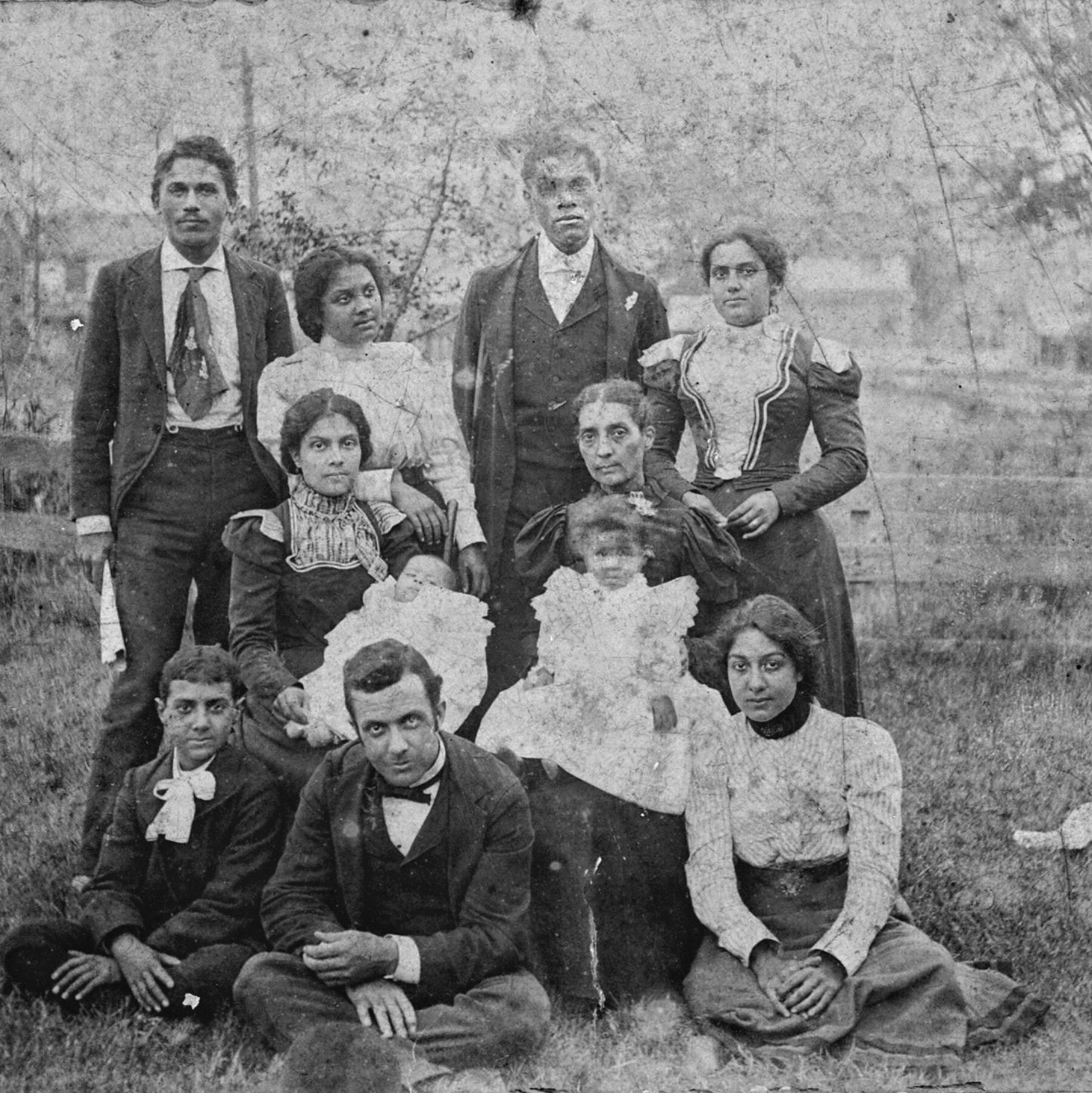
Martha S. Jones wrote the two century account of Black women and the vote, and her core argument is the one that keeps getting flattened. Black women were the earliest and most consistent organizers for universal suffrage in this country, they fought white suffragists who wanted them in the back of the parade, they fought Black men who wanted them in the kitchen, and when the vote finally came they were the last ones actually able to use it. Vanguard in name, rear in access.
Apply Jones to Fayette and Haywood County, because the standard telling gives you John McFerren and stops.
Viola McFerren cofounded the League. When the trade ban hit, Viola McFerren was the one doing the arithmetic that kept people alive, because a boycott of a household is not an abstraction, it is somebody figuring out how to feed five people with no credit at the store, no doctor, no insurance, and no gas. She went on national speaking tours to raise the money that fed Tent City. She is the reason there is a historical marker on that ground today. Georgia Mae Turner, Minnie Jameson, and the other women in those tents did the cooking, the laundry, the childcare, and the nursing inside 16 by 14 feet of canvas through two Tennessee winters, which is to say they performed the entire infrastructure of a two year political occupation.
Then read the retaliation through gender. The eviction did not hit an individual, it hit a household, and the household ran on Black women’s labor. The trade ban did not hit a voter, it hit whoever had to walk into the store, and that was usually a Black woman. The doctor refusing care did not hit a candidate, it hit whoever was pregnant, whoever had a sick child, whoever was aging. White supremacy in Fayette County did not aim at the ballot. It aimed at the womb, the pantry, and the medicine cabinet, because that is where it knew the resistance actually lived.
Same story at Highlander. The method that changed the South was designed by Septima Clark and delivered by Bernice Robinson, and for years the public face of Highlander was Myles Horton. Same story in Nashville, where Diane Nash out organized and out strategized damn near everybody in the Nashville Student Movement and is still introduced as one of the students. Same state where Ida B. Wells built the entire evidentiary method of antilynching journalism out of a Memphis newspaper office before a mob destroyed the press and ran her out of town in 1892.
Tennessee has a habit. Tennessee lets Black women build the machine and then files the patent under somebody else’s name.
And here is the intersectional kill shot for 2026. The Memphis seat that just got cracked into three was the political home of a Black electorate in which Black women are the most reliable voters in the state. When you dilute Memphis, you are not diluting an abstraction called the Black vote. You are diluting the specific women who show up, who run the phone trees, who drive the vans, who feed the poll workers, and who have been doing it in that city since Julia Hooks was pushing folks to pay their poll tax so they could stay on the roll. The map does not know their names. It does not need to. That is the whole point of a map.
Let me do the resource allocation math out loud, because the contradiction is not subtle.
Tennessee could not find 2.1 billion dollars for a land grant university it starved for 30 years. Tennessee could not find matching funds for its own HBCU across multiple decades. Tennessee could not find money to keep TSU from raiding its building fund to make payroll. Tennessee called the federal accounting of its own debt a political number.
Tennessee found a special session, a full legislative apparatus, a legal defense team, and a statewide election administration retrofit in three days, in May, to redraw nine congressional districts, and then went and repealed its own law against doing that in the middle of a decade.
In 1960, when 400 Black families were living in tents in the American South in winter, Senator Estes Kefauver asked the Red Cross to help. The local chapters said there was no need.
No need. In the mud. In December. With the babies in there.
The money is never missing. The money is allocated. Just admit that scarcity is a decision, and Tennessee makes that decision the same way every single time.
Now I have to give you the other half, because if I leave you in the ledger I have lied to you by omission.
Zandria F. Robinson is a Memphis sociologist who wrote about post soul Black southern identity, and her argument cuts against the whole national script about the South. The national script says the South is where Black people got hurt and the North is where Black people got free, so Black southernness is either a wound or a costume. Robinson says no. She says Black southerners built and keep building a distinct regional consciousness, that they claim the place rather than merely surviving it, and that the South is not the country’s past, it is where the country’s future keeps getting worked out first, in public, by Black people who never left.
Apply Robinson to every receipt in this piece.
They took Highlander’s land in 1961 and Highlander is still operating in New Market, Tennessee in 2026.
They evicted 400 families and those families did not leave the county, they pitched tents on Black owned land and stayed two years until the federal government had to come see about them, and the tent city forced the country to understand that you did not need a rope to stop a Black vote.
They expelled 14 students and those students sued and won readmission, and the university that expelled them eventually had to walk it back on its own stage.
They expelled two Justins and both of them were back in the building inside of a week and then won their seats outright at the ballot box.
They cracked Memphis into three and the ACLU case is still pending, the preliminary injunction is not the merits, and the plaintiffs said plainly they are continuing.
Woods gave us the bloc so we would stop being surprised. Robinson gives us the reason we keep showing up anyway, which is that this ground is ours, not because it treated us well, but because we made it. Nutbush is a song because a Black woman decided that county was worth naming. Cashville is a brand because a Black man decided Nashville was worth repping. Memphis is a sound before it is a market.
That is why I was out there. I was in Tennessee for a couple of days, three of them to be exact, and in two days I walked over 30 miles for the 1,000 Miles to Memphis campaign, the 30 day march that started in Nashville on July 27 and ends at the National Civil Rights Museum, built in direct response to Louisiana v. Callais, working toward 100,000 people registered. I went from Nashville to Smyrna, from Smyrna to Murfreesboro, and I will be back.
Understand what that route is. Murfreesboro is where the largest earthen fortification of the war was built by Black hands, and I said as much when I filmed there, and I said it without the context I just gave you. Nashville is where the Citizenship School method got taught and where the students who broke the lunch counters came from. The road from Nashville to Memphis is a road through Fayette and Haywood County, through Tent City ground, through the exact acreage where people got put out for registering.
We are walking to register voters through the counties where registering voters got people evicted. That is not symbolism. That is the same fight, on the same dirt, against the same bloc, with cleaner paperwork on the other side.
In my time of being there, I was able to be surrounded by this beautiful legacy of Black resistance from Tennessee, and I thought that I would share it with y’all, man.
Education Is Elevation.
Being first back in the Union was a punishment, not a prize. Tennessee was the last state to secede and the first readmitted, on July 24, 1866, which made it the only ex Confederate state left out of military Reconstruction in 1867. Everybody else got troops between Black voters and the planter class. Tennessee got left alone with them, and the Klan got founded in Pulaski.
The pretext is the technology. Back taxes took Robert Church out of Memphis in 1940. A liquor license took Highlander’s 200 acres in 1961. Misconduct expelled 14 TSU Freedom Riders in 1961. Poor work performance and mechanization replaced the illegal evictions after the 1962 consent decree. Decorum expelled two Justins in 2023. Political motivation upheld the map in 2026. The injury never changes. Only the form changes.
Fayette and Haywood County started as a jury problem. Black folks watched an all white jury try Burton Dodson in 1959, learned that jury pools came off the voter rolls, and organized. Over 400 families got evicted, Tent City went up on Shepard Towles’ and Gertrude Beasley’s land, and the Justice Department’s suits against 45 landowners, 24 merchants, and a bank became the first real teeth of the Civil Rights Act of 1957.
The literacy test was never a reading test, so Septima Clark never built a reading class. The Citizenship School taught the exact documents standing between you and the roll, and Clark chose a beautician, Bernice Robinson, to teach it, because a beautician could not be fired by a white school board. Credentials were a leash. She routed around it.
A political number and political motivations are the same alibi. Tennessee lawmakers called the federal finding of a 2.1 billion dollar underfunding gap at TSU a political number. A federal panel called the destruction of the Memphis seat explainable by political motivations. Once you relabel race as politics, the harm stays and the remedy disappears.

I‘m fighting to fill a critical void left by the retreat of public education media. I document and teach the histories, legal frameworks, and cultural knowledge that are being systematically erased or distorted. With no corporate backing or wealthy sponsors, this work depends entirely on readers like you. As a Black educator and researcher my work depends entirely on a community of readers, not corporate sponsors. If everyone reading this became a paid subscriber, we could build a full-time digital sanctuary: a new, independent source of PBS-depth reporting and curriculum, centered on Black expertise.
Elizabeth Gritter, River of Hope: Black Politics and the Memphis Freedom Movement, 1865 to 1954
Robert Hamburger, Our Portion of Hell: Fayette County, Tennessee, An Oral History
Katherine Ballantyne, “We Might Overcome Someday: West Tennessee’s Rural Freedom Movement,” Journal of Contemporary History (2021)
University of Memphis, Tent City: Stories of Civil Rights in Fayette County, Tennessee digital archive and timeline
Tennessee State University Library, “Tent Cities of Fayette and Haywood Counties,” Linda T. Wynn
BlackPast.org, “Tent Cities of Fayette and Haywood Counties (1960 to 1962)”
Tennessee Bar Journal, “Tennessee’s Tent City: The 60th Anniversary of a Great Voting Rights Victory” (2022)
SNCC Digital Gateway, Highlander Folk School entry
Stanford King Institute, Highlander Folk School entry
Tennessee Encyclopedia, “Crump, Edward Hull”
Ben Hooks Institute, University of Memphis, “The Crump Era”
Equal Justice Initiative, Reconstruction in America, Military Reconstruction sidebar
U.S. Senate Historical Office, Reconstruction Act of 1867 and readmission record
Andrew Johnson, “Message Restoring Tennessee to Former Status,” July 24, 1866
Louisiana v. Callais, U.S. Supreme Court, decided April 29, 2026
Tennessee Secretary of State, 2026 Congressional Redistricting, Second Extraordinary Session of the 114th General Assembly, May 2026
Sherman v. Hargett, three judge panel order denying preliminary injunction, July 23, 2026
ACLU of Tennessee press release, July 23, 2026
Tennessee Lookout, coverage of the May 2026 special session and the TSU underfunding calculations
NPR, NBC News, Associated Press, and UPI coverage of the May 2026 map and the July 2026 ruling
Cardona and Vilsack letter to Gov. Bill Lee, September 19, 2023, on land grant underfunding
Higher Ed Dive and WPLN reporting on the TSU financial crisis and operating agreement
Comments
Nothing yet. Say the first thing.
Sign in to join the conversation.