
Downstream from Canadian mines, Alaska tribes fight a legal battle for survival, sovereignty, and the last wild salmon rivers.
Listen to the full episode on Spotify, YouTube, Amazon Music, Apple Podcasts, and Castbox. It features interviews with Guy Archibald, SEITC’s Executive Director; John Gailus, the attorney representing SEITC in the BC Supreme Court; and Cindy Wagner, a bonafide member of the Metlakatla Indian Community on Annette Island on the southeastern coast of Alaska.
As British Columbia fast-tracks mining operations in the headwaters of the Stikine, Unuk, and Taku rivers, downstream Alaska tribes face devastating threats to their waters, livelihoods, and sacred ooligan runs. Represented by the Southeast Alaska Indigenous Transboundary Commission (SEITC), these tribes have taken their fight to the Supreme Court of British Columbia to demand consultation on projects that will impact their land and livelihoods.
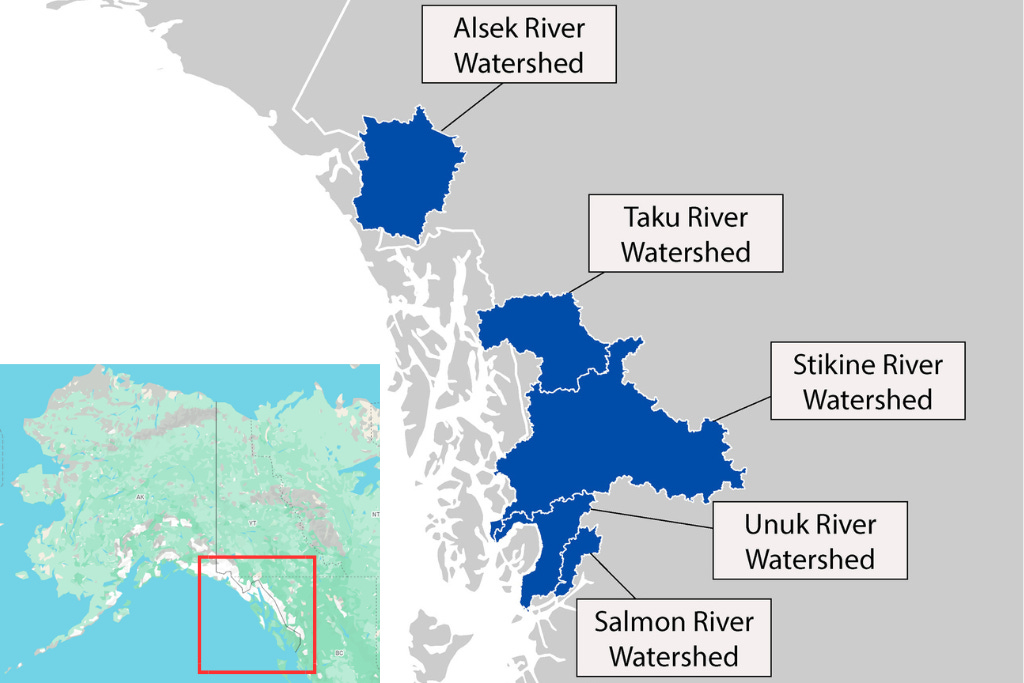
For generations, the Stikine, Unuk, and Taku rivers have fed the communities of Southeast Alaska.
Here in Southeast Alaska, it is as much water as it is land. We derive at least 80% of our caloric intake from the foods we gather in the water and off the land. There's a saying here that when the tide goes out, the table is set. And it's always been that way.
But upstream in British Columbia (BC), a mining boom is threatening the last wild salmon and ooligan strongholds on earth. Downstream, tribal members have been watching their traditional food sources collapse since the 1990s, as pollution from mines flows across the border.
These rivers are the main bread bowl for salmon and practically the whole world now because everything else is farmed or the rivers are dammed and the fish can’t get up. We have three major wild rivers in Southeast Alaska and every one of them is threatened with a mine in Canada.
Guy Archibald, the Executive Director of SEITC, spent close to two decades in the mining industry, specializing in wastewater monitoring, water quality testing, and pollution control. Mining, he says, is an “inherently destructive and depleting industry” that is severely underregulated in Canada. “The process of approving these mines is highly flawed. It’s all getting to a yes. As long as the mine and the government can work out certain conditions, they’re guaranteed a permit.”
When the Supreme Court of Canada ruled in 2021 that US-based tribes can hold constitutionally protected Aboriginal rights (such as hunting, fishing, and the right to consultation) in Canada, SEITC saw a path forward. It filed for formal consultation rights on a mining project in northwestern BC on behalf of 14 Tlingit, Haida, and Tsimshian tribes whose contemporary villages are situated in the Alaska Panhandle, a narrow strip of mainland and over 1,000 islands bordering British Columbia.
Instead of listening, the BC governmnet rewrote the rules. After denying the tribes what’s known as “Participating Indigenous Nations,” or PIN, status, on the Eskay project and five other mining projects, the provincial government this April also amended its Environmental Assessment Act, explicitly excluding US tribes from ever holding PIN status under the statutory framework.
What BC did was they changed the law to specifically exclude non-resident tribes from participating indigenous nation status, regardless of their strength of claim, regardless of the level of harm, just indiscriminately. They don’t really care what happens on this side of the border.
How SEITC’s fight unfolds in the BC Supreme Court will help determine much more than just the fate of the Stikine, Unuk, and Taku watersheds – it will set a precedent for cross-border environmental justice and Indigenous rights for generations to come.
Tune in to hear the full story of the communities standing on the frontlines to defend their waters, their culture, and their future.
Comments
Nothing yet. Say the first thing.
Sign in to join the conversation.