
One of the lasting legacies of the Covid era has been a renewed public interest in how science is conducted, published, scrutinized, and ultimately trusted.
Many people assume that concerns about peer review, reproducibility, conflicts of interest, and research integrity come only from critics outside the scientific establishment.
In fact, some of the strongest warnings have come from within.
Over the past two decades, several of the world’s most respected medical journal editors have publicly expressed concern about the reliability of published scientific research and the incentives that increasingly shape it.
In 2015, Richard Horton, Editor-in-Chief of The Lancet, wrote:
“The case against science is straightforward: much of the scientific literature, perhaps half, may simply be untrue.”
Writing in The Lancet (“Offline: What is Medicine’s 5 Sigma?”, Vol. 385, 11 April 2015), Horton attributed this to small sample sizes, tiny effect sizes, invalid exploratory analyses, conflicts of interest, and a research culture that too often rewards novelty over reproducibility.
Former New England Journal of Medicine Editor-in-Chief Dr. Marcia Angell reached a similarly sobering conclusion. Writing in The New York Review of Books in 2009 (“Drug Companies & Doctors: A Story of Corruption”), she reflected on her two decades leading one of the world’s most respected medical journals:
“It is simply no longer possible to believe much of the clinical research that is published…”

Dr. Angell explained that she had reached that conclusion “slowly and reluctantly,” citing concerns about the growing influence of the pharmaceutical industry over clinical research and medical education.
Former BMJ editor Dr. Richard Smith has also been outspoken, describing peer review as:
”…slow, expensive, a lottery, prone to bias, and poor at detecting error and fraud.”
More recently, Smith argued that, given the volume of fabricated clinical trial data now being uncovered, journals should begin by treating submitted research as “possibly fraudulent until proved otherwise.”
Underlying much of this discussion is the landmark 2005 paper by Stanford professor John Ioannidis, Why Most Published Research Findings Are False. Now one of the most cited scientific papers of the modern era, it demonstrated mathematically how low statistical power, publication bias, analytical flexibility, small effect sizes, and researcher bias can combine to make a surprisingly large proportion of published findings unreliable.
Readers of Canary in a Covid World: How Propaganda and Censorship Changed Our (My) World will recognize many of these concerns. In Chapter 13, “How Pharmaceutical Overreach, Corruption and Health System Failures Birthed COVID,” Dr. Aseem Malhotra explores the crisis of evidence-based medicine, the influence of commercial interests on scientific research, and why restoring transparency and integrity has become one of the defining challenges of modern healthcare. His chapter provides an excellent companion to the quotations above and examines these issues in much greater depth.
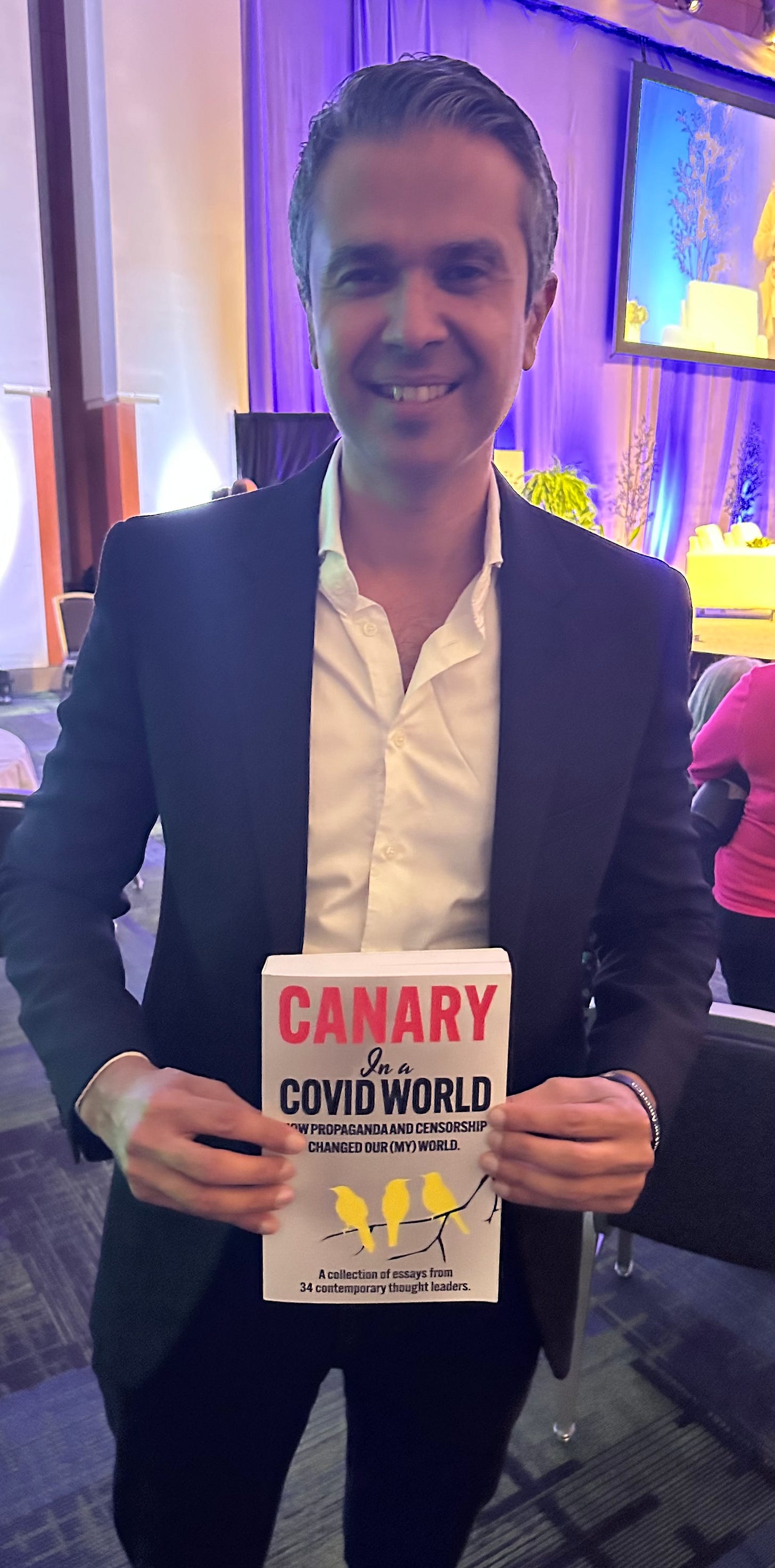
Dr. Aseem Malhotra.
These are not fringe voices.
They are among the most respected figures in modern scientific publishing.
Their concerns become even more significant when viewed alongside the financial realities of scientific publishing itself. Leading medical journals have long generated substantial revenue from pharmaceutical advertising, sponsored supplements, and the sale of bulk reprints of industry-funded studies. Research has also shown that articles generating the largest reprint sales are disproportionately funded by the pharmaceutical industry, prompting longstanding debate about whether financial incentives can influence what ultimately appears in the scientific literature.
None of this means science should be distrusted.
Quite the opposite.
If science is to remain self-correcting, it must also remain open to question.
That is not an attack on science—it is one of its defining strengths.
Horton, Angell, Smith, and Ioannidis were not calling for people to abandon science. They were calling for better science: greater transparency, stronger methodology, improved reproducibility, reduced conflicts of interest, and a scientific culture that welcomes questioning rather than suppressing it.
Although the quotations above relate specifically to medicine and medical research, the underlying principles extend well beyond healthcare. Transparency, reproducibility, rigorous debate, and the willingness to challenge accepted ideas are fundamental to every scientific discipline.
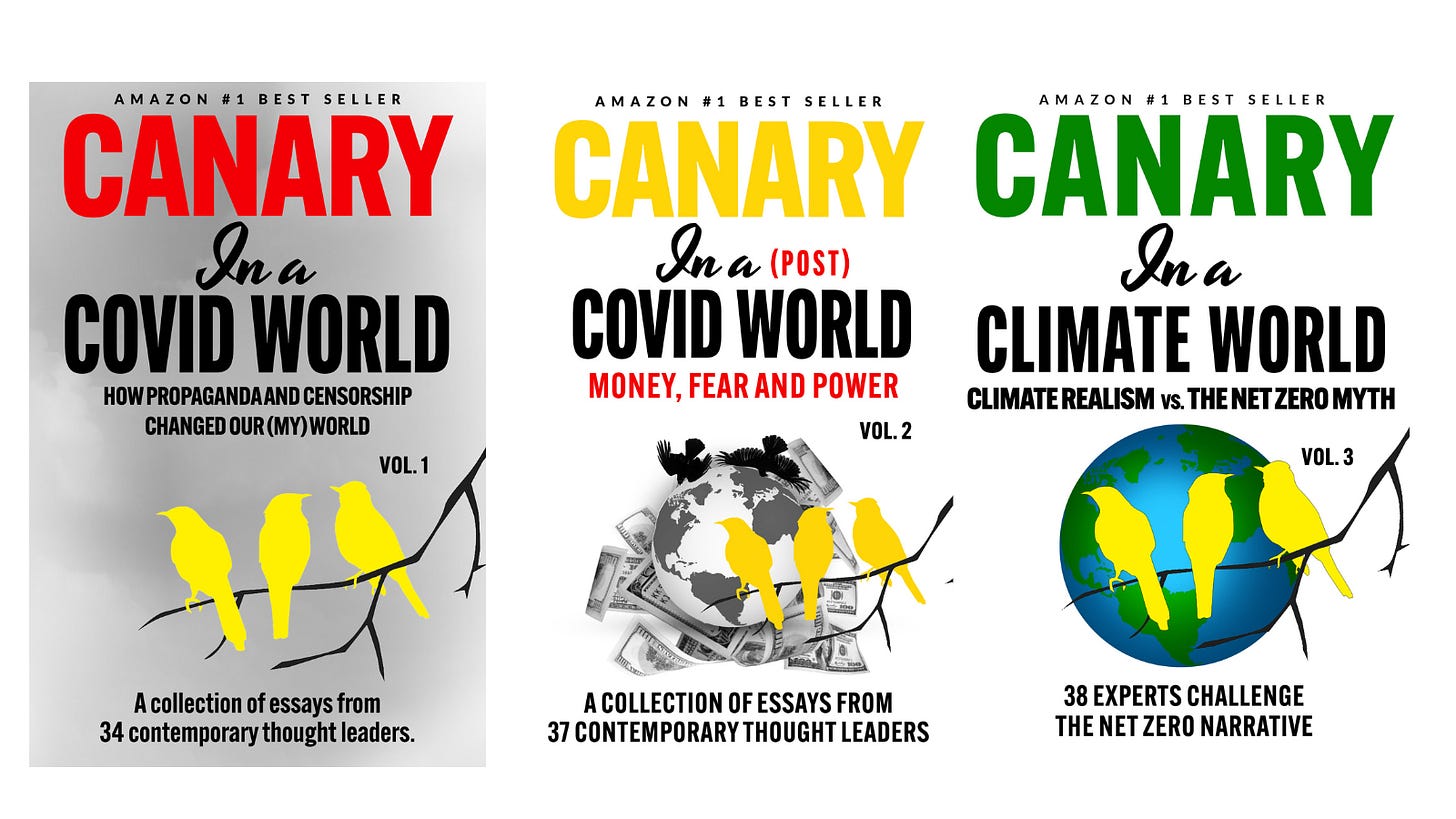
It is no coincidence that many contributors to Canary in a Climate World: Climate Realism vs. the Net Zero Myth return to these same principles. While writing about climate science, energy policy, and Net Zero, they argue that robust science depends on openness, evidence, intellectual honesty, and the freedom to question prevailing assumptions wherever the evidence leads.
Science advances not by silencing questions, but by encouraging them.
That principle lies at the heart of the Canary books. Whether examining medicine in Canary in a Covid World: How Propaganda and Censorship Changed Our (My) World and Canary in a Covid World: Money, Fear and Power or climate science in Canary in a Climate World: Climate Realism vs. the Net Zero Myth, our contributors share a common belief: that better science depends on transparency, rigorous debate, intellectual honesty, and the courage to question accepted narratives.
The quotations above are often shared on social media without context. Read in full, they tell a more important story. They are not an indictment of science itself, but a call from some of the world’s leading scientific editors to strengthen the integrity of scientific research.
Perhaps the most important lesson is this: science is never weakened by honest questioning—it is strengthened by it.
Richard Horton, The Lancet (2015), “Offline: What is Medicine’s 5 Sigma?”
Marcia Angell, The New York Review of Books (2009), “Drug Companies & Doctors: A Story of Corruption”
Richard Smith, Journal of the Royal Society of Medicine (2006), “Peer Review: A Flawed Process at the Heart of Science and Journals”
Richard Smith, BMJ Opinion (2021), “Time to Assume that Health Research Is Fraudulent Until Proved Otherwise?”
John P. A. Ioannidis, PLoS Medicine (2005), “Why Most Published Research Findings Are False”
No posts
Comments
Nothing yet. Say the first thing.
Sign in to join the conversation.