
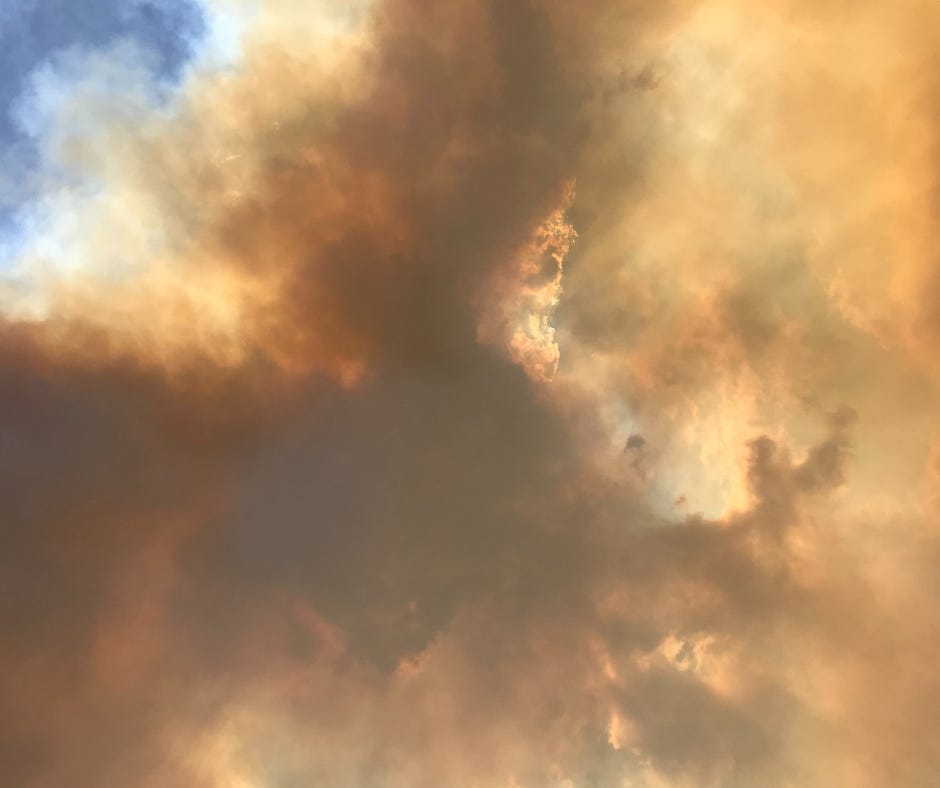
We all see what’s happening right now, whether it’s through our TV screens or through the actual first-hand experience of stepping outside and breathing it in. The sky takes on that flat, weird hazy color, the sun turns a strange apocalyptic shade of orange, and within an hour your eyes are stinging, your nose won’t settle, and there’s a scratch at the back of your throat, but you know you aren’t sick
The air quality apps light up with numbers most of us never paid attention to before (or knew existed?!), and suddenly we’re all checking them the way we check the weather.
So today I want to slow down and work through what this is. We’re going to cover:
What particulate matter is and where it comes from
Why its size is the whole story when it comes to the danger it poses
What it does to your airways and your body once you breathe it in
How to think about herbal support and prevention in a way that maps onto that physiology
My goal is that you leave this piece understanding the why and the what of wildfire smoke, so that when you reach for a supportive herb or set up an air purifier in your bedroom, you’re doing it from a place of understanding rather than guessing.
Before we get into any of that though, it helps to have a reference point for the numbers we’re all watching, because the Air Quality Index is the tool telling us how concerned to be on any given day. (I know you’ve seen this plastered on the news and weather apps) The EPA calculates it for five major pollutants regulated under the Clean Air Act, and particulate matter is one of them (Friis, 2018). The scale runs from 0 to 500, where higher numbers mean more pollution and more risk, and the guide below breaks down who needs to be careful and what to do as the number climbs.
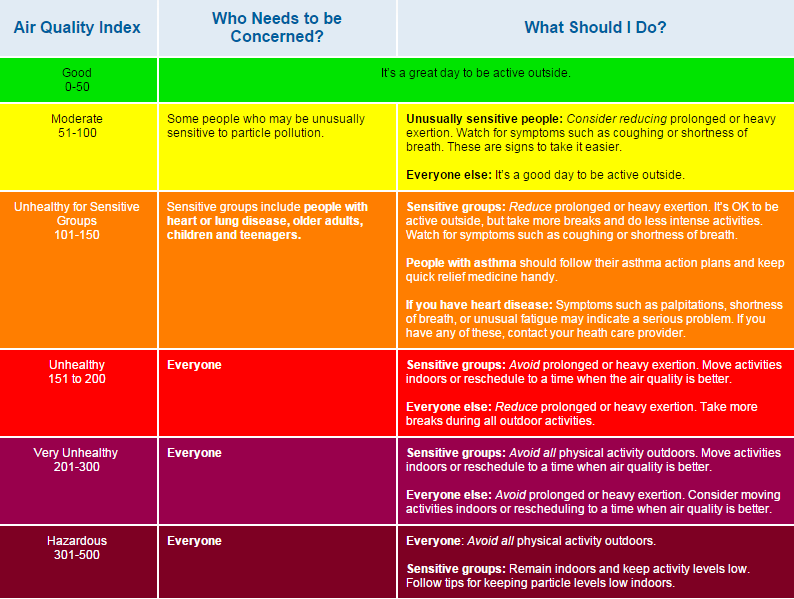
Air Quality Index guide for particulate matter. Source: U.S. Environmental Protection Agency (2014).
During a wildfire smoke event, the number climbing through those upper bands is largely being driven by the fine particulate matter we’re about to get into, so the AQI is really giving us a live readout of how much of that particulate is in the air around us.
Particulate matter is the term for the mix of tiny solid particles and liquid droplets suspended in the air we breathe, and during a wildfire event that mix is made of soot, smoke, dust, and finely divided material carried along in the air (Friis, 2018). Those particles are rarely just inert specks, because they carry polycyclic aromatic hydrocarbons and volatile organic compounds along with them, and it’s largely those chemical passengers that drive the toxic effects we’re concerned about (Crinnion & Pizzorno, 2018).
Wildfire smoke is a particularly messy version of this, combining particulate matter with a whole range of trace gases (Rizzo & Rizzo, 2024). And it reaches far more of us than you might expect, because recent estimates attribute 25% of the fine particulate matter in the air across the United States to wildfires, with 95% of the population breathing wildfire smoke for at least one day a year (Rizzo & Rizzo, 2024).
When it comes to how particulate matter behaves once it’s in the body, size drives almost everything, so it helps to picture the scale we’re working with. A single human hair runs somewhere around 50 to 70 microns across, and the particles we classify as air pollution are only a fraction of that width (Friis, 2018). PM10 covers the coarser particles, the ones larger than 2.5 microns and ranging up to 10, while PM2.5 covers the fine particles from 0.1 to 2.5 microns, and finer still are the ultrafine particles at 0.01 to 0.1 microns (Friis, 2018). The smaller a particle gets, the easier it slips past the body’s normal defenses to settle deep in the lungs, and once it’s down there, if it doesn’t dissolve, our clearance mechanisms struggle to move it back out (Friis, 2018). That is where the real trouble starts, and where we’re headed next.
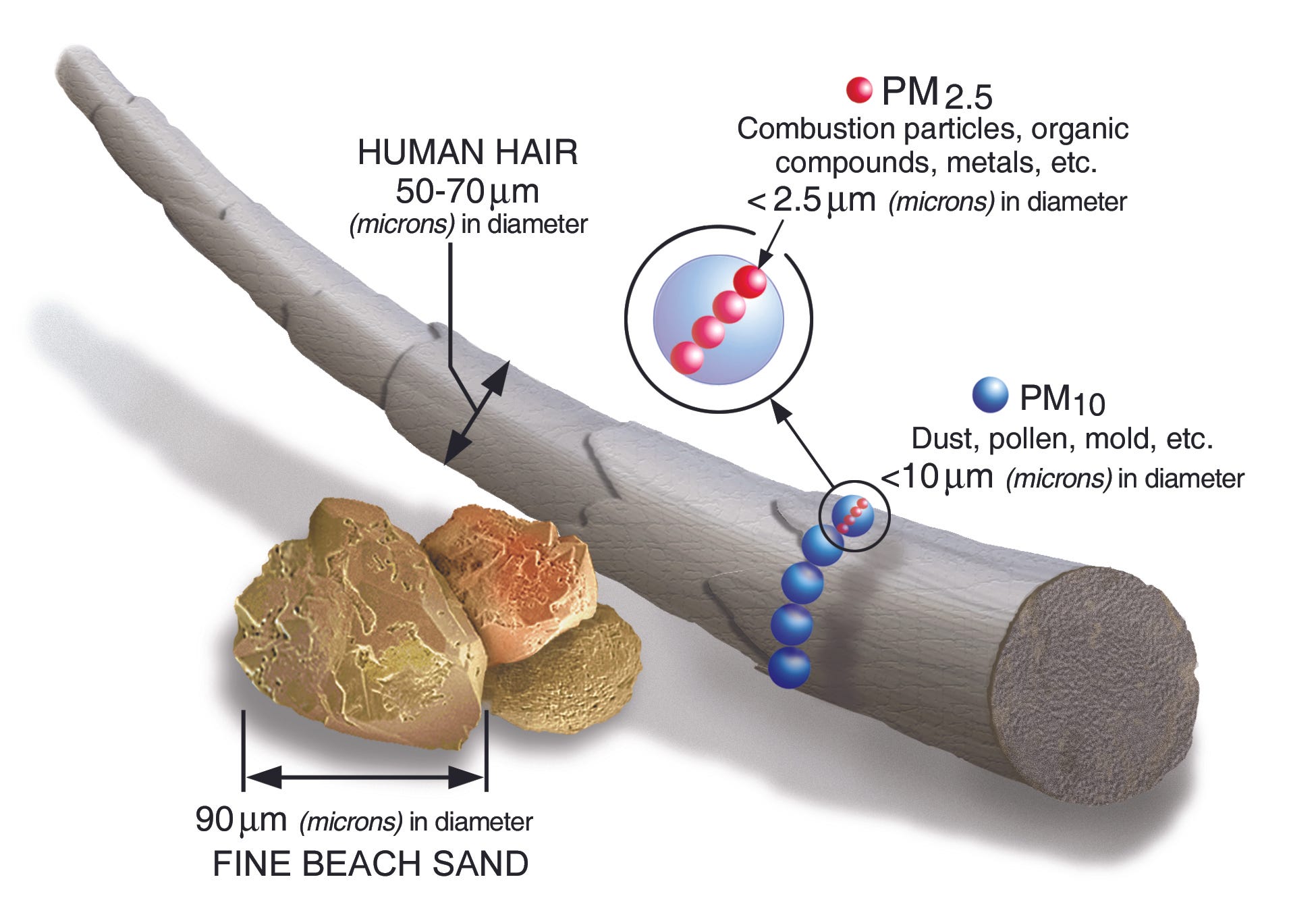
Size comparison of PM2.5 and PM10 particles against a human hair and fine beach sand. Source: U.S. Environmental Protection Agency.
Particulate matter smaller than 10 microns is readily absorbed in the lungs and then distributed throughout the body (Crinnion & Pizzorno, 2018). The smallest of these particles don’t stay where they land, and the distances they travel are hard to overstate.
When researchers measured ultrafine particulate in the livers of rats 18 to 24 hours after exposure, the levels in the liver were five times higher than in the lungs the particles had entered through (Crinnion & Pizzorno, 2018). Sit with that for a second, please. Five times higher, in the liver, in about a day. When we think about breathing in smoke, our minds go straight to the lungs, and that makes complete sense, because the lungs are the door it comes in through. What that liver finding tells us is that the door is not the destination, and the organ taking the biggest hit may be one we weren’t thinking about at all. Keep the liver in the back of your mind, because it’s going to come back around when we talk about support.
Comments
Nothing yet. Say the first thing.
Sign in to join the conversation.