

Join The Broadway Maven! Nowhere else online brims with this much Broadway content, and certainly not for so little (Membership is $25 a month for 5-15 compelling classes). Purchase a monthly or an annual plan. Cancel at any time. Sign up here:
Broadway Maven Members get the Friday Blast once a week filled with Members-only goodies. It’s the easiest way to get links for upcoming classes. In this week’s Friday Blast: links to the upcoming classes on Broadway in the 1970s and Sunday in the Park with George as well as a Watch Party of Sunday; recordings of BOTH Merrily We Roll Along classes and Ted’s Intro to Rodgers & Hammerstein; a Broadway Blast on Falsettos; a YouTube highlight about The Music Man‘s music; and the Archive clips reel of the week on In the Heights.
SPECIAL OFFER: Through September 1, new Members who sign up for a year get one month FREE!
One month FREE Broadway Maven Membership
On today’s marquee: A) A review of Rick Pender’s new book about Sweeney Todd; B) a StageStreams with a song from Mateo’s new show; C) a student review of a production of Meet Me in St. Louis; D) a close-up game with images from Broadway posters; and E) a Last Blast about Hairspray.
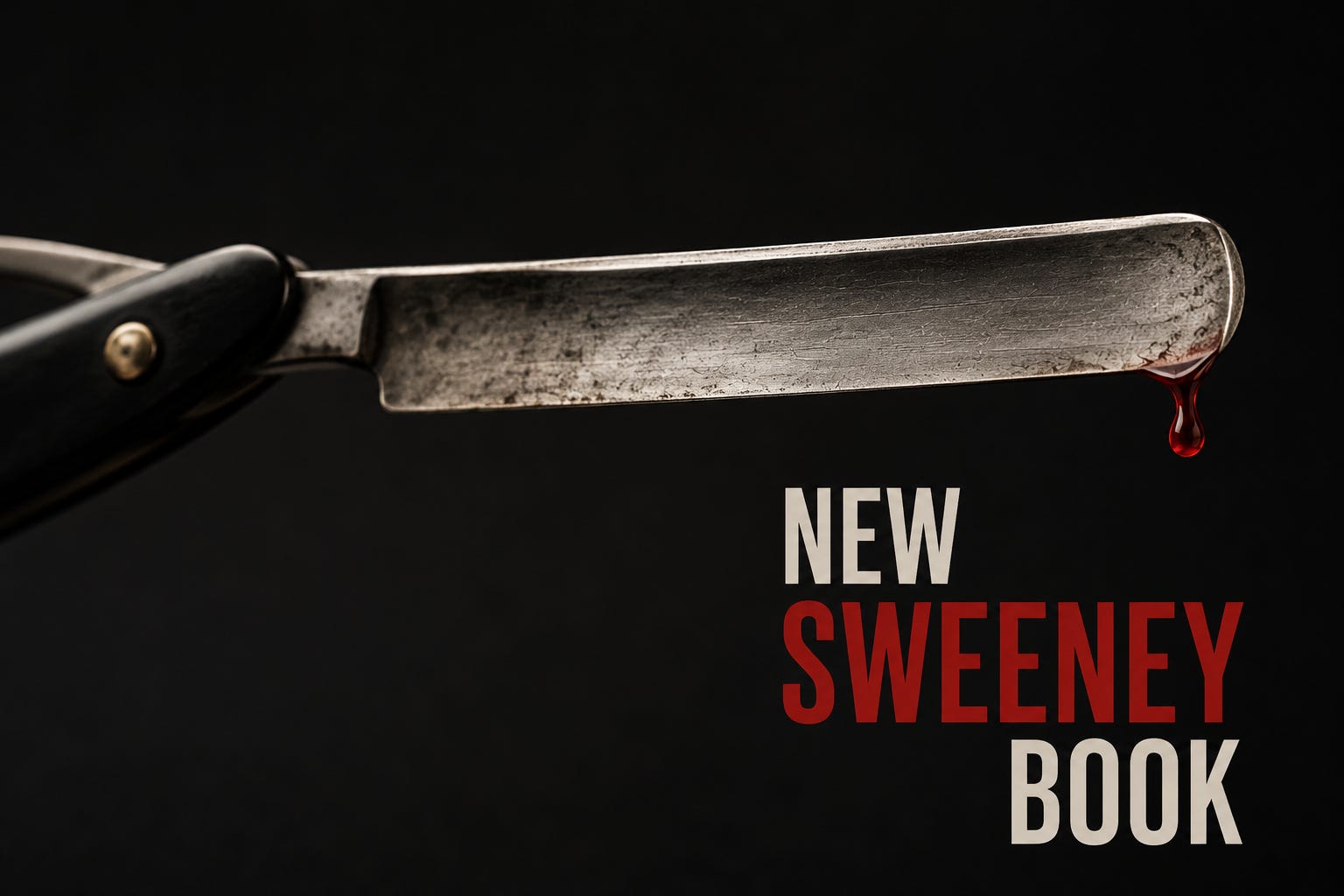
REVIEW: Somewhere inside the exhaustive new study Stephen Sondheim’s Sweeney Todd: Behind the Bloody Musical Masterpiece is a terrific book. Finding it takes a little slicing.
Rick Pender’s 2025 overview is stuffed with details and data that can become tiring and then tiresome. How were various revivals cast and reviewed? What were the strong points of various recordings? And how exactly did Tim Burton adapt the show for the big screen?
Some of the details are fun (like the way high schools adapt the Beggar Woman’s lascivious dialogue; she only asks for “a kiss”). But most are more straightforward, making the book less rewarding to read straight through.
The book’s encyclopedic nature is to be expected because Pender is, after all, an encyclopedist (his 2021 Stephen Sondheim Encyclopedia is indispensable). But if you look carefully, it’s clear that Pender is better than his method. There is insight and even brilliance in the book if you know where to look.
And now you do.
Here are the best four sections of the book, so you don’t have to go through it with a fine-toothed, er, comb:
• Chapter 2: “Sweeney’s Bloody Roots” (13-36). This section is a biography of Sweeney Todd the character, not the show, and it’s fascinating. Was there a historical Sweeney Todd? How has the legend been translated into fiction and drama? Also here: the details behind Christopher Bond’s play, which Sondheim and librettist Hugh Wheeler leaned on repeatedly.
• Chapter 6: “Sweeney Settles the Musical Score” (149-168). Here the book really delves into the show’s layers for the first time. Among the topics discussed are whether the show is best categorized as musical theater or opera, the crucial influence of film composer Bernard Herrmann, and a survey of the show’s leitmotifs, especially the Dies irae. Also found here: deep dives into “Epiphany” and “A Little Priest.”
• Chapter 8: “Isn’t that Sweeney there beside you? Cultural Impact” (185-193). At the end of the body of the book, Pender zooms out to show the ways the intensity and unique voice of Sweeney Todd have influenced Broadway (Hamilton, anyone?). Pender also evocatively describes parodies in The Simpsons, The Office, and Schmigadoon!
• Appendix 2: Song-by-Song Commentary (205-225). Why this gem is relegated to the back I cannot understand. Pender goes from Prelude to Epilogue showing the role of each song in building the dramatic story and contributing to the unity of the score. The section’s placement gives persevering readers a treat for the last 20 pages of the book, but Pender should have found a way to place it earlier.
All of these sections have something in common: they reveal a little about how Pender thinks, and not just how he collects information. And his voice when he’s analyzing instead of just chronicling? God, that’s good.
StageStreams: The career of The Broadway Maven’s music educator Mateo Chavez Lewis is burgeoning, and this video is tantalizing evidence. The composer-lyricist is writing and music directing several shows at once, but the one he beams most about seems to be Glass House. Here he sings “Let Me,” the 11 o’clock number from that bio-musical about one of the most complicated figures in queer history: architect (and sometime Nazi propagandist) Philip Johnson, who kept a gay lover secret for decades. In Mateo’s words, the show “asks us the question: how can we choose to love people who are flawed?”
STUDENT REVIEW: How often does a regional theater get to add a new song to a traditional show? It’s pretty rare, but when it’s Meet Me in St. Louis—in St. Louis (at The Muny)—it’s a real treat. The stage musical, which had its world premiere at that massive outdoor theater in 1960, starts in 1903, the year before the World’s Fair. The story follows the Smith family through the 10 months before an expected move to New York from their longtime home for Mr. Smith’s promotion, and Mrs. Smith dreads sharing the news. The lively new song is “That’s Enough of That,” written by Mark Sonnenblick and delivered by witty housekeeper Katie (Muny favorite Beth Leavel). Celebrating the bold advances of “modern” (1904) women, it has strong promise as an audition song. Andrew Poston (John Truitt) creates a breathtaking dynamic swell in “Over the Bannister,” starting softly before quickly moving into a vibrato-filled crescendo. The St. Louis audience responded enthusiastically to jokes and costumes referencing local cities and schools. Moving screen projections place viewers directly into Esther’s perspective as she travels on the trolley (”clang, clang, clang...”). The most captivating set design? The Smiths’ house. Designed like a dollhouse, the structure rotates on a turntable as characters move through detailed rooms. And the kicker? Fireworks illuminated modern-day Forest Park as the musical ended not far from where the Fair itself was held 122 years ago. Meet Me in St. Louis runs through August 13 (visit Muny.org for tickets). —Jill Hamill, Maven Scholar (Jill is a music teacher specializing in strings).
BROADWAY CLOSE-UP: Which six Broadway posters (cropped) are in this image? Solution at the end of the issue, after the Last Blast. (Answers run left to right, top to bottom.)


• Sunday, August 16 Sunday in the Park with George Watch Party, Noon ET (MEMBERS ONLY)
• Monday, August 17 Broadway in the 1970s with UW Prof. David Armstrong, Noon ET (MEMBERS ONLY)
• Tuesday, August 18 Sunday in the Park with George with David Benkof and Asher Shectman, Noon and 7 pm ET, ($50 for a 16-part course, register HERE)
• Tuesday, August 25 Into the Woods with David Benkof and Asher Shectman, Noon and 7 pm ET, ($50 for a 16-part course, register HERE)
• Monday, August 31 Jule Styne with Steve Bell, 7 pm ET (MEMBERS ONLY)
• Tuesday, September 1 Godspell, 7 pm ET (MEMBERS ONLY)
• Monday, September 7 Cabaret, Noon ET (MEMBERS ONLY)
• Tuesday, September 8 Pippin, 7 pm ET (MEMBERS ONLY)

LAST BLAST: In Hairspray, the final number is, “You Can’t Stop the Beat,” but the metaphor does more than signal momentum—it removes agency. A beat isn’t something anyone controls; it exists independently, and people either align with it or fall out of sync. By framing social change as rhythm, the show shifts the argument away from persuasion and toward inevitability. Integration isn’t something to be debated—it’s something already happening. Those who resist aren’t just wrong; they’re off-tempo. The brilliance of the metaphor is that it makes progress feel less like a victory and more like a fact. The beat doesn’t ask permission. It just keeps going.
SOLUTION TO THE GAME: CATS, The Book of Mormon, West Side Story, Miss Saigon, Hamilton, Company
The Broadway Maven is a vibrant educational community that helps its members think more deeply about musical theater. We offer 5-15 classes a month for just $25. We also foster enthusiasm for Broadway through the FREE weekly Substack newsletter MARQUEE and host an expansive YouTube channel. It’s your home for Broadway appreciation. Contact The Broadway Maven at DavidBenkof@gmail.com.
Comments
Nothing yet. Say the first thing.
Sign in to join the conversation.