
Welcome to the eighth edition of our weekly roundup of branding news, thought leadership, and insightful articles on brand strategy.
Each week, we curate and summarize the most relevant stories from the branding industry, so you can stay informed without having to search for them yourself. Enjoy!

Linda Boff believes brands should move before it feels safe
Former General Electric CMO Linda Boff reflects on her career-defining philosophy of taking early risks. She argues that great brand building requires shifting before conditions feel completely comfortable, trusting precise execution to ultimately win over internal management, stakeholders, and public communities.What Brands Are Actually Made Of
This article critiques the misconception that branding is merely a combination of visual assets like logos and color palettes. Real brand longevity is built below the waterline on strategic positioning, point of view, and consistent organizational choices rather than aesthetic execution alone.
Anthropic’s marketing success holds key lessons for B2B brands
This piece analyzes the business-to-business marketing lessons from artificial intelligence developer Anthropic. It highlights how the company successfully differentiated itself in a highly technical and competitive landscape by focusing on strategic positioning and trusted B2B brand building.

Georges Kern in his own words: The Resurrection of a Brand: What It Really Takes
Breitling CEO Georges Kern explains that reviving historic dormant brands requires intense humility, deep research with collectors, and clear positioning. Success rests on respecting legacy while correcting past design or positioning mistakes to find a distinct contemporary voice.The 4 Marketing Decisions That Seem Smart, But That Can Weaken Great Brands
Brand equity requires C-suite protection from well-disguised but damaging tactical choices. Marketers often mistake internal impatience for agility, leading them to retire distinctive brand assets, logos, and slogans just as consumers are beginning to build strong mental associations with them.

Norwegian adopts British Airways logo after 2-1 loss to England
Following England’s 2-1 World Cup win over Norway, Norwegian honored a viral Instagram bet by temporarily using British Airways’ logo, while both airlines continued the friendly exchange and Norwegian launched a flash sale.
Hovis and Kingsmill are now one business – and BrandOpus has given it an identity with no wheat in sight
Following a massive market merger, BrandOpus developed the positioning and identity for Hovis Bakeries. The agency deliberately abandoned the visual clichés of the bread aisle, like wheat fields and sunrises, to build a future-facing corporate identity in a declining consumer category.New oral care brand Ozen aims to disrupt the sector
Mother Design built the identity for Ozen, a science-backed oral care challenger. Moving away from clinical blues and whites, the agency used premium and fresh greens, a sculptural Wordmark, and subtle structural lines to blend clinical authority with modern lifestyle appeal.South Ken’s world-famous culture quarter gets new identity
Frost*collective consolidated South Kensington’s fragmented public perception under a single “South Ken Culture Quarter” brand. Powered by AI audience research, the identity is built around the positioning line “Curious since 1851” and features shifting visual arrow elements representing exploration.To celebrate Sporting CP's 120th anniversary, JKR modernized the Portuguese football club's identity. The design agency simplified a classic 1945 crest, removing heavy borders, softening the central lion graphic, and introducing a custom brand font to bridge heritage with youth appeal.
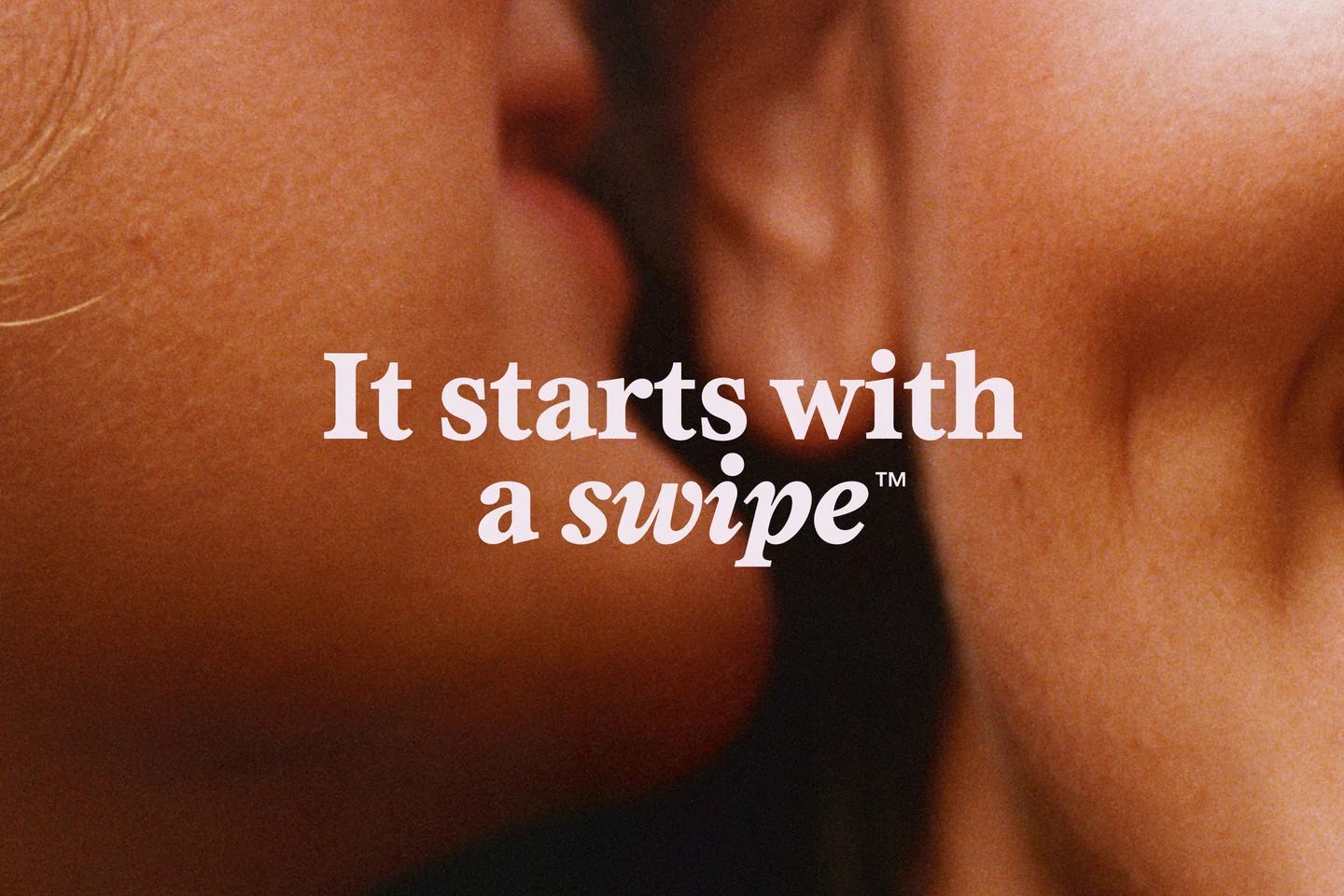
Tinder’s first rebrand in nearly a decade channels the voice of a dating columnist
The interview discusses Tinder’s rebrand, especially its new verbal and visual identity. Its voice is modeled on a witty, empathetic dating columnist—a “wise older sister” who offers advice from experience. Visually, Tinder sharpened its flame logo, introduced an all-caps wordmark and bold serif typeface, and expanded its color palette to reflect the varied emotions of modern dating while appealing to Gen Z.
Ragged Edge rebrands AI notepad Granola with a co-founder’s handwriting and a deliberately imperfect logo
Ragged Edge bypassed rigid corporate aesthetics to rebrand AI notepad Granola. Embracing the “messiness of work,” they utilized a co-founder’s handwriting and an imperfect, sketched logo, driving record downloads and helping secure $125 million in funding.Welsh National Opera unveils rebellious rebrand
Welsh National Opera partnered with design studio Bwtîc to create a progressive, bilingual identity. Drawing inspiration from a 1946 promotional poster, the new system places Welsh and English text in equal, parallel vertical forms alongside a flexible outer “O” framing device.German energy supplier Meteoric unveils sci-fi inspired rebrand
To differentiate from opaque traditional utilities, German AI energy platform Meteoric (formerly Zeus Energy) worked with agency How&How. The rebranded identity relies on cinematic, Kubrick-inspired science-fiction visual codes, highlighting is as an transparent, out-of-this-world alternative.Studio Kiln brings motion-first thinking to BAFTA’s new identity
Studio Kiln introduced a motion-first visual identity for the BAFTAs. Instead of using literal gemstone graphics, the studio animated shimmering 2D particle fields to visually represent the journey of creative ideas “from raw to refined” across four distinct annual award categories.Autism Association of Australia launches transformational rebrand developed with FutureBrand
FutureBrand delivered a pro bono rebrand for Autism Awareness Australia, renaming it the Autism Association of Australia. The new name, messaging, and visual identity reflect a deep strategic shift from simply raising awareness to actively leading structural, political advocacy.

Who Really Wins the Summer of Sport? Official Sponsors or Unofficial Brand Activations?
From fan activations to cultural moments, brands are finding new ways to compete beyond official sponsorships. We asked three branding experts what it takes to stand out.
How Adidas is leaving its mark on the World Cup
Adidas prepared for this summer’s World Cup for nearly a decade, executing an expansive media campaign that combined star-filled video spots with massive physical activations, including floating a giant, 3D statue of winger Lamine Yamal down New York’s East River to capture social media conversation.Heinz Arabia World Cup Campaign Shows Its Bottles Are Too Familiar to Hide
During the World Cup, non-sponsor brands have logos blurred. Heinz Arabia turned this censorship into a creative asset with its “Heinz Tapeover” campaign, covering its ketchup bottles with black tape to prove that the silhouette is so distinctive it remains immediately recognizable without a logo.
‘The Wheel’ Turns Granada Into a Meditation on Slowing Down
Cervezas Alhambra expanded on its 15-year “no rush” brand platform with its poetic campaign, “The Wheel.” An analytical assessment shows how the brand uses performance art in historic streets as a visual metaphor to challenge fast-paced modern consumption, encouraging mindful, slow-paced brand interactions.
OpenAI’s GPT-Live Gets the Grandma Test in New Campaign
OpenAI introduced its GPT-Live voice models using a playful campaign featuring three grandmothers. By putting the technology through everyday conversational tasks like planning a trip, the brand visually demonstrates natural speech rhythms, interruptions, and real-time response times.Farmers Insurance flips its jingle and goes all-pink in rebrand
Farmers Insurance launched a major refresh to stand out from competitors. While adopting an all-pink color palette, the company preserved its high-equity 2009 jingle but flipped the lyric from “We Are Farmers” to “You Have Farmers,” changing the statement into an active customer-centric benefit.

Nowstalgia: The smartest brands are building for memory
While marketing departments accelerate AI asset creation, consumers are growing more distrustful of synthetic imagery. Successful brands are leveraging “nowstalgia,” using shared cultural memory, rituals, and real human faces, such as BEVEL’s choice of actor Larenz Tate, to cultivate authentic trust.The Age of Validation Branding: Moving Beyond Identity to Belonging
Modern consumers evaluate brands based on what a brand says about them. Audiences easily spot performative social stances and trend-chasing; real brand connection requires moving away from seeking external validation toward securing deep, shared cultural belonging.Gen Alpha Doesn’t Hate Brands. They Just Expect More From Them
A strategic panel discussion reveals that Gen Alpha is highly adept at filtering out polished, disingenuous commercialism. Growing up around AI-generated media, these young consumers actively bypass performative ads, demanding deep product honesty, societal care, and real transparency from brands.What the Starbucks Korea Crisis Teaches Marketers About Cultural Risk
Starbucks faced intense backlash in South Korea when its “Tank Day” promotion clashed with the anniversary of the 1980 Gwangju massacre. The incident demonstrates that global brands must integrate localized cultural and historical context assessments directly into campaign quality assurance systems.Disney’s New ‘Moana’ Is Dividing Fans. There’s a Big Branding Lesson in That
The divided reaction to Disney’s live-action Moana remake offers a clear branding lesson. In times of consumer economic strain, relying heavily on cherished past intellectual property can read as a lazy cash grab unless brands add fresh, meaningful value to the nostalgia.

How Adobe’s CMO is preparing for AI-driven brand discovery
Adobe’s chief marketing officer discusses how the widespread adoption of generative AI interfaces is fundamentally upending traditional search. Marketers are forced to restructure teams, rewrite performance metrics, and rethink how brands are surfaced in natural language conversational queries.AI Doesn’t Understand Your Brand: Why Foundation Models Distort Logos, Replace Fonts, and What Enterprise AI Must Do Instead
This article analyzes why standard foundational AI models distort trademarked visual elements like logos and custom fonts. It highlights the urgent technical requirement for enterprises to build structured systems that accurately protect and govern brand identity across AI outputs.

How Brand Owners Should Treat Green Claims After EmpCo Directive Takes Effect
The EU’s EmpCo Directive introduces bans on generic greenwashing claims, explicitly covering brand, company, and product names. Registered trademarks are no longer shielded, meaning labels like “eco-friendly” or “green” must be backed by official sustainability schemes or verified credentials.EU rules may trigger mass destruction of products
Analytical scrutiny of the apparel industry reveals that strict EU EmpCo regulations and German anti-greenwashing laws may force brands to destroy stock carrying vague, unverified claims like “climate neutral” or “eco-friendly” to avoid heavy legal penalties by late 2026.Lennon Group’s New Paper Reveals Why the Brands Earning the Most Trust Aren’t Running Better Campaigns - They’re Being Better Neighbors
Lennon Group, a HumanKind independent creative collective based in the Philippines, released a practical guide addressing the 20-point gap between brand purpose statements and genuine societal action. Research shows the most trusted brands do not rely on polished marketing platforms; instead, they embed themselves within the local neighbor communities they serve.Crocs says its clogs are 25% ‘bio-circular,’ but some pairs may contain no plant-based material
An analytical look at Crocs shows the brand facing public scrutiny over its “25% bio-circular” claim. Because they use “mass balance accounting”—mixing plant waste with fossil fuels during production—individual shoes may contain zero plant material, highlighting a potential regulatory and brand trust issue.

Interbrand Appoints Claire Morris and Simon Kearney to Strengthen North American Leadership and Global Client Partnerships
Interbrand expanded its North American leadership team by appointing Claire Morris as Senior Partner, Client Relationship, and Simon Kearney as Senior Strategy Director. The strategic additions aim to deepen global brand partnerships and navigate corporate business transformation.Colle McVoy Named Brand Strategy Partner for Allegiant Following Sun Country Acquisition
Allegiant has appointed agency Colle McVoy to lead its strategic brand integration following its acquisition of Sun Country Airlines. The challenge highlights how companies must balance the preservation of local customer trust with clear transitional branding during large-scale mergers.OK COOL Elevates Benjamin Arnold to First Global CEO
Global creative agency OK COOL appointed Benjamin Arnold as its first-ever global CEO after he scaled the agency’s North American footprint. The move signals a deeper integration with the Residence creative network while strengthening its model of cultural brand building.
Thanks for reading until the end! We’d love to read your thoughts and feedback in the comments of this Substack newsletter.
Your Team at The Branding Journal www.thebrandingjournal.com
No posts
Comments
Nothing yet. Say the first thing.
Sign in to join the conversation.