
Welcome to the night edition of our weekly roundup of branding news, thought leadership, and insightful articles on brand strategy.
Each week, we curate and summarize the most relevant stories from the branding industry, so you can stay informed without having to search for them yourself. Enjoy!

Will Glossier’s “I <3 NY” balm dotcom kicks off its comeback?
Under new marketing leadership, beauty brand Glossier is initiating a strategic turnaround following years of declining market share. The campaign uses Milton Glaser’s iconic I <3 NY logo to celebrate its roots while pivoting from clean-girl minimalism to unpolished consumer reality.Founders Makers reimagines Hi*Ball for the UK market
Transatlantic expansion requires local adaptation. To launch American seltzer brand Hi*Ball in the UK, agency Founders Makers rebuilt the brand from the ground up, avoiding the word seltzer on packaging to carve out a unique home in a crowded category.
Luxury Meets Mass Market: GU Bets on Designer Appeal for $18 Denim
Uniqlo sister brand GU is employing high-end design leadership to pivot away from fast-fashion perceptions. By appointing former Marni director Francesco Risso, the brand aims to inject luxury-level credibility into its affordable, mass-market apparel line.Turning Sunscreen Into a Lifestyle Brand: Lessons from Roy Fleeman
Sunscreen pioneer Vacation shifted a clinical necessity into a coveted lifestyle brand. VP of Design Roy Fleeman explains how the company uses sensory branding, strategic packaging inconsistencies, and broad nostalgia to build a highly collectible and highly shareable identity.Windsorborn wins Police Bank account; unveils new “Here for our own” brand platform
Member-owned Police Bank launched a targeted repositioning focused on the specific life stages of law enforcement families. The strategy leans on officer and community illustrations to emphasize a commitment to service that differentiates them from major commercial banks.
“I spent a few minutes this week scrolling through the LinkedIn company pages of a dozen B2B startups I admire. Most looked abandoned. A product update here, a hiring post there, and very little else. The engagement matched the emptiness.
Then, I clicked into the founders’ personal profiles. That’s where the companies actually lived. Real opinions. Real debates. Real numbers. Real audiences that respond.”
Why Personal Branding Is No Longer Optional For Founders In 2026
If you’re a founder who’s serious about growth, building a personal brand is no longer optional or a "nice-to-have." In 2026, a strong, consistent personal brand has the potential to directly affect your company’s bottom line.

This marketer thinks brands should stop letting dashboards make decisions
Blair Pfander, VP of Creative at infant formula brand Bobbie, criticizes hyper-optimized creative pipelines that result in sterile content. By rejecting sanitized category tropes in favor of messy, emotionally honest parenting realities, Bobbie succeeded in building deep, authentic brand equity.
The Key to Building More Durable Brand Relationships
To build durable consumer bonds, brands should transition from short-term sponsor activations to organic integration within daily healthy habits. Leaders from Strava and Starbucks highlight how rewarding consumer rituals drives deeper engagement than typical impression-based ad campaigns.
Why brands have swapped competing for co-branding
Why brand collaborations are booming in 2026, what makes them succeed, and the opportunities they create for creatives.
What Happens With Speed and No Center
Reflecting on the lightning-fast relaunch of the Rolaids brand, strategist Nate Challen warns against prioritizing product execution over core equity. While launching seventeen SKUs in nine months, Chattem treated J&J’s classic brand as a mere trademark rather than a living repository of consumer memory.Play-Doh enters “home decor space” with flower-making kit for adults
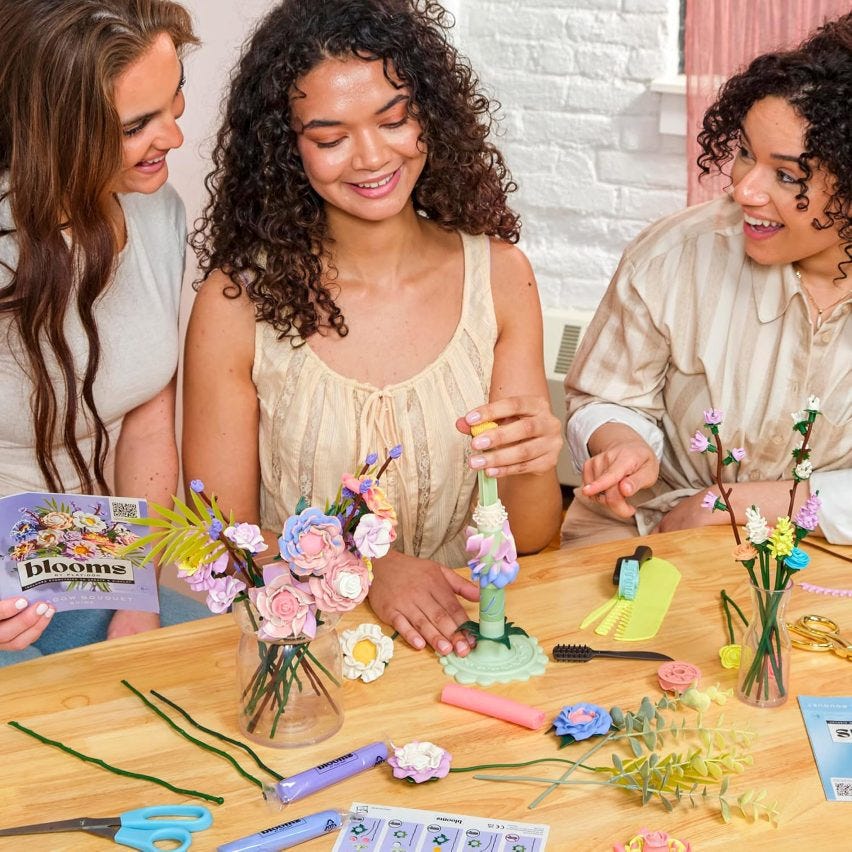
Hasbro has launched Blooms by Play-Doh, its first adult craft and home-decor range, featuring kits for making realistic, scented flowers with moulding tools, stems, leaves and vases.
The finished flowers can be preserved for months with a spray, targeting adults seeking creative, nostalgic ways to relax and reduce stress.Lufthansa Group evolves Loyalty Program Miles & More into unified loyalty brand
Moving toward closer group alignment, Lufthansa will rebrand its loyalty program to Lufthansa Group Miles & More by late 2026. The shift establishes a single loyalty system designed to build consistent branding across multiple member airlines.

Coca-Cola sharpens identity with global design system built for scale
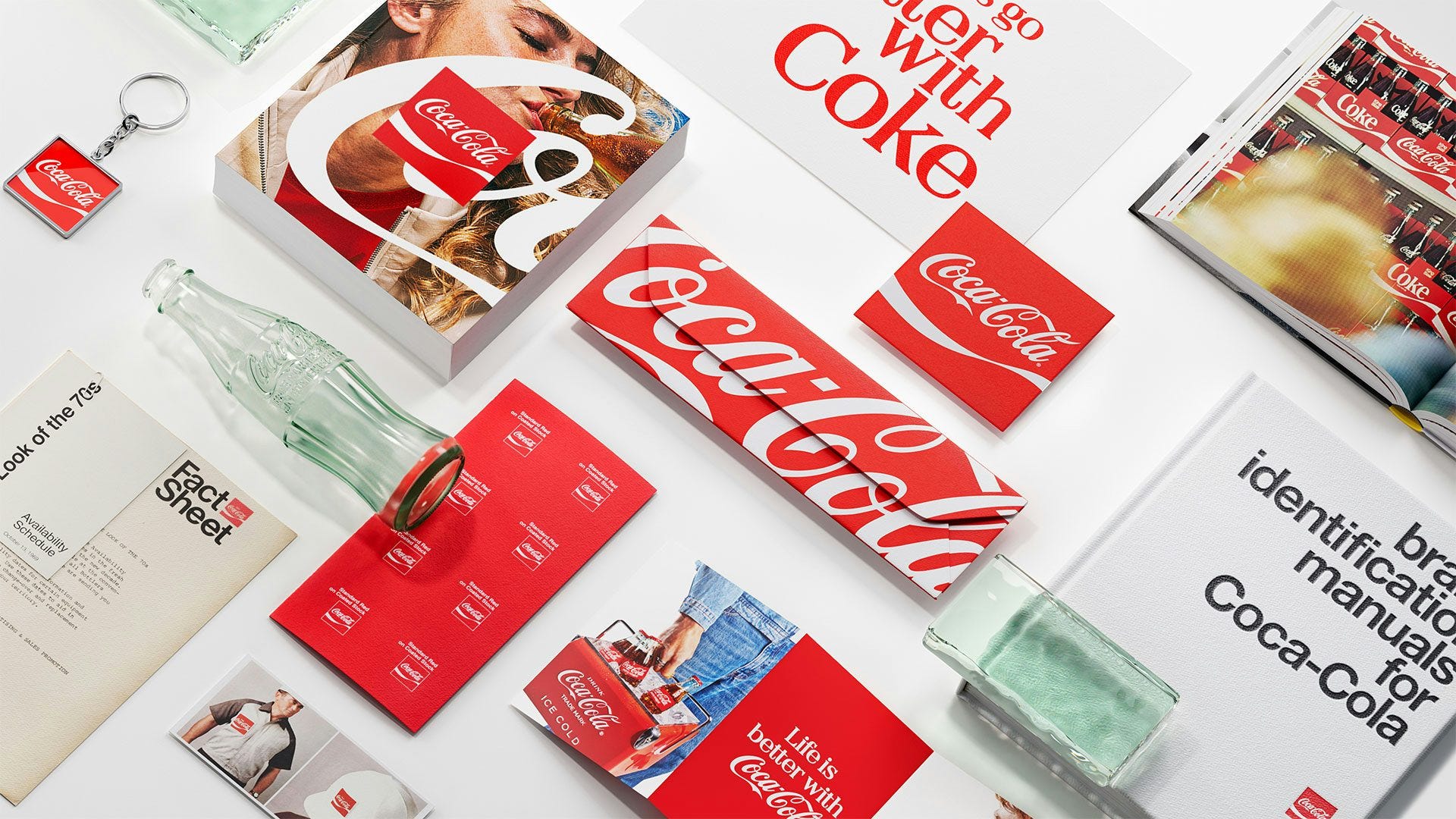
Under the creative direction of JKR, this global identity update refines Coca-Cola’s iconic Spencerian script, Dynamic Ribbon, and color scheme. The unified system aims to eliminate global brand inconsistency across its packaging and retail environments in 200 markets.Inside Wolves of Tokyo: the design lessons behind London’s new Japan-noir restaurant
Design studio Run for the Hills utilized a shared-studio approach to design Wolves of Tokyo, integrating visual branding and interior layout concurrently. The process demonstrates how keeping graphics and physical design under one roof ensures a unified hospitality experience.BrandOpus avoids bread tropes for newly formed Hovis Bakeries corporate identity
Following Allied Bakeries’ acquisition of Hovis Group, BrandOpus built a corporate identity around Elemental Power. By rejecting common category tropes like wheat sheaves or sunrises, the visual system uses four abstract graphic elements to unify both national institutions.
20(Something) carves out Latin-inspired rebrand for Open Point
Agency 20(Something) designed a unified masterbrand for civic tech company Open Point, fusing its dual engagement tools. The typography takes inspiration from ancient Latin letter-carving chisels, projecting public trust and democratic authority without resorting to cliché icons.San Francisco Signal rebrand marks new era for women’s volleyball
Designed by 72andSunny, the new brand identity for League One Volleyball’s San Francisco team is built on community feedback. The custom geometric typography draws on iconic Art Deco architecture, and features a literal dividing line to represent a transmitted signal.FutureBrand Rebrands Autism Association of Australia
FutureBrand delivered a pro-bono strategic overhaul, renaming the peak body to transition from standard public awareness to policy advocacy. The identity features warm, hand-drawn typography and letterform-based pictograms to establish a clear human voice in a fragmented support system.
How Thirst redesigned M&S’s beer aisle, from stamp-inspired lagers to bold, flavour-led craft
Design agency Thirst revamped Marks and Spencer’s private-label beer range, moving away from generic visual cues. The continental line incorporates detailed vintage postage-stamp illustrations, while the craft selection visualizes the distinct heritage of its local brewing partners.Samsara Evolves Brand to Reflect Next Decade of Scale in Physical AI
Telematics leader Samsara introduced a partner-focused brand refresh developed alongside physical operators. The identity draws on the aesthetics of field environments, utilizing high-visibility yellow, a redesigned owl icon, and a custom typeface inspired by engineer handwriting.

Hilary Duff, ‘Cash Cab,’ and branded newspapers: How Ladder is communicating ‘stronger, not smaller’ to women
Strength-training app Ladder launched a powerful female-facing campaign using the tagline Stronger, not smaller. Partnering with actor Hilary Duff, the campaign challenges toxic body trends and TikTok misconceptions through highly authentic athletic messaging.

The iconic ‘Fearless Girl’ statue is becoming a brand
State Street is expanding its temporary Fearless Girl campaign asset into a permanent, multi-channel global platform. By launching dedicated social channels and digital environments, the company is building a broader advocacy system focused on female empowerment and institutional equity.‘We’re the official nipple protector’: how Unilever lets communities rewrite the brief
Unilever’s Vaseline capitalized on real marathon runner behavior by securing a licensing sponsorship as The Official Nipple Protector. By elevating authentic user behaviors rather than broadcasting standard ads, the brand deepened community cultural relevance and creator-led trust.

How Brands Can Create Meaning in the Age of AI
Large-scale generative AI tools have made execution cheap but distinct meaning scarce. In response, luxury heritage brands are investing heavily in showcasing their historical archives and craftsmanship to secure long-term differentiation, consumer trust, and emotional resonance.The age of ‘good enough’ is branding’s biggest problem
Generative design tools make acceptable work easy to produce, which means middle-of-the-road safety is today’s riskiest branding strategy. To build genuine equity, Mother Design’s Kirsty Minns argues that brands must avoid polished normality to save themselves from being easily ignored.Study reveals consumer preferences for AI packaging design
A consumer study of 3,600 buyers shows that hybrid human-AI design processes outperform pure human or pure AI-generated packaging on every test measure. Consumers recorded a high willingness to pay a premium for hybrid work, whereas pure AI struggled to gain trust.

For Canada Goose, the Next Phase of Sustainability Is All About Data Wrangling
While many luxury brands resort to greenhushing to avoid regulatory scrutiny, Canada Goose is choosing raw data disclosure. Highlighting its emission cuts, the company’s detailed sustainability documents aim to build systemic stakeholder trust in its environmental commitments.Supply Chain: The Ongoing Probe Into ‘Made in Italy’, Explained
Global supply-chain investigations exposing worker exploitation among top Italian luxury subcontractors have threatened the region’s historic brand equity. Brands are now forced to rebuild downstream transparency to protect the superior quality and ethical prestige in Made in Italy labels.How clean energy is becoming AI’s new marketing advantage
As AI’s immense electrical footprints undergo public scrutiny, tech brands are turning their local renewable infrastructure into front-facing strategic assets. Demonstrating green hosting and hourly carbon matching is transforming back-office procurement into a powerful driver of enterprise trust.53% of Green Claims Won’t Survive the EU’s New QR Code Test
Europe’s Digital Product Passport registry will make transparency-based QR codes legally mandatory. Brands must digitize their complete environmental histories, turning product packaging into a verified lookup directory that directly challenges superficial greenwashing.Brands are embedding social impact into products and campaigns
Modern brands are integrating purpose into daily purchases, rather than separating corporate philanthropy. Case studies from Lidl, Zuke’s, and e.l.f. Cosmetics illustrate how embedding social action directly into product touchpoints drives deeper consumer trust and engagement.

Where Does Design Reside Now?
The traditional design department is dismantling as tools like Canva, Figma, and generative models decentralize asset production. Under this shift, designers are transitioning from asset creators to systemic rule-builders, managing brand governance, templates, and technological orchestration.Designworks Brings Global Experience Into Senior Leadership Roles
New Zealand-based design consultancy Designworks expanded its regional strategy and design capabilities. By bringing home two seasoned expatriates, Head of Strategy Anna Gregory and Creative Director Vinesh Kumar, the agency intends to redefine local brand transformations.
Thanks for reading until the end! We’d love to read your thoughts and feedback in the comments of this Substack newsletter.
Your Team at The Branding Journal
www.thebrandingjournal.com
No posts
Comments
Nothing yet. Say the first thing.
Sign in to join the conversation.