
Starting a beauty brand requires a healthy amount of delusion. I mean that affectionately.
You have to believe that in an industry overflowing with exceptional founders, perfectly formulated products, and marketing budgets that will make you physically ill (or cry of joy if you’re me), that there’s still room for your idea. Your cleanser, your candle, your fragrance, your lipstick, or your body oil deserves to exist alongside everything that’s already fighting for attention.
Truthfully, I hope you do believe that. Indie beauty has always been propelled by people willing to see possibilities that everyone else overlooked.
However. Somewhere between having the confidence to start a brand and the pressure to build one publicly, I think we’ve developed a bit of a main character problem.
Founder visibility has never mattered more so I know some of this might be kind of confusing, but hear me out. Yes, consumers want to know who’s behind the products they’re buying. They care about your values, perspective, taste, BTS of the creative process, and yes, occasionally what you’re wearing while packing orders.
The issue isn’t visibility. But what happens when visibility becomes the product? That’s not the move, babes.
The line between creator and company has never been blurrier. If you’re launching with an audience that’s already invested in your life, you’ve solved one of the hardest challenges in business before your first shipment ever leaves the warehouse. Community is an extraordinary advantage. I’d even argue that for many brands today, it’s one of the strongest predictors of early success.
But community isn’t the same thing as commercial value.
And followers aren’t the same thing as product-market fit.
I spend most of my days helping beauty founders build brands, so I understand exactly how this happens. Building a company is deeply personal. You’re pouring your savings, weekends, and quite possibly your entire emotional stability into something that exists only because you decided it should. Of course it feels like your story. And it is, but internally.
The hard part is remembering that your customer isn’t shopping to become part of yours. They’re building their own, too.
That’s the distinction I wish more founders spent time thinking about.
Before anyone misunderstands me, again, this isn’t an argument against having a strong POV. Quite the opposite. The beauty industry has never been more crowded, and bland branding has an incredibly short life expectancy. Consumers are looking for conviction. They want brands with taste and founders who know what they stand for, who can edit ruthlessly, and make deliberate creative decisions instead of chasing whatever trending aesthetic happened to perform well on TikTok that week.
Please, give me a brand with opinions. Give me a founder who has impeccable taste. Give me a world so thoughtfully constructed that I immediately understand why it exists. Just don’t mistake that world for the destination.
Your point of view is the lens through which customers experience the brand. It isn’t supposed to block the view.
Beauty has never really been about the products themselves. I know, it’s kind of ironic to say in an industry that literally manufactures products, but stay with me.
Nobody buys a fragrance because they enjoy owning another glass bottle. I mean, maybe they do. There’s collectors of all kinds in this world and I personally have a thing for pink depression glass. But typically, they are not buying for the glass and are more so investing in the version of themselves that fragrance seems to belong to.
The bottle simply becomes the vessel, but the story was always theirs.
That’s why I think some celebrity brands succeed while others disappear almost as quickly as they arrived.
Celebrity can absolutely introduce consumers to a product. Awareness has never been easier to manufacture when millions of people already know your name. Depth is considerably harder.
Britney Spears’ Curious wasn’t commercially iconic simply because Britney Spears was iconic. Obviously, she is. But had it smelled objectively terrible, I promise you we wouldn’t still be talking about it two decades later. It became part of people’s lives because it was genuinely wearable, which earned repeat purchases. It became someone’s first fragrance and may even be a scent they still buy for the nostalgia of it all.
I’m fairly neutral on Billie Eilish, but I own her perfume because I’m a vanilla girl and, objectively speaking, it’s a good vanilla fragrance. Will I buy again? Maybe. I don’t know. I get sent a lot of perfume. But I’ll give Billie her flowers on this one.

Celebrity opened the door. The product earned the room.
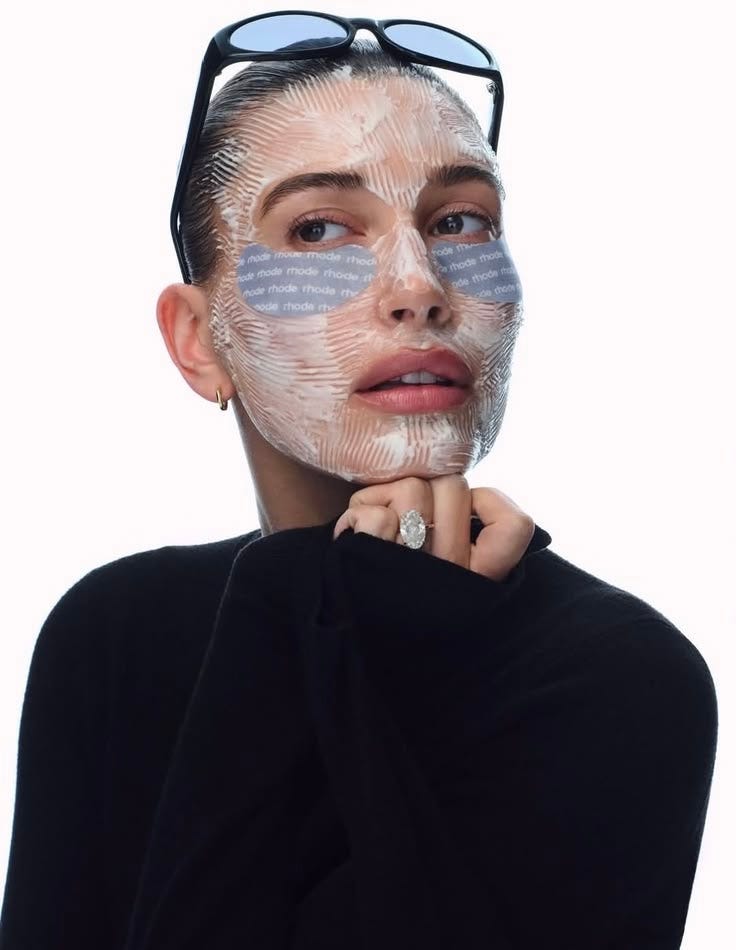
Rhode tells a similar story, just through a different lens. Yes, Hailey Bieber’s influence deeply accelerated awareness. It would be silly to pretend otherwise. But the reason consumers stayed was because the products delivered on the promise. The finishes, textures, formulas, and overall aesthetic felt like a natural extension of what people already admired about her approach to beauty. Rhode has been both aspirational and coherent from day one.
Coherence is important. And I do think we’ve entered an era where some brands are accidentally becoming more invested in documenting the journey of building a business than building one. Not that you can’t do both, but hold on.
Vlogs, podcasts, newsletters, diaries, GRWM’s. None of these things are inherently bad. In fact, I encourage plenty of that content myself. But only when it’s woven throughout the rest of the story. Don’t lose sight of that part.
The problem arises when the founder’s personality becomes more developed than the product strategy. When consumers know your morning routine but couldn’t tell you why your formulation is different, like, that’s a problem.
If your launch campaign teaches me more about your apartment than your ingredient philosophy then be a creator, not a founder. Or keep channels distinctly separate if you have the capacity to do it all.
Beauty is a wonderfully emotional business. It’s also still a business.
And I think that’s worth remembering, particularly right now. The economy is brutal atm. Consumers are still spending, but they’re spending with intention. They’re choosing between your product and dozens of others that are also beautifully branded, thoughtfully formulated, and founded by genuinely lovely people. Existing isn’t enough anymore. Looking expensive isn’t enough anymore. Having a gorgeous Instagram grid certainly isn’t enough anymore.
This isn’t the time to be full delulu. Dream, but dream in the way a Virgo or a Capricorn would. Creative mixed with logic and strategy.
There will always be room for new indie brands. Honestly, I believe that more than ever. Consumers are actively looking for fresh perspectives and brands that feel distinct from the sea of sameness that’s settled over much of the industry.
Which means creating something that genuinely improves someone’s life, however small that improvement may seem. Your candle makes Sunday Scaries a bit less intense and it’s part of a self-soothing ritual. Your lipstick is the perfect interview shade and boosts confidence to secure the new job. Maybe your cleanser is the first product that’s ever worked for their reactive skin. Or your particular fragrance is the one they will forever associate with the summer they fell in love.
Those are the moments that matter. It’s not about you. Your job is to make your customer’s story richer and fit into their very real lives as is.
Ironically, I think that’s what separates brands that become iconic from brands that simply become popular temporarily.
The brands that last will weave themselves into people’s routines, relationships, milestones, heartbreaks, celebrations, and ordinary Tuesday mornings. What they’re not doing is asking its audience to orbit around a founder.
These brands are memorable precisely because they stop asking to be admired and start becoming useful, beautiful, comforting, exciting, or simply dependable.
You need just enough main-character energy to believe the world needs what you’re creating. But you can’t expect your customer to make you their main character too.
They already have one and it’s not you. It’s them. As it should be.
If you’ve built your brand well enough, you’ll have the privilege of becoming part of their story instead. That’s why we do what we do.
No posts
Comments
Nothing yet. Say the first thing.
Sign in to join the conversation.