

Nintendo is one of those rare companies respected both for its products and for the people who make them.
Its unconventional thinking and “blue ocean” strategy have been discussed at length since the legendary Hiroshi Yamauchi transformed a century-old card maker into the gaming powerhouse it is today. I even talked about his way of thinking in a previous article if you are curious about it:
How an Ancient Board Game Shaped Nintendo’s Boldest Leader
·
September 3, 2025

There's a Chinese board game that dates back over 2000 years. It's older than chess and most written languages, yet it continues to influence how some of the brightest minds approach competition, including a well-known video game company famous for its iconic IPs, blue ocean strategies, and creative ways to work with withered technology.
But as much as we celebrate creative minds like Shigeru Miyamoto, Eiji Aonuma, and Masahiro Sakurai, you’d be hard-pressed to name a better leader at Nintendo than Satoru Iwata.
Iwata inspired people because his leadership never felt theoretical. He came up through the trenches and never forgot what those felt like. That empathy shaped his decisions in the most caring ways possible. He’d pick up a debugger when a schedule slipped, translate between creatives and executives when a project deadlocked, and shoulder the blame (and a pay cut) when the organization stumbled. There’s a lot of people out there ready to share how great Iwata was, and most of what we hear is nothing less than inspiring.
If you lead or aspire to become a leader, there’s a lot to learn from how Iwata worked with colleagues. And after revisiting some of his most telling moments, I distilled five lessons every leader can use to become better in the fine art of inspiring others.
But before we dive in, let’s analyze his most iconic quote first.

We can’t discuss Iwata’s lessons without naming what motivated most of his actions: his identity.
He made it clear to the world when he opened his GDC 2005 keynote with a line that became legendary:
“On my business card, I am a corporate president. In my mind, I am a game developer. But in my heart, I am a gamer.”
More than a slogan, it was a declaration of values to his audience and to himself. Iwata knew who he was and never lost sight of it, carrying that simple, powerful philosophy from his earliest days in the industry to his final years leading one of the world’s most influential companies.
At his core, he was a gamer. That passion led him to become a developer, and eventually a president. Understanding this is key to why his teams cherished him: he kept a maker’s mindset while operating at executive altitude, and people felt the difference.
If you want to know your essence just like Iwata did, try this exercise:
Write your own three-part identity line. What do you do (title), how do you think (craft), and what do you care about (heart)?
Repeat it to yourself a few times until you’re comfortable with the answer.
When you feel confident enough, share this with your team or with people you care about.
Always keep in mind that no matter what values you cherish or what passions you pursue, people will always place their trust in those who have clear and consistent priorities.
With that foundation set, here’s how Iwata made his identity visible in practice.

When Pokémon Stadium needed its Game Boy battle logic running on Nintendo 64, there was no specification document. All the team had to work was raw source and not much else.
Iwata, then president at HAL and a board member at Creatures Inc., studied the original code, understood how everything connected, and ported the battle system in about a week so the team could move forward. But that wasn’t the first time he did that: when the Ape Inc team had trouble during the Earthbound creation, Iwata was capable of taking their assets and polish them to reduce the development time from 2 years to six months.
“What kind of company president is this?” his colleagues joked. It can be a cheeky comment, but it hid a truth: he refused to be a bystander when a team was in trouble.
And those wouldn’t be the final occasions he would do that. Years later, with Super Smash Bros. Melee in danger of missing its date, Iwata (by then Nintendo’s General Manager of Corporate Planning) quietly went to HAL as acting head of debugging. For three weeks he reviewed code, fixed bugs himself, parsed Nintendo’s giant bug reports, and directed fixes so Melee could ship on time. He called it the last time he worked “in the field,” but the message to colleagues was permanent: your deadlines are my deadlines; your blockers are my blockers.
Even as an executive, Iwata kept writing code at night until age 40. He understood that personal connection to the craft is a renewable source of empathy: it tunes you to what “hard” actually means and makes your estimates, trade-offs, and deadlines more humane. When he finally stepped away from the editor, he didn’t abandon the programmer’s mindset, which is why he could drop into Earthbound, Pokémon or Melee and be useful when the team needed him the most.
How leaders can apply this:
Keep a rescue skill: Maintain one deeply practical skill (debugging, data analysis, forecasting, prototyping) so you can remove a blocker in a pinch.
Maintain a “craft hour”: Set a weekly session to practice your core craft. Leaders who keep a toe in the water give better feedback and set better goals.
Time-box interventions: When you parachute in, set a short window (e.g., 72 hours) to stabilize, then hand control back to the team.
Be explicit about intent: Tell the team you’re there to unblock them, not micromanage them. It preserves autonomy and turns a crisis into shared learning.

Beyond Stadium, Iwata also played a key role in the Pokémon franchise during its first Game Boy iterations, primarily overseeing translation efforts. He was responsible not just for developing tools for a seamless transition from Japanese to various other languages, but also for the systems and codes that enabled some of the most impressive features on those games.
During the overseas push for Pokémon Red/Green, he obtained the source code, analyzed it to recommend a localization approach, and coordinated with Nintendo so Game Freak’s small team could keep building Gold/Silver rather than stall under new work. That would be great on its own, but he went a step further when he wrote compression tools for Pokémon graphics so the team could be “greedy” with features on Gold/Silver without breaking the cartridge budget. If you were a child in the early 2000s who was thrilled to find out that you could explore the Kanto region in Generation 2, you owe a debt of gratitude to Iwata for making that happen.
We talk a lot about empathy in the corporate world, but Iwata practiced something even more actionable called tactical empathy. He used his strengths to reduce cognitive and operational load for partners, freeing them to pursue what only they could do.
How leaders can apply this:
Do translation audits: List where work dies in hand-offs (e.g.: engineering ↔ product, product ↔ publishing, HQ ↔ regional) so you can assign a “bridge owner” for each fragile interface.
Protect the sequel: When urgent side-quests (like a port, a rebrand, or a hotfix) threaten the main roadmap, explicitly carve out bandwidth, tools, or temporary talent so the team can guarantee that the core vision survives.
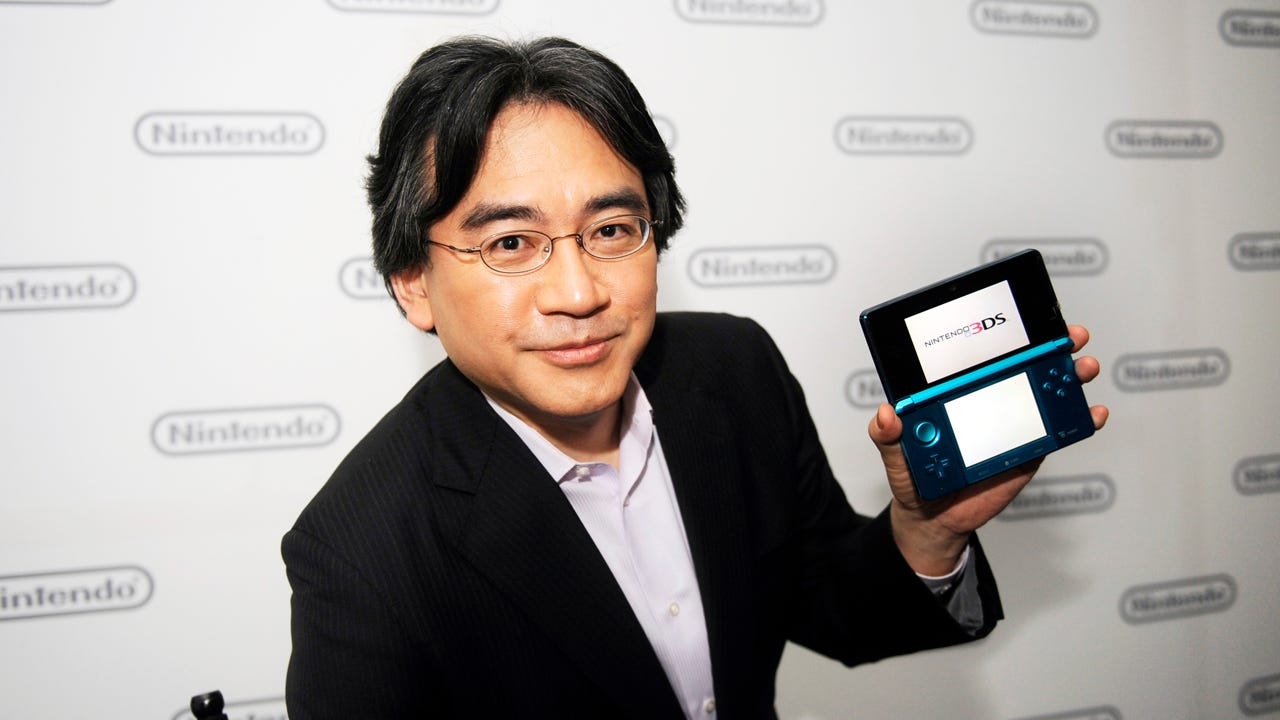
When the 3DS stumbled and Nintendo slashed its price, Iwata cut his own salary in half and reduced board pay rather than reflexively lay off staff. Later, during Wii U’s challenges, he repeated the gesture.
The initial thought for an outsider is that this pay cut must have significantly improved the situation. However, there’s the twist: after reviewing the balance sheets, one can conclude that it did very little to alleviate the problem. Despite this knowledge, Iwata moved ahead and agreed to a reduction in his salary.
Beyond symbolism, it was a policy statement. Short-term optics don’t beat long-term capability. In other words, skilled teams are harder to rebuild than balance sheets, and employees notice when a leader assumes responsibility in a way that shields the makers doing the work.
How leaders can apply this:
Own the downside publicly: When a bet misses, articulate what you will change (habits, cadence, capital allocation) before you ask others to change.
Adopt a layoff-last principle: Preserve core teams by cutting discretionary spend and executive comp first.
Institutionalize retros: Publish a “leadership retro” with decisions you’d repeat and those you’d redesign. Model the behavior you want to see in your teams.
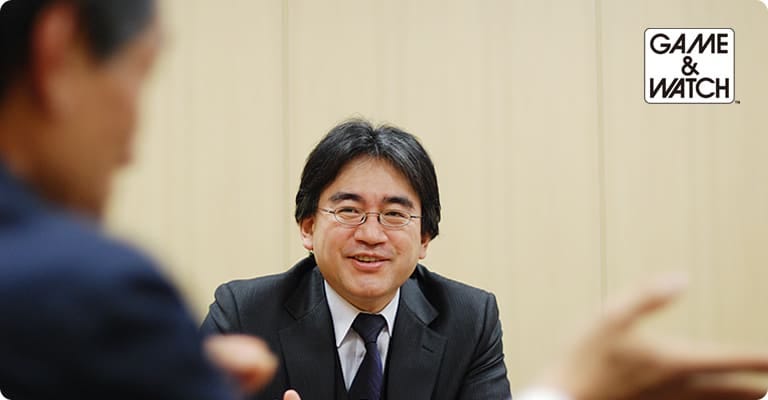
One of the things Nintendo fans miss the most about Iwata was his Iwata Asks interviews.
Despite sounding like corporate PR, those were far from a cheap marketing trick. On the contrary, they were valuable documents on how Nintendo’s teams solved problems and weighted trade-offs throughout the years. Most importantly, they showed the president asking maker-level questions and listening to them with the same level of curiosity Nintendo fans had.
Iwata Asks had a double effect on the company. For readers, the series demystified creation and brought them closer the people behind the games. For employees, it normalized cross-team learning and gave visibility to the craft itself.
Unfortunately, despite its success, this remains unusual among CEOs. It’s a move capable of build trust across functions and makes customers more empathetic to what they buy. It is a shame that this isn’t spread across other companies, especially with game makers. The industry would benefit from more of it.
How leaders can apply this:
Start an internal “Asks” series: You don’t need to make this public, but you can interview team members who shipped something hard and publish the conversation internally.
Rotate the interviewer: Let PMs, engineers, artists, marketers take turns asking leadership and peers. Curiosity scales faster than authority.

Following a philosophy that echoed Yamauchi’s, Iwata advocated a “blue ocean” approach that can be summarized simply by prioritizing fun over specs. That was executed it with the DS and Wii, broadening who games were for, but those were steps in a long-term strategy that spanned his entire tenure.
Starting at GDC 2005, he re-framed the industry’s purpose by stating that games are “fun for everyone.” Whether you agree with every Nintendo’s portfolio bet or not in the last decade, you can at least admit that his teams had a strong internal compass: accessibility, surprise, and new forms of play. If you analyze the period when Iwata led Nintendo, it’s clear that he stayed true to that path.
Not only that, unlike shareholders focused on the next quarter, he often weighed decisions against the next decade. His approach during tough times (prioritizing talent retention, investing in outreach, emphasizing fun) wasn’t always well-received, yet the internal teams remained committed to his vision, even during challenging periods like the Wii U era. Teams get more resilient when they can see how today’s sacrifices lead to future opportunities.
The fact that the Nintendo Switch became a massive success, a console he played a huge role in creating but sadly never got to witness its launch, speaks for itself.
How leaders can apply this:
Define the “for”: Not just the market, but the human permission your product offers (e.g., “for people who think this isn’t for them yet”).
Publish a “why we’ll still exist in 10 years” memo: Name three bets, three risks, three cultural habits that keep you adaptable.
Write two roadmaps: One focused on performance (KPIs, margin, velocity) and one for delights (surprise moments, first-time-user “aha,” playful details). If both are well aligned, you have a guaranteed recipe for success.
Tie short-term pain to long-term outcomes: if you’re pausing a project, show the R&D you’ll preserve, the customers you’ll still delight, and the skills you’ll grow.
Most of what we explored here are highly applicable to leaders in the gaming industry, but you don’t need to run a console company to adopt Iwata’s habits.
Here is some examples on how you can follow his philosophy in your daily routine:
In consulting: Be the partner who goes beyond slide presentations and explore the model itself. Sit with the analyst to remove a gnarly formula, then present the client-facing story that frees the delivery team to keep momentum.
In product: When legal or marketing pressure threatens to siphon your core team, spin up a vanguard that absorbs the load (like Iwata bridging Pokémon work) so the mainline roadmap survives.
In operations: Use downturns to invest in process improvements you can keep (like documented runbooks, better observability, clearer ownership) rather than reflexive headcount cuts that erase hard-won tacit knowledge.
In creative teams: Interview your own creators and publish their findings. It builds internal respect and external credibility simultaneously.
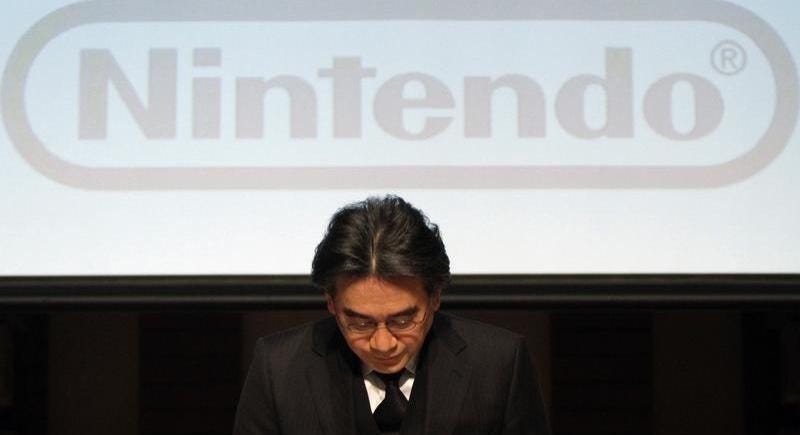
Satoru Iwata was a man like few other.
His colleagues described him as approachable, technically fluent, and unfailingly oriented toward shipping real things for real people. Not only that, he refused to just cheer from the balcony and often picked up a tool and join you on the floor. He didn’t waste precious time talking about customer centricity, but rolled up his sleeves and made a genuine effort to guide Nintendo around his fun for everyone motto, all while protecting people so they could keep creating the best games and consoles they could.
That combination of craft fluency + accountability + long-game clarity is a leadership pattern anyone can copy. Practice it consistently and your teams will give back by bringing you their hardest problems sooner, tolerating the honest misses, and believing that what what you’re building together is worth the sacrifice.
As I write this, it has been a decade since Satoru Iwata departed from us. In a landscape where financial obligations often overshadow the quality of the games we make and healthy margins get mistaken for true innovation, the void left by his “heart of a gamer” philosophy is still felt among us.
That is why I believe the best way to honor him is learn from the master and apply his lessons, one step at a time.
Thanks for everything, Iwata-san.
This post was a suggestion from Peter Monks, one of my favorite writers here on Substack. I already praised his work in the past, but I’m always glad to give him a shoutout. His analysis are honest, detailed and a joy to read, with his multi part recollection about Rare being a personal pick for me.
As for his request, I know he said I wasn’t obliged to write this post, especially knowing that a lot was said about Satoru Iwata and I was risking on repeating what everybody already said about him, but I really liked the idea to give my spin on his teachings. I hope I was able to deliver!
Comments
Nothing yet. Say the first thing.
Sign in to join the conversation.