
When President Trump signed the executive order creating a Strategic Bitcoin Reserve back in March 2025, it was treated as a landmark moment for the crypto industry: the U.S. government, for the first time, formally committing to hold Bitcoin as a national asset. Now, more than a year later, that plan is stuck in a much less exciting place than anyone expected buried in legal and bureaucratic questions about who is actually allowed to run it.
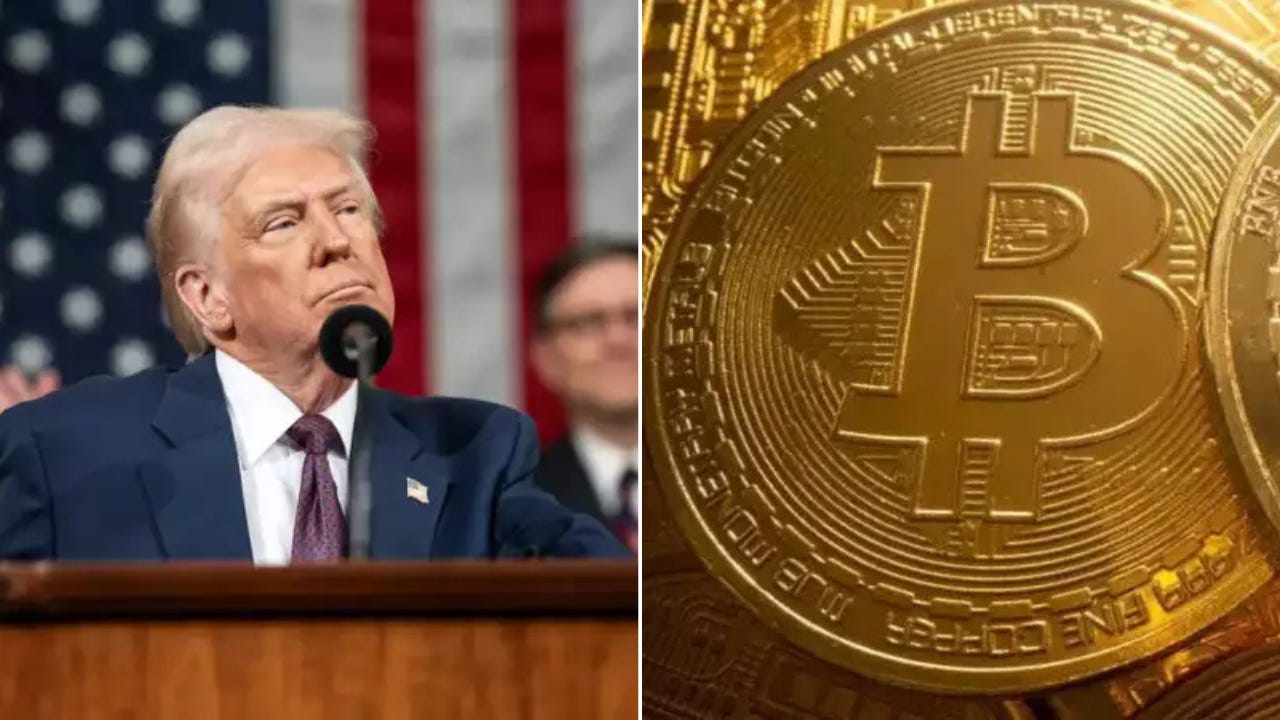
The idea didn’t come out of nowhere. Just days before signing the order, Trump had already announced plans for a broader “crypto strategic reserve” that would include not just Bitcoin, but other tokens like XRP, Solana, and Cardano. That announcement was controversial from the start. Many people in the crypto industry pushed back hard, arguing that tokens like XRP and ADA didn’t have the same level of decentralization or developer activity as Bitcoin and Ethereum, and didn’t belong in a reserve meant to represent the U.S. government’s most serious digital asset holdings.
Trump’s executive order narrowed the focus. It created two separate things: a Strategic Bitcoin Reserve, holding only Bitcoin, and a separate U.S. Digital Asset Stockpile, holding other cryptocurrencies the government already owned. Crucially, the plan was designed to cost taxpayers nothing. The Bitcoin funding the reserve would come almost entirely from coins the government already had in its possession, seized over the years through criminal investigations and civil asset forfeiture cases. At the time the order was signed, the U.S. government held roughly 198,000 BTC, worth about $17 billion at that point.
David Sacks, who serves as the White House’s AI and crypto policy adviser, described the plan as a way to treat Bitcoin as a long-term store of value, comparing it to Fort Knox, the highly secure facility where the U.S. keeps a large portion of its physical gold reserves. According to Sacks, the government would not sell any Bitcoin placed into the reserve. It was meant to sit there, permanently, as a kind of national savings account in digital form.
The order also gave the Treasury Department and the Commerce Department a joint assignment: figure out ways to acquire more Bitcoin for the reserve without spending taxpayer money. This was meant to be done through “budget-neutral” strategies, though the order didn’t spell out exactly what those strategies would look like in practice.
Fast forward to April, more than a year after the reserve was created. Patrick Witt, the White House’s top crypto adviser, told the public that a major update was coming. He expected a significant announcement about next steps for the reserve within just a few weeks.
Trump’s crypto donors likely called in a favor to get Trump to tease the possibility of allowing Trump accounts to buy Bitcoin by telling a reporter that he’s “become a big crypto guy.” Trump’s already made a killing off crypto, but hopefully he won’t rip off Trump accounts too.
— Peter Schiff
That announcement never happened. Weeks turned into months, and the promised update simply didn’t materialize. At the time, this was seen mostly as a delay — the kind of thing that happens often in government projects. But it’s now becoming clearer that the silence wasn’t just about timing. It reflects a deeper, unresolved problem inside the administration about how the reserve should actually function.
According to a Bloomberg report published this week, citing people familiar with the matter, the core issue isn’t whether the U.S. should have a Bitcoin reserve. That decision was made back in March 2025 and hasn’t changed. The real problem is much more technical: officials are still trying to determine whether the Treasury Department actually has the legal authority to manage the reserve in the first place.
This might sound like a small procedural detail, but it’s actually a significant issue. Government agencies can only operate within the powers Congress has explicitly given them, or that existing law allows. If Treasury’s authority to hold and manage a long-term Bitcoin reserve isn’t clearly established in law, any large-scale action it takes could be challenged, reversed, or tied up in litigation down the road. Getting this right matters not just for optics, but for the long-term legal durability of the whole program.
Partly because of this uncertainty, there have reportedly been internal discussions about moving oversight of the reserve away from the Treasury Department entirely, and placing it under the Commerce Department instead. Commerce Secretary Howard Lutnick was already named alongside Treasury Secretary Scott Bessent in the original executive order as jointly responsible for developing strategies to acquire more Bitcoin, so shifting more control to Commerce wouldn’t be a complete departure from the original structure. Still, no final decision has been made public.
Beyond the question of which department should be in charge, there’s an even bigger unresolved issue: whether the federal government can legally hold an asset as volatile as Bitcoin indefinitely.
This is where the comparison to gold starts to break down. The U.S. government has held gold reserves for well over a century, and there’s a deep, well-tested legal and financial framework around how that works. Bitcoin has no such history. It’s a fundamentally different kind of asset; it can swing dramatically in value over short periods of time, no government or central authority backs it, and there’s no long-established legal precedent for how a sovereign government should account for, audit, or manage this holding over the long term.
In other words, officials aren’t just asking “who runs this,” they’re asking “how do you even legally justify the government sitting on a highly volatile asset for years or decades without a clear framework for what happens if its value collapses, or what accounting rules apply?” These are the kinds of questions that typically get worked out well before a policy is announced publicly, but in this case, they appear to still be under active discussion more than a year after the reserve was created.
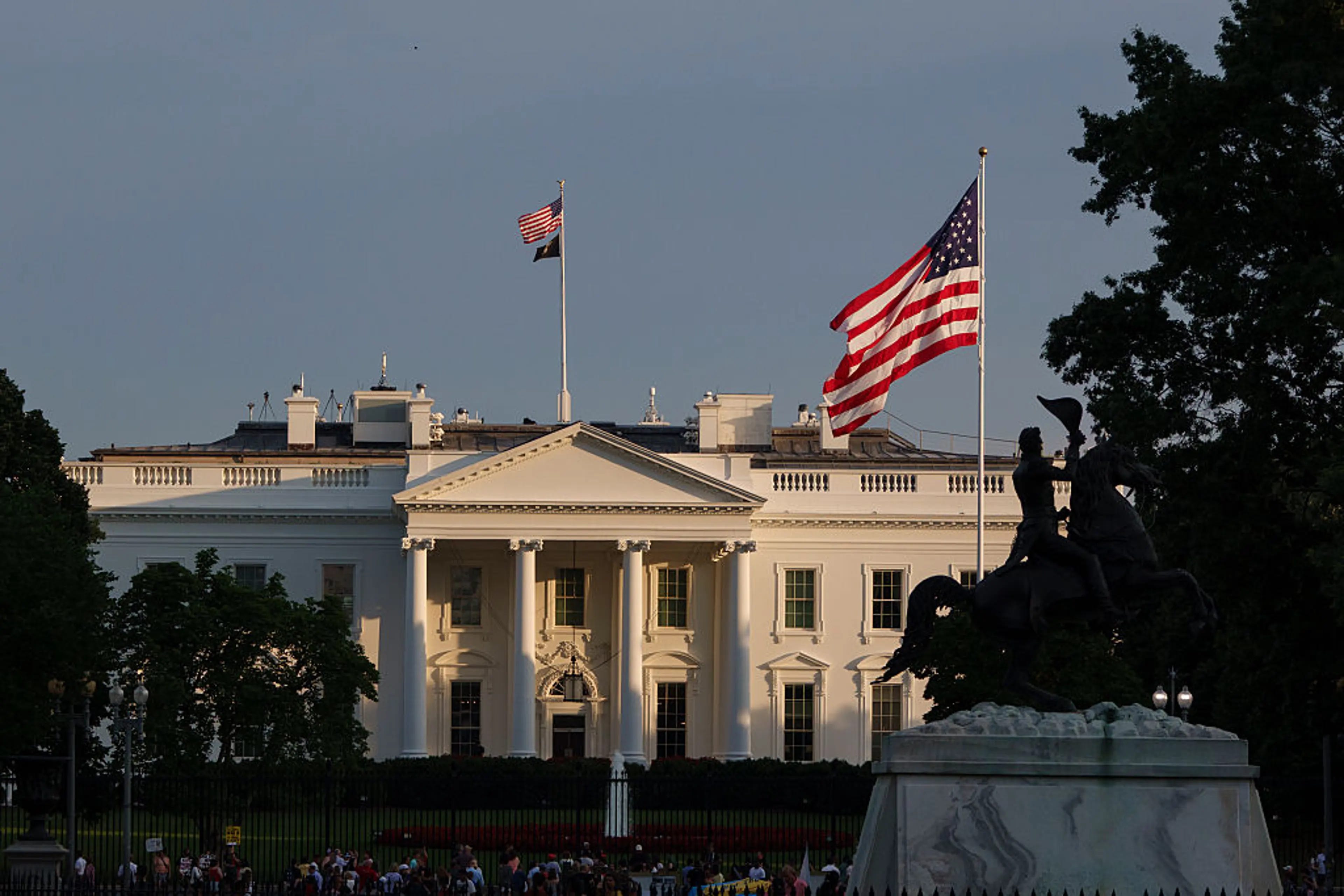
Asked directly about these reports, a White House spokesperson didn’t deny that these discussions were happening. Instead, the response was fairly broad. White House spokesperson Liz Huston said in a statement that President Trump campaigned on a vision of making America the global capital of cryptocurrency and other advanced technologies, and that the administration continues to evaluate the best structure for both the Strategic Bitcoin Reserve and the U.S. Digital Asset Stockpile.
Notably, neither the Treasury Department nor the Commerce Department responded to requests for comment on the matter, which suggests these conversations are still very much unresolved internally, not just a messaging issue.
While the administration works through these internal questions, lawmakers have been pursuing a parallel path: turning the executive order into actual, permanent law. An executive order can be reversed by a future president with the stroke of a pen, but a law passed by Congress is far more durable.
Senator Cynthia Lummis of Wyoming and Representative Nick Begich of Alaska have introduced a bill that would build directly on Trump’s original executive order. Their proposal goes further than the order itself in one major way: it calls for the U.S. government to acquire up to 1 million Bitcoin over five years, using budget-neutral strategies so that the plan wouldn’t directly cost taxpayers.
To put that number in perspective, 1 million Bitcoin would represent roughly 5% of Bitcoin’s total maximum supply of 21 million coins, an enormous position for any single holder, let alone a national government. If this bill were to pass, it would likely resolve much of the current uncertainty by giving the reserve a clear legal foundation directly from Congress, rather than leaving it dependent on the executive branch’s interpretation of its own authority.
It’s easy to see this as a minor bureaucratic delay, but it actually says something important about how major crypto policy gets built in practice. Announcing a bold idea is the easy part. Turning that idea into something that can survive legal challenges, changes in administration, and years of market volatility is a much slower and more complicated process.
The Strategic Bitcoin Reserve made headlines around the world when it was first announced, framed as a historic moment where the U.S. government formally recognized Bitcoin as a strategic asset worth holding long-term. But headlines don’t resolve legal authority questions, and they don’t decide which federal agency should be accountable for managing a highly volatile, multi-billion-dollar asset position. Those questions take time, and apparently, more than a year later, they still haven’t been fully answered.
For now, the Bitcoin the U.S. government already holds through forfeitures continues to sit in place, technically part of the reserve, but without a fully settled legal framework behind it. Whether that changes soon may come down to two separate tracks moving at the same time: whether the White House can resolve its internal jurisdictional debate, and whether Congress can get the Lummis-Begich bill through both chambers and signed into law. Until one of those things happens, the Strategic Bitcoin Reserve remains more of a policy statement than a fully operational program.
Thanks for reading. If you like the post, please share with crypto lovers and make this viral.
Disclaimer: This article is for informational purposes only and does not constitute financial advice. Cryptocurrency markets are highly volatile; always do your own research before making investment decisions.
No posts
Comments
Nothing yet. Say the first thing.
Sign in to join the conversation.