
Vinted has grown from a small Lithuanian startup into Europe’s leading C2C marketplace for second-hand fashion. Today, it operates in 22 European markets and counts 100M+ users. It promises to find anything you’ve ever wanted on its platform.
The company recently closed an €880M secondary share transaction at an €8B valuation. That’s a good occasion to take a closer look.
Its product is deceptively simple but technically complex due to its massive scale (600M+ unique items). So, building and running it requires a specific kind of product team.
We mapped 151 current and former product talent, from Manager to C-level, based in Europe. Then, we looked at how the funding-to-revenue history shaped its hiring cycles; the profiles brought in to lead the product, and where that talent went next.
We also spoke with Mindaugas Jankauskas, former CPTO at CGTrader and current Head of Product at eCarsTrade. He was one of the first product hires at Vinted and watched the product and company evolve over the years. Thanks for contributing!
For consumer marketplace CEOs, Vinted’s evolution is a good example of what to do and what to avoid when building a financially stable, category-leading platform over the long run.
This article was compiled in collaboration with the Consumer Practice at The Big Search. If you’re interested in leadership and talent trends, looking to hire a Consumer leader, or simply want to discuss the findings, feel free to reach out to sahar@thebigsearch.com or Sahar Powell (PhD).
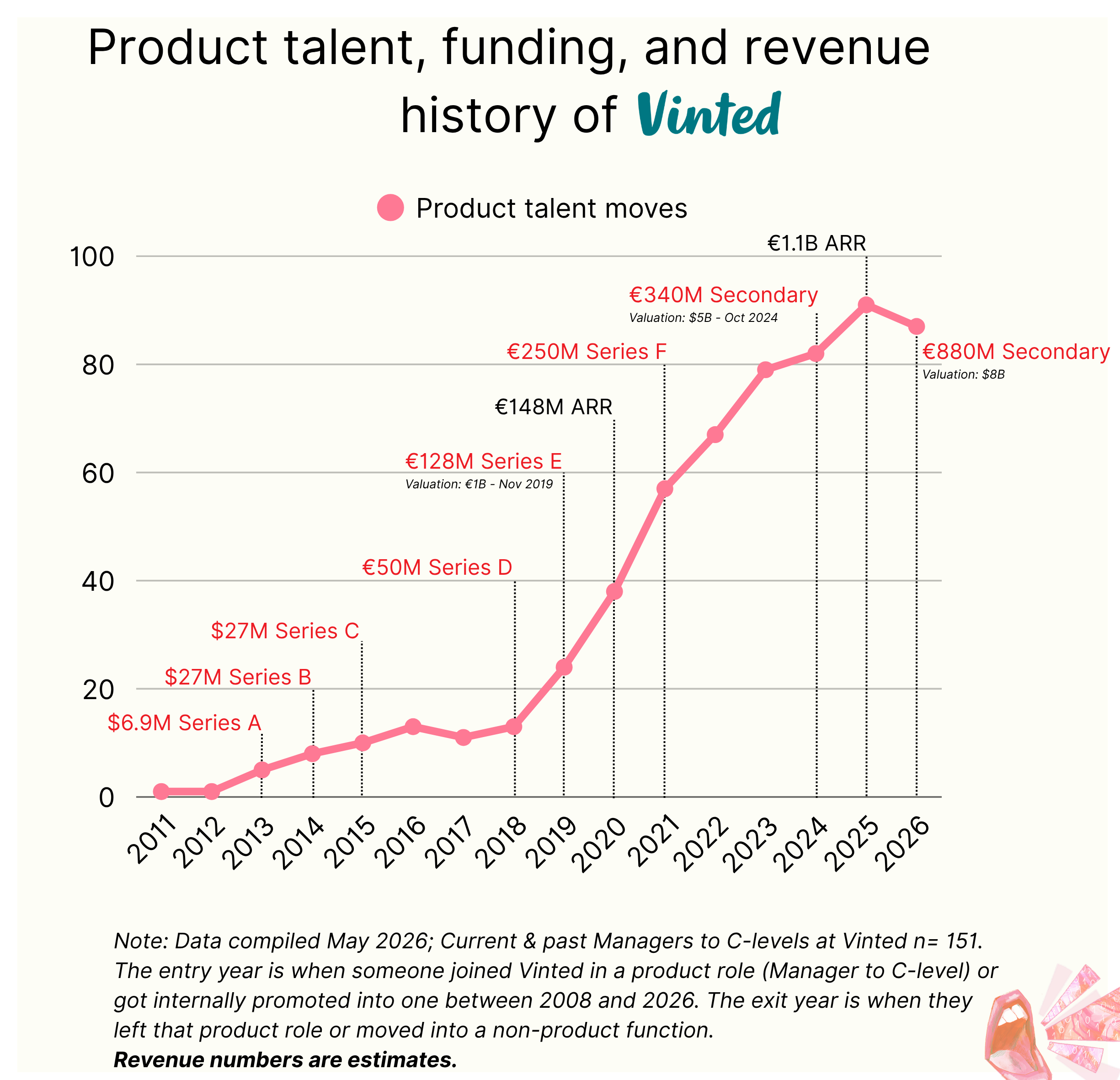
As you can see, the product team stayed lean until 2018. It even shrank between 2016 and 2017 (-23%).
By 2016, Vinted was burning cash and hadn’t figured out a revenue model yet. The product had a fundamental problem: users found it too expensive. The company had introduced a 20% seller fee, which scared users away.
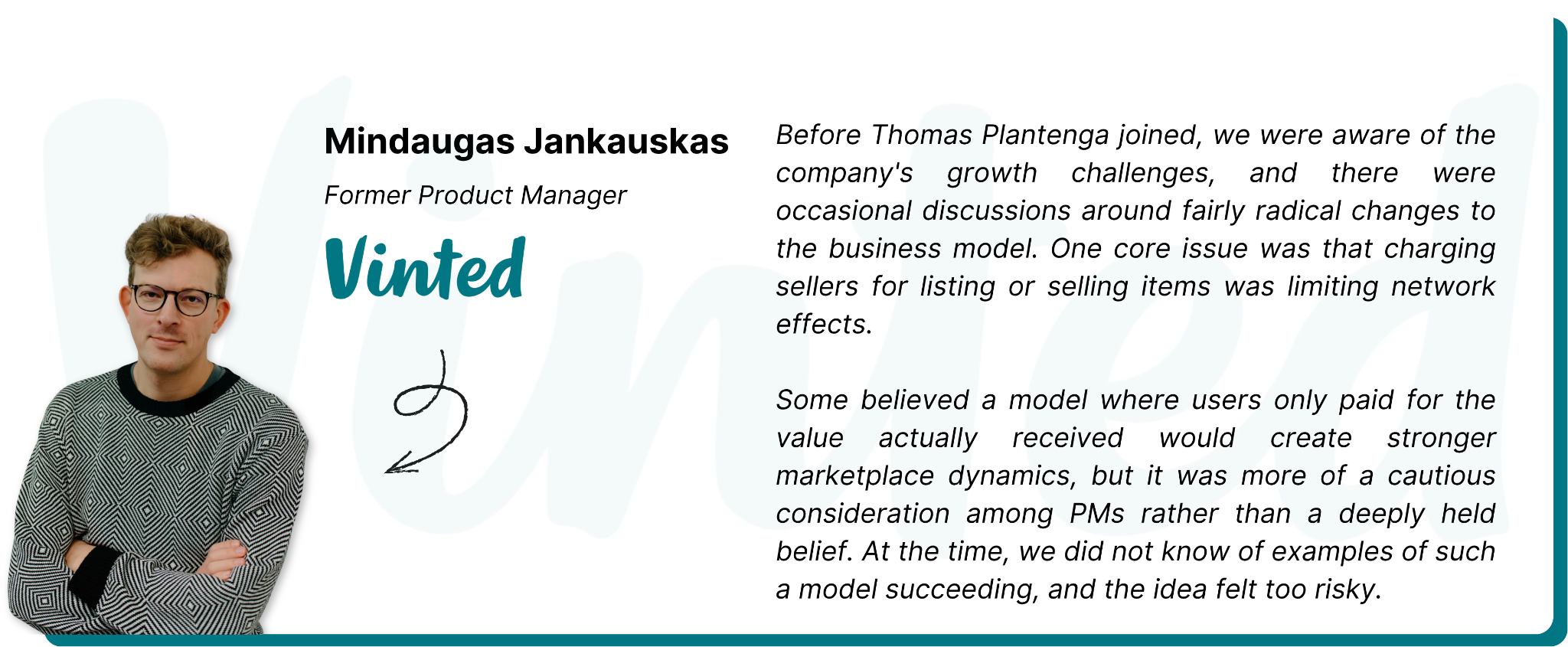
That same year, Vinted hired Thomas Plantenga to pull the company out of financial trouble. He cut the workforce by more than a third, shut down every office outside HQ, replaced the 20% seller fee with a buyer protection fee, and merged all the apps into one scalable platform.
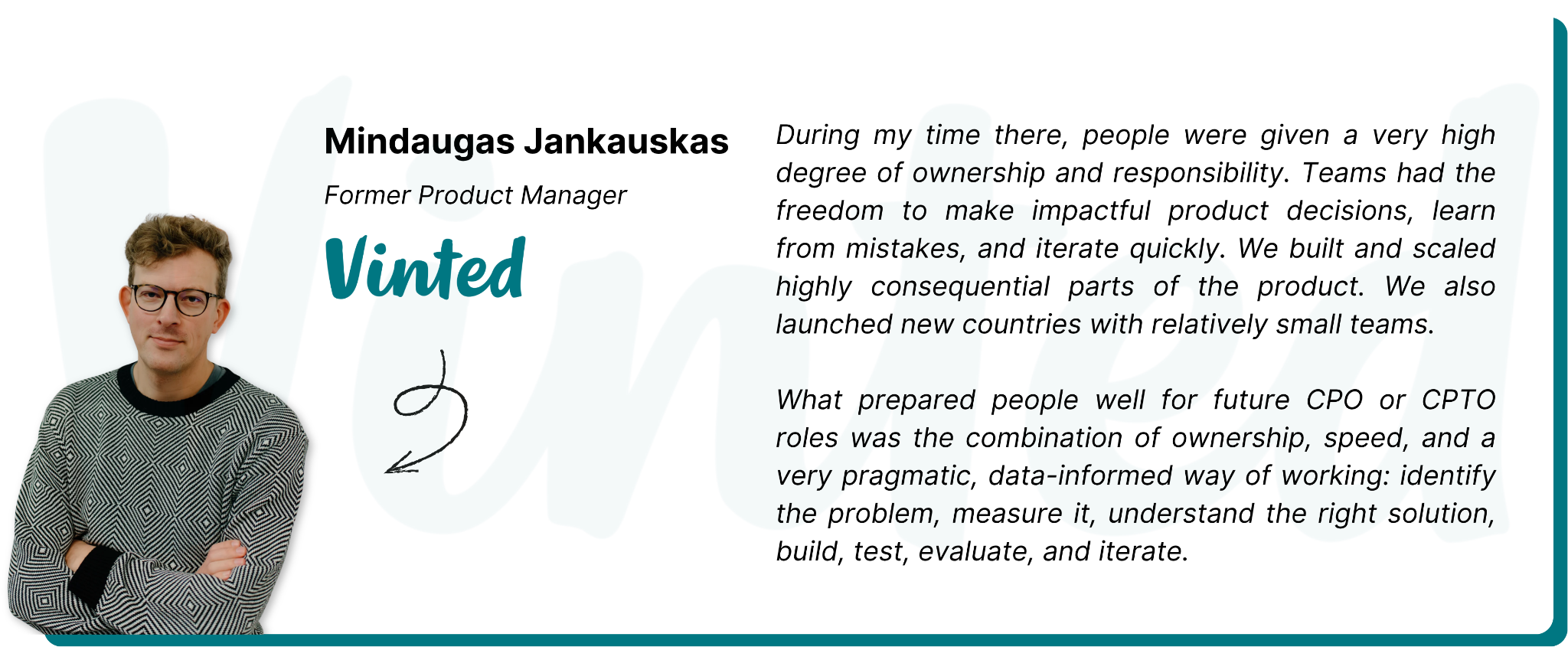
That means the product team shifted focus from extracting value (via seller fees) to driving liquidity on the platform, leaning on decision science to guide calls.
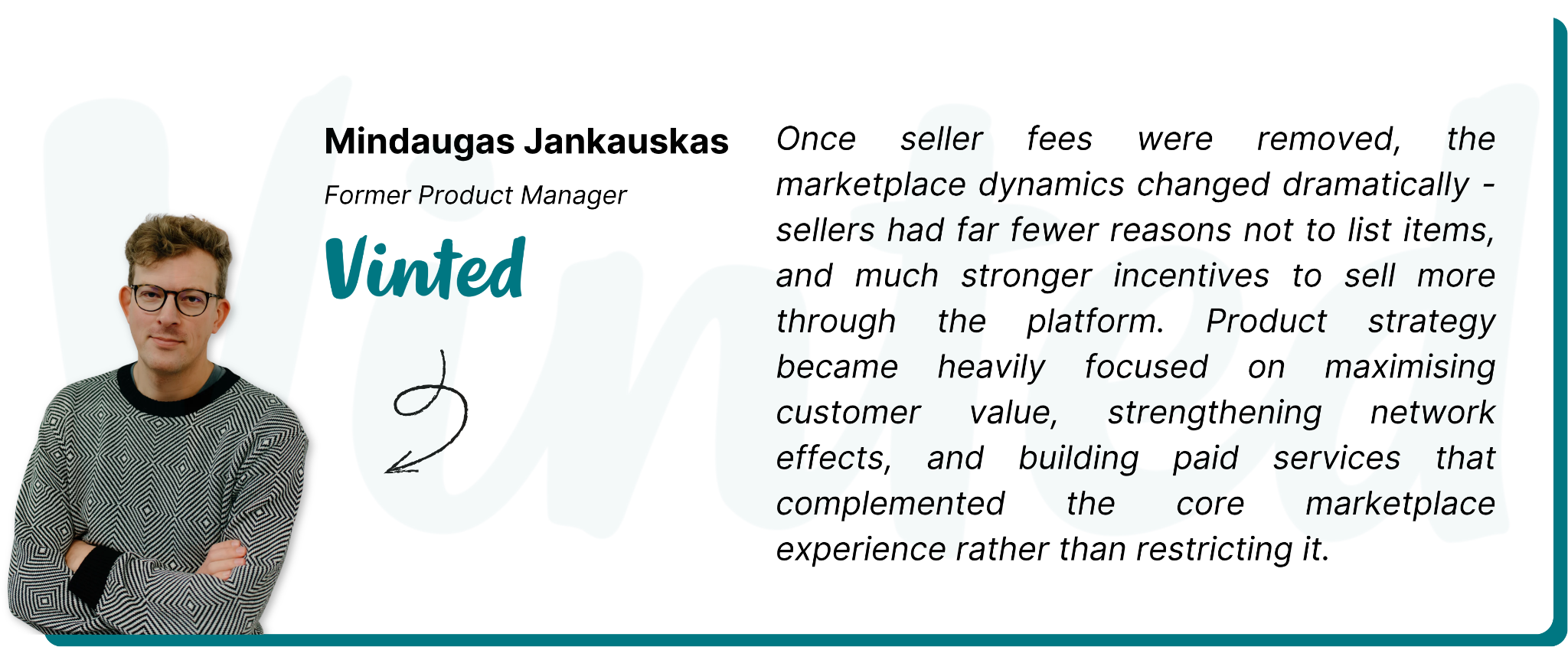
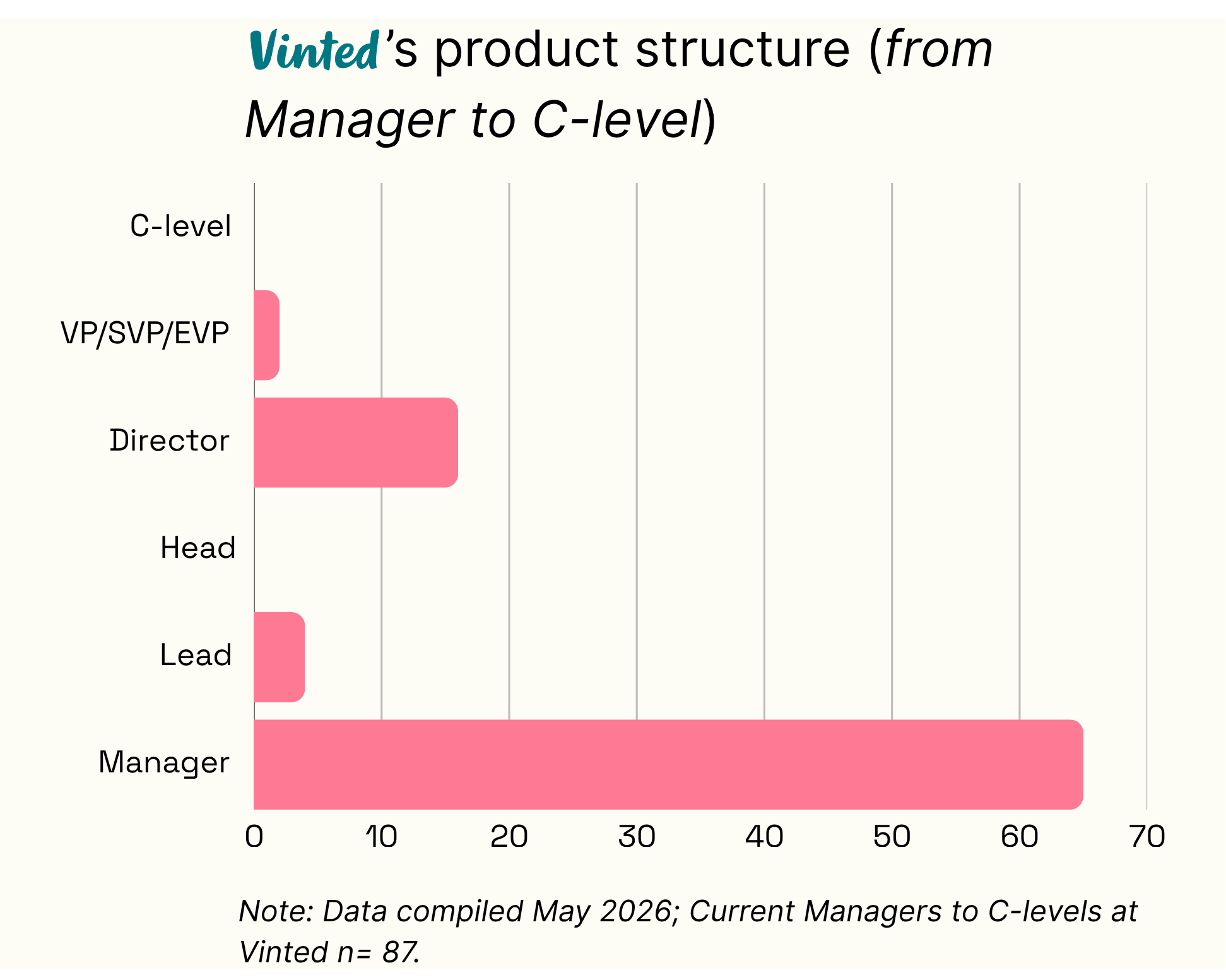
Insight Partners also doubled down with a Series D shortly after Plantenga’s appointment. And between 2018 and 2025, product headcount from Manager to C-level grew by 709%!
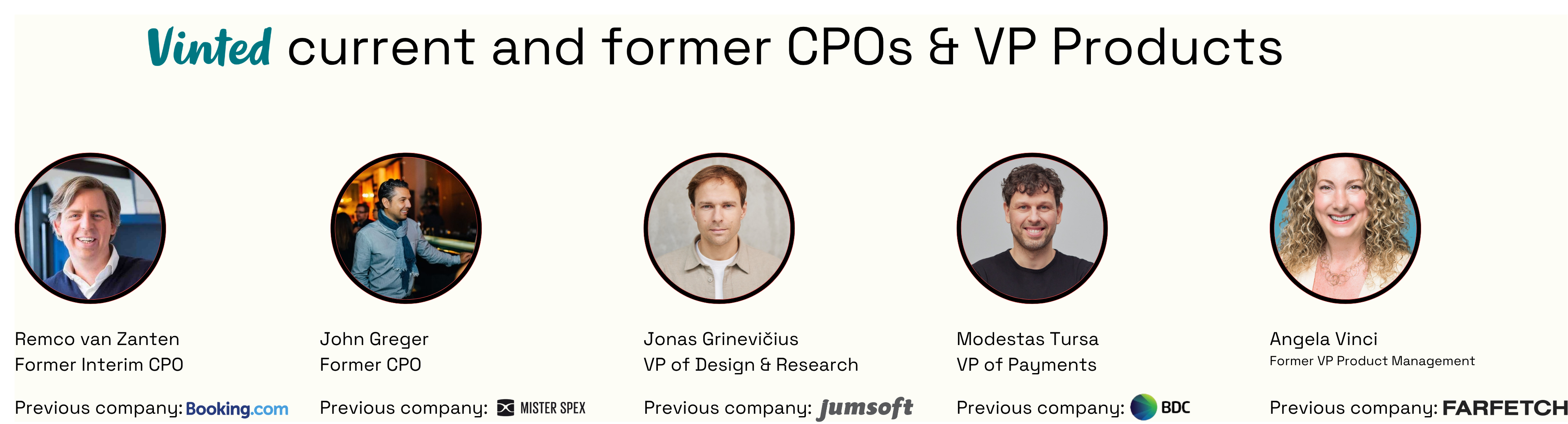
We found three CPOs in Vinted’s history:
Modestas Tursa was internally promoted to Interim CPO for a six-month tenure.
John Greger arrived after Thomas Plantenga and played a key role in the business strategy shift and turnaround. He brought e-commerce and marketplace product leadership from Rocket Internet, Mister Spex, and Immobilienscout24.
After Greger’s departure, Vinted hired Remco van Zanten from Booking.com as Interim CPO to help scale the company, with experience at Bol.com and Zalando.
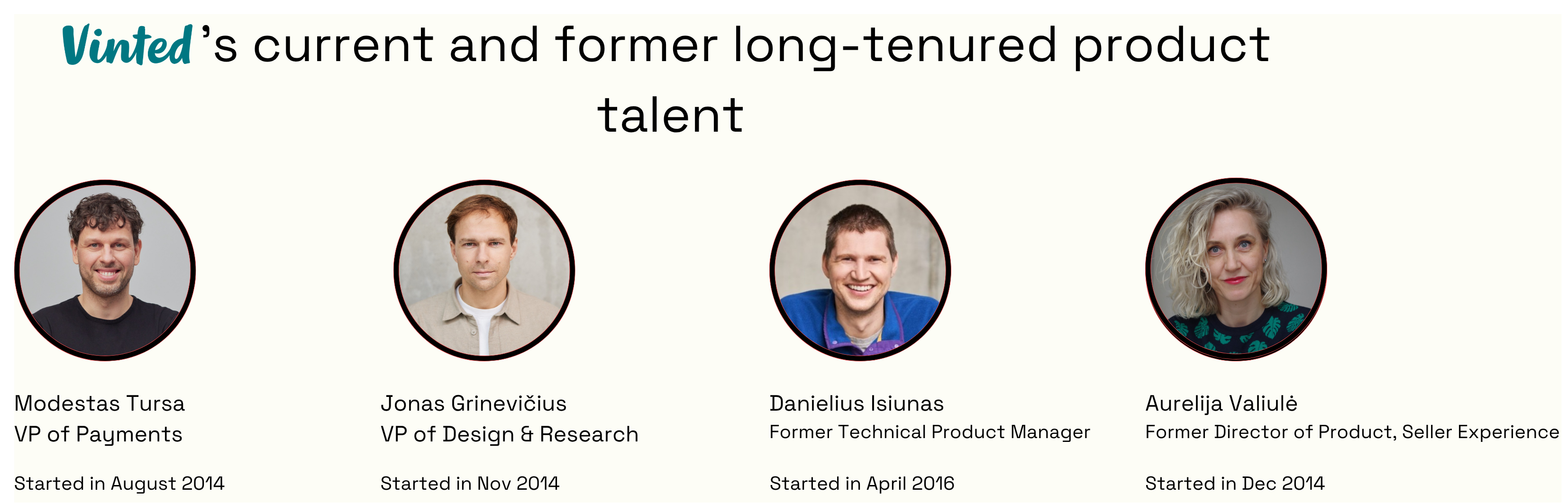
Today, Vinted has two VPs, Jonas Grinevičius and Modestas Tursa, plus a layer of Directors, each owning a different product domain.
Indeed, the company is going deeper into the value chain and vertical integration. Vinted Go handles shipping. Vinted Pay, still being built, will run payments and eventually offer wallet services. For consumer marketplace CEOs, Vinted is showing you that the deeper you go into the value chain, the more your biggest cost lines turn into your biggest revenue drivers. The parts you’d outsource early become the moat later.
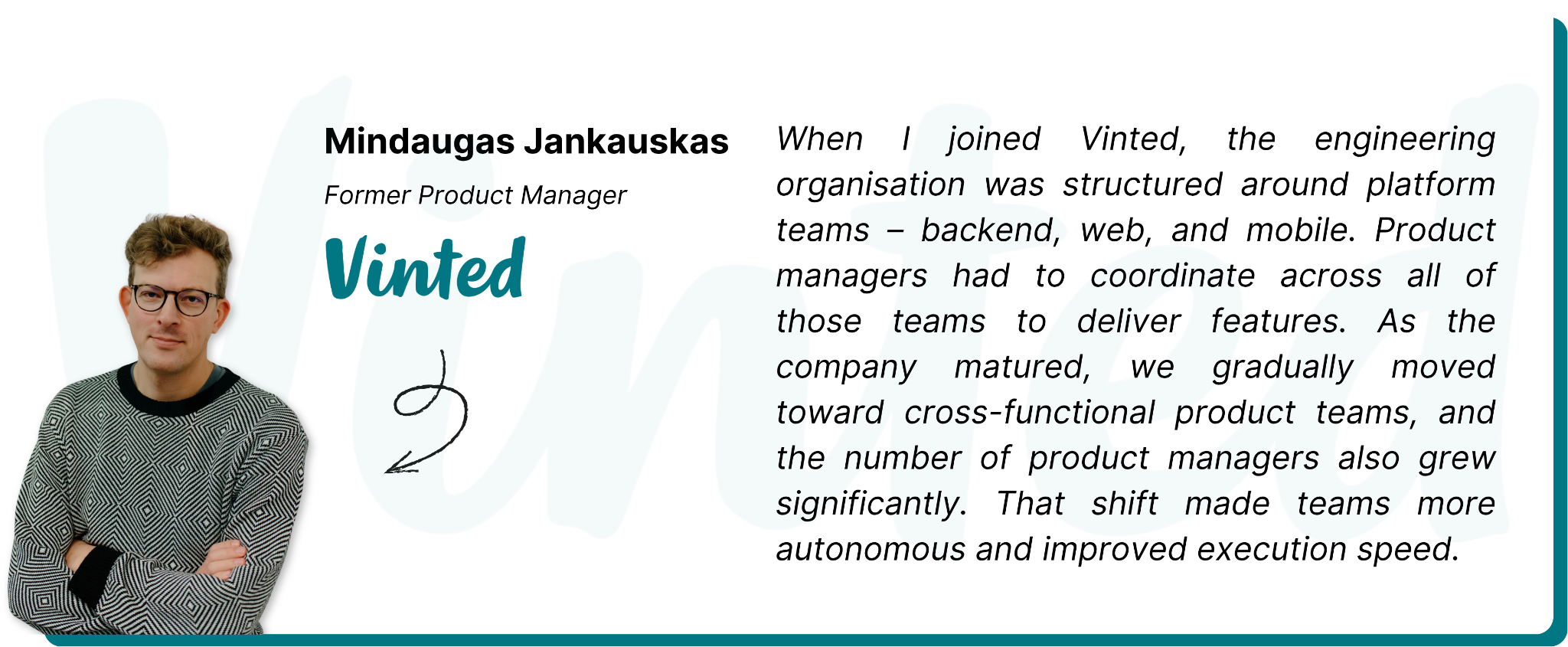
To support that, the product team is organised into domains, which lets them scale without constant cross-team friction:
Vinted Marketplace (categories domain): end-user experience, supply range, or seller tools.
Vinted Go: logistics and shipping infrastructure.
Vinted Pay: escrow and payment systems that build trust between buyers and sellers.
When we looked at the profiles inside the product team, a few domains kept coming back: Payments, Trust & Safety, Growth/Monetisation/Liquidity, Shipping (Vinted Go), Product Design, and Help Experience/Customer Support.
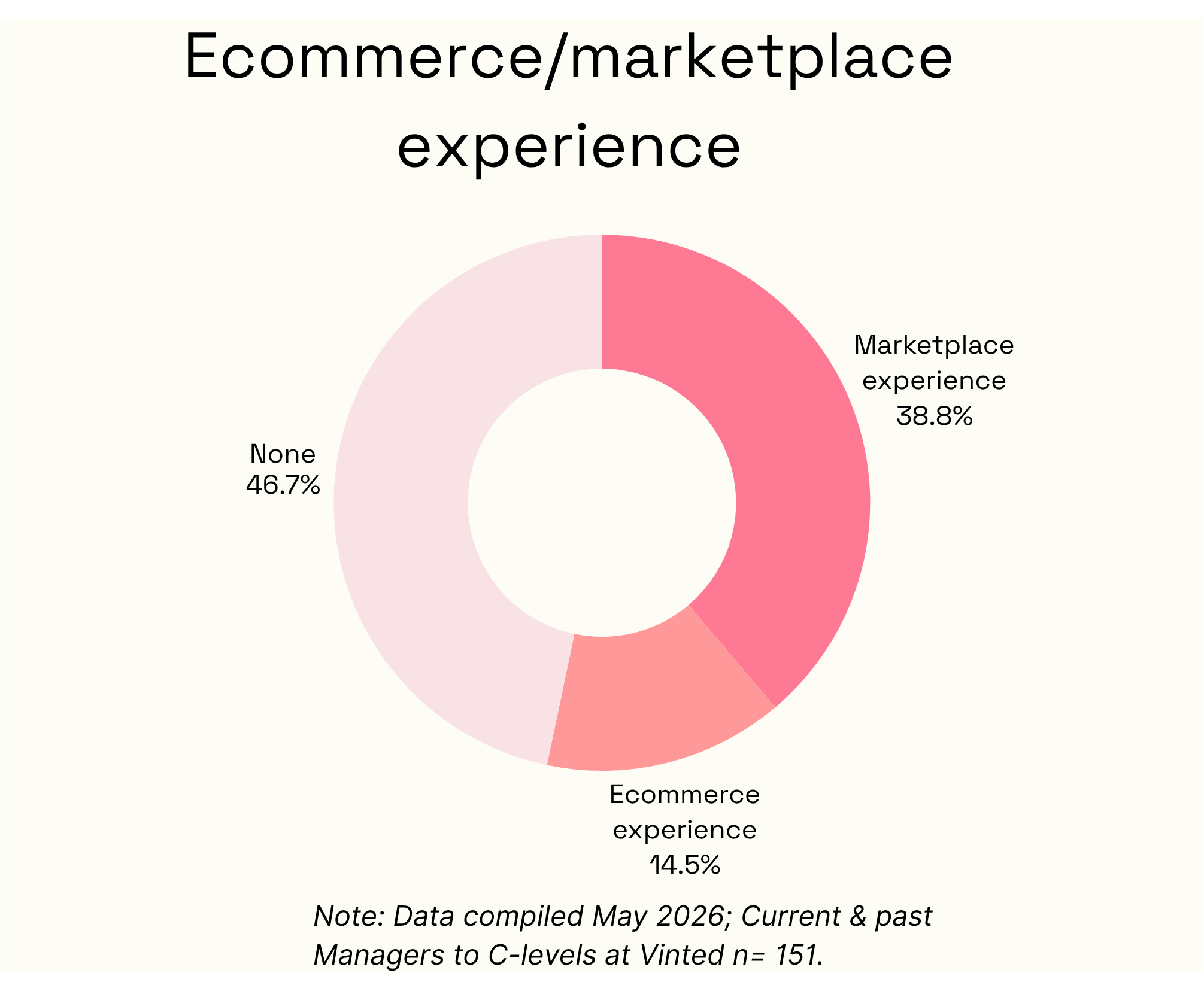
We found that 38.8% of Vinted’s current and former product talent have marketplace experience, with a gap between pre-2016 and post-2016 hires (19% vs 41%).
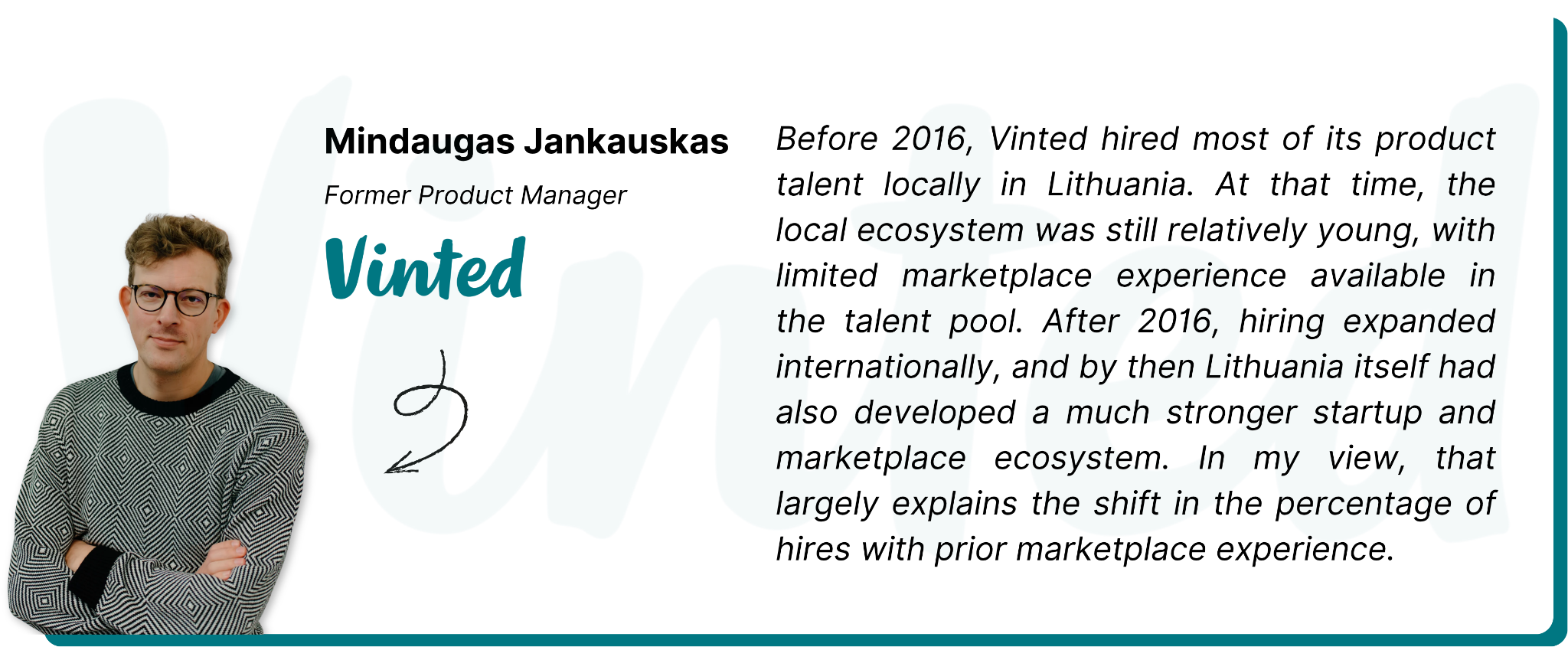
From our hiring experience, we often see marketplace startups default to e-commerce product leaders who know how to optimise the buyer experience but can’t read the second-order effects on seller behaviour, inventory quality, or listing density. That solves half the problem, usually the wrong half.
That said, almost no one has pre-Vinted fashion experience. And the few externally hired fashion-background product talent left within 6 to 12 months. These hires came in later, during the internationalisation push, at Head, VP, or Director level. But they didn’t last, probably because the product is a marketplace problem before a fashion problem.
So, where does Vinted source its product talent?
The first pipeline is the local Vilnius ecosystem, with Danske Bank as the single biggest feeder (13 people), followed by Adform (10), Telia (6), and other Lithuanian tech companies (TransferGo, Trafi, and Revolut). The second, mostly in the Netherlands and Germany, includes e-commerce/marketplace companies like Booking.com (8) and OLX.
Most Vinted alumni stay in the e-commerce/marketplace sector, joining companies like GetYourGuide, Booking.com, Oviva, Atolls, or Roadsurfer.
Some have stepped up to CPO roles: Belén Alomar Brutau, former CPO at Malt; Angela Vinci, CPO at Artsy; and Mindaugas Jankauskas, former CPTO at CGTrader.
Others moved into adjacent sectors: Aurelija Valiulė, CPO at Ondato; Mykolas Dumčius, CPO at Nexos.ai; and Marisa Elena Todd, CDO at David Zwirner.
In total, 16% of Vinted alumni have held a C-level role at some point after leaving. And with the recent secondary share sale, you can expect more early product talent to cash out and move on, expanding the pool of marketplace product talent coming out of Vinted.
Want to see how we can support your search? Visit our website to explore our services and learn what we can do for you.
Comments
Nothing yet. Say the first thing.
Sign in to join the conversation.