
European consumer scale-ups at Series B+ are at an inflexion point, with product-market fit and an acquisition engine. But the acquisition engine is getting expensive to run and fragile to rely on. The early adopter pool is largely saturated. The audience that converts easily from paid has been reached. The next phase is about expanding into new, larger audiences, and that requires the right marketing leader.
To understand what that talent looks like, we mapped the people already doing the job.
We selected 183 consumer-facing tech businesses that have scaled in Germany from Series B onwards. We focused on Germany because it has become one of the top consumer tech talent hubs in Europe and is home to one of the top two e-commerce economies on the continent.
We included companies founded and headquartered in Germany and organisations with established consumer operations there:
Consumer e-commerce, marketplaces and platforms,
Food delivery and quick commerce,
Consumer fintechs,
Consumer apps and platforms.
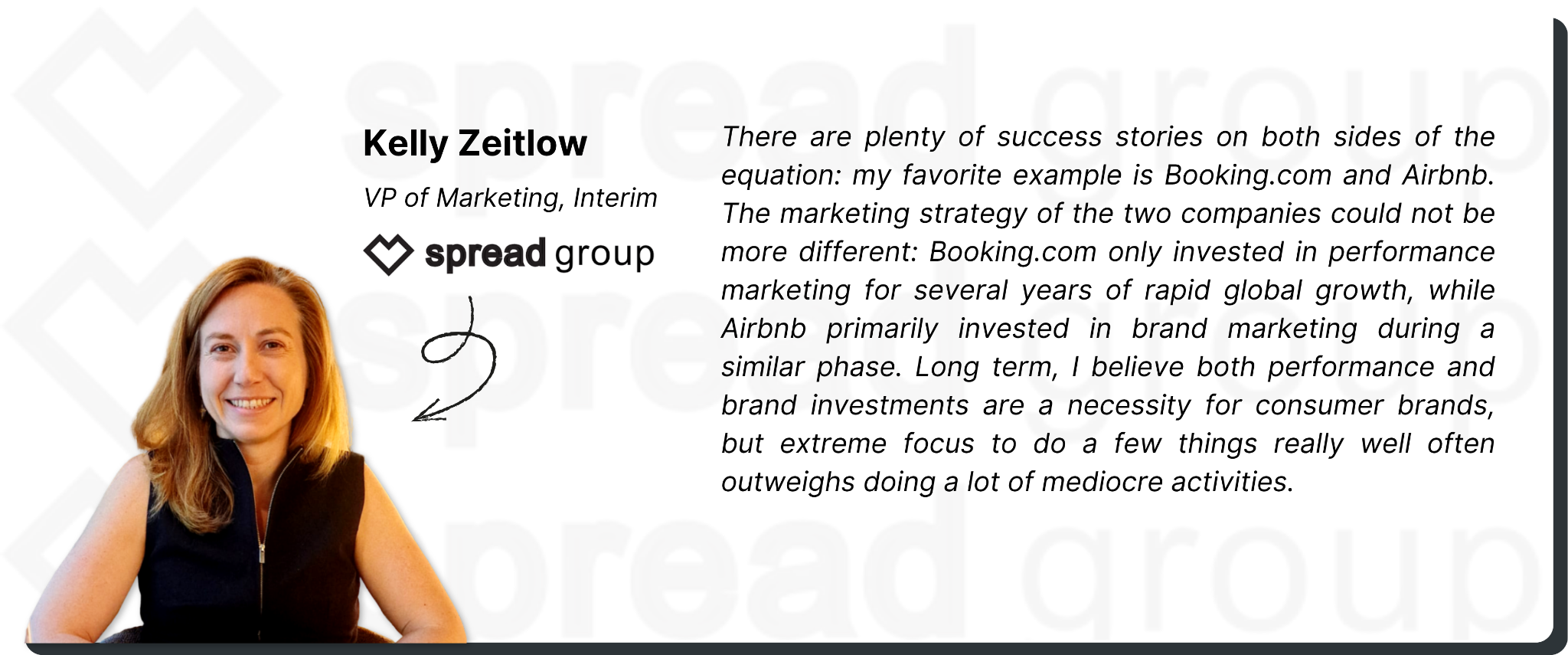
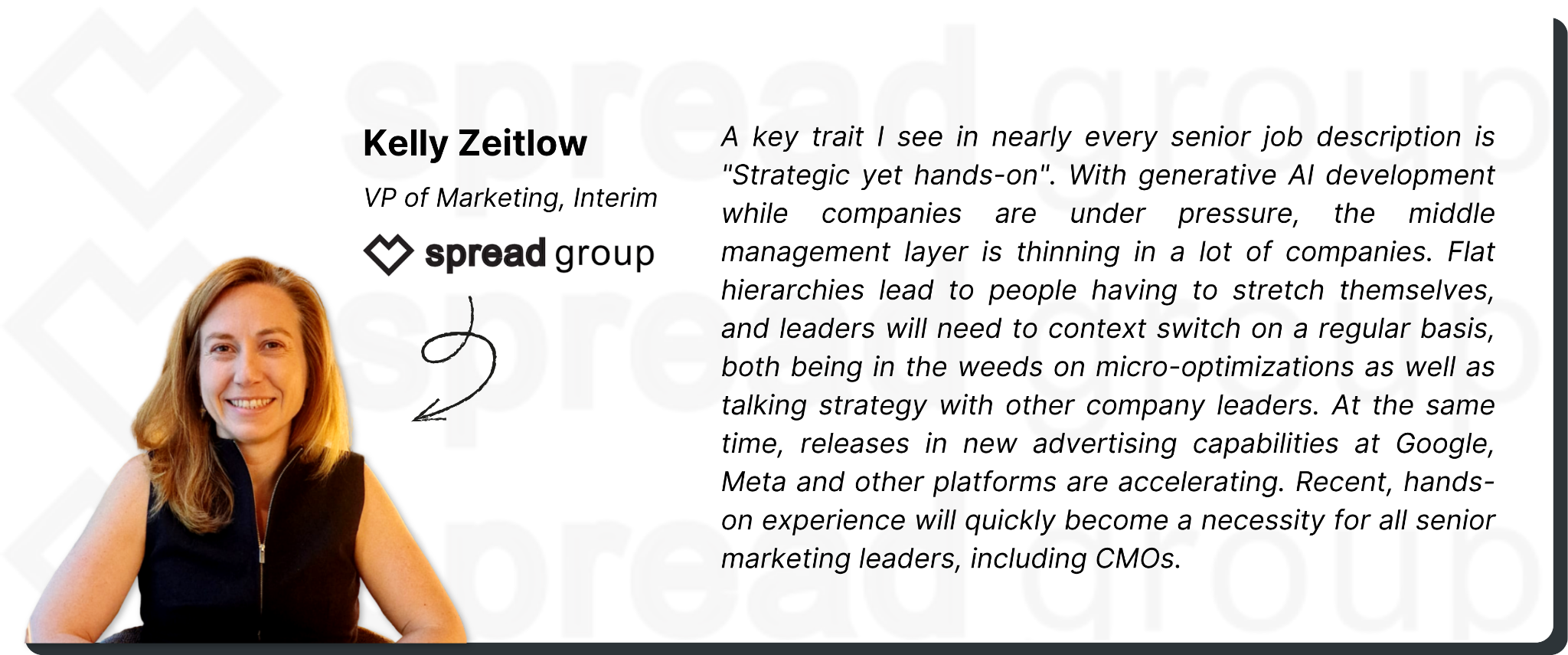
We mapped 287 current leaders, from Director to C-level, across customer acquisition, growth, marketing, brand and comms. And we spoke with two of them: Kelly Zeitlow, VP of Marketing (Interim) at Spread Group and Martin Gaubitz, VP of Marketing at Shopware. Thanks for contributing!
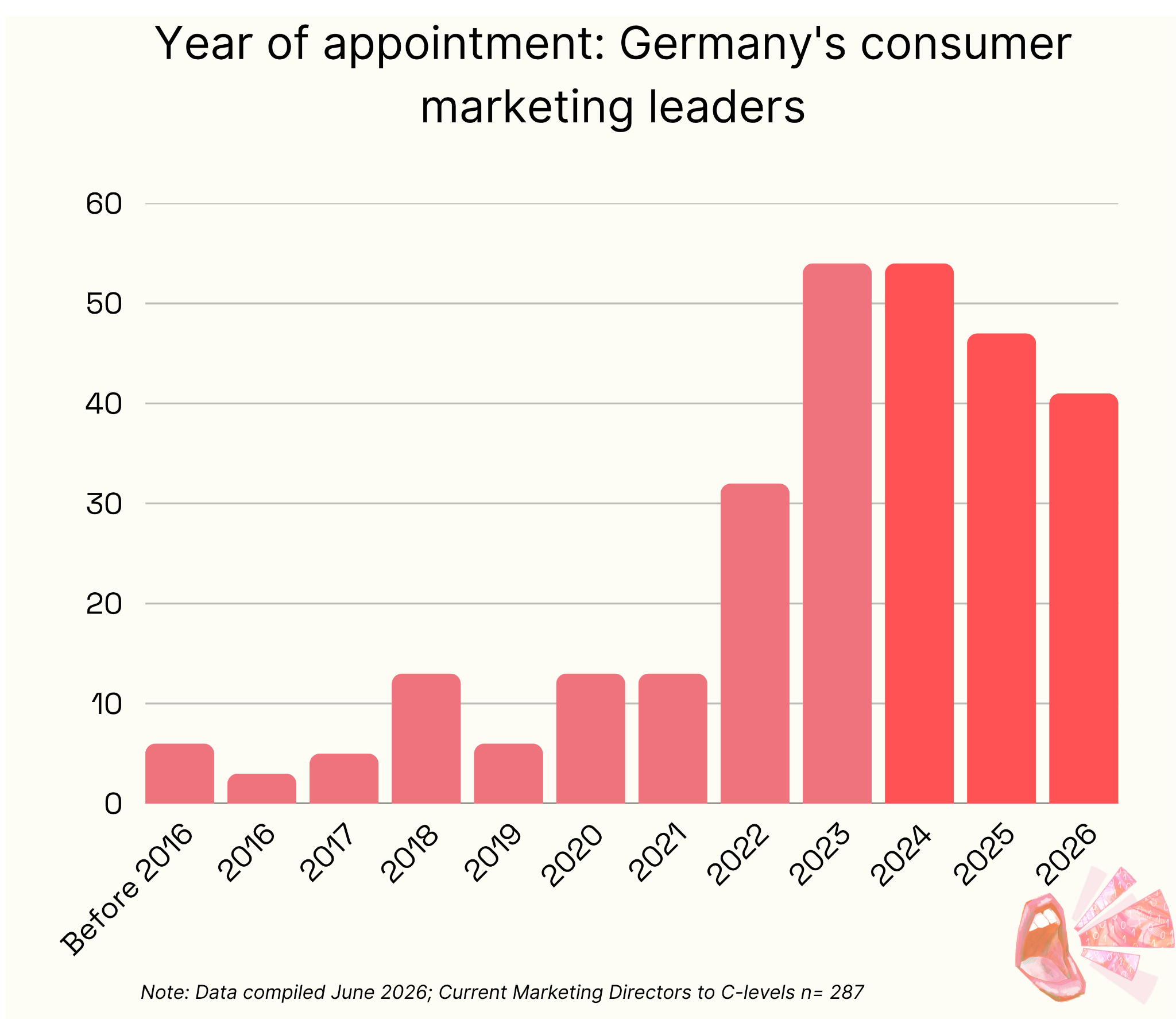
We also found that almost 50% of these leaders joined in the last 24 months. That means most companies are building/rebuilding from the middle of the function (90% of that group are at Director and VP level), with one hire for most of them. Only a few, like Enpal, Westwing, AutoScout24, and Wolt, brought in multiple new marketing leaders across this window.
This article was compiled in collaboration with the Consumer Practice at The Big Search. If you’re interested in leadership and talent trends, looking to hire a Consumer leader, or simply want to discuss the findings, feel free to reach out to sahar@thebigsearch.com or Sahar Powell (PhD).
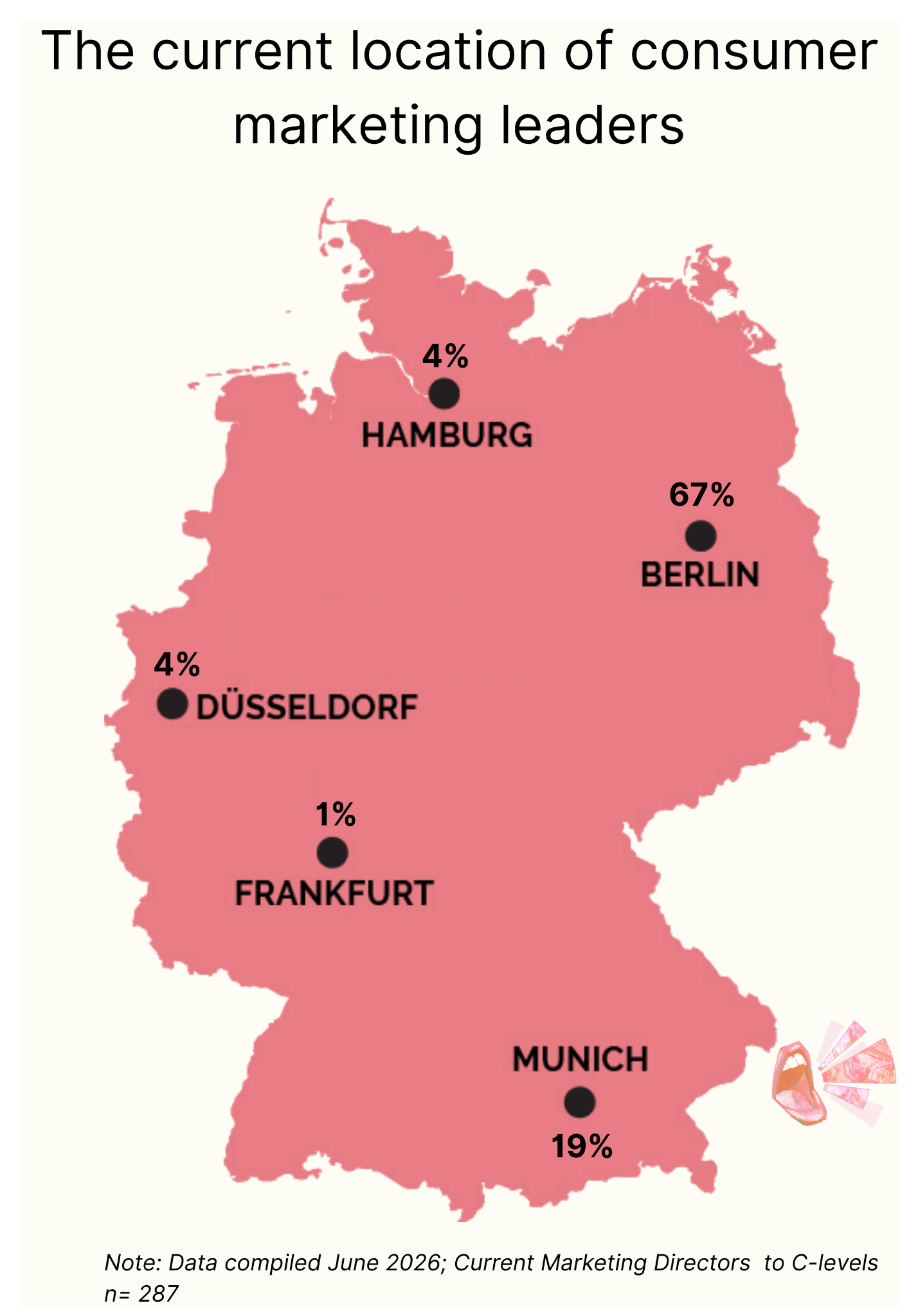
Berlin accounts for 67% of consumer marketing leaders in Germany. The city built its consumer tech gravity early, anchored by Rocket Internet’s companies and the ecosystem that grew around them. If you’re looking for a consumer tech marketing leader, Berlin is where most of them are.
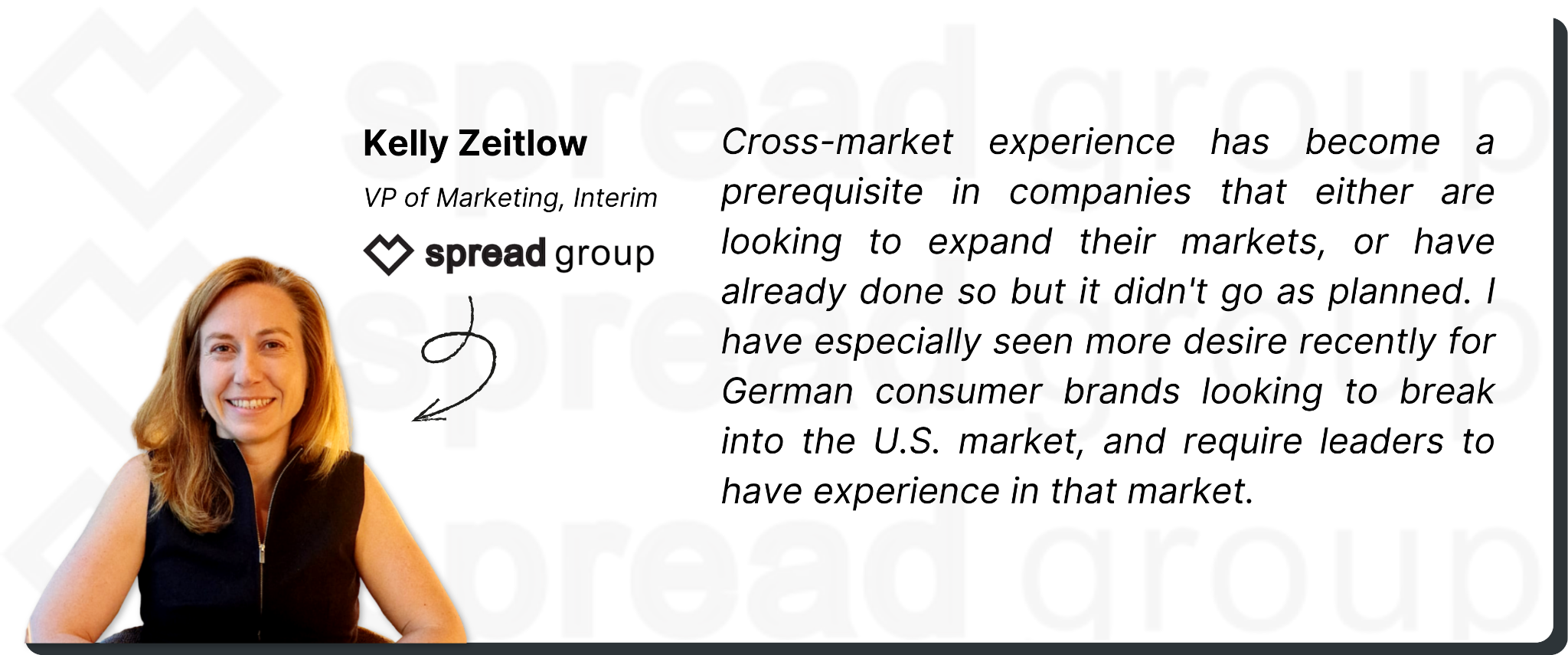
And 70.4% have worked outside of Germany at some point in their career. Expanding into the UK, the Nordics, Southern Europe, CEE, or the US means building a brand and acquiring customers that have never heard of you. Leaders with exposure to different market dynamics and consumer behaviours across regions carry a hard-to-replicate skill set. Localising global messages and assets to resonate with specific cultural contexts is more a core strength than a secondary capability.
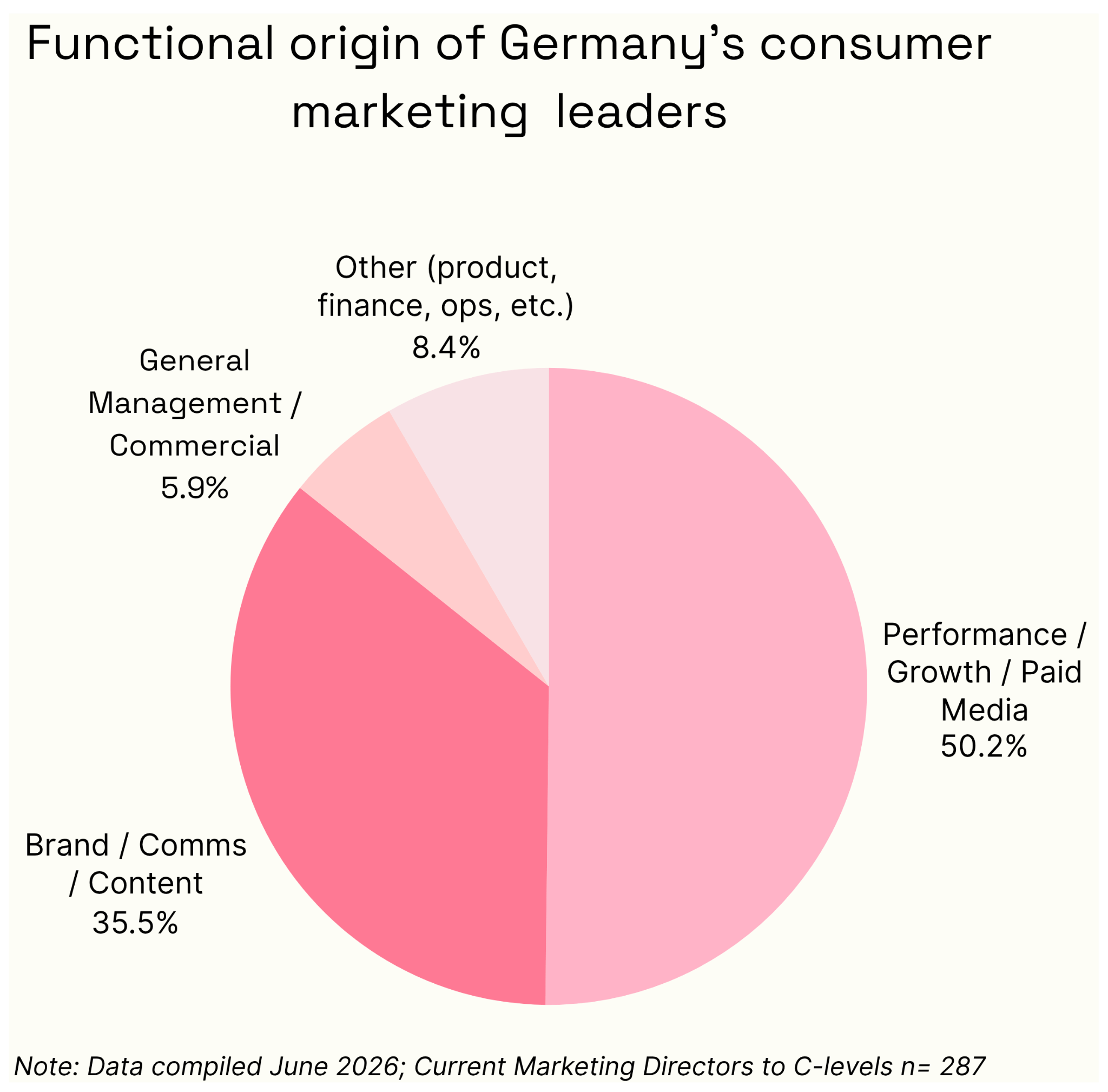
Performance marketing and growth backgrounds account for 50.2% of the pool. At Series B+, the default hire is someone who can optimise the paid stack and reduce blended CAC.
The problem is that most of these companies are making that hire when the phase it’s optimised for is already ending. If the default profile is someone who has spent their career reducing CAC and improving ROAS, brand investment will always feel like a secondary priority. Because for most of their careers, it has been.
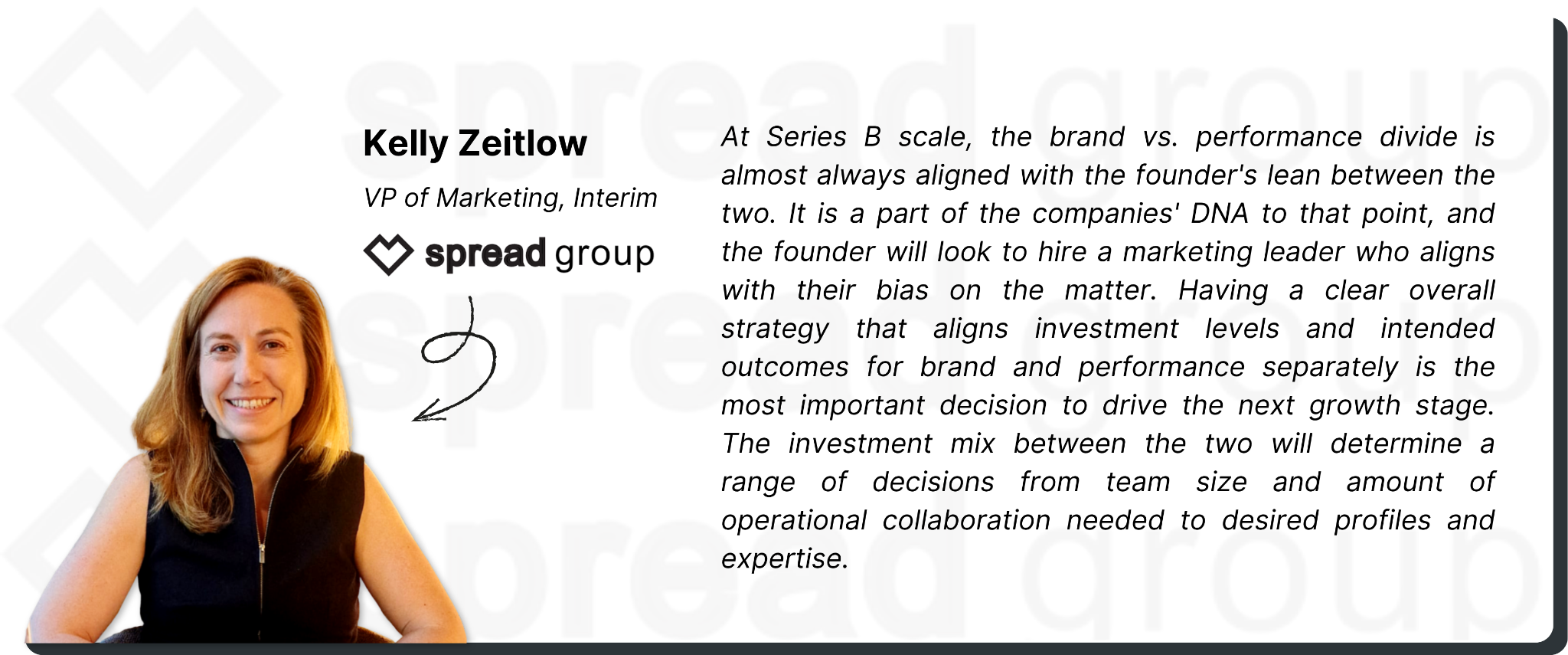
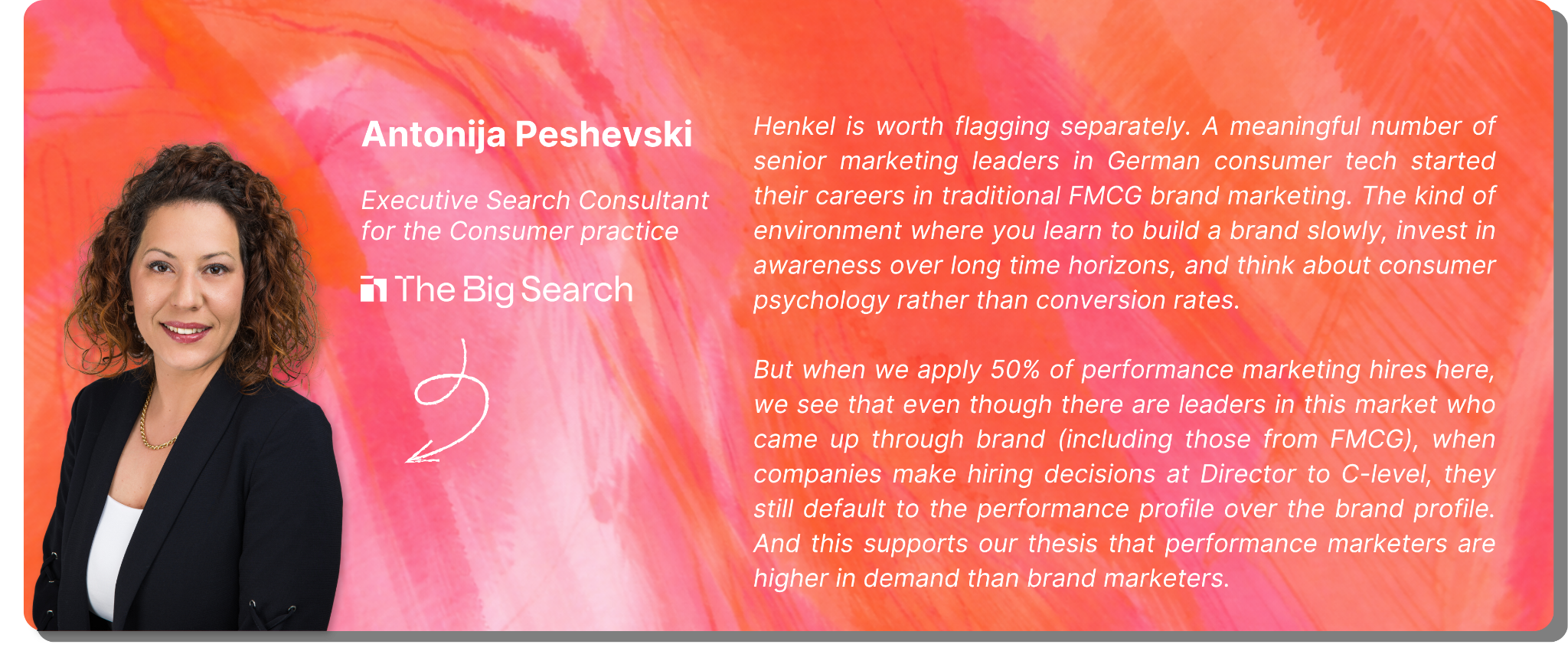
35.5% come from brand, comms, or content backgrounds. So, brand talent isn’t scarce. Nearly one in three leaders in this pool built their career on it. But most operate on one side of the line. Performance hires optimise the paid stack and treat the brand as someone else’s problem. Brand hires build equity and treat CAC as someone else’s metric. Consumer scale-ups that don’t align on investment levels and intended outcomes for both face similar challenges: the acquisition machine gets less efficient, CPAs climb, and the paid stack that once compounded starts to decay.
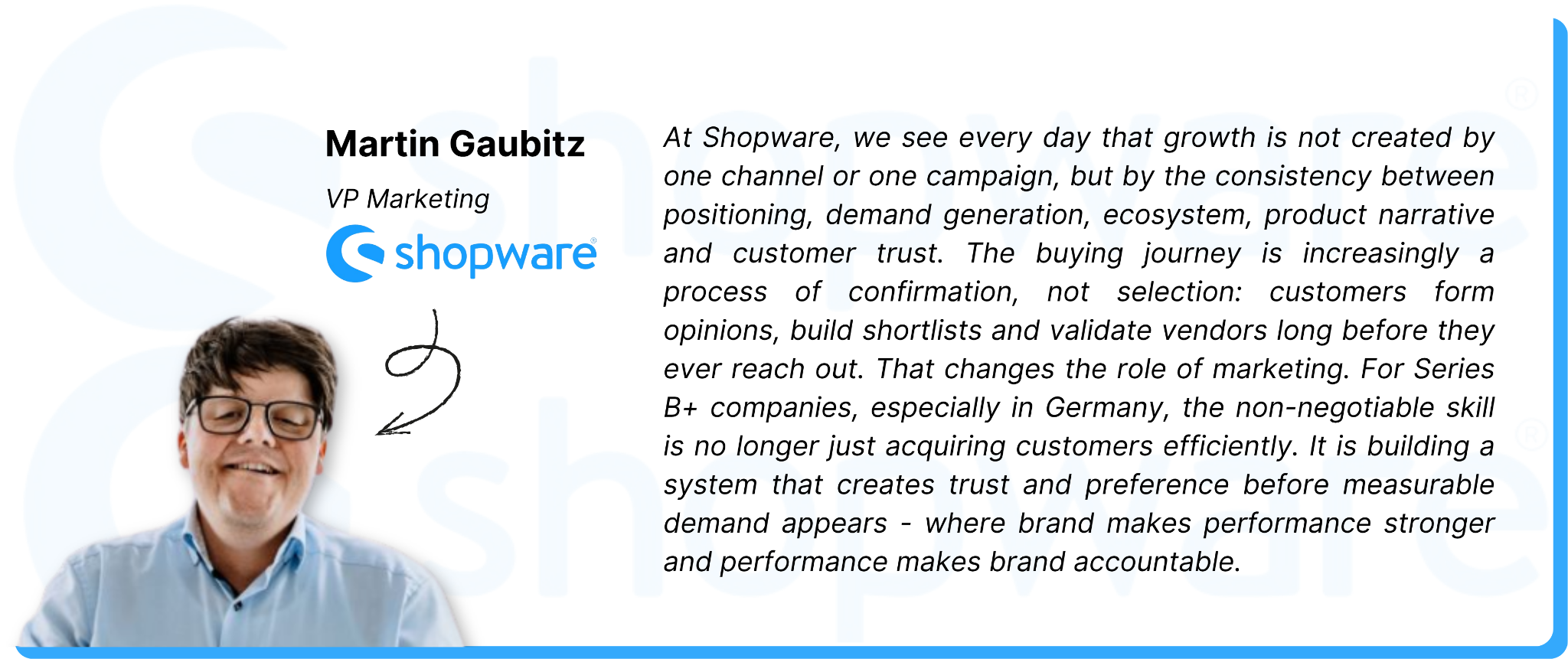
Brand determines whether the paid funnel compounds or collapses. But as Kelly Zeitlow notes, Booking.com scaled for years on performance alone while Airbnb built primarily on brand during the same phase. Both worked. What doesn’t work is splitting budget and attention across both without a strategy on where the growth is coming from.
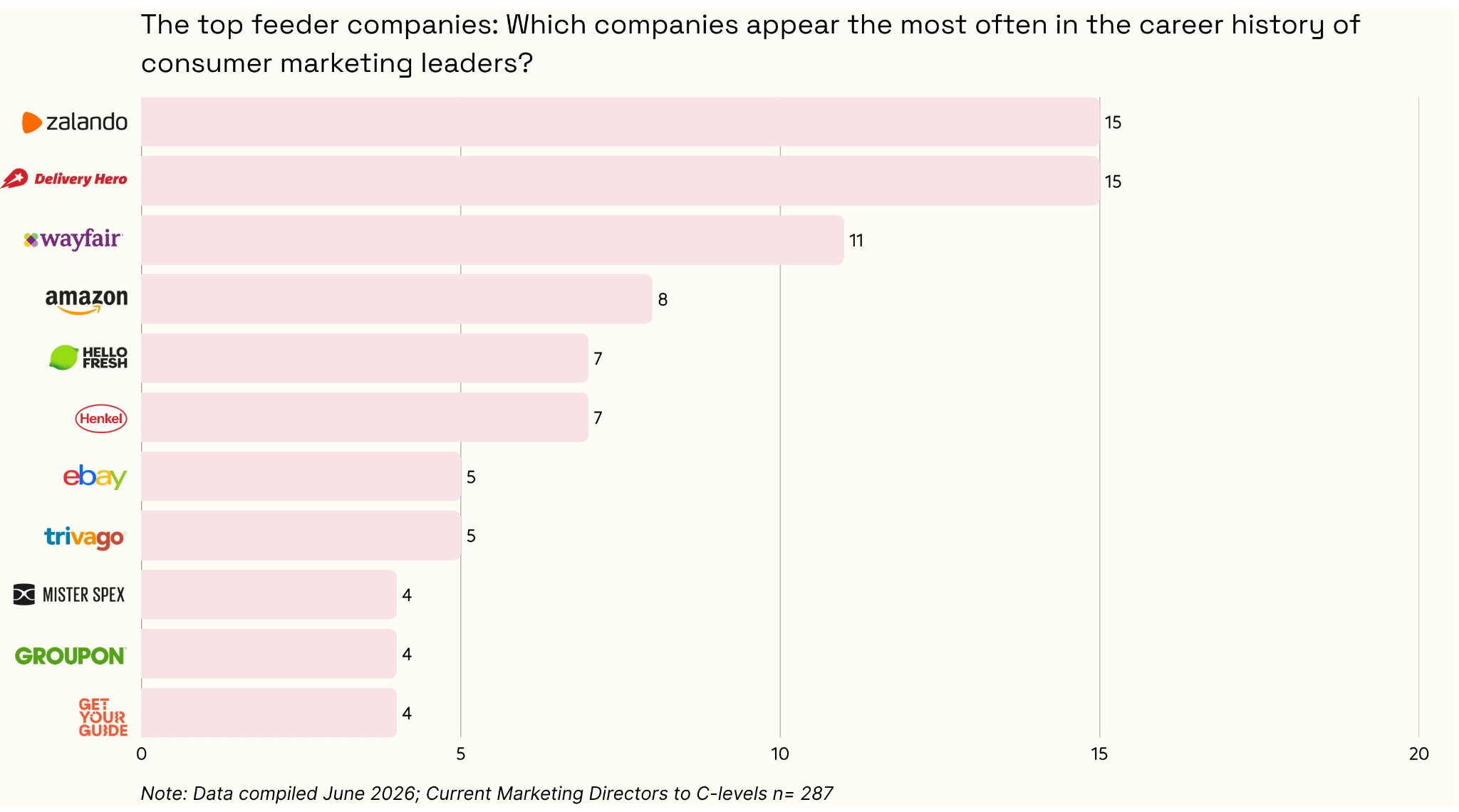
The strongest profiles come from a concentrated pool of companies that built brand equity and performance capability simultaneously.
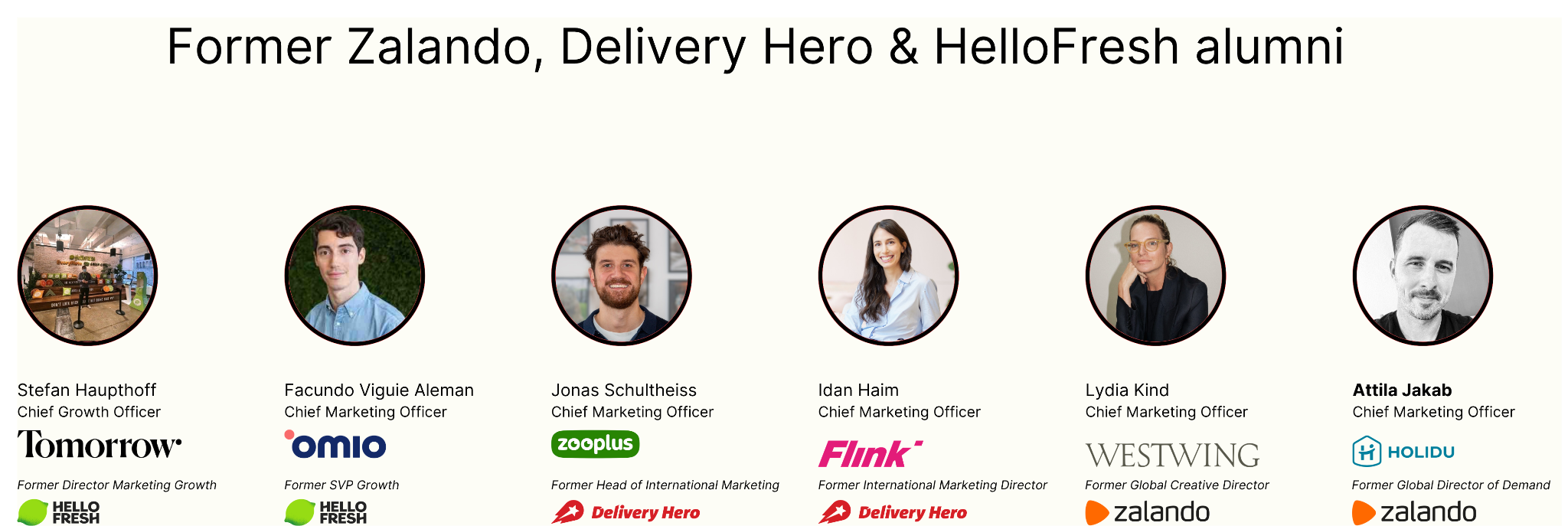
Zalando and Delivery Hero are the most represented feeders. Both built communities at scale and developed brand equity in competitive European markets. Their alumni understand European consumer audiences across multiple markets. Delivery Hero in particular has produced leaders with multi-market operational experience that exports well across geographies.
HelloFresh is the most relevant feeder for subscription and DTC searches. The company built the meal kit category from scratch across multiple European markets simultaneously, ran one of the largest paid acquisition operations in European DTC, and was then forced to rebuild its entire marketing model around retention and brand equity when paid costs inflated. Leaders who ran marketing through that transition have seen both sides of the performance-to-brand shift.
Wayfair is another interesting feeder. The company built aggressive performance marketing operations in Europe, faced brand and retention challenges, and went through multiple restructuring cycles. Leaders who came through that environment have seen both sides of the growth curve: the scale-up phase, where paid drives everything, and the efficiency phase, where it stops working.
German consumers are structurally more risk-averse than most European consumers. That influences everything about how you build a brand there.
Take something as basic as payment details. In Germany, the decision to enter them is often made before the first purchase. That means a performance creative needs to carry the same trust signals as a brand campaign. You can’t outsource trust to the upper funnel and expect the lower funnel to convert.
However, leaders who genuinely integrate brand and performance are rare. Only 20% of the leaders we mapped had experience in both.
The split is visible in conversations. Leaders who came up through brand talk about campaigns, awards, and brand perception scores. Leaders who came up through performance talk about CAC, ROAS, and conversion rates. Very few mentioned both fluently.
The next generation of German consumer CMOs is most likely sitting at Director level today. Outside the Zalando, Delivery Hero, and HelloFresh pool, the companies currently having the most Director-level marketing talent are Wolt, Vinted, Zooplus, and Westwing.
And when it comes to what those future CMOs will need…
Want to see how we can support your search? Visit our website to explore our services and learn what we can do for you.
Comments
Nothing yet. Say the first thing.
Sign in to join the conversation.