
Great literature is inspiring! Our reader and frequent commentator Diane Levesque has created an amazing painting, “The Vanity of the Visible,” based on our reading and discussions of Thomas Mann’s Doctor Faustus. (You can view all of Diane’s art here: https://dianelevesque.net/links.html) Here’s Diane on her painting:
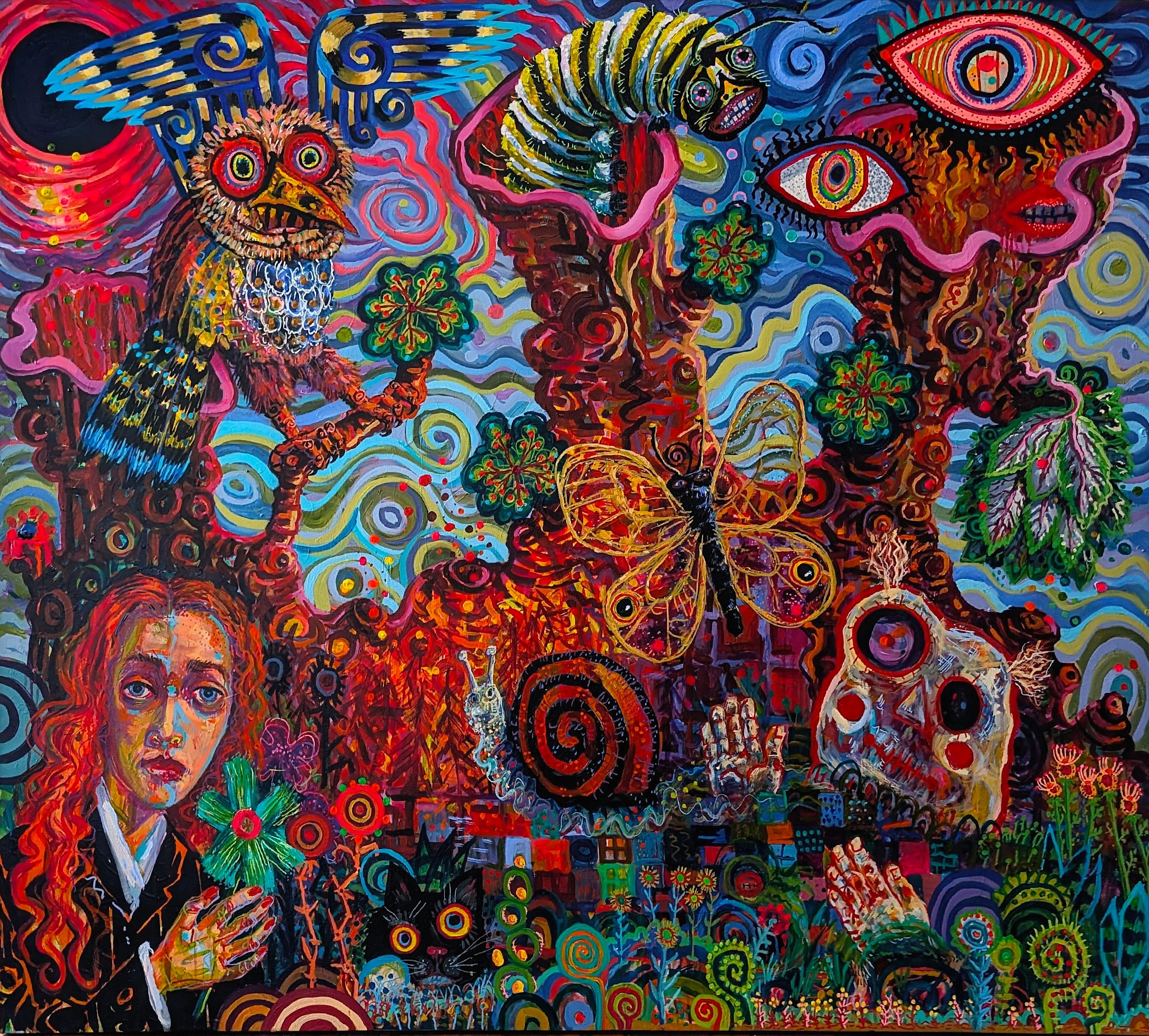
“My new painting “The Vanity of the Visible,” was inspired by your The Big Book Project group read of Thomas Mann’s Doctor Faustus. I was so taken by the imagery at the very beginning (p. 17- 23) of the book with Zeitblum’s recollection of Father Leverkuhn’s “libertine intimacy with what is forbidden” that I had to base the 3rd of a series of four paintings of the elements (this is “Earth”) for my “Poisonous Plants in Toxic Places” series (which can be seen on my website linked below) on this extremely detailed concept of mimicry in nature that “as in so many things, there was a meeting here--of poison and beauty, poison and sorcery, but of sorcery and liturgy as well.”
I wanted to depict how that might lead to “morally murky territory” which included the Hetaera Butterfly, the description of snail shells which have “fixed their rigidity on the outside...and the fact that it is external and not internal must be the reason for their beauty,“ leads the boys to smile at “the vanity of the visible.”
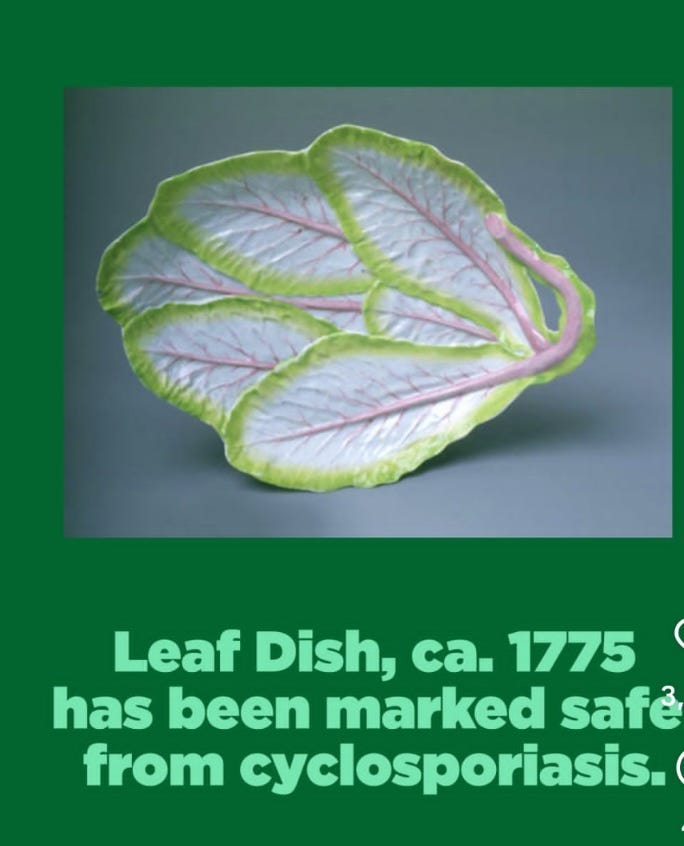
Well, basically, everything on those pages became the “aesthetic of externality” and a “fantastic ambiguity” that I explored in my painting. The brown trunk like structure from which all the creatures are emerging or resting on is the “grotesque miniature landscape” ...with its “muddle of vegetation...” (p.22). It is the bizarre culture where the Hetaera Butterfly, painted with gold transparent wings, rests in the middle, and a slimy snail climbs up towards the raving bird. A Monarch Butterfly caterpillar, which is also toxic, emerges from the center trunk. The ghostly figure at the bottom right lies under a patchwork bottom of “algae, fungi, rooted polys, mosses”. At the far left is a portrait of a red-haired young woman--who I imagine as a combination of Esmeralda and the red-haired figures that often haunt Mann’s stories. Lastly, the patch of leaves on the branch at the far right was inspired by this photo of a ceramic Leaf Dish that fellow reader at The Big Book Project, Eileen, sent to me. It was the last element I needed to finish the painting.”
No posts
Comments
Nothing yet. Say the first thing.
Sign in to join the conversation.