
I just got back from Puglia, where salad burnet grows wild around Trulli Trazzonara. It’s everywhere right now—threaded in among wild oregano, olive-leaf arugula, fennel, calamentha nepeta, chicory, and the first wild asparagus of the season. On our walks, we’d pinch a little of this, a little of that—never taking whole plants, just enough to scatter into our salads and taste the landscape.
I’ve been growing salad burnet for years in California, ever since Rosemary Loveall-Sale first introduced me to this quietly wonderful Mediterranean herb. It even made its way into my second book, Harvest: Unexpected Projects Using 47 Extraordinary Garden Plants. Still, I wish more people here grew it.
This is my love letter to salad burnet.
Salad burnet tastes like spring. I use it in spring herb and edible-flower salads, including this one, an easy favorite homegrown preparation. Salad burnet is a member of the rose family (Rosaceae). Its early, lacy foliage bridges the gap between winter and summer leafy herbs, offering the taste of cucumber well before the actual cucumber harvest season arrives.
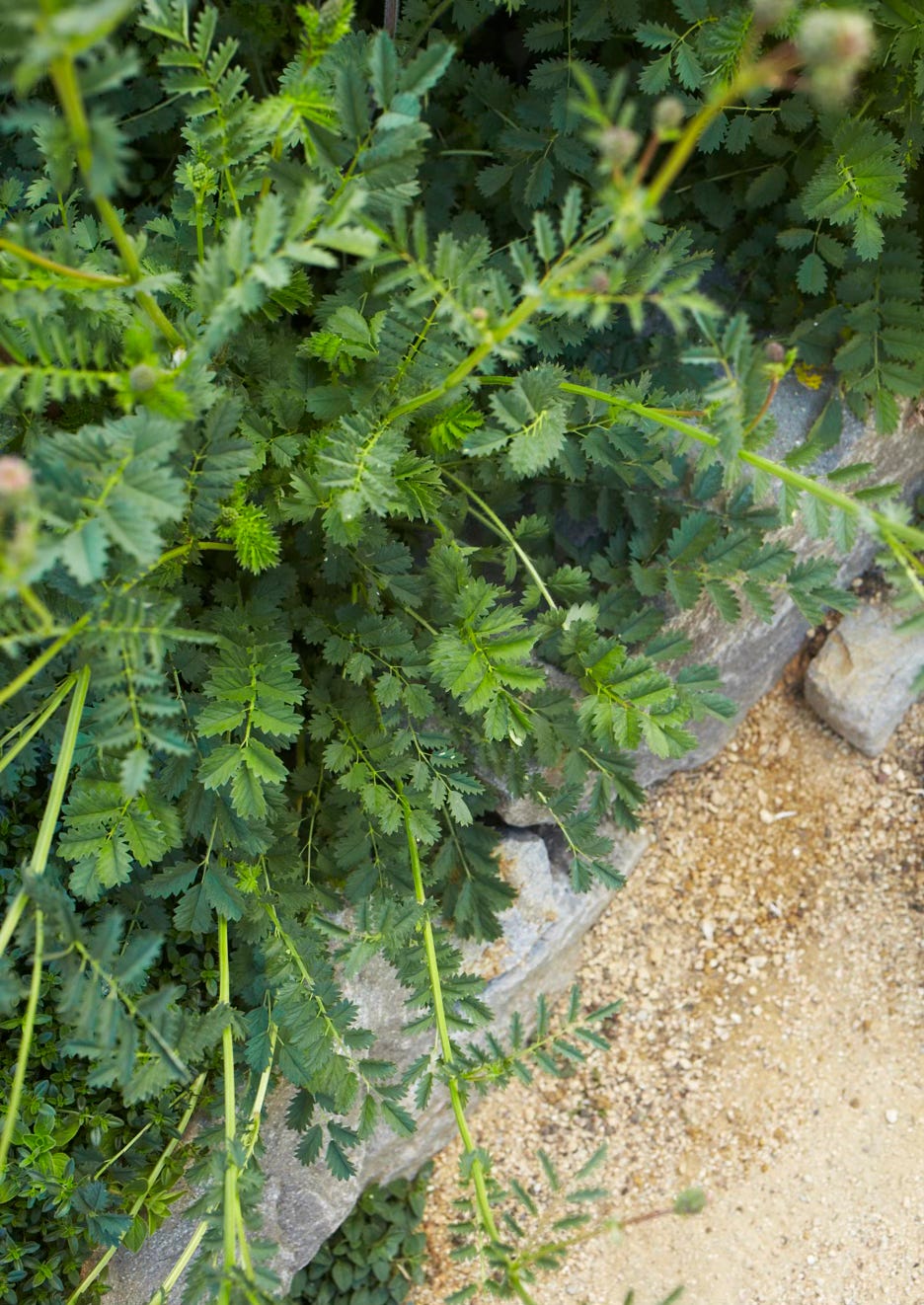
I plant salad burnet along pathways for easy access, because I love to snack on it while we work. Don’t be fooled by its delicate appearance—this is a hard-working plant. Perennial in USDA zones 4 to 8, it can be harvested until the first snowfall. Plants grow 15 to 35 inches (38 to 90 cm) tall and spread to about 12 inches (30 cm). These drought- dolerant plants will grow in most soils, though they prefer moist soils and sunny conditions.They tolerate partial shade but not full shade, making them a great planting under a fruit tree.
Salad burnet is easy to grow from seed, or you can transplant plants as seedlings, though it is a bit more complicated when it comes to reproduction. The plants are hermaphrodites that produce male and female flowers. The flowers are not self- pollinating and pollen must be distributed by wind, bees, or other insects for the plants to reproduce. When they’re successful, watch out! Salad burnet will reseed and freely produce new plants.
As with any leafy plant harvest, do not harvest salad burnet in the high heat of the day or you’ll be left with a handful of wilted greens. Harvest in the cool of the morning or evening instead. Rinse the leaves in cold water and use a salad spinner to dry them. Use the greens immediately or store them wrapped in a clean towel or storage bag in the crisper section of your refrigerator. Salad burnet typically lasts a week or two in the fridge.
Salad burnet is the basis for spring herb salads and makes a great vinegar infusion. Try adding a bunch of finely chopped leaves to crème fraîche–based dips for a delicious cucumber flavor kick. Add a few leaves to your mixed garden salads, enjoy with sliced melon, or use it instead of mint in sparkling water and cocktails.
This salad is a simple celebration of the spring garden. It is not fancy and too delicate to be covered in lots of dressing. You want to taste each of the newly sprouted herbs. It will also not keep, so harvest only the amount of salad burnet and herbs that you need. Here’s a good rule of thumb: A handful of herbs equals one serving, so if you’re serving four people, you will need at least four handfuls for your salad.
MAKES 4 SERVINGS
4 handfuls of garden herbs, such as salad burnet, chervil, flat-leaf parsley, French sorrel, mint, nasturtium leaves, and peppermint candy flower leaves
Olive oil
Kosher or sea salt
1 lemon
5 to 10 stems of freshly harvested edible flowers, such as bachelor’s buttons, borage, viola, calendula, and nasturtiums.
Rinse the herbs in a bowl filled halfway with cold (not warm) water. Gently swish the herbs in the water to loosen any dirt or lingering insects, lift the herbs out, and place them in salad spinner. Give the herbs a gentle spin, and then lay them on a clean cloth. Herbs must be sufficiently dry because the olive oil will not adhere to wet leaves.
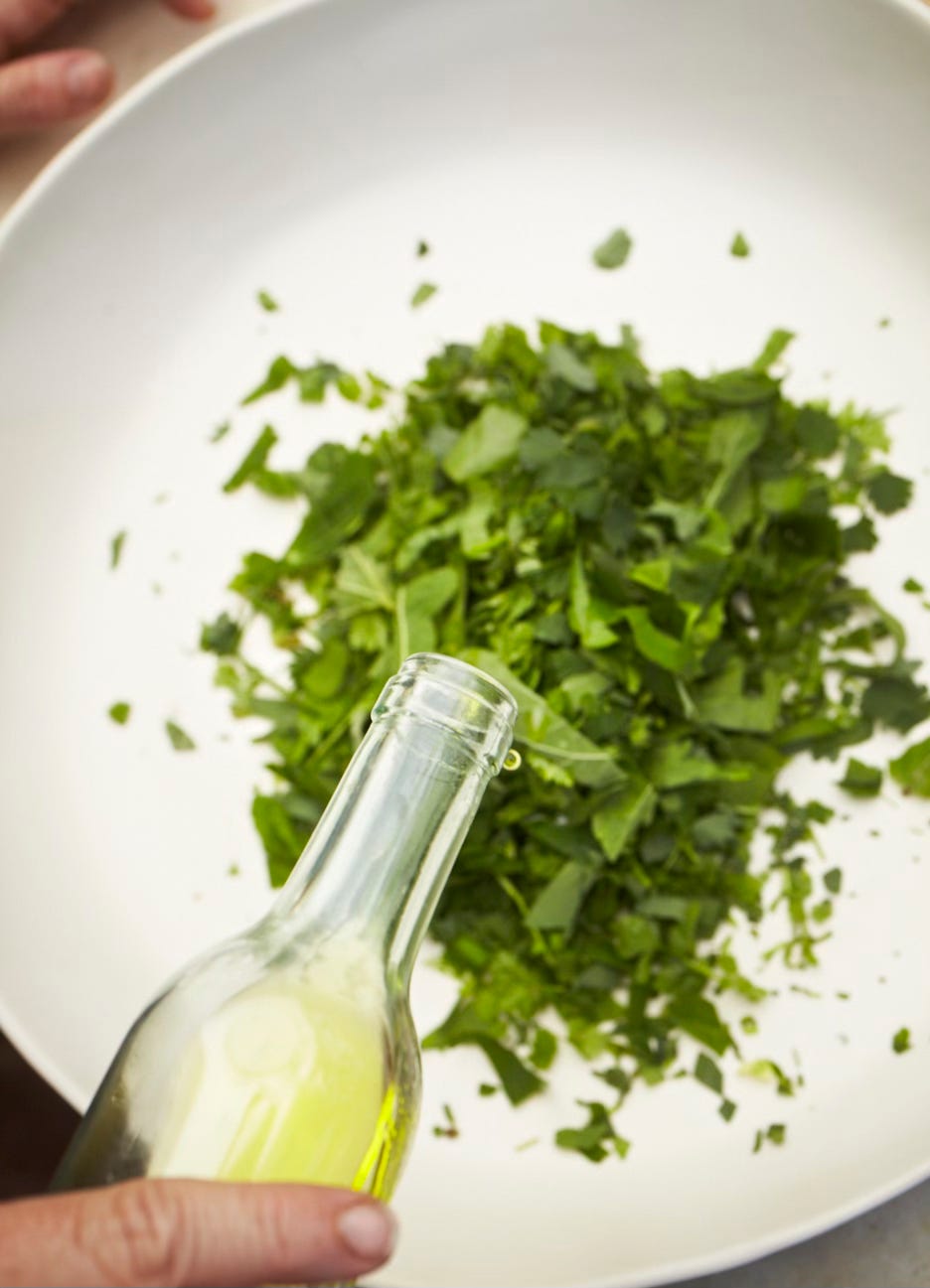
Gently chop the herbs and place them in a salad bowl. Drizzle olive oil over the herbs, sprinkle with salt, and gently mix. Add a squeeze of lemon and mix again.
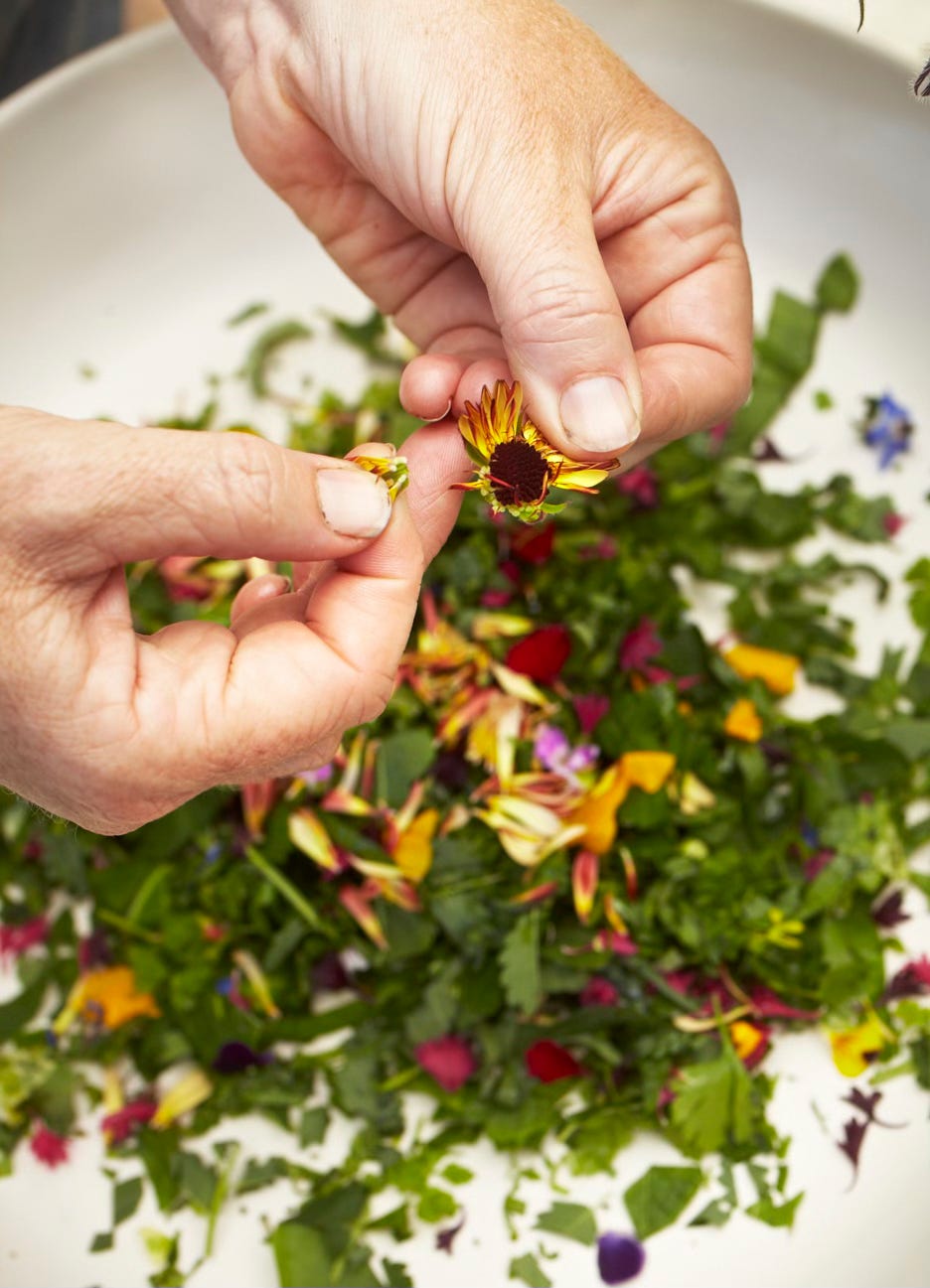
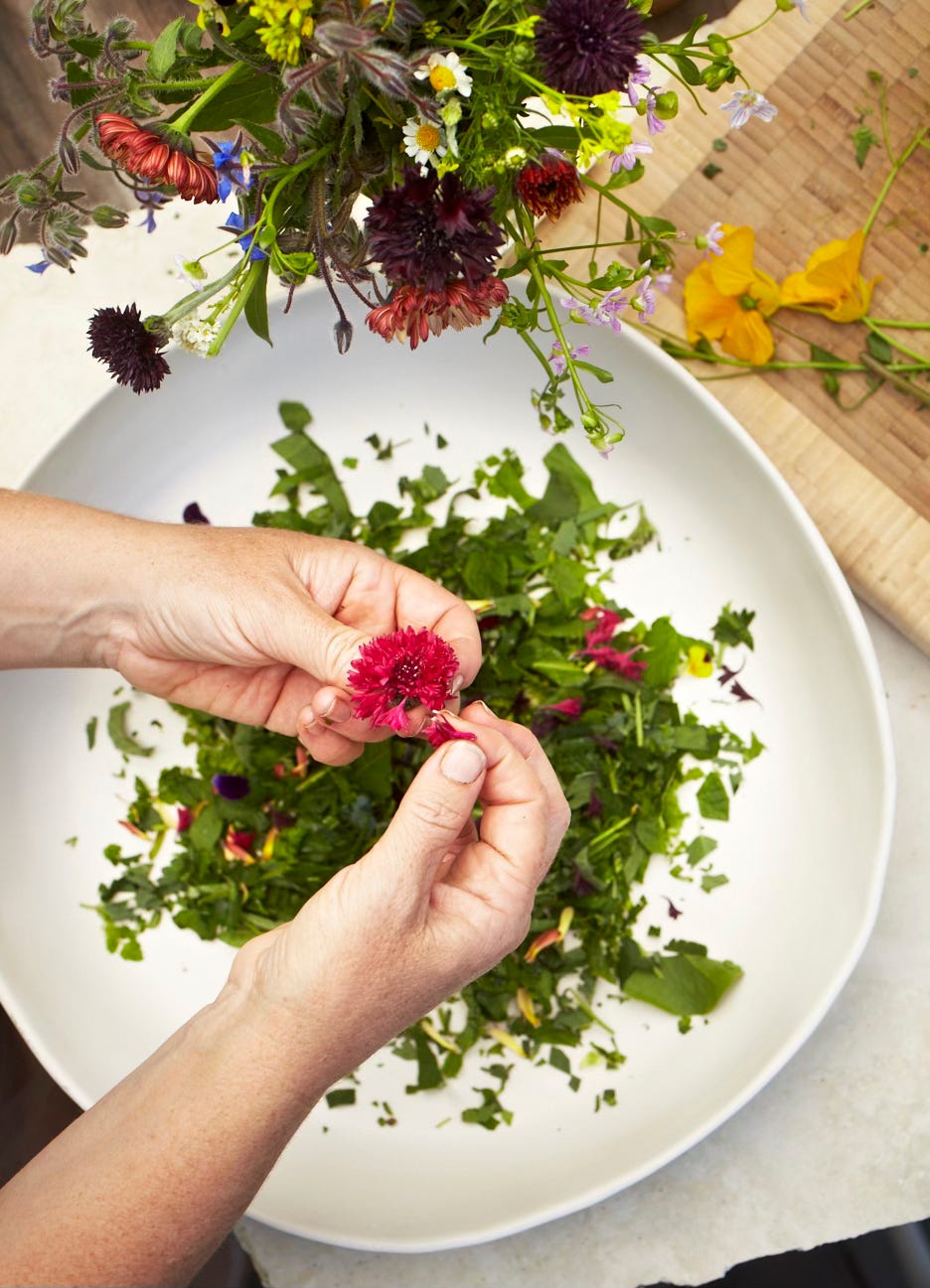
Remove the petals from the edible flowers and add them to the salad bowl after the greens are dressed. Alternatively, the flower petals can be added to individual plates before serving.
Serve immediately & Enjoy.
May 7, 2026 — Edible Flower Workshop. Lafayette, Ca. Learn how to grow, harvest, and arrange stunning blooms that are as delicious as they are beautiful.
May 9, 2026 - Tea Garden Workshop at UC Botanical Gardens, Berkeley, Ca.
No posts
Comments
Nothing yet. Say the first thing.
Sign in to join the conversation.