
Adding edible flowers to your cooking and cocktails is a surprisingly easy way to use your harvest. They add fresh dabs of color and introduce unique flavors to your dishes. As always, use only edible flowers that have been grown organically and not sprayed with chemicals or pesticides. As exciting as it is to grow food throughout your landscape, growing edible plants with common sense and food safety in mind is paramount to healthy living. As an edible gardener, food safety is always a design consideration when I plan a garden.
If your home is older (pre-1978), it may have lead paint in its past. Have your soil tested. Heavy metals usually do not travel far, so if you want to plant edible flowers or other food based plants in-ground next to your house, you should absolutely test your soil. What a plant eats, we end up eating, so if our plants are grown in contaminated soil, we’re exposed to the contaminants as well. Likewise, if a fence is constructed of pressure-treated wood (made with arsenic), surrounding soil might include some heavy metal contamination. Designate these spots as places for non-edible plants or plant edible flowers in containers.
Choose food-safe materials (natural wood, corten steel and ceramics, for example) for growing containers, and avoid planters with pressure treated wood and possible toxic stains or paints. Finally, if you have pets, create a separate space in your garden for them so that they are not potentially contaminating your edibles.
Organic gardening and food safety go hand in hand. As with other contaminants, when your food plants are exposed to toxic pesticides, those pesticides end up in what you harvest and eat. If you are not already gardening organically, this is your opportunity to learn and implement organic gardening practices and principles.
One major principle in organic gardening is the need for beneficial insects and pollinators— and flowers to attract them. The great news is that the flowers we love to bring indoors to fill our vases and garnish our salads are the same flowers that pollinators and beneficial insects love, too.
And a note on foraging. If you are harvesting edible flowers while on a hike or on a foraging trip, it is good to keep food safety in mind here as well. Try and harvest flowers above the dog pee zone if you are on a trail frequented by folks with lots of dogs. If a walk/harvest area it right by a busy road, try and harvest a foot or two deep into a planting and not right next to the road where flowers are exposed all day to the road. And lastly, if foraging, try and have a sense of where you are harvesting your edible flowers. Is this location a place where pesticides like Round Up are used to keep weeds at bay? Are you on public land or private property? Keeping food safety in mind and just using common sense goes a long way to making sure that you are not inadvertently exposing yourself and others to toxins.
Lastly, know your flower. The flower of a plant has the same medicinal and flavor properties as the plant itself. This goes for toxic flowers as well. Hellebores, foxgloves, delphiniums and so many more flowers are beautiful in your cut flower garden but will give you a hell of a stomach ache or worse, if digested. Do not serve flowers on your cakes that are toxic. I’ve seen it on Instagram -- beautiful cakes decked out in flowers but when you look closely the flowers chosen to decorate the cake are hellebores and foxgloves. No one should eat that cake.
For beginner gardeners and those gardening with children, I recommend planting only edible flowers alongside your vegetables in designated edible beds. That way there is no confusion whether the flowers are edible or not. Edible flowers are beautiful and many are staples of the cut flower garden, but we start off harvesting the flowers for food purposes just in the designated food beds to avoid confusion and potential mishaps.
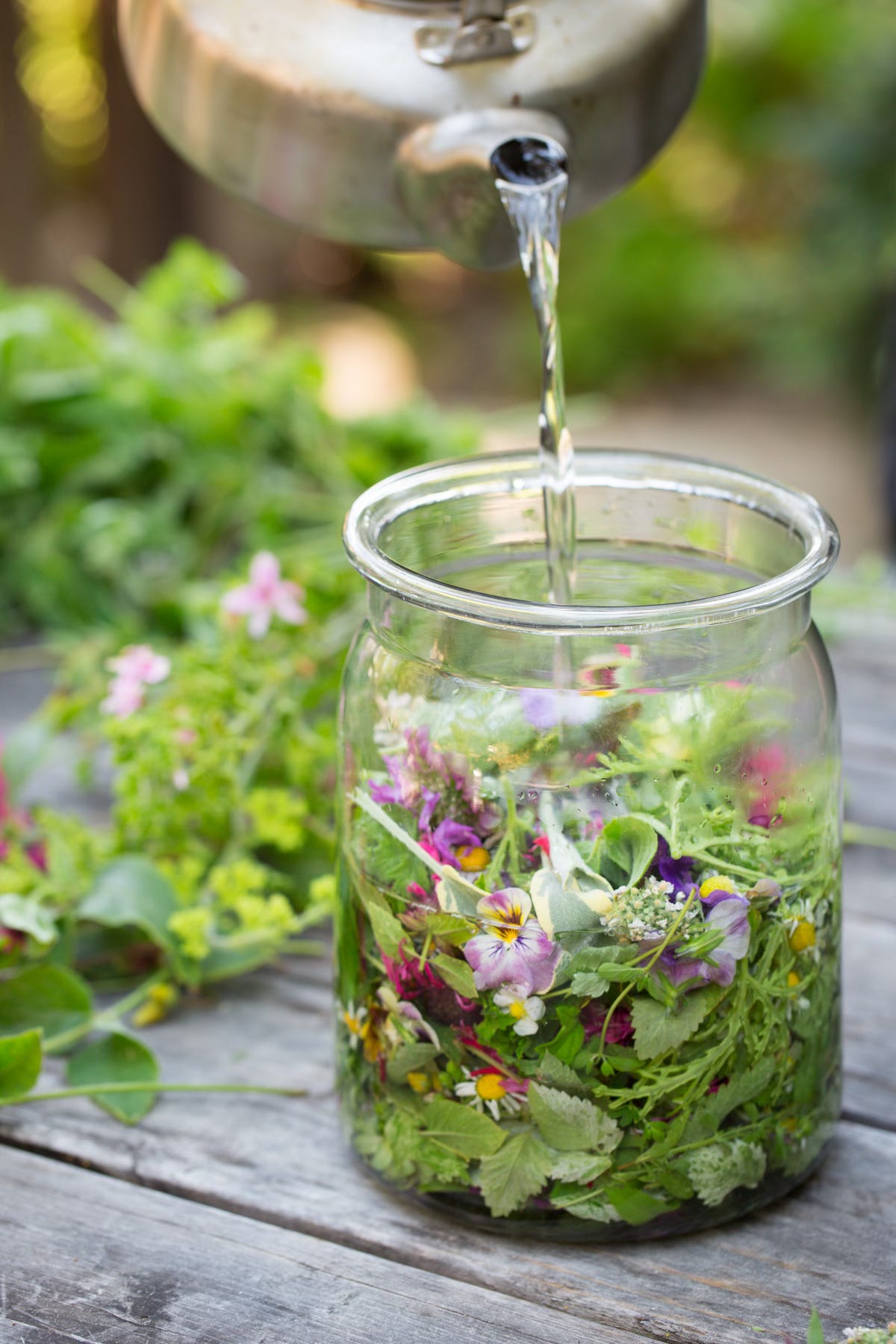
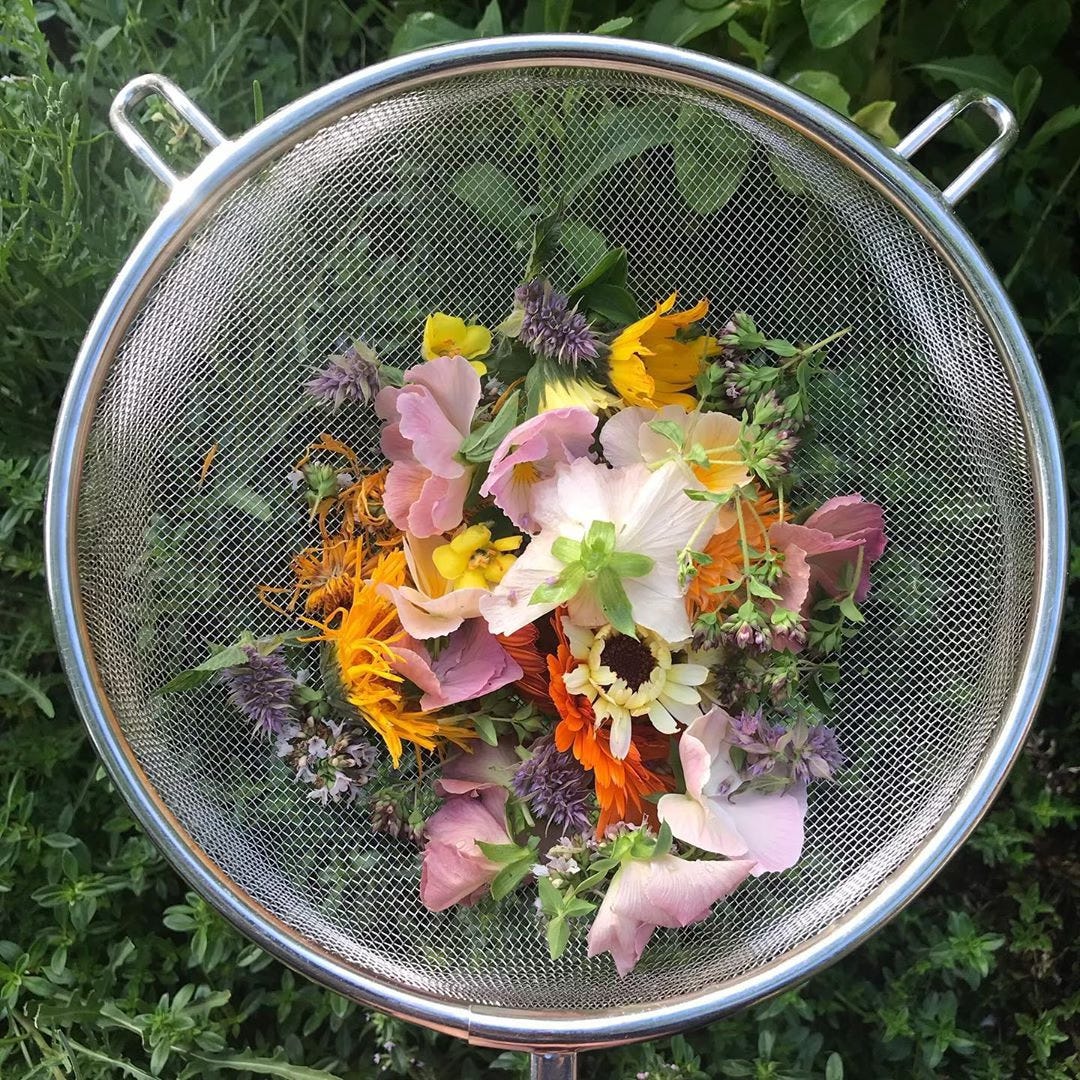
Now to the fun part, how to harvest your edible flowers. Pick your edible flowers in the coolest part of the day, usually the morning. Pick flowers that are just opening, not already fully open or spent flowers for best results. Immediately place harvested stems in a vessel with cool water and keep them out of direct sunlight. Taste your edible flowers before adding them to your dishes. Most edible flowers have a sweet or neutral taste but have bitter centers, so we usually eat only the petals. For borage, we also remove the thorny backside of the flower. Once you’ve finished garnishing your dish or beverage, you can save leftover petals by wrapping them in a cloth and storing them in the crisper of your refrigerator for up to 2 weeks. Alternatively, you can keep your edible flowers in a vase on the kitchen counter to remind yourself that you have edible flowers right at your finger tips. Simply harvest petals throughout the week from your arrangement and add to your nightly dishes and cocktails.
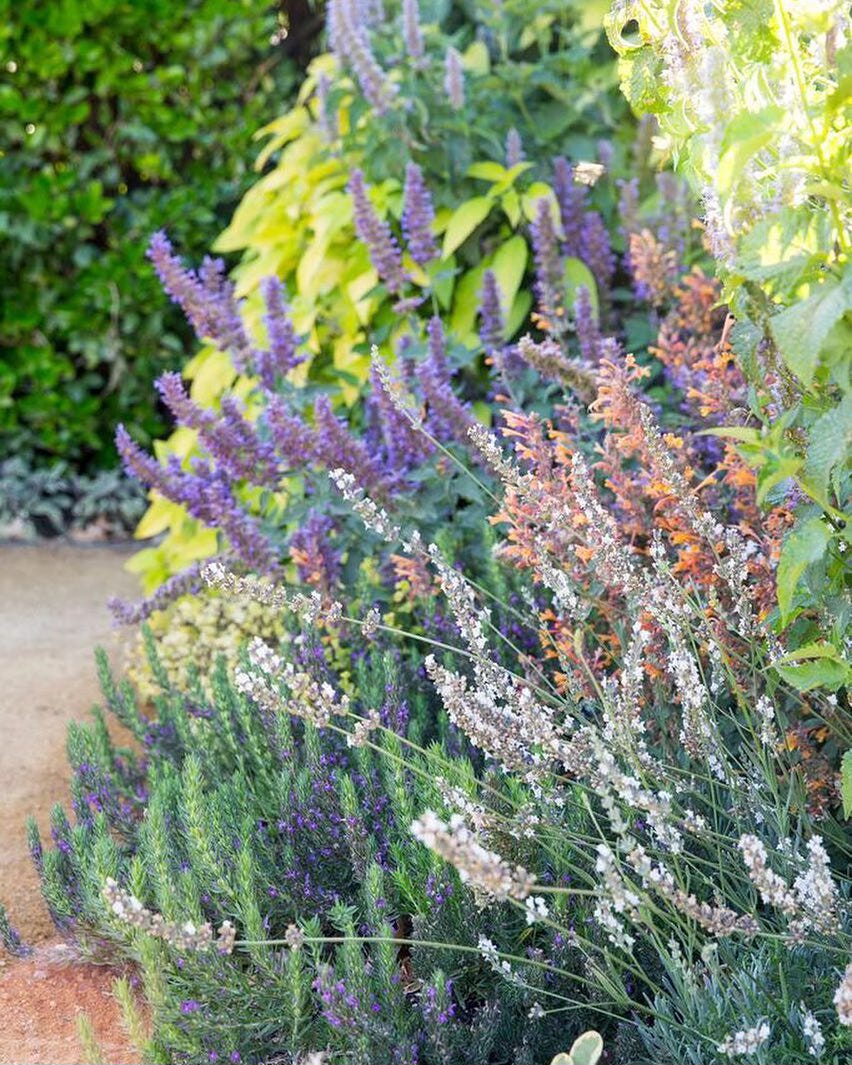
Anise hyssop & other Agastaches: Add to summer fruit & herb salads and brew leaves and flowers for iced teas.
Bachelor’s Buttons: One of my favorite edible flowers, Bachelor’s Buttons’ tiny petals remind us of confetti. Pull the petals from the center of the flower and use them as a pretty garnish for anything from soft cheeses and salads to cakes and cocktails. They also are fantastic dried.
Borage: Garnish Champagne, Pimm’s Cups, and other cocktails with the blue and white star shaped flowers. Borage flowers taste a bit like cucumbers and are fantastic as a garnish to any vegetable dish or salad.
Calamintha: This non-invasive mint alternative is a great tea plant. Garnish vegetable salads, pasta dishes, roasted vegetables, and mushroom bruschetta with its flowers.
Calendula: Harvest calendula flowers and add the petals to salads and herb butters for an instant pop of color; sprinkle them on as generously as you’d like. Use calendula as a garnish in salads, sushi, fresh spring rolls, desserts, and avocado toast, really anything you chose.
Flowering basils: Garnish tomato salads, herbal iced tea, and summer cocktails
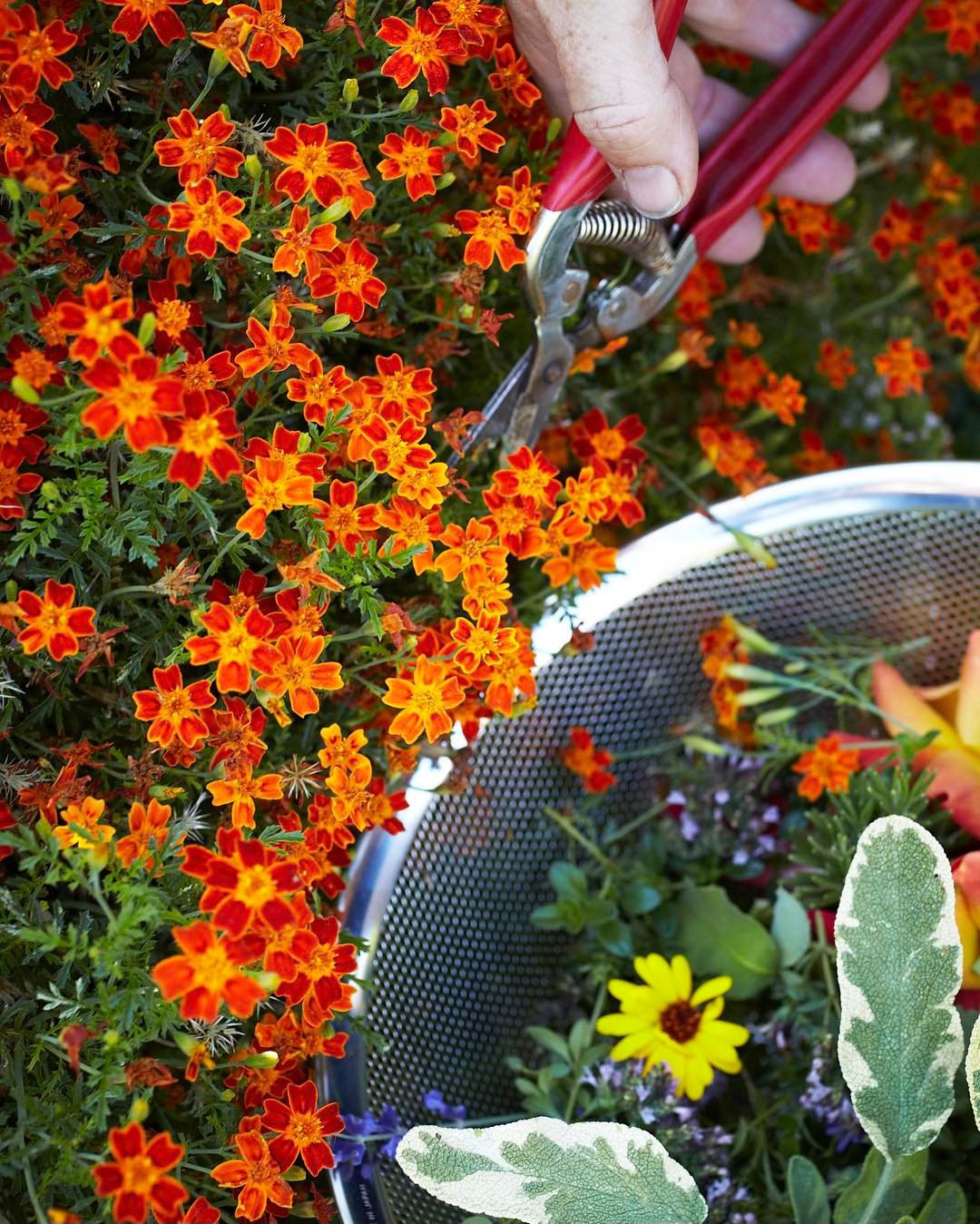
Gem marigolds: Float them in cocktails, especially Gin and Tonics. The edible flowers can be used whole to infuse bitters (where their bitter centers are appreciated and needed), or separate the petals to sprinkle over a dish for an aromatic, colorful lift. Gem marigolds also create a beautiful dye for textiles.
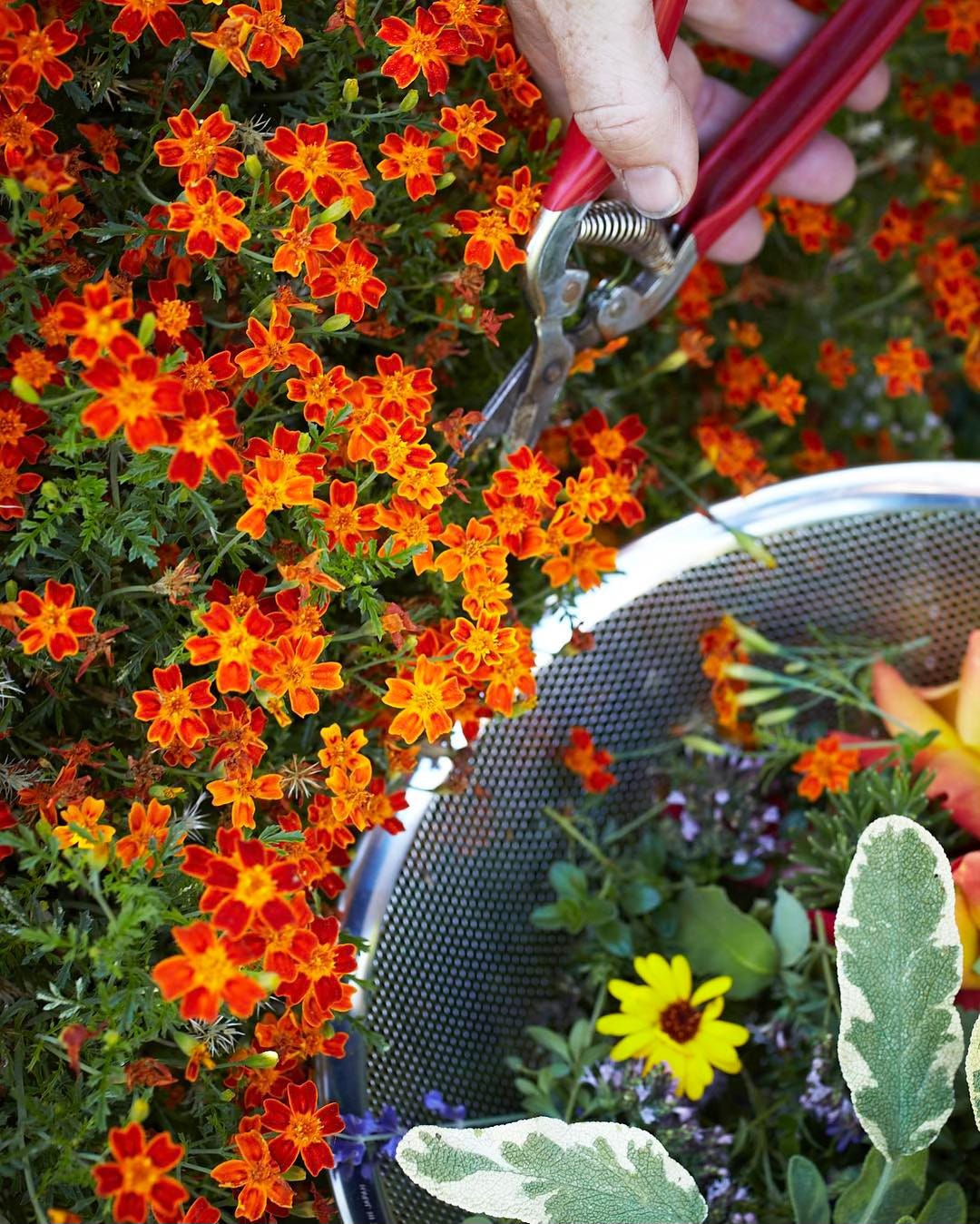
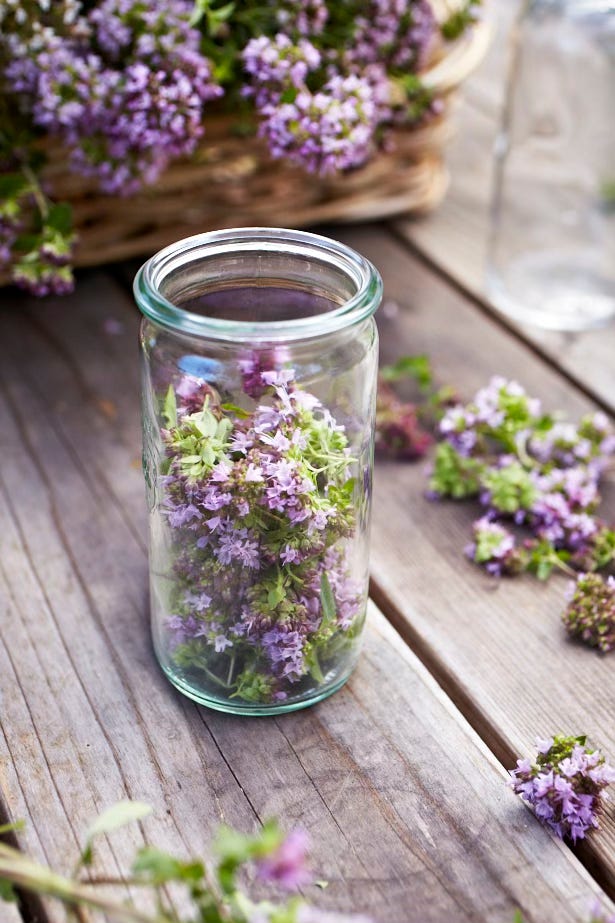
Gem marigold & herb harvest Herb Flowers: There’s no need to harvest all of your herbs before they flower. Let your herbs flower for the pollinators and for the edible flowers. Oregano is our number-one plant in the kitchen gardens we design not only because it’s stunning and tasty but also because it lures all sorts of pollinators. All herb blooms bring texture and fragrance to a homegrown herb bouquet and boost the flavor profile in salads and infusions. Many herbs possesses medicinal properties, so vinegar infusions made from herbs are not only great on your salads but can be taken at the onset of winter colds.
Lavender: Please remember that we eat the English or Angustifolia varieties, like Hidcote and not the French varieties, like Provence that are used for perfume products (and taste like soap). In the kitchen, we use lavender to flavor salt and sugar, to brew tea, infuse cream for ice cream and to make aromatic simple syrups for sodas and cocktails.
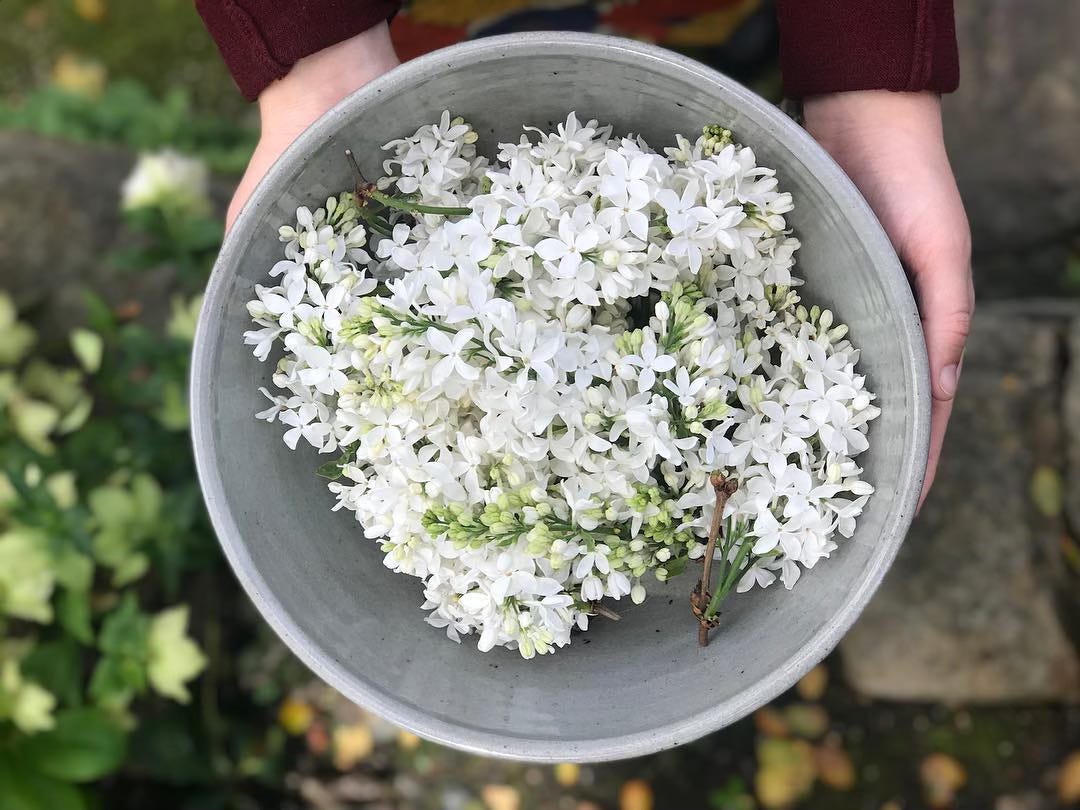
Lilac: Garnish vanilla cupcakes or scones, add to lemon-based beverages and salads. Make cordials and simple syrups for cocktails.
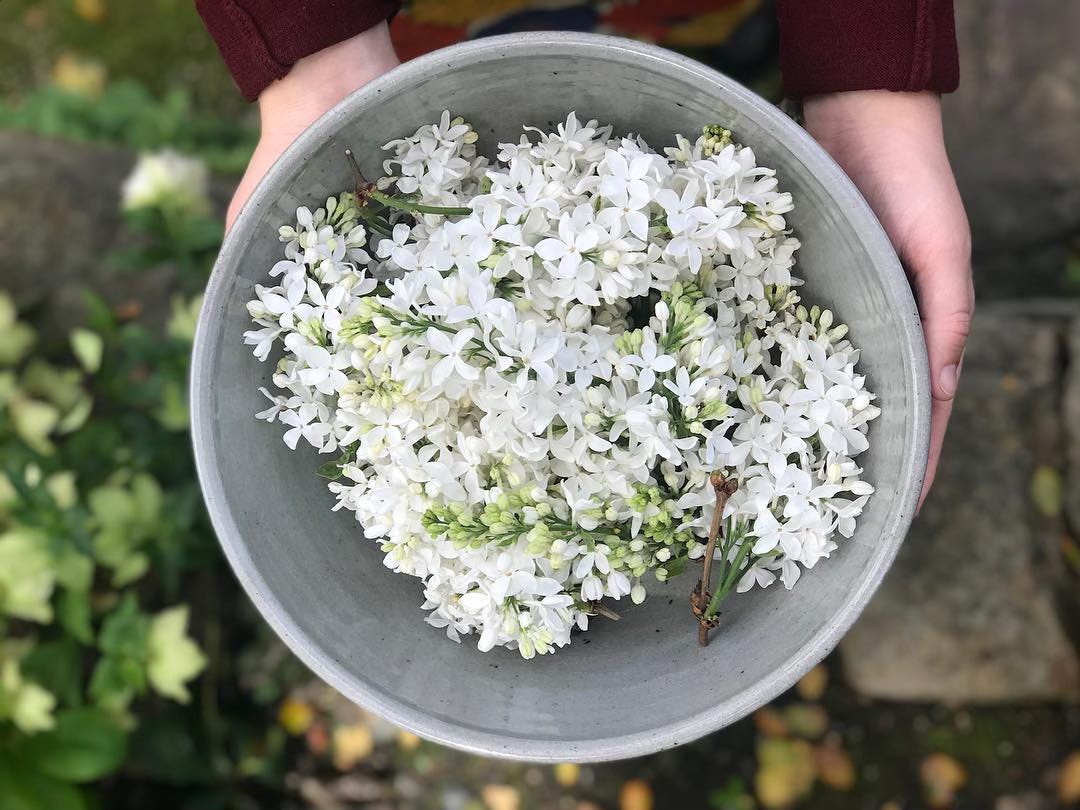
Make cordials and simple syrups for cocktails with lilac flowers. Nasturtium: All parts of the nasturtium plant can be eaten. Larger leaves can be used to wrap other ingredients, similar to grape leaves but with a spicy kick. The blooms are a go-to edible flower in all of our salads. Pickle the seeds for a caper substitute.
Peppermint candy flower: Garnish cheeses, salads, and desserts. I wrote about this unique edible flower here.
Rose: Add to salads, use to top ice cream, baked desserts, vinegars, baked goods, and teas. Make rose petal jam, simple syrups and cordials.
Shungiku: Use the flower petals as a garnish for soups and salads. Young leaves can be cooked like spinach or used in fresh salads. Lightly steamed or boiled, these greens have a mildly grassy, herbaceous taste. Open flowers and unopened flower buds (pearls) can be used to make a beneficial herbal tea. The Japanese dip the flowers in sake and eat them at the beginning of a meal to confer good health and long life.
Viola: The foliage and flowers of viola are as nutritious as they are pretty. The leaves contain healthful vitamins and minerals, and the blooms are rich in vitamin C. (Avoid eating the roots and seeds because they can be irritating to some.) The flowers make a beautiful, edible garnish for salads or atop cakes, and can be blended into compound butters and sprinkled on soft cheeses. Use viola leaves in place of or in addition to other green leafy vegetables by adding them to salads, soups, and steamed or sautéed greens. You can also use the leaves to make tea or an olive oil or water infusion.
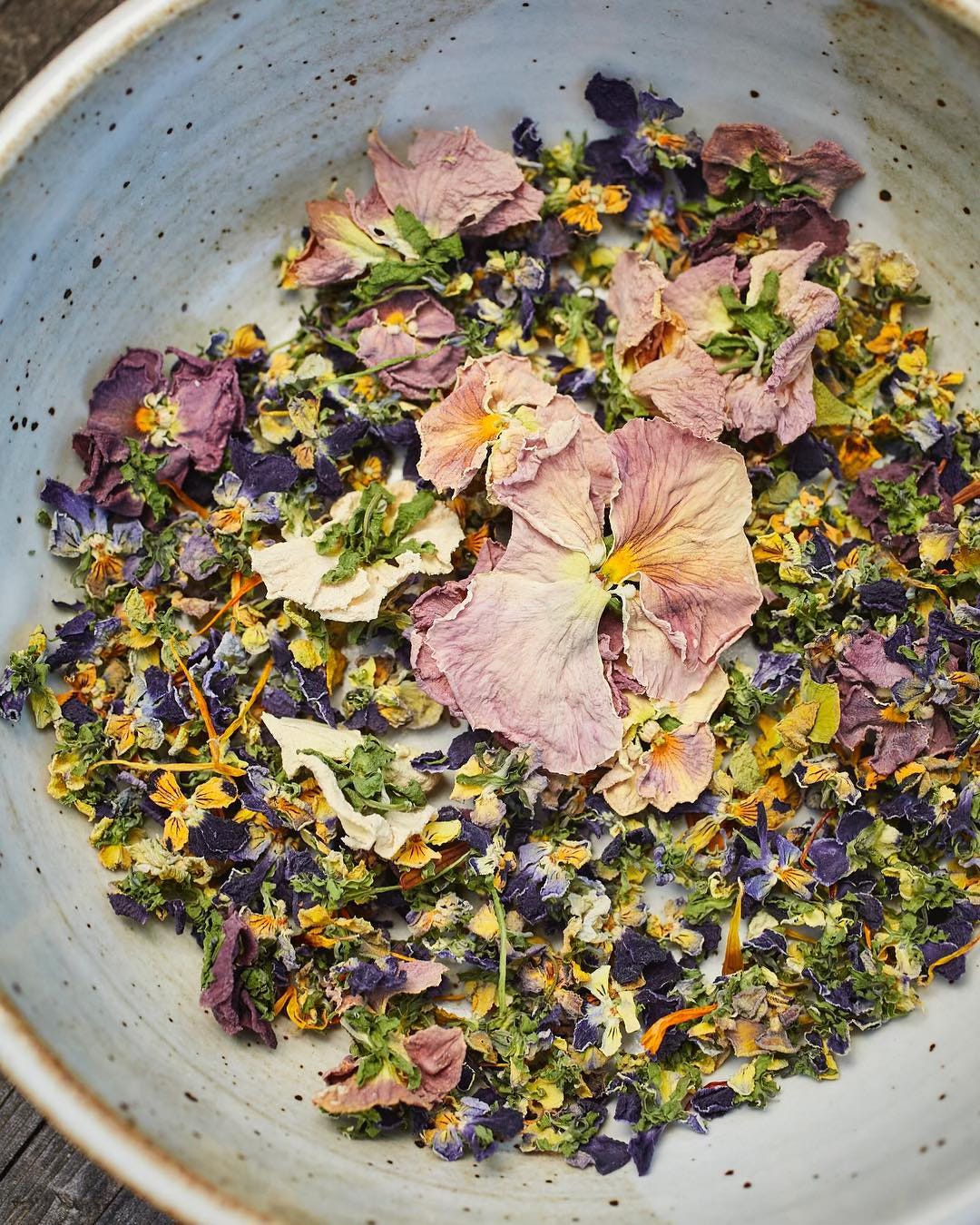
If you haven’t already, now’s a great time to add some of these edible flowers to your garden. For a little inspiration, here’s a quick video from my edible flower garden, filmed yesterday.
I’m teaching two classes this week here in the Bay Area, then heading to NYC for my youngest’s graduation, and on to London for the Chelsea Garden Show—my first time, and very much a bucket-list moment. I’ll be sharing plenty along the way, so expect a steady stream of photos in my Substack notes.
May is busy, in the garden and beyond. I hope you find some time this week to be in a garden and simply enjoy it.
Until next time,
Stefani
May 7, 2026 — Edible Flower Workshop. Lafayette, Ca. Learn how to grow, harvest, and arrange stunning blooms that are as delicious as they are beautiful.
May 9, 2026 - Tea Garden Workshop at UC Botanical Gardens, Berkeley, Ca.
No posts
Comments
Nothing yet. Say the first thing.
Sign in to join the conversation.