
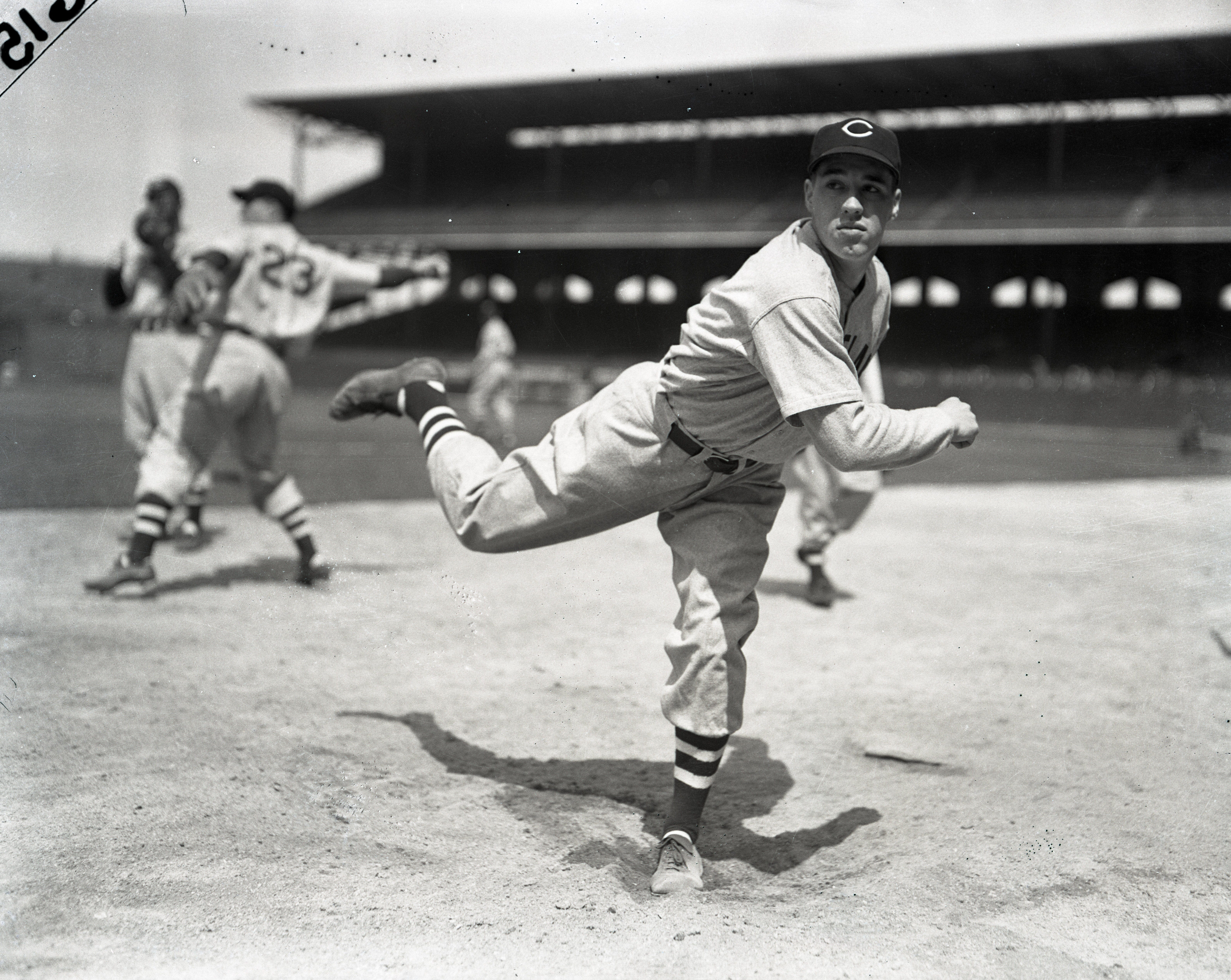
90 years ago today, a 17 year old kid was given an opportunity that most of us, if not all of us, would do various sketchy things to have. Bob Feller took the mound for his first major league start and struck out 15 St. Louis Browns, two shy of Dizzy Dean’s major league record. Feller hadn’t graduated high school yet, and would go home to Iowa that fall to finish his senior year, right around the time a commissioner’s investigation nearly unraveled the whole arrangement that had gotten him there in the first place.
A Contract Signed on the Back of a Napkin
Cleveland scout Cy Slapnicka found Feller on a sandlot in Van Meter, Iowa, in 1935, after actually driving out to scout a different pitcher entirely and never bothering to watch him. He signed Feller instead, on the back of a napkin dated July 22, 1935, with his father’s signature required since Feller was only 16.
The agreement listed Cleveland’s farm club in Fargo-Moorhead, North Dakota, as the team of record, guaranteed Feller could visit home during the season, and even included a clause protecting his right to keep playing high school basketball, all in exchange for one dollar. The plan was for him to report to Fargo-Moorhead the following year. He never did.
His contract was quietly transferred to New Orleans instead, but that never resulted in an appearance either. Slapnicka brought him straight to Cleveland that summer, had him work out with the team, and got him into an exhibition game against the Cardinals that July, where Feller struck out eight batters in three innings, including Leo Durocher twice. The Indians called him up to the majors weeks later, skipping the minor leagues entirely.
A Manager Who Kept a Reliever Warming Up Just in Case
By the time Feller got his first real start on August 23, he’d already made several relief appearances. Manager Steve O’Neill wasn’t fully convinced a teenager was ready for it, and started him mainly at Slapnicka’s urging, keeping reliever Denny Galehouse loose in the bullpen in case things fell apart. They didn’t. Feller struck out 15 Browns and won, 4-1. O’Neill’s postgame assessment was blunt: the kid had been perfect.
An Investigation Already Underway
What the crowd at the ballpark that day didn’t know was that iron-fisted Commissioner Kenesaw Mountain Landis had opened a formal investigation into Feller’s signing just days earlier. Lee Keyser, owner of the Des Moines club in the Western League, had complained that Cleveland’s whole arrangement, signing a high schooler directly and routing him through farm teams he never actually played for, broke the rules governing how amateur players were supposed to be acquired.
Landis, adhering to his well-known reputation, made no secret of what he thought of the napkin contract, calling it a cover-up and fining Cleveland $7,500. Then he asked Feller directly whether he wanted to become a free agent, a status that reporters expected could have sparked a bidding war worth well over $100,000.
A Kid Who Said No
Feller told the commissioner he wanted to stay with Cleveland. His father wanted the same thing badly enough that he’d told Landis he was prepared to sue if the ruling went the other way. Landis let the fine stand and let Feller stay put.
Slapnicka wasn’t done bending the rules either. He’d used the same playbook that year on a first baseman named Tommy Henrich, offered by Landis the identical choice Feller had just faced. Henrich took free agency and signed with the Yankees instead.
Home for His Senior Year
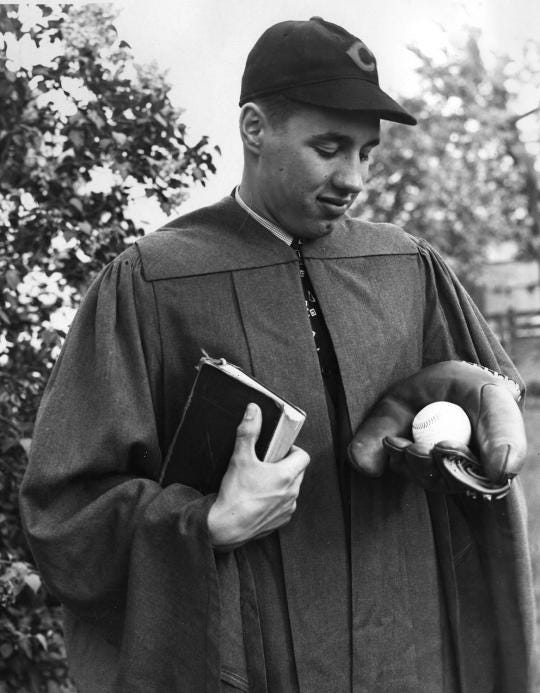
Feller finished his rookie season with a 5-3 record and the best ERA on Cleveland’s staff, then went home to Van Meter to finish high school and graduate the following spring, before rejoining the Indians for good in 1937. Two years later he set a new single-game strikeout record that stood for decades. By 21, he’d become the first pitcher in history to win 24 games before turning that age.
None of it required the free agency Landis had offered him outright. The version of the story that gets remembered is a phenom striking out a stadium full of grown men on a random Sunday in August. The version underneath it is a 17-year-old who was handed the choice to walk away from the only team he wanted, and turned it down himself.
Sunday Stories · Timeless baseball stories, delivered weekly
Comments
Nothing yet. Say the first thing.
Sign in to join the conversation.