
Since starting The Auntie Bulletin, I’ve participated in many conversations about how auntiehood shows up in cultures other than my own. (By “my own,” I’m referring to the culture of middle class or affluent, predominantly white people in countries like the U.S.). In such conversations, someone will point out that in India there are tons of aunties, and maybe reflect on what “auntie” means in an Indian context. Or they’ll remark that in Black American culture there are tons of aunties, or in cultures throughout Latin America as well as in Latine culture in the U.S. Or they’ll bring up aunties in Indonesia or Vietnam or The Philippines or Ethiopia. Auntiehood is more common in some cultures than in “ours,” will be the takeaway, and that’s to our detriment.
Which, yes to all that. It’s all true, except for one important point.
The important point is that auntiehood isn’t just the norm in some cultures; it’s not even just the norm in many cultures. In fact, aunties are and have been the norm in pretty much all human cultures for pretty much all of human history, up to and including today. Alloparenting is, in fact, what social scientists call a “cultural universal.” It’s everywhere. Every culture has alloparents, and lots of them.
Except “us” — whoever precisely “we” might be.
“We” educated conspicuous consumers who live in nuclear families at the center, not the fringes, of industrialized societies, we who have always gotten to see people like ourselves represented in popular American media – we are the weird ones. In fact, we’re the WEIRD ones, where “WEIRD” is a technical term coined by psychologists Joseph Henrich, Steven Heine, and Ara Norenzayan to refer to people living in societies that are Western, Educated, Industrialized, Rich, and Democratic. We WEIRD people generally perceive ourselves as the standard, representative human subjects when in fact that’s not the remotely the case. In fact, we’re outliers in many, many ways.1
Not having, and later becoming, alloparents is weird. Having, and later becoming, alloparents is what humans usually do.
All of which I’ve been meaning to say loudly and repeatedly at The Auntie Bulletin since I started this newsletter nearly two years ago, but repeatedly failing to get around to. I needed a really good entry point, you know? I needed to do justice to the important reality that every human culture except my own is and always has been fully, beautifully auntie’d up.
Then my buddy Sri Juneja, who writes the wonderful kids’ book newsletter Readable Moments, emailed me about the recent trip she took with her four-year-old to visit her extended family in India. She wondered if maybe it’d make a good topic for an Auntie Bulletin interview? And I was like yes oh my gosh yes heck yes we must. We must!
So here is that interview, and aunties, it far surpasses even what I had hoped.
Do not miss the part where Sri’s mom, newly immigrated to the United States, speaking little English and with two small children, is taken under the wing of (but never converted by) the friendly local Jehovah’s Witnesses.
Do not miss finding out what the word for “mother’s sister” means in Hindi.
Do not miss the part where Sri and I have a brilliant brainstorm about how to help us WEIRDos actually accept our neighbors’ offers of support.
Do not miss the part where Sri shares what a four-year-old learns when literally every adult in her vicinity is part of her family.
What Sri has to tell us about having that elusive village we all long for and are trying to build – it is beautiful without being sentimental, it is easy to imagine but also realistic. And, since Sri is not only Indian but also American, she’s got some very clear insights about what the heck we’re doing to ourselves here in the States, too.
Read on. You’re going to love this one.
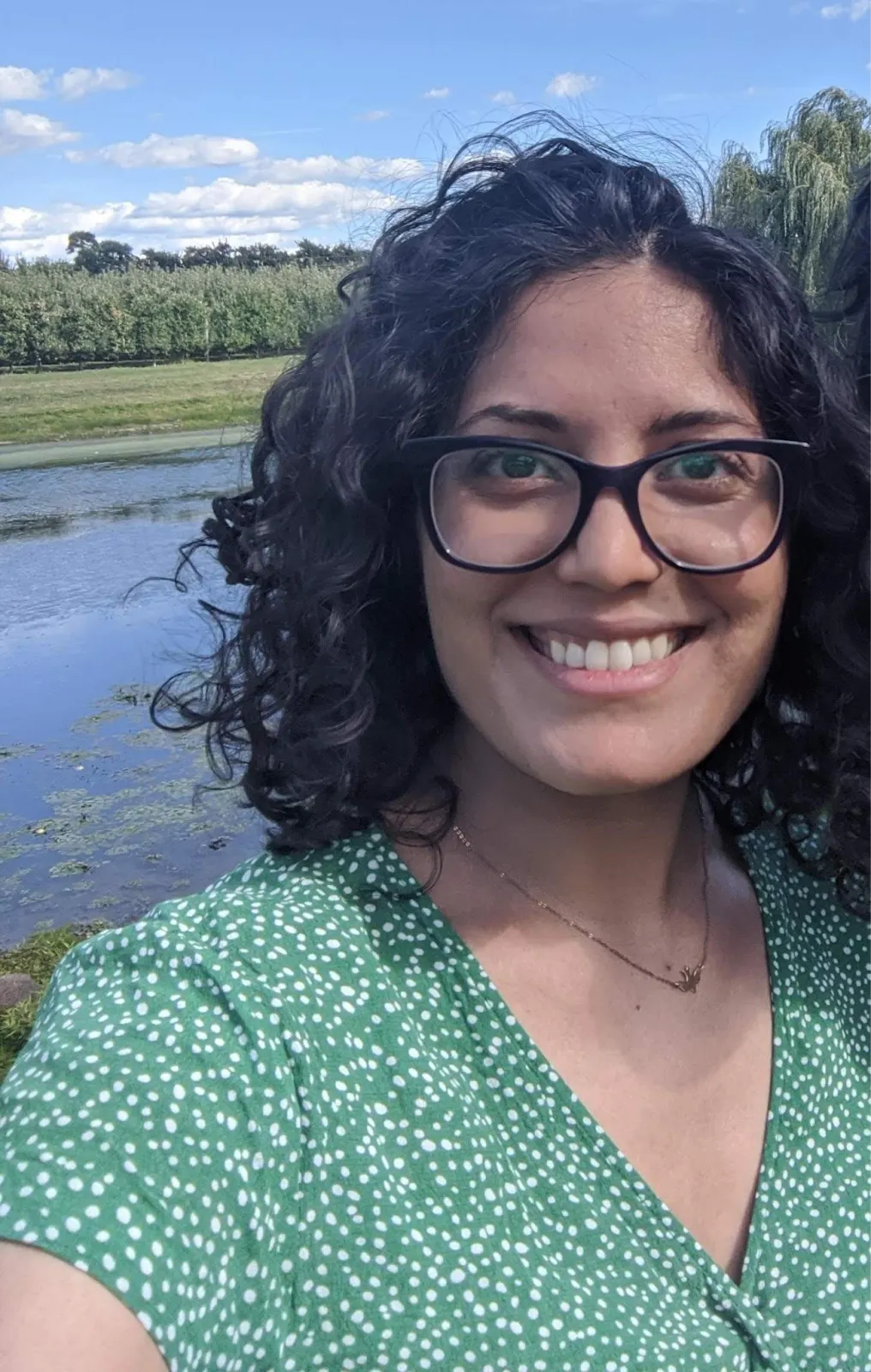
Sri Juneja: When I first started my professional career out of college, I joined an American company based in India, and one of the first things I had to do was a cross-cultural training. They asked all the American-born people without Indian heritage, “What is a value that Americans hold most dear?” And the first answers were independence and freedom.
Then they asked the Indian colleagues attending: “What’s the most important trait of Indian culture, the one that rises to the top?” And when I thought from that standpoint, I was like, “It’s family.” And that’s exactly what everyone’s answer was. Then they showed this slide with the top five most-named values for each culture. Family was like third or fourth or fifth for the Americans, but for us it was family at the top, full stop. That is our identity as a culture.
Americans think about community-based cultures as these hunter-gatherer, tight-knit communities, doing basket weaving together, trading babies off each other’s teats, but it can’t be done that way in the States because we value our privacy too much. And there’s nothing wrong with that. But like anything else, it comes with trade-offs.
In India, my maternal grandparents’ family have lived in the same house for more than a hundred years.
Lisa Sibbett: Wow!
Sri: And that house has three houses inside it.
Lisa: Like a compound?
Sri: It’s a compound — a huge courtyard. My aunt lives in one, my grandmother lives in one, and they rent out the third. It’s just so communal. Here, we don’t even open the windows. Everyone has fences. Everything about our architecture says, “This is your space, this is my space.”
In India, there’s so much less concept of my space, your space. My daughter was like, “Oh my god, this person is right next to me,” and I was like, “Yeah, you gotta lose that American ten-feet-of-bubble thing, it’s a country of billions of people.”
So it’s fascinating to me, because there has to be an American version of community that can borrow from that, but you can’t just replicate what’s happening in India. Everyone would end up pissed off at each other.
Lisa: Because it would be too much for an American sensibility, being that much up in each other’s space?
Sri: Exactly. When I go back, I really have to reset the way I approach things. I have to accept that if I’m letting my grandparents, my aunt, my cousins take care of my kid, I’m also letting them tell me how they think I should be raising her.
Lisa: And they share their opinions?
Sri: Very vocally. They’re like, “Why would you do it that way?” That’s the tug-of-war, right? As an American, I’m like, “Don’t tell me what to do with my child!” One time my grandmother, who’s very home-remedy-based, told me I shouldn’t listen to the pediatrician so much. She was like, “I know because I’ve raised my own kids, but I’ve also helped raise other people’s kids.” And I was like, “Yeah, but the pediatrician has a thousand kids’ worth of experience!” It’s very different models of information and knowledge-sharing.
And when you expose yourself to that kind of family community, you do open yourself up to – I don’t want to say criticism, because that’s such an American framing of it – but more like if you’re part of this family, you’re welcome to share what you think. As an American I’m like, “You don’t get to say that,” but on the Indian side I’m like, “Just be grateful someone loves your kid enough to care.”
Lisa: It sounds like you have to really recalibrate yourself and relax into, “Here’s how it is when I’m here.”
Sri: One hundred percent. I’m genuinely very grateful, because I love that my daughter feels comfortable moving between homes. My paternal side and my maternal side are next-door neighbors. I loved that growing up. My mom would say she’d barely see me, I’d just be running back and forth between cousins. I love that my kid gets to experience that when we’re in India: family everywhere. My family’s been in this one part of the state for hundreds of years, they know everyone who lives there.2 When my kid’s out and about, I’m still keeping an eye on her, but I know there are a lot of other people keeping an eye on her too.
Lisa: Everybody thinks of her as family.
Sri: Exactly. We know each other. That’s changing now as things modernize and people move around more, but the essence is still there. But there’s no perfect system: we love community, we want it, but you also have to be willing to let people into your life for that to work.
Lisa: When you describe the family compound, my first thought is, “Living the dream!” But it’s not completely the dream, is it? There are downsides.
Sri: Privacy is not really a thing.
Lisa: That would be so hard for me.
Sri: That’s exactly what I mean. In the U.S., we need an American-flavored version. We can’t just copy directly from Denmark or China or wherever. You need to think through what culturally makes sense here. I literally have to recalibrate my brain. “Nope, you’re in India now. Indian sensibility. Switch off the Western part.”
Lisa: So tell me about your situation growing up. You lived in India until age four. What do you remember from your early childhood?
Sri: My parents had an arranged marriage, and there are so many traditions in Indian culture that people follow. One of them is that when a woman gets married, she becomes part of this new family, she’s their person now. But when she gives birth, for the first forty days, she goes back home to her parents’ house with the baby. The whole point is so she can rest, be herself, heal, have love and protection – not that the baby wouldn’t be well taken care of at the in-laws’.
Lisa: But she’s not having to perform.
Sri: Right. She’s not having to defer to anyone, she can just be herself. Like with my mother-in-law, we have a great relationship, but I keep my mouth shut about certain things. Whereas with my mom I’m like, “I’m going to tell you exactly what I think.” So you get to be yourself instead of also managing this performance on top of an already exhausting life change.
So when I gave birth, my mom said, “I’m going to do this for you,” and I was like, “What do you mean?” It genuinely hadn’t occurred to me that I could do that in America.
Lisa: Live with your parents for forty days?
Sri: No, they came here. I told her, “I’m not going over there, you can come to me.” So they stayed with us for the first four months.
That’s the thing about family in India: it’s always expected that what you were given, you’ll give to someone else. Your parents received that help when you were born, so now I have absolutely no hesitation telling my mom, “You need to come babysit on this day.” I don’t even really ask so much as tell her — unless she’s busy, in which case she’ll say so, but if she can be there, she will be.
Lisa: Do you anticipate doing that for your own child someday?
Sri: A hundred percent. So in India that’s the first forty days of someone’s life, and then there’s a ceremony where the mother goes back to her husband’s family, and it’s understood that she’ll continue to be taken care of.
Lisa: There’s so much care built into the postpartum period.
Sri: Exactly. Although the dark side of it is that most of that care is performed by women who are already caring for everybody else. It’s not fair.
But I have so many friends who grew up being raised partly by their grandparents: Indian friends sent to India over summer break, Chinese friends, Eastern European friends, so many people who’d go spend two or three months with grandparents. As an American, it might not even occur to you that’s an option unless you have a really strong support system that’s told you so explicitly. So many other cultures just take it for granted.
I had a lot of trips as a kid where we’d go to India for a month – my mom doing her own thing, me doing mine, someone always keeping an eye on me. I had so many friends in the neighborhood to play with, it was kind of like a ‘90s summer child experience, but Indian flavor, you know? I’d have sleepovers with my aunts. I wouldn’t sleep with my parents, I’d sleep with my relatives, because it was more fun, like a slumber party.
Lisa: I love that. Do you have lots of cousins?
Sri: So many cousins. That was honestly one of the best parts of growing up, and we didn’t even go to India that often – we couldn’t afford to – maybe every three years. But because I’d been raised there for the first four years of my life, I still had a lot of memories of closeness and kinship to draw on. My brother, who was fifteen months old when we left India, didn’t have that as much. He had to rely more on me to help build those connections for him.
Even now, when I go back, I have a cousin who’s eight years older than me, but I think of her as my sister.
That’s another thing: the way Indians have names for relatives isn’t like here, where you’d just use someone’s name, or say “aunt” and “uncle.” In India, every relationship has a specific title. My dad’s younger brother is my chacha; my dad’s older brother is my tayaji. They’re both brothers, both uncles —
Lisa: But different words. And then different words again on your mom’s side?
Sri: Right. And what’s so interesting is how the language itself carries meaning. My mom would be called “mama” in Hindi, pretty standard. But her sister is called “masi,” which literally translates to something like, “like a mother.”
Lisa: Oh wow. That’s beautiful.
Sri: I love all my aunts, but my masi and I have the kind of relationship with her where I can almost take her for granted. Which you shouldn’t, but it reflects the level of affection I have for her. Part of my daughter’s name actually comes from her name, because I love her so much. It’s fascinating to me how even the language encodes the meaning the culture assigns to those relationships.
Lisa: So then what was it like for your parents in the U.S. when you were a kid? Do you know what their village situation looked like here?
Sri: It was rough. My dad was okay, because he’d go to work, but my mom was a stay-at-home mom who didn’t speak English very well. She’d been studying for a PhD in India, and that didn’t transfer to the States.
Lisa: And it’s not like you could keep doing your degree remotely back then.
Sri: Right, none of that existed in the ‘90s. It was really hard for her because we’d moved to a small town in Connecticut. There was only one other South Asian family there. I was the only South Asian kid in my school. As someone who didn’t speak much English at the time, she really struggled.
It’s an interesting story. She was taken in by Jehovah’s Witnesses, and they became her closest friends. They tried to convert her and that didn’t take, but to this day she’s still in touch with them. My mom told me the knock on that door came on a day she was really struggling: we were being difficult, and she was feeling incredibly lonely, because you couldn’t even really call India, it was so expensive and the calls weren’t that reliable. You were basically shouting into the phone hoping the other person could hear you. So she was having one of those days where she was thinking, “What have I done with my life?” And then this Jehovah’s Witness showed up.
Lisa: This feels like such an American story!
Sri: It was her first real foray into being American, honestly. They knocked, tried to pitch her, and she was like, “I don’t understand what you’re saying.” Somehow she managed to communicate that she was new here. And I think they realized: she doesn’t have anyone. So they took her under their wing. They found her English classes, they got her going to the library. She discovered the public library and she was like, “Oh my god, this is amazing, I’m bringing my kids here every day.” That was, I think, her first real sense of community in the States: that there were people here who cared about her even without a shared language. I think she sees the Jehovah’s Witnesses as her saviors, honestly.
Eventually more Indian families moved in. Although even with other Indians, my mom often had to use English to communicate, because we’re North Indian, and a lot of the families who moved in were South Indian.
Lisa: Different languages entirely.
Sri: Right, completely different languages, and culturally very different too. But my mom always says, “In those moments, you form community because you have to make it work.” I think that’s the kernel we need in American culture: not necessarily people you’d choose as your best friends, but people you foster a relationship with because you need each other.
Lisa: The people you have, rather than the people you’d pick.
Sri: Like, you don’t choose your neighbors, but it’s worth it to maintain a good relationship with them because if you’re ever in a dire situation, it’s that neighbor across the street who’s actually going to be able to help, not my mom who lives forty miles away. I think that’s something we could actually foster successfully here.
Lisa: Preach! Oh my god, this interview is so good.
Sri: Oh, good, I’m so happy I can help!
So as more Indians moved in, it was just like, “We need each other to survive.” We’d drive from Connecticut to an Indian store in New Jersey –
Lisa: How far was that?
Sri: An hour and a half to two hours, depending on traffic. You’d gather everyone’s requests before you went. “Oh, you’re going? Get me this!” It was like in Little House on the Prairie.
Lisa: “I’m going to town!”
Sri: “Get me some cinnamon sticks, get me some lard.”
Lisa: “I need some calico.”
Sri: We’d get these bootleg VHS tapes and rent them for a dollar, and everyone would pass the same copy around. That’s how community formed.
But also, where I lived in Connecticut it was a very middle-class town, but there was the white section and we were in the working-class section. I was the only South Asian kid, but we lived next to lots of Latino kids and Black kids. And my mom, even without speaking much English, got along really well with everyone because culturally there was a lot of overlap. Parents ruled the roost, there was a certain level of discipline expected of kids. She was like, “I get this, this is my culture.”
We’d be outside, and as long as one adult was around, everyone understood, “That person’s watching the kids, it’ll be my turn tomorrow.” It was never formalized, it was just expected and very innate that someone was always looking out for the kids. My mom trusted it completely. “Oh, you’re going to Beverly’s house? Is her aunt there? Good, have fun!” She fully trusted that they knew how to handle the chaos.
Lisa: So can you tell me what your personal village situation looks like as a parent today, here in the U.S.?
Sri: It’s a patchwork. Daycare is my day-to-day — the hours match my work hours, so that’s great. Anytime I need extra support, I call my mom.
Lisa: How far away is she?
Sri: About an hour’s drive, so if she comes, she’ll usually stay the night. But now she’s started taking these long trips to India. She leaves in the fall and doesn’t come back until late winter. And those end up being peak months when I need her, because everyone gets sick. So usually what I’ll do is call my in-laws who live in India, and they’ll come stay with us for a few weeks. I’ll call them at a point when I really need them.
Lisa: So they fly from India to the U.S. as needed? You know your parents are going to be gone, so you ask your in-laws to come during that window?
Sri: Yes, and they’ll always come. Of course, that’s another thing with Indian families: if they’re going to make a trip that long, you’d better let them stay for at least four weeks.
Lisa: Do they stay at your house?
Sri: Yes. When we bought this house, we made sure there’d be space for them to have their own area.
Lisa: Like a guest room, or a whole in-law suite?
Sri: I wish I had a mother-in-law suite — it’s a guest room, but on a different floor from us, which is perfect, because it gives everyone a little space and no one’s on top of each other. We knew going in that we wanted some separation, but obviously still wanted to be able to host them and have them stay with us. If you told an Indian parent, as their child, “You’re only visiting for two weeks,” they’d be like, “This relationship is over.”
Lisa: This is making me realize I don’t think I know any Indian American people with family in India who don’t come stay for months at a time. Everyone I know does that.
Sri: I remember someone once asked me how long my in-laws were here for, and I said, “Probably six weeks this time,” and they were like, “Oh, that’s so short!”
Lisa: Okay, so you’ve described your village in the U.S. as 1) paid childcare, 2) your mom, and 3) your in-laws who fly all the way from India to help out. Do you have friends here in the U.S. who function like aunties to your kid? Who are part of your village in that way?
Sri: This is the part I’ll be honest about, Lisa, since I know this interview is private –
Lisa: Right, this interview is definitely not going out to thousands of people.
Sri: I really struggle with this, honestly, because my closest friends are all American-plus-something-else, from cultures that are similar insofar as everyone pitches in. But because we met within American culture, that’s the culture that predominates in how the friendship functions.
Lisa: So you end up with a more American-style relationship?
Sri: Exactly. We’re there for each other, but to be fair, they also don’t live that close. That’s the other piece: proximity is key. Neighbors are really the only people you can call on that way. I’m not going to ask a friend who lives an hour away to come babysit, it just doesn’t work logistically. I am actively trying to build more of that closer-proximity network, not even just for childcare, but so that if something happened, I’d know I could call someone. But right now it’s very emergency-based. My close friendships aren’t the kind of relationship where I can say, “My kid’s sick, I just need to run out for twenty minutes, can you come sit with her?”
Lisa: You can’t call a friend an hour away for that.
Sri: I’ve told my friends, “If you ever need to go somewhere, drop your kid at my house, I’ll take care of them.” I’m happy to do it, but everyone treats it like a huge imposition. I’m literally telling them, “I want you to do this.” Because maybe that means we get to a place where we can do these little things for each other and it feels refreshing. Your kid has a blast, my kid has a blast, and I don’t even have to be involved.
Lisa: It’s actually easier.
Did you know The Auntie Bulletin is now available via Ghost? Learn more here.

Sri: It’s easier! You go off and do your own thing, and maybe down the line, if I need something, you’ll do the same for me. The offer just doesn’t connect with people, and I genuinely don’t get why.
Lisa: I hear this at The Auntie Bulletin all the time, that exact feeling that it’s a big imposition. I hear from people who say they make these invitations again and again, trying so hard to normalize dropping kids off at each other’s houses, and it’s just so hard to get people to take them up on it.
Sri: So hard. Part of it might be the kids’ age. My daughter is four now, but when I was trying the hardest, she was younger, so all of her friends were younger too. I remember once there was this huge snowstorm, and I called a new neighbor who had recently moved from India and I said, “My daughter is bored out of her mind, yours is probably even more bored, and I know you’re busy trying to work today. So feel free to send your kid over, they’ll have a great time.” I even said, “If you’re not comfortable leaving her here without you, I have a spare bedroom you could work from.” I tried to make it as easy as possible for her to say yes, and she still didn’t take me up on it. I was thinking, “Nooooo, don’t Americanize yourself like that!”
Lisa: Oh my gosh, I wonder: do you think there’s a difference between framing it as “You can drop your kid at my house if you need time,” versus “Can your kid come play with mine”? Do you think the second framing would get more uptake, because it’s them doing you a favor, rather than you doing them one?
Sri: I think people would be more receptive to it, honestly. I don’t know if it’d work every time, but I think they’d at least stop and consider it, instead of immediately going, “Oh no, I could never ask that of you.”
Lisa: I wonder if we all need to reframe from “I’d like to help you” to “You’re invited” – where it’s secretly help, but it doesn’t read that way. Just being more responsive to the American cultural discomfort around asking for or receiving help.
Sri: Right! Like if I framed it as, “My kid is super bored, she’ll have something to do, and I’ll get a break,” I think my neighbor would have genuinely considered it.
We should run an anthropological study on this. What’s the response rate for each framing?
Lisa: Okay, one more question about visiting family in India. What do you notice about what your child registers as different between being in the U.S. and being there?
Sri: Honestly, I feel like there’s a sense of world expansion for her. It seems like such an obvious thing to say, but it’s visible in how she acts. It’s like she has a sense of independence because she doesn’t have just one person to rely on. “If this person isn’t willing to do this for me, I’ll just go to the next person.” It’s not about being manipulative. For me, growing up, I remember my aunts would each be cooking, and I’d get to decide where I wanted to eat based on what was on offer. I’d go around asking, “Tell me what you made” – at this house, at that house – and pick accordingly.
My daughter does the same thing now. She gets to have so much control over her choices. She has some say, she has some autonomy.
Lisa: She can make some choices between –
Sri: Different houses, different people, different options. Exactly.
I think it’s really trippy for her, honestly, because in the first couple of days it’s, “Can I go here, mama? Can I do this, mama?” She’s checking in constantly. And I’m just like, “Do whatever you want, stop asking me! Go do your thing, let me do mine.” And then by the end of the trip, it’s so hard to get her to leave. She’s like, “I don’t want to go,” and she’s pretty final about it.
Lisa: This is kind of blowing my mind. The piece about the autonomy that becomes available to kids when they have all these safe adults, and other kids of different ages, around them – it’s such a profound insight.
Sri: It’s genuinely wild. There were times when I’d say to her, “Hey, I’m going to head out now, are you going to be okay?” and she’d basically respond, “Why are you even asking me this?”
I kept thinking, “You’re so little, these people shouldn’t even feel real to you yet.” I visit with actual memories of these people, but she has zero of that going in, she’s building these connections right now in real time. Yet she adapted so quickly. There’s a sense of entitlement that comes with it: “These are my adults, I get to pick and choose who I want to talk to.” It’s not just autonomy over what she wants to do, she also gets to ask adults for things or tell them what to do, and expect they’ll say yes.
My grandmother, who’s in her eighties, is very religious. She sits and prays every day. Whenever my grandmother is praying I leave the room, because it’s boring. She’s just sitting there. But my daughter sits and watches her, like “It’s so interesting what this person is doing!”
Lisa: You’ve never seen her sit so quietly!
Sri: “You want to sit and contemplate your grandmother in prayer? Wonderful. This is your opportunity.”
It’s valuable to have all these trusted adults. I think it opens a kid’s eyes to the idea that family doesn’t only mean your parents, it can mean a lot of different things. A lot of us do wind up learning that as adults, but we could be learning it as kids too. It’s a little sad that we don’t have more of that built in for our kids here.
Lisa: But we’re working on it!
Sri: We’re trying!

The Auntie Bulletin is an ad-free, feminist, anti-capitalist publication that will never try to sell you anything (okay, except a paid subscription). We donate 100% of affiliate revenue from Bookshop.org to organizations supporting vulnerable kids. We’re currently supporting NICWA, the National Indian Child Welfare Association. Learn more here.
If today’s post made you think or helped you out, please take a moment right now to become a paid subscriber. This newsletter is a form of carework and carework advocacy, and it’s how I make a living.
Thanks for reading all the way to the end! You get the secret scoop that if you can’t afford a paid subscription due to financial hardship, you can reply to this email or DM me on Substack and I’ll comp you a 12-month paid tier subscription, no questions asked.
Henrich, Heine, and Norenzayan published their original WEIRD paper in 2010 and since then it’s been cited by other researchers approximately ten gajillion times. It’s great but loooooooooong. If you’d like a more accessible perspective into their argument, you could read Henrich’s 2020 book, The WEIRDest People in the World, which is also great but loooooooong. In fact, I accidentally bought two (used) copies and the first person who comments that they want it on this post, I’ll send you my extra. (Outside the U.S. I’ll ask you to cover the extra postage, though, in which case it’d probably be more affordable for you to buy your own used copy or, you know, get it from the public library like god intended).
Read that again: “My family’s been in this one part of the state for hundreds of years.” I cannot imagine!!
Comments
Nothing yet. Say the first thing.
Sign in to join the conversation.