
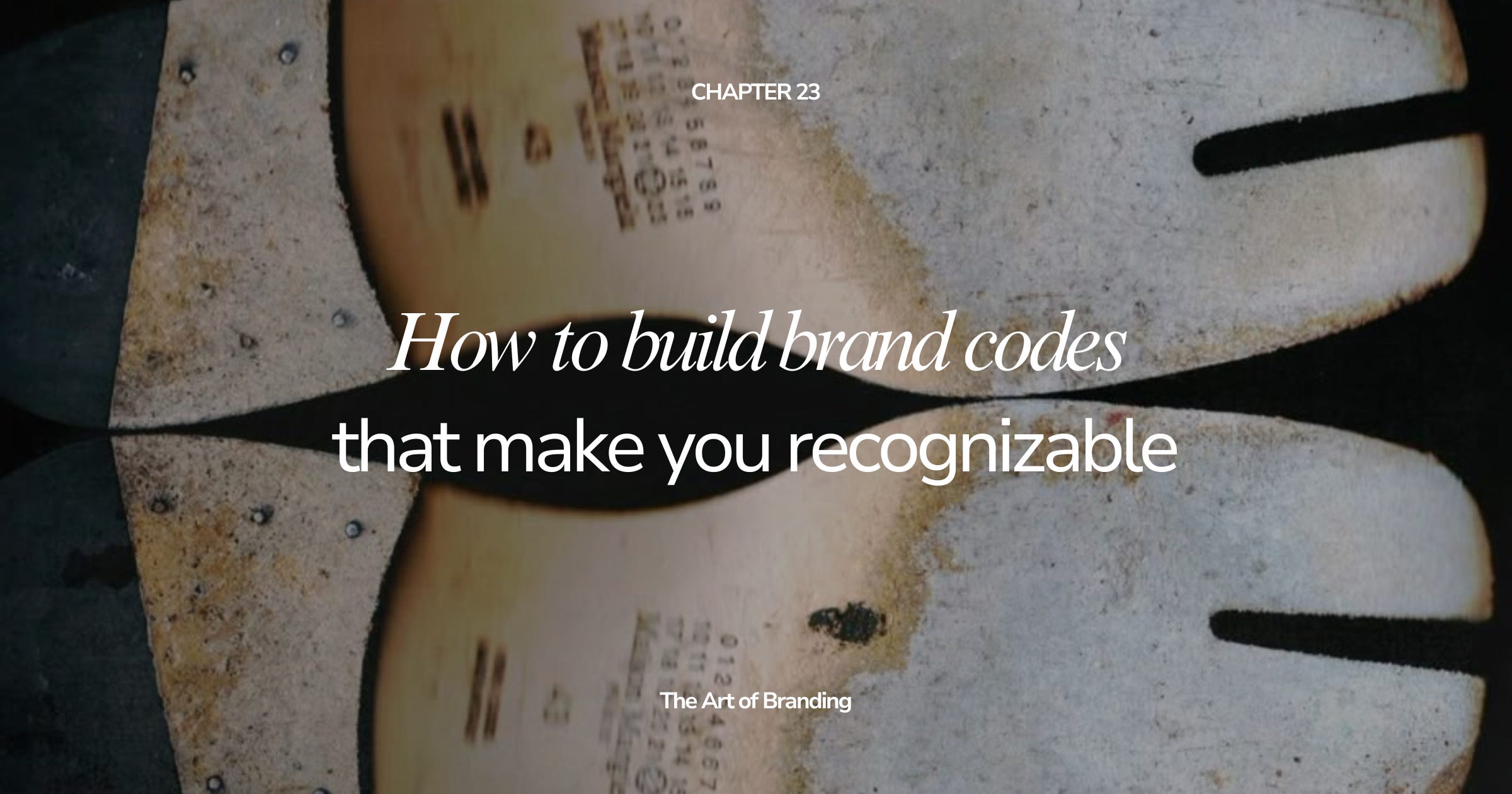
This is a playbook for smart brands. Each chapter is shaped by years of experience in branding, sharing how to build brands that are human, intentional, and culturally relevant.
If you’re stuck overthinking branding — or waiting for more budget, more people, or more polish — this is for you. Clarity over complexity. And yes, you can save time, money, and resources along the way.
This is a paid chapter. It goes deeper than the series so far — into the application, not just the thinking.
There is a particular kind of brand recognition that doesn’t need explanation. You catch a glimpse of a campaign, a color combination, a crop, a line of copy, a product shape, a store interior, a packaging detail, and before you’ve consciously read the name, something in your brain has already placed it. You know where you are.
That moment is the result of brand codes.
Not a logo. Not a campaign. Not a visual identity in the narrow sense. Codes are the signals a brand repeats often enough that they stop being decisions and start being memory. Over time, they do the work the brand no longer has to explain.
This is where a lot of brands misread what distinctiveness actually requires. They assume it means being loud, original, or impossible to confuse with anyone else at first glance. Sometimes it does. More often, distinctiveness is quieter than that. It comes from choosing a small number of signals and defending them with something close to unreasonable discipline.
Comments
Nothing yet. Say the first thing.
Sign in to join the conversation.