
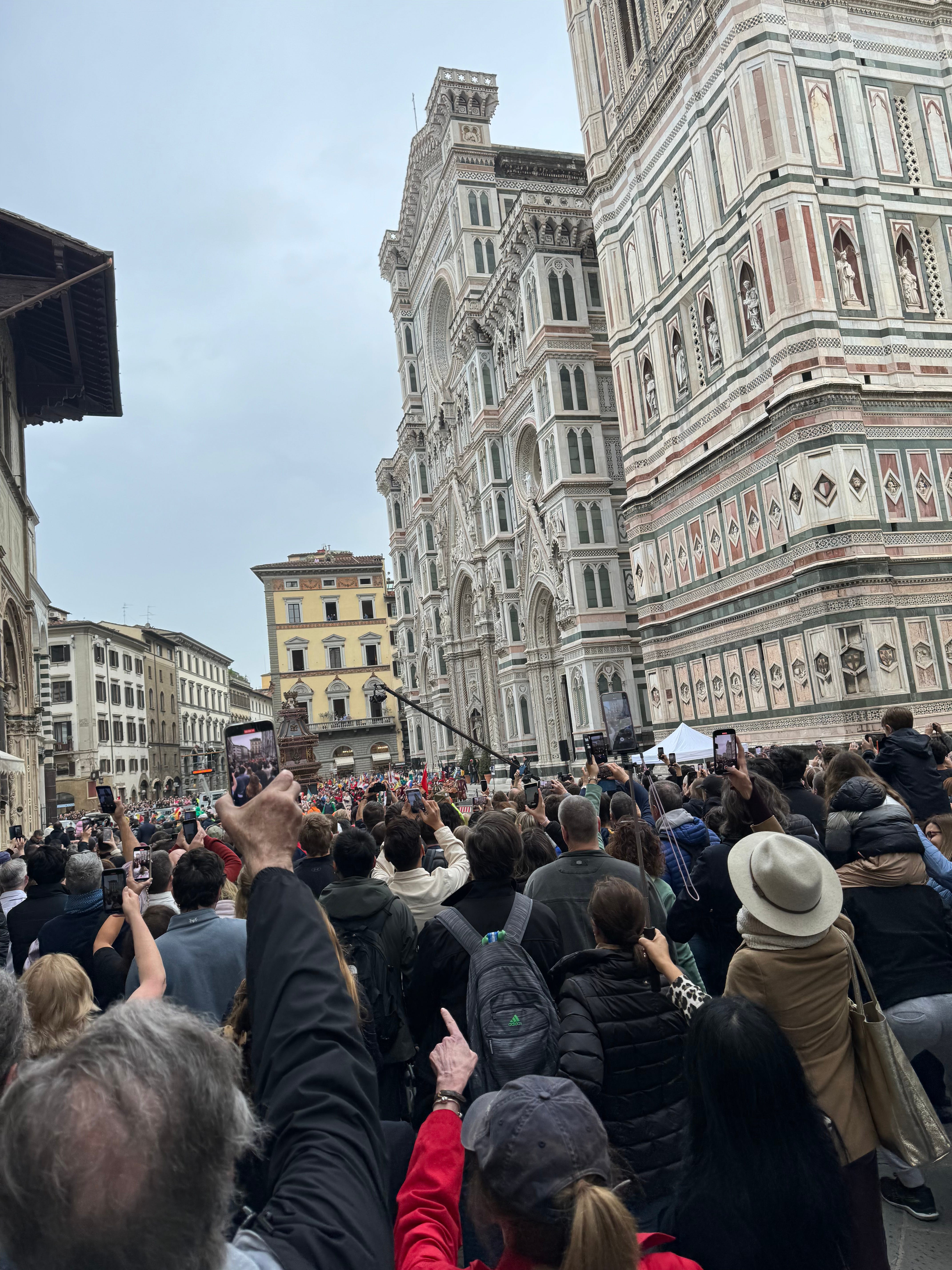
Two and a half years ago, I wrote about the overcrowding of cultural spaces. And the conversation keeps coming up.
Carrie Scott of SEEN posted recently about the disappointment of visiting an overcrowded museum. (It’s a brilliant commentary—watch it here). Then the Telegraph posted nearly the same thing, calling it a “sin against art.” Then Artnet wrote about it. Time Out picked it up. And it went viral: Travel and Leisure Asia, Apollo Magazine, The Guardian…
It’s a problem. And it’s true of most major museums: The Uffizi Gallery, The Met, the Louvre. Cultural spaces, like the enchanted old European towns (Florence), cultural events (Pride celebrations), and architectural wonders (the viewing platform of any high-rise), are all teeming with people. Our current institutions aren’t managing crowds properly, so we’re losing impact, enthusiasm, and audience.
The thing is, we WANT people to visit cultural institutions to enjoy and learn about important events in human history. We WANT people to see the art. We WANT to support the arts. We WANT to share and preserve our history. As a business case study, the cultural product is failing, and managers lack solutions or action. They’re leaving audiences out, and that is a business problem and a cultural problem.
This week I’m resharing my post about this issue. I have suggestions.
The info is still relevant. I’d love to know your thoughts.
Comments
Nothing yet. Say the first thing.
Sign in to join the conversation.