
The relationship between political power, private business, and the rapidly expanding defense technology industry has become increasingly difficult to separate. In yesterday’s conversation with Washington Post reporter Elizabeth Dwoskin on The Weekend Show, she exposed how investments involving Donald Trump’s sons intersect with Pentagon contracts, the rise of politically connected venture capital, the transformation of warfare, and the broader question of whether financial incentives are beginning to influence American foreign and domestic policy.
I began by asking Elizabeth how difficult it had been to uncover the financial relationships between Trump’s sons and companies receiving government contracts. She explained that the difficulty was not necessarily that the companies were hiding their relationships. Rather, government contracting data is extraordinarily complicated. Companies can operate under multiple corporate names, subcontractors may not appear directly in government records, and private companies generally are not required to disclose their investors. Investigating the relationships therefore requires expertise in navigating databases such as USAspending.gov and following numerous corporate and financial trails.
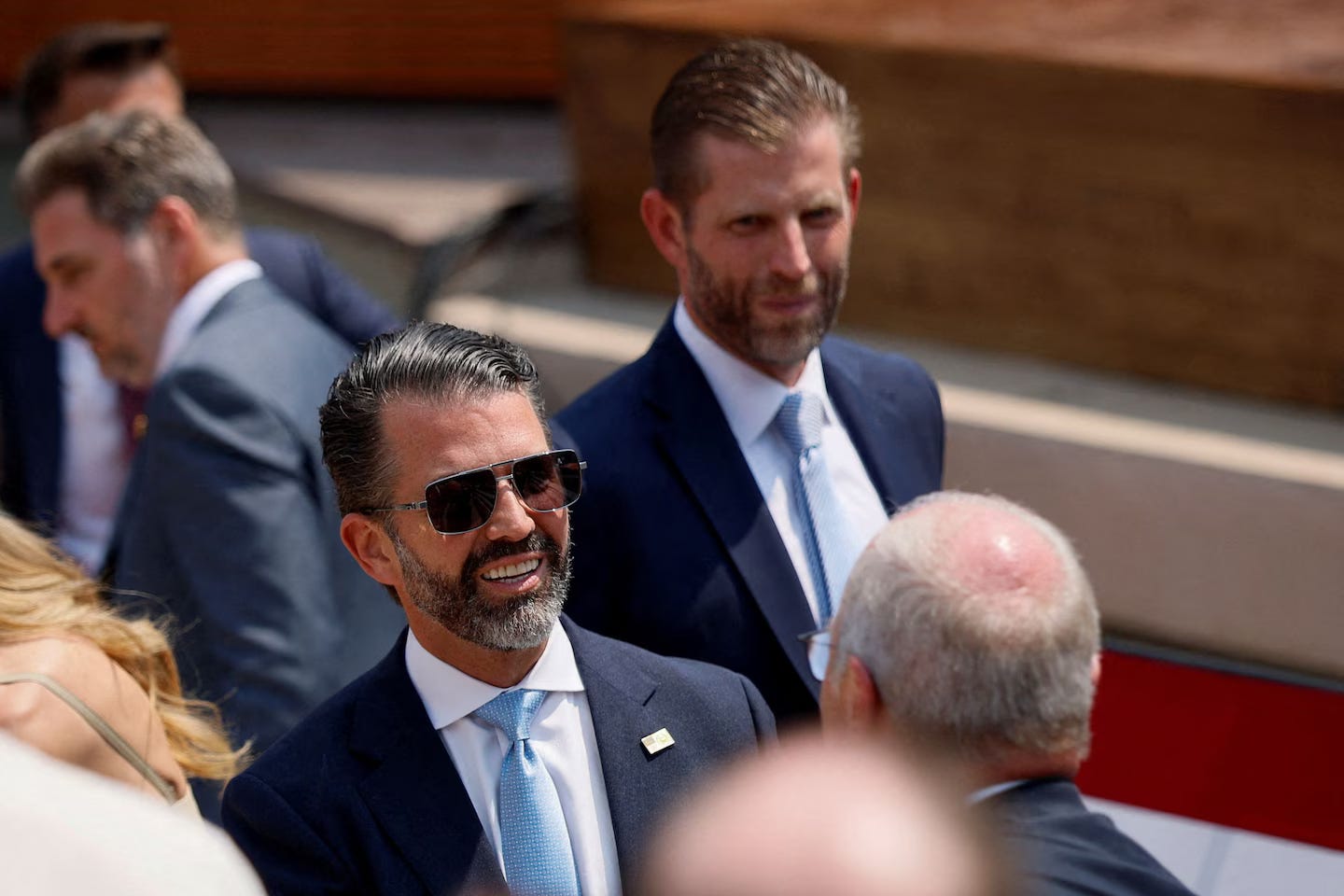
Defense companies are heavily dependent on government spending, particularly Pentagon contracts. That creates a much more direct relationship between private companies and government decision making. Although Trump’s sons are private citizens and have never held public office, companies in which they invest may depend substantially on decisions made by their father’s administration.
Comments
Nothing yet. Say the first thing.
Sign in to join the conversation.